
BREAKING NEWS
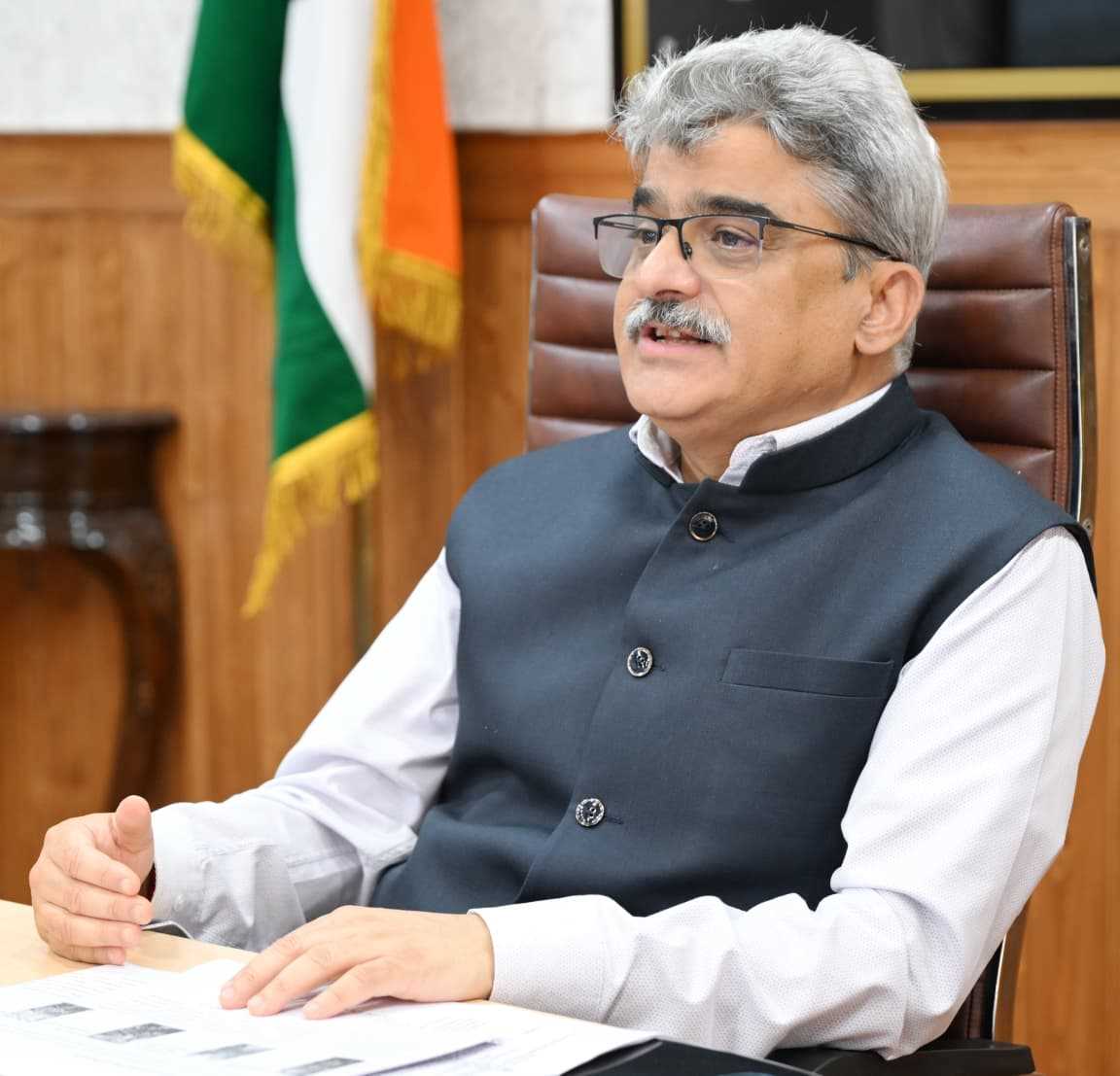
Srinagar, Oct 23: Chief Secretary, Atal Dulloo on Friday chaired an interdepartmental coordination meeting to sensitise administrative departments about integrating Sustainable Development Goals (SDGs) into their budgetary proposals for the forthcoming financial year, while addressing issues and concerns relating to the implementation of the proposed SDG-aligned budgeting framework.
The meeting was attended by the Additional Chief Secretary, Finance; Secretary, Planning, Development & Monitoring; and other concerned administrative heads; SIO, NIC; and officers from various departments.
The Chief Secretary directed the concerned departments to expedite the requisite formalities for operationalising the SDG-aligned budgeting framework ahead of the forthcoming budget exercise.
Emphasising the importance of technology-enabled financial monitoring, the Chief Secretary stressed the need for seamless integration of the proposed SDG Monitoring Dashboard with the Public Financial Management System (PFMS) and the Budget Estimation, Allocation and Monitoring System (BEAMS). He observed that such integration would facilitate automated, real-time tracking of budgetary allocations and expenditure, thereby strengthening transparency and accountability in public spending.
The Chief Secretary also directed that the pilot exercise being undertaken by the Higher Education Department be pursued in a systematic manner, with the lessons learnt and operational challenges addressed before extending the framework to other Administrative Departments.
He underscored the importance of ensuring that departments are adequately sensitised to the methodology and that their capacity is enhanced for enabling wider adoption of SDG-aligned budgeting in the forthcoming financial year.
The meeting focused on familiarising departments with the methodology for mapping their schemes against relevant SDG goals, targets and indicators, clarifying the process of budget tagging and facilitating coordinated action ahead of the preparation of departmental budgets. The interaction also provided an opportunity for departments to raise implementation-related concerns and seek necessary clarifications to ensure a common understanding of the proposed framework.
The initiative, being pursued by the Planning, Development & Monitoring Department (PD&MD) in partnership with the United Nations Development Programme (UNDP), aims to establish linkage between budgetary allocations and measurable development outcomes. It is intended to help departments assess how their schemes and expenditure contribute towards specific SDG targets and identify areas requiring focused interventions.
As part of the preparatory exercise, the Secretary PD&MD, Owais Ahmad, shared the National Indicator Framework (NIF)-aligned SDG goals, targets and indicators with all administrative departments and district administrations. Explaining that these will serve as the basis for mapping departmental schemes and aligning their budgetary provisions with the relevant development priorities.
Moreover the Secretary, PD&MD added that following the completion of Phase-I workshops for master trainers, regional-level Phase-II training sessions are also planned for departmental heads and district officers to familiarise them with the SDG mapping and budget-tagging methodology and facilitate its uniform adoption across the Union Territory.
Additionally the proposed institutional arrangements provide for a High-Level SDG Steering Committee to oversee the exercise, with the Finance and Planning Departments coordinating the reconciliation of departmental frameworks. Individual line departments will be responsible for identifying the SDG contributions of their ongoing and newly proposed schemes, while the dedicated SDG Cell will facilitate cross-referencing against the State Indicator Framework (SIF).
The framework distinguishes between Scheme-SDG Mapping, which assesses the alignment of scheme objectives and guidelines with specific SDG targets, and SDG Budget Tagging, which identifies the corresponding financial allocations. The exercise is envisaged to cover all five phases of the budget cycle including its preparation, approval, execution, accounting and oversight in order to strengthen transparency, accountability and outcome-based monitoring of public expenditure.
To support implementation, technical teams from the National Informatics Centre (NIC) and UNDP are working towards integrating the SDG Monitoring Dashboard with the relevant financial management and budget monitoring systems, including the Budget Estimation, Allocation and Monitoring System (BEAMS). The proposed integration is intended to improve the tracking of budgetary allocations and expenditure alongside physical outputs and relevant socio-economic indicators.
During this meeting it was revealed that the Higher Education Department has been selected to pilot the initiative during the Revised Estimates (RE) exercise for 2026-27. The pilot will involve mapping its ongoing schemes against the relevant SDG targets and indicators, providing an operational model for extending the exercise to other departments.
The ongoing interdepartmental consultations are expected to facilitate smoother adoption of the framework in the forthcoming budget exercise, ensuring that departments are adequately sensitised, their concerns are addressed and budgetary proposals are increasingly aligned with clearly defined development priorities and measurable outcomes.

© Copyright 2023 brighterkashmir.com All Rights Reserved. Quantum Technologies