
BREAKING NEWS
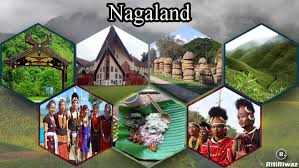
Nagaland is often referred as - the Land of Festivals. Tucked in the hills of Northeast India, Nagaland is alive with culture. Many Naga tribes call it home, each with their own language, customs, clothes and festivals. We get this incredible diversity, but what ties everyone together is just as powerful community spirit, respect for nature, courage, Culture and Heritage of Nagaland discipline and deep social bonds.
Nagaland holds onto its old traditions while stepping into modern life.Major tribes like Angami, Ao, Konyak, Lotha, Sumi, Chakhesang, Phom, Rengma, Sangtam and the list feels endless.
Every tribe does follow traditions in their own way reflecting their unique dialects and social structures. Traditional Naga society is casteless and largely classless
People value equality and work together. Villages organised around clans and everyone pitches in whether it’s farming, building, or making decisions for the community. Farming sits at the centre of it all. Nearly every ritual or festival circles back to sowing or harvest time. Hard work isn’t just a virtue here - it’s a tradition, handed down with discipline, courage and a sense of belonging.But if there’s one thing that really defines Naga life, it’s the Morung system.
A big communal dorm for unmarried youth. The Elders teach them everything - values, discipline, folklore, clan history, village rules, practical skills. No textbooks, just stories, songs, and the kind of learning you only get by doing. If anyone wanted to know what your clan stood for or where you came from, you learned it in the Morung.
Morungs did more than teach - they shaped the character. They taught respect for elders, loyalty to the village and a kind of courage that’s about protecting home, not picking fights. Young people learned how to defend the village if it ever came to that, but always with a strong sense of what’s right.
Most Morungs were for boys, but girls had their own spaces. There, they learned weaving, music, hospitality, childcare - skills that kept the community strong. These roles mattered just as much as any other.
Morungs were also hubs for skills - wood carving, bamboo work, house building, tool repair. The lesson was clear: dignity comes from what you do for others, not your family name or wealth. While the old Morung system faded with the arrival of Christianity, schools, and city life, its spirit - unity, responsibility, equality - still shapes how Nagas see themselves.
Art runs deep in Nagaland. Weaving, bamboo and cane work, wood carving, basket making, jewellery - these crafts are everywhere. Hand woven shawls aren’t just clothes; their patterns and colours show a person’s tribe or achievements. During festivals, people wear their best - beads, shells, feathers, animal motifs - showing off tribal pride every step of the way.
Festivals give Naga life its rhythm. Each tribe has its own big celebration - Sekrenyi, Moatsu, Aoling, Tokhu Emong, Tuluni, Mimkut. These aren’t small affairs; they’re packed with songs, dances, games, and food. The Hornbill Festival brings all the tribes together at Kisama near Kohima, turning unity into a living, breathing thing.
Stories, legends, and songs keep the culture alive. Oral traditions pass down knowledge, values, and a sense of belonging, even as the world changes around them.
Nagaland’s culture is about resilience and community. The Morung wasn’t just a dorm - it was where people learned that freedom means responsibility, equality comes from shared work, and real education happens by living it. By holding on to these old ways, while embracing the new, Nagas keeps their traditions alive in a world that never stands still.
Nagaland is often referred as - the Land of Festivals. Tucked in the hills of Northeast India, Nagaland is alive with culture. Many Naga tribes call it home, each with their own language, customs, clothes and festivals. We get this incredible diversity, but what ties everyone together is just as powerful community spirit, respect for nature, courage, Culture and Heritage of Nagaland discipline and deep social bonds.
Nagaland holds onto its old traditions while stepping into modern life.Major tribes like Angami, Ao, Konyak, Lotha, Sumi, Chakhesang, Phom, Rengma, Sangtam and the list feels endless.
Every tribe does follow traditions in their own way reflecting their unique dialects and social structures. Traditional Naga society is casteless and largely classless
People value equality and work together. Villages organised around clans and everyone pitches in whether it’s farming, building, or making decisions for the community. Farming sits at the centre of it all. Nearly every ritual or festival circles back to sowing or harvest time. Hard work isn’t just a virtue here - it’s a tradition, handed down with discipline, courage and a sense of belonging.But if there’s one thing that really defines Naga life, it’s the Morung system.
A big communal dorm for unmarried youth. The Elders teach them everything - values, discipline, folklore, clan history, village rules, practical skills. No textbooks, just stories, songs, and the kind of learning you only get by doing. If anyone wanted to know what your clan stood for or where you came from, you learned it in the Morung.
Morungs did more than teach - they shaped the character. They taught respect for elders, loyalty to the village and a kind of courage that’s about protecting home, not picking fights. Young people learned how to defend the village if it ever came to that, but always with a strong sense of what’s right.
Most Morungs were for boys, but girls had their own spaces. There, they learned weaving, music, hospitality, childcare - skills that kept the community strong. These roles mattered just as much as any other.
Morungs were also hubs for skills - wood carving, bamboo work, house building, tool repair. The lesson was clear: dignity comes from what you do for others, not your family name or wealth. While the old Morung system faded with the arrival of Christianity, schools, and city life, its spirit - unity, responsibility, equality - still shapes how Nagas see themselves.
Art runs deep in Nagaland. Weaving, bamboo and cane work, wood carving, basket making, jewellery - these crafts are everywhere. Hand woven shawls aren’t just clothes; their patterns and colours show a person’s tribe or achievements. During festivals, people wear their best - beads, shells, feathers, animal motifs - showing off tribal pride every step of the way.
Festivals give Naga life its rhythm. Each tribe has its own big celebration - Sekrenyi, Moatsu, Aoling, Tokhu Emong, Tuluni, Mimkut. These aren’t small affairs; they’re packed with songs, dances, games, and food. The Hornbill Festival brings all the tribes together at Kisama near Kohima, turning unity into a living, breathing thing.
Stories, legends, and songs keep the culture alive. Oral traditions pass down knowledge, values, and a sense of belonging, even as the world changes around them.
Nagaland’s culture is about resilience and community. The Morung wasn’t just a dorm - it was where people learned that freedom means responsibility, equality comes from shared work, and real education happens by living it. By holding on to these old ways, while embracing the new, Nagas keeps their traditions alive in a world that never stands still.

© Copyright 2023 brighterkashmir.com All Rights Reserved. Quantum Technologies