
BREAKING NEWS
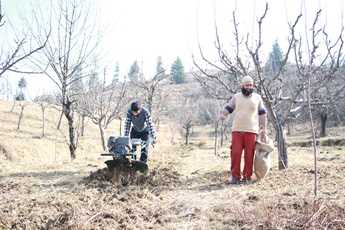
As the harsh Chilai Kalan grips Kashmir, life in the orchards continues with quiet resilience. In the Kukuthal area of Tangmarg in Baramulla district, a farmer was seen working with a tiller in his apple orchard, turning the frozen soil despite biting cold and sub-zero temperatures.
Chilai Kalan, the 40-day harshest phase of winter, has brought intense cold across the Valley, freezing water bodies, disrupting daily life, and testing the endurance of locals. While most people limit outdoor activity, farmers like him continue essential work to prepare their orchards for the coming season.
Locals said winter tilling is crucial for apple cultivation as it helps improve soil aeration, controls pests, and ensures better moisture retention once the snow melts. “If we miss this period, it affects the health of the trees and the quality of fruit,” said a resident, adding that farming does not stop for the weather.
The apple industry remains the backbone of the rural economy in north Kashmir, and orchardists rely on year-round care to sustain their livelihoods. Even during Chilai Kalan, farmers brave icy winds and numb hands to protect their crops.
As temperatures continue to plunge, scenes like these reflect the resilience of Kashmir’s farming community—working silently against the cold, ensuring that life and livelihood endure through one of the harshest winters of the year.
As the harsh Chilai Kalan grips Kashmir, life in the orchards continues with quiet resilience. In the Kukuthal area of Tangmarg in Baramulla district, a farmer was seen working with a tiller in his apple orchard, turning the frozen soil despite biting cold and sub-zero temperatures.
Chilai Kalan, the 40-day harshest phase of winter, has brought intense cold across the Valley, freezing water bodies, disrupting daily life, and testing the endurance of locals. While most people limit outdoor activity, farmers like him continue essential work to prepare their orchards for the coming season.
Locals said winter tilling is crucial for apple cultivation as it helps improve soil aeration, controls pests, and ensures better moisture retention once the snow melts. “If we miss this period, it affects the health of the trees and the quality of fruit,” said a resident, adding that farming does not stop for the weather.
The apple industry remains the backbone of the rural economy in north Kashmir, and orchardists rely on year-round care to sustain their livelihoods. Even during Chilai Kalan, farmers brave icy winds and numb hands to protect their crops.
As temperatures continue to plunge, scenes like these reflect the resilience of Kashmir’s farming community—working silently against the cold, ensuring that life and livelihood endure through one of the harshest winters of the year.

© Copyright 2023 brighterkashmir.com All Rights Reserved. Quantum Technologies