
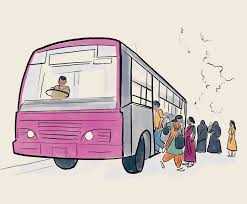
Srinagar is not just a city of lakes and gardens; it is a city of movement. In a city like Srinagar, where daily life is shaped by geography, climate, and long-standing social structures, mobility has never been a neutral issue
When the announcement of free bus services in Srinagar was made on 1st April 2025 . The announcement acted as a conversation starter as it was the first time such kind of service was ever introduced in Kashmir. People especially women were highly delighted by the government order . In a city where daily mobility is both a necessity and a burden, the idea of free public transport for woman was bound to stir emotions, expectations, and anxieties in equal measure.
Srinagar is not just a city of lakes and gardens; it is a city of movement. In a city like Srinagar, where daily life is shaped by geography, climate, and long-standing social structures, mobility has never been a neutral issue. For women in particular, moving through public spaces has often involved negotiation — of cost, safety, time, and social permission. The introduction of free bus services for women in Srinagar has emerged as a policy with deep social, economic, and philosophical implications. It has altered routines and challenged assumptions .
At the most immediate level, the impact of free bus services on women’s daily lives is tangible. Female Students commuting to colleges, schools, and coaching centers now travel without the constant anxiety of fare money. Working women including teachers, healthcare workers, clerks, and domestic workers describe the service as a quiet but meaningful relief. In households where income is limited and carefully allocated, transport expenses for women were often the first to be questioned or curtailed. Free bus services have eased this pressure, allowing women greater consistency in education and employment.
The policy has also influenced women’s participation in public life. Frequent travel to markets, hospitals, government offices, and social gatherings has become more feasible. Many women note that they now feel less dependent on male family members for transportation. This sense of autonomy, though subtle, carries long-term consequences. Mobility is closely linked to empowerment; when women can move freely, they gain greater control over their time, opportunities, and choices. In this sense, free bus services operate as an enabling tool rather than a mere welfare measure.
Public reaction among women has been largely positive, often expressed in everyday conversations rather than formal statements. Elderly women speak of relief from choosing between essential trips and saving money. Young women see the service as a recognition of their presence in public spaces. For many, the policy signals that the state acknowledges women not just as dependents, but as active participants in the city’s economic and social life. Yet, alongside appreciation, there are concerns about overcrowding, irregular schedules, and safety during peak hours reminders that accessibility must be matched by quality.
However, critics raise questions about fiscal sustainability. Free services require continuous public funding, and in an economy like Kashmir’s marked by instability and limited industrial growth , resource allocation is a sensitive issue. Some argue that targeted subsidies would be more efficient than universal free transport. Others counter that women’s mobility generates social returns that are difficult to quantify but vital for long-term development. The debate reflects a broader tension between immediate budgetary concerns and long-term social investment. The reaction of auto-rickshaw drivers to the policy reveals another layer of complexity. For many drivers, especially those operating along busy routes, the introduction of free bus services for women has led to a noticeable decline in female passengers. This has translated into reduced earnings, particularly during peak hours. Several drivers express frustration, arguing that while buses are supported by the state, they face rising fuel prices and maintenance costs without comparable assistance.
Yet, the response among auto drivers is not uniform. Some acknowledge that autos continue to serve a distinct role offering convenience, speed, and last-mile connectivity that buses cannot always provide. Women traveling short distances, carrying goods, or needing flexible routes still rely on autos. Over time, certain drivers have adapted their strategies, focusing on niche routes or services. Even so, the policy has exposed the vulnerability of informal transport workers and highlighted the need for inclusive planning that considers all stakeholders.
Public opinion across Srinagar reflects a blend of empathy and pragmatism. Many citizens support the policy for its benefits to women, while simultaneously recognizing the hardships faced by auto drivers. This dual awareness underscores an important truth: social welfare policies often create winners and losers, and ethical governance lies in minimizing harm while maximizing collective good. Calls for dialogue, compensation, or alternative support mechanisms for affected workers are growing louder.
Beyond economics and logistics, the free bus service for women invites a deeper philosophical reflection. At its heart lies the enduring debate between capitalism and socialism. A capitalist framework emphasizes market efficiency, individual responsibility, and user-paid services. From this perspective, free transport risks distorting markets and discouraging competition. Critics influenced by this ideology argue that subsidies should be limited and carefully targeted. In contrast, a socialist or welfare-oriented perspective views mobility as a social right rather than a commodity. It emphasizes collective responsibility and state intervention to correct structural inequalities. its a way of leveling the field rather than creating dependency. The policy reflects the belief that certain services should exist outside the logic of profit.
In conclusion, the free bus service for women in Srinagar represents more than a policy decision; it is a statement about priorities and values. Its impact on women’s mobility, economic participation, and sense of autonomy is undeniable. Yet, its challenges : fiscal sustainability, service quality, and livelihood disruption demand thoughtful responses. Situated between the ideals of socialism and the realities of a market economy, the initiative reflects an ongoing negotiation about the role of the state in people’s lives. Ultimately, its success will depend on whether it can remain grounded in a humanistic vision one that values dignity, inclusion, and balance as much as efficiency and cost.
Email:---------------------nabeeljehangir885@gmail.com

Srinagar is not just a city of lakes and gardens; it is a city of movement. In a city like Srinagar, where daily life is shaped by geography, climate, and long-standing social structures, mobility has never been a neutral issue
When the announcement of free bus services in Srinagar was made on 1st April 2025 . The announcement acted as a conversation starter as it was the first time such kind of service was ever introduced in Kashmir. People especially women were highly delighted by the government order . In a city where daily mobility is both a necessity and a burden, the idea of free public transport for woman was bound to stir emotions, expectations, and anxieties in equal measure.
Srinagar is not just a city of lakes and gardens; it is a city of movement. In a city like Srinagar, where daily life is shaped by geography, climate, and long-standing social structures, mobility has never been a neutral issue. For women in particular, moving through public spaces has often involved negotiation — of cost, safety, time, and social permission. The introduction of free bus services for women in Srinagar has emerged as a policy with deep social, economic, and philosophical implications. It has altered routines and challenged assumptions .
At the most immediate level, the impact of free bus services on women’s daily lives is tangible. Female Students commuting to colleges, schools, and coaching centers now travel without the constant anxiety of fare money. Working women including teachers, healthcare workers, clerks, and domestic workers describe the service as a quiet but meaningful relief. In households where income is limited and carefully allocated, transport expenses for women were often the first to be questioned or curtailed. Free bus services have eased this pressure, allowing women greater consistency in education and employment.
The policy has also influenced women’s participation in public life. Frequent travel to markets, hospitals, government offices, and social gatherings has become more feasible. Many women note that they now feel less dependent on male family members for transportation. This sense of autonomy, though subtle, carries long-term consequences. Mobility is closely linked to empowerment; when women can move freely, they gain greater control over their time, opportunities, and choices. In this sense, free bus services operate as an enabling tool rather than a mere welfare measure.
Public reaction among women has been largely positive, often expressed in everyday conversations rather than formal statements. Elderly women speak of relief from choosing between essential trips and saving money. Young women see the service as a recognition of their presence in public spaces. For many, the policy signals that the state acknowledges women not just as dependents, but as active participants in the city’s economic and social life. Yet, alongside appreciation, there are concerns about overcrowding, irregular schedules, and safety during peak hours reminders that accessibility must be matched by quality.
However, critics raise questions about fiscal sustainability. Free services require continuous public funding, and in an economy like Kashmir’s marked by instability and limited industrial growth , resource allocation is a sensitive issue. Some argue that targeted subsidies would be more efficient than universal free transport. Others counter that women’s mobility generates social returns that are difficult to quantify but vital for long-term development. The debate reflects a broader tension between immediate budgetary concerns and long-term social investment. The reaction of auto-rickshaw drivers to the policy reveals another layer of complexity. For many drivers, especially those operating along busy routes, the introduction of free bus services for women has led to a noticeable decline in female passengers. This has translated into reduced earnings, particularly during peak hours. Several drivers express frustration, arguing that while buses are supported by the state, they face rising fuel prices and maintenance costs without comparable assistance.
Yet, the response among auto drivers is not uniform. Some acknowledge that autos continue to serve a distinct role offering convenience, speed, and last-mile connectivity that buses cannot always provide. Women traveling short distances, carrying goods, or needing flexible routes still rely on autos. Over time, certain drivers have adapted their strategies, focusing on niche routes or services. Even so, the policy has exposed the vulnerability of informal transport workers and highlighted the need for inclusive planning that considers all stakeholders.
Public opinion across Srinagar reflects a blend of empathy and pragmatism. Many citizens support the policy for its benefits to women, while simultaneously recognizing the hardships faced by auto drivers. This dual awareness underscores an important truth: social welfare policies often create winners and losers, and ethical governance lies in minimizing harm while maximizing collective good. Calls for dialogue, compensation, or alternative support mechanisms for affected workers are growing louder.
Beyond economics and logistics, the free bus service for women invites a deeper philosophical reflection. At its heart lies the enduring debate between capitalism and socialism. A capitalist framework emphasizes market efficiency, individual responsibility, and user-paid services. From this perspective, free transport risks distorting markets and discouraging competition. Critics influenced by this ideology argue that subsidies should be limited and carefully targeted. In contrast, a socialist or welfare-oriented perspective views mobility as a social right rather than a commodity. It emphasizes collective responsibility and state intervention to correct structural inequalities. its a way of leveling the field rather than creating dependency. The policy reflects the belief that certain services should exist outside the logic of profit.
In conclusion, the free bus service for women in Srinagar represents more than a policy decision; it is a statement about priorities and values. Its impact on women’s mobility, economic participation, and sense of autonomy is undeniable. Yet, its challenges : fiscal sustainability, service quality, and livelihood disruption demand thoughtful responses. Situated between the ideals of socialism and the realities of a market economy, the initiative reflects an ongoing negotiation about the role of the state in people’s lives. Ultimately, its success will depend on whether it can remain grounded in a humanistic vision one that values dignity, inclusion, and balance as much as efficiency and cost.
Email:---------------------nabeeljehangir885@gmail.com

© Copyright 2023 brighterkashmir.com All Rights Reserved. Quantum Technologies