
BREAKING NEWS
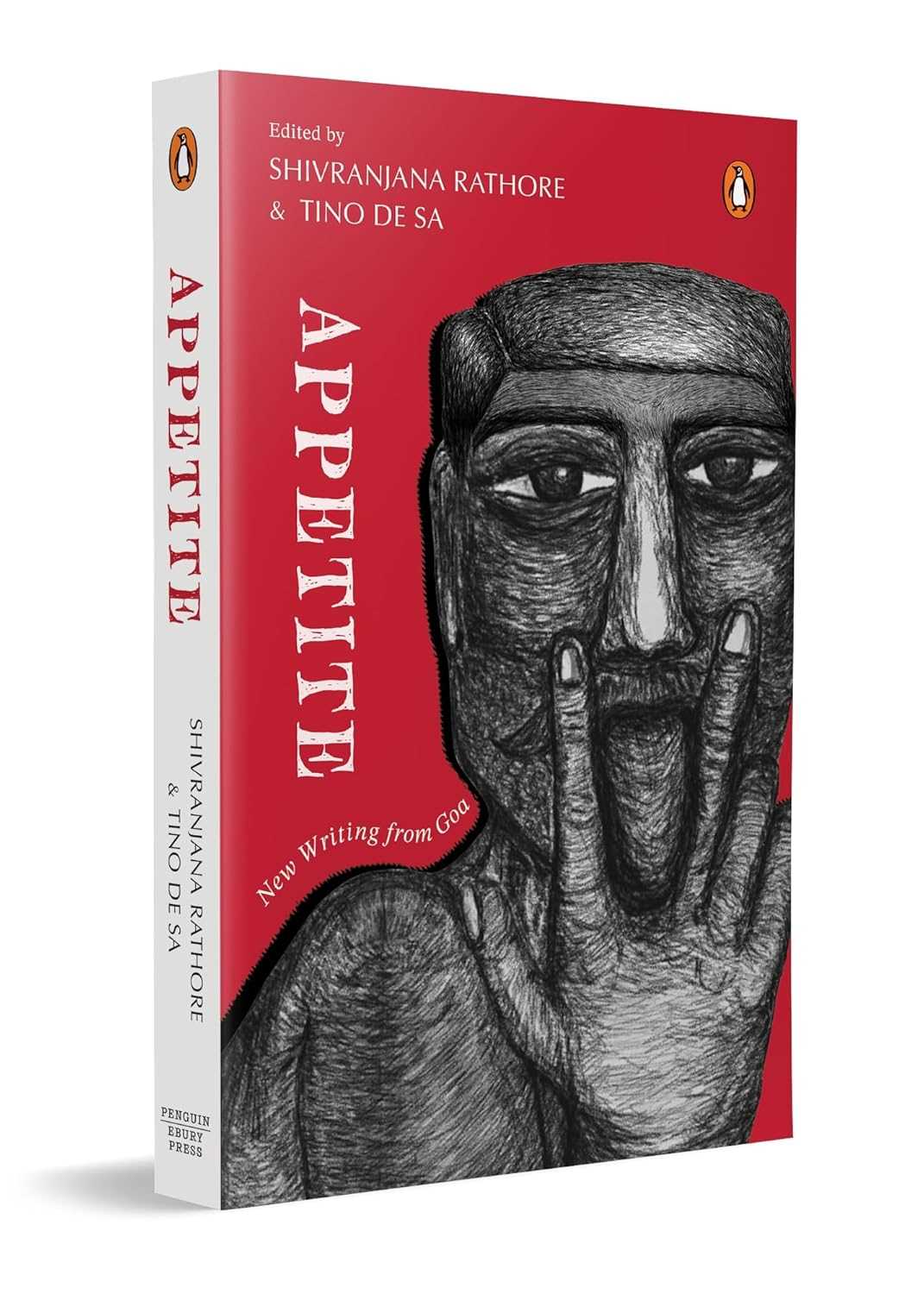
'Appetite: New Writing in Goa', by Shivranjana Rathore and Tino de Sa, published by Penguin Random House India, shifts the focus inward. It is an audacious collection of poems, stories, and essays with roots in Goa, presenting the reader with a texture of a state that grapples with hunger in various manifestations, including food, intimacy, belonging, resistance, and selfhood.
Goa had always been pictured as a postcard utopia, complete with beaches, nightlife, and sus egad afternoons. Still, there is much more to the tourist gaze than meets the eye, and it is rarely reflected in contemporary Indian texts.
'Appetite: New Writing in Goa', by Shivranjana Rathore and Tino de Sa, published by Penguin Random House India, shifts the focus inward. It is an audacious collection of poems, stories, and essays with roots in Goa, presenting the reader with a texture of a state that grapples with hunger in various manifestations, including food, intimacy, belonging, resistance, and selfhood.
As the editors are closely attached to the region, the chorus of voices has been thoughtfully selected and uttered with an urgency and candour. The contributors, who include familiar faces as Damodar Mauzo and Seema Mustafa, as well as those only beginning to experiment with form, are listed briefly in the book. 'Appetite: New Writing in Goa' is not about any one particular face and name, but about the echo of the words.
Hunger Beyond the Plate
The central metaphor of appetite is hunger, and the anthology explores it both literally and metaphorically. Food, naturally, is a standard feature, as seen in ancestral recipes, family meals, and the decline of authentic Goan cuisine under the influence of tourism. But hunger, here also, is about desire, solitude, political disillusionment, and identity quest.
One of the essays contributes to the isolation of the COVID years, in which food and intimacy become inseparable when the question of belonging arises. A poem addresses the emergence of conservatism in India, placing Goa within broader national concerns. Domestic spaces, late-night meals, and the muted talks of everyday life are captured in short stories.
Goa in Transition
The most noticeable thing that the anthology reveals is the feeling of transition. One of the former centres of the maritime empire that once expanded as far as Macau and Mozambique, Goa is currently the smallest state in India, struggling with issues of immigration, demographics, and cultural standards. This flux has been captured in the writing with honesty.
The faith and memory, sexuality and social change, and the erosion of authentic cultural practices under the onslaught of tourism are reflected upon. The anthology is anti-nostalgic. It demands, instead, plurality, multiple voices living together, debating, recollecting, and fantasising. This rejection of Goa as a single identity is one of the book's greatest strengths.
Literature as Resistance
The note made by the editor clarifies that appetite is not a merged portrayal of Goa. It is rather a call to listen. Literature, in this case, is a democratic space where complexity is not resolved, but tension is retained. The collection challenges the clichés that have long been convenient for characterising Goa in the national memory.
In this respect, appetite is part of a broader trend in Indian writing, where poetry and prose serve as a form of resistance. Similar to how the Tamil Bhakti saints did in the past by using hymns to challenge caste hierarchies, the authors of this book employ verse and storytelling to address modern-day demands, which are political, cultural, and economic in nature. Their hunger is not an individualistic one but a social one, the thirst for justice and genuineness.
Editorial Vision
Tino de Sa and Shivranjana Rathore should be credited with creating a book that is both coherent and diverse. Their editorial practice, as they describe it, involved being good listeners and creating space for contributors. The outcome is a body that is not artificial but natural. Every work is premised on a unique occupation of Goa, some heartfelt, some mischievous, some searching, all heartfelt.
The editors recognise that the collection of stories is not comprehensive. Goa cannot be encapsulated in a single book, and its identity cannot be defined narrowly. However, by preempting diversity in literature, they have created a mirror of the state during a tumultuous historical period.
Glimpses of contributors
While the anthology is best read as a collective voice, it is worth noting the range of contributors. From octogenarian cartoonist Alexyz to journalist Frederick Noronha, from poet Pragya Bhagat to novelist Damodar Mauzo, the book brings together generations and genres. Some write from within Goa, others from the diaspora, but all maintain a strong connection to the land.
These contributors are not presented as celebrities but as participants in a shared conversation. Their variety underscores the editors' commitment to inclusivity -- insiders and outsiders, seasoned and emerging, all given space to share their perspectives.
Why this Anthology Matters
In the broader landscape of Indian literature, appetite is significant for several reasons. First, it challenges the tourist gaze that has long dominated representations of Goa. By turning inward, it insists on lived realities rather than postcard images.
Second, it situates Goa within national conversations. The anthology's engagement with political unease, conservatism, and cultural erosion resonates far beyond the state. It reminds us that Goa is not an isolated idyll but part of India's complex social fabric.
Third, it demonstrates the power of collective literary effort. Created by members of the Goa Writers Group, the anthology reflects what can be achieved when writers support each other in a spirit of solidarity. In an increasingly fragmented world, this sense of community is itself a form of resistance.
At a time when India grapples with questions of identity, migration, and cultural change, appetite feels urgent. The anthology does not offer easy answers. Instead, it presents complexity -- voices that coexist without resolution. In doing so, it models a democratic approach to literature, where diversity is not a problem to be solved but a reality to be embraced.
For readers outside Goa, the book offers a fresh perspective on the state. For Goans, it gives recognition -- a validation of experiences often overshadowed by stereotypes. For Indian literature as a whole, it adds a vital regional perspective to the ongoing conversation about who we are and how we live.
Style and Accessibility
The writing across the anthology is varied, ranging from lyrical poems to sharp essays and intimate stories. Yet the overall tone is accessible. Readers do not need specialised knowledge of Goa to engage with the book. The themes of hunger, belonging, and resistance are universal, yet rooted in local experiences.
This accessibility makes the appetite valuable not only to Goans but also to anyone interested in contemporary Indian literature. It is a reminder that regional writing, when attentive to lived realities, can illuminate national and even global concerns.
Tailpiece
The book is not just an anthology of writing on appetite in Goa. It is a literary atmosphere of a state between the worlds, a grouping of voices around hunger in all its variations. It provides the reader with a subtle view of Goa in the present, due to its opposition to clichés and the use of plurality as a form of foreground.
The editors have made this book nourishing and lingering by providing space for these voices. Appetite is a hint that literature is simultaneously a mirror and a map, that is what we are, and where we may be going.
Email:--------------------daanishinterview@gmail.com
'Appetite: New Writing in Goa', by Shivranjana Rathore and Tino de Sa, published by Penguin Random House India, shifts the focus inward. It is an audacious collection of poems, stories, and essays with roots in Goa, presenting the reader with a texture of a state that grapples with hunger in various manifestations, including food, intimacy, belonging, resistance, and selfhood.
Goa had always been pictured as a postcard utopia, complete with beaches, nightlife, and sus egad afternoons. Still, there is much more to the tourist gaze than meets the eye, and it is rarely reflected in contemporary Indian texts.
'Appetite: New Writing in Goa', by Shivranjana Rathore and Tino de Sa, published by Penguin Random House India, shifts the focus inward. It is an audacious collection of poems, stories, and essays with roots in Goa, presenting the reader with a texture of a state that grapples with hunger in various manifestations, including food, intimacy, belonging, resistance, and selfhood.
As the editors are closely attached to the region, the chorus of voices has been thoughtfully selected and uttered with an urgency and candour. The contributors, who include familiar faces as Damodar Mauzo and Seema Mustafa, as well as those only beginning to experiment with form, are listed briefly in the book. 'Appetite: New Writing in Goa' is not about any one particular face and name, but about the echo of the words.
Hunger Beyond the Plate
The central metaphor of appetite is hunger, and the anthology explores it both literally and metaphorically. Food, naturally, is a standard feature, as seen in ancestral recipes, family meals, and the decline of authentic Goan cuisine under the influence of tourism. But hunger, here also, is about desire, solitude, political disillusionment, and identity quest.
One of the essays contributes to the isolation of the COVID years, in which food and intimacy become inseparable when the question of belonging arises. A poem addresses the emergence of conservatism in India, placing Goa within broader national concerns. Domestic spaces, late-night meals, and the muted talks of everyday life are captured in short stories.
Goa in Transition
The most noticeable thing that the anthology reveals is the feeling of transition. One of the former centres of the maritime empire that once expanded as far as Macau and Mozambique, Goa is currently the smallest state in India, struggling with issues of immigration, demographics, and cultural standards. This flux has been captured in the writing with honesty.
The faith and memory, sexuality and social change, and the erosion of authentic cultural practices under the onslaught of tourism are reflected upon. The anthology is anti-nostalgic. It demands, instead, plurality, multiple voices living together, debating, recollecting, and fantasising. This rejection of Goa as a single identity is one of the book's greatest strengths.
Literature as Resistance
The note made by the editor clarifies that appetite is not a merged portrayal of Goa. It is rather a call to listen. Literature, in this case, is a democratic space where complexity is not resolved, but tension is retained. The collection challenges the clichés that have long been convenient for characterising Goa in the national memory.
In this respect, appetite is part of a broader trend in Indian writing, where poetry and prose serve as a form of resistance. Similar to how the Tamil Bhakti saints did in the past by using hymns to challenge caste hierarchies, the authors of this book employ verse and storytelling to address modern-day demands, which are political, cultural, and economic in nature. Their hunger is not an individualistic one but a social one, the thirst for justice and genuineness.
Editorial Vision
Tino de Sa and Shivranjana Rathore should be credited with creating a book that is both coherent and diverse. Their editorial practice, as they describe it, involved being good listeners and creating space for contributors. The outcome is a body that is not artificial but natural. Every work is premised on a unique occupation of Goa, some heartfelt, some mischievous, some searching, all heartfelt.
The editors recognise that the collection of stories is not comprehensive. Goa cannot be encapsulated in a single book, and its identity cannot be defined narrowly. However, by preempting diversity in literature, they have created a mirror of the state during a tumultuous historical period.
Glimpses of contributors
While the anthology is best read as a collective voice, it is worth noting the range of contributors. From octogenarian cartoonist Alexyz to journalist Frederick Noronha, from poet Pragya Bhagat to novelist Damodar Mauzo, the book brings together generations and genres. Some write from within Goa, others from the diaspora, but all maintain a strong connection to the land.
These contributors are not presented as celebrities but as participants in a shared conversation. Their variety underscores the editors' commitment to inclusivity -- insiders and outsiders, seasoned and emerging, all given space to share their perspectives.
Why this Anthology Matters
In the broader landscape of Indian literature, appetite is significant for several reasons. First, it challenges the tourist gaze that has long dominated representations of Goa. By turning inward, it insists on lived realities rather than postcard images.
Second, it situates Goa within national conversations. The anthology's engagement with political unease, conservatism, and cultural erosion resonates far beyond the state. It reminds us that Goa is not an isolated idyll but part of India's complex social fabric.
Third, it demonstrates the power of collective literary effort. Created by members of the Goa Writers Group, the anthology reflects what can be achieved when writers support each other in a spirit of solidarity. In an increasingly fragmented world, this sense of community is itself a form of resistance.
At a time when India grapples with questions of identity, migration, and cultural change, appetite feels urgent. The anthology does not offer easy answers. Instead, it presents complexity -- voices that coexist without resolution. In doing so, it models a democratic approach to literature, where diversity is not a problem to be solved but a reality to be embraced.
For readers outside Goa, the book offers a fresh perspective on the state. For Goans, it gives recognition -- a validation of experiences often overshadowed by stereotypes. For Indian literature as a whole, it adds a vital regional perspective to the ongoing conversation about who we are and how we live.
Style and Accessibility
The writing across the anthology is varied, ranging from lyrical poems to sharp essays and intimate stories. Yet the overall tone is accessible. Readers do not need specialised knowledge of Goa to engage with the book. The themes of hunger, belonging, and resistance are universal, yet rooted in local experiences.
This accessibility makes the appetite valuable not only to Goans but also to anyone interested in contemporary Indian literature. It is a reminder that regional writing, when attentive to lived realities, can illuminate national and even global concerns.
Tailpiece
The book is not just an anthology of writing on appetite in Goa. It is a literary atmosphere of a state between the worlds, a grouping of voices around hunger in all its variations. It provides the reader with a subtle view of Goa in the present, due to its opposition to clichés and the use of plurality as a form of foreground.
The editors have made this book nourishing and lingering by providing space for these voices. Appetite is a hint that literature is simultaneously a mirror and a map, that is what we are, and where we may be going.
Email:--------------------daanishinterview@gmail.com

© Copyright 2023 brighterkashmir.com All Rights Reserved. Quantum Technologies