
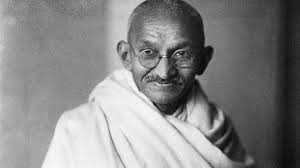
Truth was Gandhi’s other pillar. He called truth his God, and his political life was built on fearless honesty. Yet in present-day India, lies circulate faster than facts. False promises dominate election campaigns, propaganda overshadows genuine debate, and truth is often drowned beneath noise.
Mahatma Gandhi remains one of the most luminous figures of the twentieth century, remembered across the world as the man who confronted empire with the quiet strength of truth and nonviolence. To generations, he is the conscience of India, the frail man in khadi who mobilized millions without weapons, who made morality a force in politics, who turned simplicity into power. Yet, in today’s India, his presence feels strangely spectral. His face adorns banknotes, his statues stand in city squares, his anniversaries are marked with speeches. But behind the symbolism lies a harsher truth: Gandhi’s India is slipping further away from Gandhi’s ideals.
The principle of ahimsa: nonviolence, was Gandhi’s deepest conviction. He believed that peace was not weakness but the highest form of courage. He proved it by bringing down the world’s mightiest empire without resorting to arms. But contemporary India is scarred by violence: communal clashes erupt in neighbourhoods’, lynchings are broadcast on social media, and politics increasingly thrives on the language of hatred. Where Gandhi dreamed of harmony, intolerance spreads its roots. His greatest teaching is not just forgotten, it is openly defied.
Truth was Gandhi’s other pillar. He called truth his God, and his political life was built on fearless honesty. Yet in present-day India, lies circulate faster than facts. False promises dominate election campaigns, propaganda overshadows genuine debate, and truth is often drowned beneath noise. Gandhi taught that truth could liberate a nation; today’s India too often treats it as expendable, bending it to serve ambition. If Gandhi’s life was a hymn to sincerity, ours has become a marketplace of deception. Economically, too, the betrayal is visible. Gandhi envisioned an India where villages were self-reliant, where the dignity of labor was honored, and where progress meant lifting the poorest first. But the India of glass towers and booming stock markets is also the India where farmers commit suicide under crushing debt, where rural communities live in neglect, and where economic disparity grows wider each year. The wealth of a few outshines the suffering of millions. Gandhi’s dream of justice through simplicity has been smothered by greed and glitter.
Socially, the chains he tried to break remain unbroken. Gandhi fought untouchability, embraced those despised by society, and called them Harijan, children of God. He believed that no nation could claim greatness while oppressing its own. Yet caste discrimination persists in subtle and brutal forms alike. Women, whose empowerment he championed, still face violence and inequity daily. The India that promised dignity for all continues to stumble under the weight of its prejudices. Culturally, Gandhi celebrated India’s diversity. He saw its mosaic of languages, religions, and traditions as its greatest wealth. He believed a true India was an inclusive India. But in the present, identity has become a battlefield. Religious minorities live under suspicion, cultural differences are politicized, and pluralism itself is under strain. Gandhi’s khadi was a symbol of unity and simplicity; today, consumerism and sectarianism too often take its place.
The deepest tragedy is the hypocrisy. Leaders quote Gandhi while trampling on his values. His name is invoked in rallies even as policies contradict his principles. His likeness appears on money, while corruption flourishes unchecked. Statues are garlanded with flowers, while his ideals are left to wither. India has turned Gandhi into a symbol but abandoned Gandhi the moral compass.
And yet, Gandhi’s voice has not been silenced. Beyond borders, his ideas continue to inspire movements for peace and justice. Around the world, he is remembered not as a saintly relic but as a guide to resisting tyranny with humanity. It is in his own country, paradoxically, where he risks becoming no more than a ritual, a hollow icon, a photograph in textbooks.
The measure of a nation is not in its GDP, its skyscrapers, or its military arsenal. It lies in the moral courage of its people. By that measure, India today stands at a difficult crossroads. It must decide whether Gandhi will remain an image on currency notes or whether his spirit will live again in policies, institutions, and everyday life.
The true tribute to Gandhi is not in statues or slogans. It is in reclaiming his courage to resist hate with compassion, lies with truth, greed with simplicity, and division with unity. Until then, the father of the nation may continue to gaze silently at his children, a silence more damning than words.
Email:-----------------------: asiakashmiri001@gmail.com
Truth was Gandhi’s other pillar. He called truth his God, and his political life was built on fearless honesty. Yet in present-day India, lies circulate faster than facts. False promises dominate election campaigns, propaganda overshadows genuine debate, and truth is often drowned beneath noise.
Mahatma Gandhi remains one of the most luminous figures of the twentieth century, remembered across the world as the man who confronted empire with the quiet strength of truth and nonviolence. To generations, he is the conscience of India, the frail man in khadi who mobilized millions without weapons, who made morality a force in politics, who turned simplicity into power. Yet, in today’s India, his presence feels strangely spectral. His face adorns banknotes, his statues stand in city squares, his anniversaries are marked with speeches. But behind the symbolism lies a harsher truth: Gandhi’s India is slipping further away from Gandhi’s ideals.
The principle of ahimsa: nonviolence, was Gandhi’s deepest conviction. He believed that peace was not weakness but the highest form of courage. He proved it by bringing down the world’s mightiest empire without resorting to arms. But contemporary India is scarred by violence: communal clashes erupt in neighbourhoods’, lynchings are broadcast on social media, and politics increasingly thrives on the language of hatred. Where Gandhi dreamed of harmony, intolerance spreads its roots. His greatest teaching is not just forgotten, it is openly defied.
Truth was Gandhi’s other pillar. He called truth his God, and his political life was built on fearless honesty. Yet in present-day India, lies circulate faster than facts. False promises dominate election campaigns, propaganda overshadows genuine debate, and truth is often drowned beneath noise. Gandhi taught that truth could liberate a nation; today’s India too often treats it as expendable, bending it to serve ambition. If Gandhi’s life was a hymn to sincerity, ours has become a marketplace of deception. Economically, too, the betrayal is visible. Gandhi envisioned an India where villages were self-reliant, where the dignity of labor was honored, and where progress meant lifting the poorest first. But the India of glass towers and booming stock markets is also the India where farmers commit suicide under crushing debt, where rural communities live in neglect, and where economic disparity grows wider each year. The wealth of a few outshines the suffering of millions. Gandhi’s dream of justice through simplicity has been smothered by greed and glitter.
Socially, the chains he tried to break remain unbroken. Gandhi fought untouchability, embraced those despised by society, and called them Harijan, children of God. He believed that no nation could claim greatness while oppressing its own. Yet caste discrimination persists in subtle and brutal forms alike. Women, whose empowerment he championed, still face violence and inequity daily. The India that promised dignity for all continues to stumble under the weight of its prejudices. Culturally, Gandhi celebrated India’s diversity. He saw its mosaic of languages, religions, and traditions as its greatest wealth. He believed a true India was an inclusive India. But in the present, identity has become a battlefield. Religious minorities live under suspicion, cultural differences are politicized, and pluralism itself is under strain. Gandhi’s khadi was a symbol of unity and simplicity; today, consumerism and sectarianism too often take its place.
The deepest tragedy is the hypocrisy. Leaders quote Gandhi while trampling on his values. His name is invoked in rallies even as policies contradict his principles. His likeness appears on money, while corruption flourishes unchecked. Statues are garlanded with flowers, while his ideals are left to wither. India has turned Gandhi into a symbol but abandoned Gandhi the moral compass.
And yet, Gandhi’s voice has not been silenced. Beyond borders, his ideas continue to inspire movements for peace and justice. Around the world, he is remembered not as a saintly relic but as a guide to resisting tyranny with humanity. It is in his own country, paradoxically, where he risks becoming no more than a ritual, a hollow icon, a photograph in textbooks.
The measure of a nation is not in its GDP, its skyscrapers, or its military arsenal. It lies in the moral courage of its people. By that measure, India today stands at a difficult crossroads. It must decide whether Gandhi will remain an image on currency notes or whether his spirit will live again in policies, institutions, and everyday life.
The true tribute to Gandhi is not in statues or slogans. It is in reclaiming his courage to resist hate with compassion, lies with truth, greed with simplicity, and division with unity. Until then, the father of the nation may continue to gaze silently at his children, a silence more damning than words.
Email:-----------------------: asiakashmiri001@gmail.com

© Copyright 2023 brighterkashmir.com All Rights Reserved. Quantum Technologies