
BREAKING NEWS
The historical origins of Harisa lie outside Kashmir and are generally traced to West and Central Asian food traditions. Similar preparations made of meat and grains existed in Persia, the Arab world, and Central Asia, where slow-cooked, energy-rich dishes were common
Harisa occupies a significant position in Kashmiri food culture, particularly during the winter months, and represents a convergence of history, climate, religion, and everyday life in the Valley. Unlike many regional dishes that remain confined to celebratory occasions, Harisa functions as a seasonal staple, consumed regularly during chilla-i-kalan, the coldest phase of the Kashmiri winter. Its continued presence across centuries reflects not only culinary preference but also the adaptive strategies of a society living in a harsh climatic environment.
The historical origins of Harisa lie outside Kashmir and are generally traced to West and Central Asian food traditions. Similar preparations made of meat and grains existed in Persia, the Arab world, and Central Asia, where slow-cooked, energy-rich dishes were common. In the Kashmiri context, most historians associate the introduction of Harisa with the arrival of Mir Syed Ali Hamdani in the fourteenth century. Hamdani’s influence on Kashmiri society extended beyond religion into crafts, dress, social organization, and food practices. Harisa is widely believed to have entered the Valley as part of this broader cultural transmission. Over time, the dish was localized, adapting to available ingredients and Kashmiri culinary sensibilities. Another tradition connects Harisa to the Sufi saint Mir Syed Shah Qasim Haqqani, who is remembered for preparing and distributing the dish among the local population, reinforcing its association with charity and social welfare.
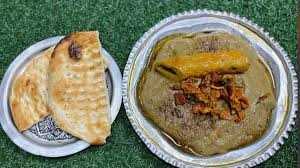
From a culinary perspective, Kashmiri Harisa is distinguished by its method of preparation rather than by an elaborate range of ingredients. The core components are mutton and rice, supplemented with a limited selection of spices such as fennel, cinnamon, cardamom, ginger, and garlic. The emphasis is on slow cooking, which allows the grains and meat to merge into a homogeneous, paste-like consistency. Traditionally, Harisa is cooked in large earthen vessels over wood fire for many hours, often overnight. This prolonged cooking process not only enhances flavor and texture but also reflects an older culinary philosophy in which time and labor were central to food production. The removal of bones and the final vigorous stirring require experience and physical effort, underscoring the specialized skill involved in its preparation.
Harisa is consumed primarily in the early morning and is closely linked to the daily rhythms of winter life in Kashmir. Its consumption after the dawn prayer is a long-established practice, and Harisa shops typically operate only for a few hours each day. This limited availability contributes to its cultural value and reinforces its identity as a winter-specific food. The addition of hot mustard oil at the time of serving is a distinctive feature that enhances aroma and caloric content, aligning with the nutritional demands of cold weather. Although rich in fats and proteins, Harisa has traditionally been consumed in moderation, with local knowledge recognizing both its benefits and its heaviness.
Beyond nutrition, Harisa plays an important social and cultural role. Historically, it functioned as a medium of social exchange, particularly in familial contexts. The practice of sending Harisa from parental homes to married daughters during winter reflects its symbolic association with care, continuity, and kinship. At the community level, Harisa shops became shared social spaces where individuals from diverse backgrounds gathered, contributing to everyday social interaction. The charitable dimension of Harisa, rooted in Sufi traditions of communal feeding, further strengthened its moral and ethical significance within Kashmiri society.
In contemporary times, Harisa continues to be an important marker of Kashmiri identity, though it faces several challenges. The number of traditional Harisa makers has declined due to the physically demanding nature of the work and the reluctance of younger generations to continue the profession. Modern cooking techniques and commercial pressures have led to variations in preparation, raising concerns about the dilution of traditional methods. At the same time, Harisa has gained wider visibility through tourism, restaurants, and online food delivery services, extending its reach beyond the Valley and among the Kashmiri diaspora. This expansion has contributed to its recognition as a symbol of Kashmiri culinary heritage.
Harisa can be understood as a cultural artifact that embodies historical exchange, environmental adaptation, and social practice. Its endurance illustrates how food traditions persist when they fulfill practical needs while also carrying symbolic and cultural meaning. Harisa remains a living tradition rather than a static relic, continuing to evolve while retaining its core identity. As such, it offers valuable insight into the ways in which Kashmiri society has historically negotiated climate, economy, and culture through food.
Email;----------------aamiriqbal9103@gmail.com
The historical origins of Harisa lie outside Kashmir and are generally traced to West and Central Asian food traditions. Similar preparations made of meat and grains existed in Persia, the Arab world, and Central Asia, where slow-cooked, energy-rich dishes were common
Harisa occupies a significant position in Kashmiri food culture, particularly during the winter months, and represents a convergence of history, climate, religion, and everyday life in the Valley. Unlike many regional dishes that remain confined to celebratory occasions, Harisa functions as a seasonal staple, consumed regularly during chilla-i-kalan, the coldest phase of the Kashmiri winter. Its continued presence across centuries reflects not only culinary preference but also the adaptive strategies of a society living in a harsh climatic environment.
The historical origins of Harisa lie outside Kashmir and are generally traced to West and Central Asian food traditions. Similar preparations made of meat and grains existed in Persia, the Arab world, and Central Asia, where slow-cooked, energy-rich dishes were common. In the Kashmiri context, most historians associate the introduction of Harisa with the arrival of Mir Syed Ali Hamdani in the fourteenth century. Hamdani’s influence on Kashmiri society extended beyond religion into crafts, dress, social organization, and food practices. Harisa is widely believed to have entered the Valley as part of this broader cultural transmission. Over time, the dish was localized, adapting to available ingredients and Kashmiri culinary sensibilities. Another tradition connects Harisa to the Sufi saint Mir Syed Shah Qasim Haqqani, who is remembered for preparing and distributing the dish among the local population, reinforcing its association with charity and social welfare.
From a culinary perspective, Kashmiri Harisa is distinguished by its method of preparation rather than by an elaborate range of ingredients. The core components are mutton and rice, supplemented with a limited selection of spices such as fennel, cinnamon, cardamom, ginger, and garlic. The emphasis is on slow cooking, which allows the grains and meat to merge into a homogeneous, paste-like consistency. Traditionally, Harisa is cooked in large earthen vessels over wood fire for many hours, often overnight. This prolonged cooking process not only enhances flavor and texture but also reflects an older culinary philosophy in which time and labor were central to food production. The removal of bones and the final vigorous stirring require experience and physical effort, underscoring the specialized skill involved in its preparation.
Harisa is consumed primarily in the early morning and is closely linked to the daily rhythms of winter life in Kashmir. Its consumption after the dawn prayer is a long-established practice, and Harisa shops typically operate only for a few hours each day. This limited availability contributes to its cultural value and reinforces its identity as a winter-specific food. The addition of hot mustard oil at the time of serving is a distinctive feature that enhances aroma and caloric content, aligning with the nutritional demands of cold weather. Although rich in fats and proteins, Harisa has traditionally been consumed in moderation, with local knowledge recognizing both its benefits and its heaviness.
Beyond nutrition, Harisa plays an important social and cultural role. Historically, it functioned as a medium of social exchange, particularly in familial contexts. The practice of sending Harisa from parental homes to married daughters during winter reflects its symbolic association with care, continuity, and kinship. At the community level, Harisa shops became shared social spaces where individuals from diverse backgrounds gathered, contributing to everyday social interaction. The charitable dimension of Harisa, rooted in Sufi traditions of communal feeding, further strengthened its moral and ethical significance within Kashmiri society.
In contemporary times, Harisa continues to be an important marker of Kashmiri identity, though it faces several challenges. The number of traditional Harisa makers has declined due to the physically demanding nature of the work and the reluctance of younger generations to continue the profession. Modern cooking techniques and commercial pressures have led to variations in preparation, raising concerns about the dilution of traditional methods. At the same time, Harisa has gained wider visibility through tourism, restaurants, and online food delivery services, extending its reach beyond the Valley and among the Kashmiri diaspora. This expansion has contributed to its recognition as a symbol of Kashmiri culinary heritage.
Harisa can be understood as a cultural artifact that embodies historical exchange, environmental adaptation, and social practice. Its endurance illustrates how food traditions persist when they fulfill practical needs while also carrying symbolic and cultural meaning. Harisa remains a living tradition rather than a static relic, continuing to evolve while retaining its core identity. As such, it offers valuable insight into the ways in which Kashmiri society has historically negotiated climate, economy, and culture through food.
Email;----------------aamiriqbal9103@gmail.com

© Copyright 2023 brighterkashmir.com All Rights Reserved. Quantum Technologies