
BREAKING NEWS
Srinagar, Aug 26: The historic Hazratbal Shrine, perched like a pearl on the western shores of Dal Lake, became the epicenter of spiritual awakening on Monday night as tens of thousands of devout Muslims gathered to offer night-long prayers on the eve of Eid-e-Milad-un-Nabi (SAW)-the sacred occasion marking the birth anniversary of Prophet Muhammad (Peace Be Upon Him).
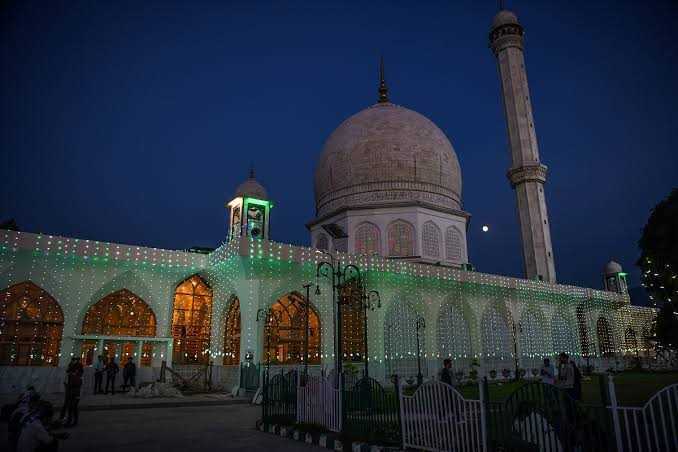
As the evening gave way to a crisp winter night, the shrine complex wore a resplendent look, illuminated by thousands of twinkling lights and traditional earthen lamps. The air was thick not with cold, but with an overpowering warmth of faith. From every corner of the valley-and beyond-believers streamed in, their footsteps measured, their hearts full, their eyes fixed on the holy relic preserved within the shrine's silver-cased sanctum.
The night began with the Maghrib prayers, followed by hours of uninterrupted Zikr (remembrance of God), Durood Sharif (salutations upon the Prophet), and soul-stirring Naats that narrated the sublime life, character, and teachings of the final messenger of Islam. Scholars took turns addressing the gathering, reminding them that the Prophet's life was not merely a historical event but a living guide for humanity-a beacon of compassion in times of cruelty, patience in times of trial, and justice in times of oppression.
For the devotees, this was no ordinary night. It was a night of introspection, of seeking forgiveness, and of renewing their bond with the prophetic legacy. "When I stand here, under this open sky, surrounded by so many souls praying together, I feel closer to Allah and His Messenger than ever before," said Bali Sakeena, a young School Teacher from Budgam, her voice trembling with emotion. "This is not just a ritual. It is a homecoming."
The shrine management, in coordination with local authorities, made extensive arrangements for the comfort of the pilgrims. Summer blankets were distributed, medical camps were set up, and volunteers moved through the crowds offering cups of steaming Kehwa and dates to keep the faithful nourished through the long night. Separate, well-organized spaces were allocated for women, ensuring their peaceful participation in the prayers.
What made this year's observance particularly poignant was the palpable sense of unity. Rich and poor, young and old, scholar and layman-all sat shoulder to shoulder on the same marble floor, their differences dissolved in the ocean of shared devotion. In a world often fractured by sectarian and political divides, the scene at Hazratbal was a living sermon on the Prophet's message of universal brotherhood.
As the first light of dawn crept over the Zabarwan hills, casting a golden glow upon the shrine's pristine white dome, the faithful rose for the Fajr congregation. The air resonated with the collective Ameen of thousands, a heartfelt prayer for peace, mercy, and guidance for all of mankind. Many lingered after the prayers, their eyes still wet, their hands still raised, unwilling to let go of the sacred moment.
The holy relic—the Moi-e-Muqaddas, a strand of the Prophet's hair—was displayed to the public after the morning prayers, drawing long queues of devotees eager to catch a glimpse and offer their respects. For them, it was not merely an artifact; it was a tangible link to their beloved Prophet, a reminder that his light continues to shine across fourteen centuries.
Eid-e-Milad-un-Nabi at Hazratbal is more than a festival. It is a living, breathing testament to the enduring power of faith. As the crowds slowly dispersed and the shrine returned to its tranquil stillness, one thing was clear: the spirit of the night-of love, mercy, and togetherness-had taken root in every heart that had kept vigil. And that, perhaps, is the truest celebration of the Prophet's life.
In an age of noise and haste, Hazratbal offered a moment of silence, reflection, and grace—a gift not just to the valley, but to the soul of humanity.
Srinagar, Aug 26: The historic Hazratbal Shrine, perched like a pearl on the western shores of Dal Lake, became the epicenter of spiritual awakening on Monday night as tens of thousands of devout Muslims gathered to offer night-long prayers on the eve of Eid-e-Milad-un-Nabi (SAW)-the sacred occasion marking the birth anniversary of Prophet Muhammad (Peace Be Upon Him).
As the evening gave way to a crisp winter night, the shrine complex wore a resplendent look, illuminated by thousands of twinkling lights and traditional earthen lamps. The air was thick not with cold, but with an overpowering warmth of faith. From every corner of the valley-and beyond-believers streamed in, their footsteps measured, their hearts full, their eyes fixed on the holy relic preserved within the shrine's silver-cased sanctum.
The night began with the Maghrib prayers, followed by hours of uninterrupted Zikr (remembrance of God), Durood Sharif (salutations upon the Prophet), and soul-stirring Naats that narrated the sublime life, character, and teachings of the final messenger of Islam. Scholars took turns addressing the gathering, reminding them that the Prophet's life was not merely a historical event but a living guide for humanity-a beacon of compassion in times of cruelty, patience in times of trial, and justice in times of oppression.
For the devotees, this was no ordinary night. It was a night of introspection, of seeking forgiveness, and of renewing their bond with the prophetic legacy. "When I stand here, under this open sky, surrounded by so many souls praying together, I feel closer to Allah and His Messenger than ever before," said Bali Sakeena, a young School Teacher from Budgam, her voice trembling with emotion. "This is not just a ritual. It is a homecoming."
The shrine management, in coordination with local authorities, made extensive arrangements for the comfort of the pilgrims. Summer blankets were distributed, medical camps were set up, and volunteers moved through the crowds offering cups of steaming Kehwa and dates to keep the faithful nourished through the long night. Separate, well-organized spaces were allocated for women, ensuring their peaceful participation in the prayers.
What made this year's observance particularly poignant was the palpable sense of unity. Rich and poor, young and old, scholar and layman-all sat shoulder to shoulder on the same marble floor, their differences dissolved in the ocean of shared devotion. In a world often fractured by sectarian and political divides, the scene at Hazratbal was a living sermon on the Prophet's message of universal brotherhood.
As the first light of dawn crept over the Zabarwan hills, casting a golden glow upon the shrine's pristine white dome, the faithful rose for the Fajr congregation. The air resonated with the collective Ameen of thousands, a heartfelt prayer for peace, mercy, and guidance for all of mankind. Many lingered after the prayers, their eyes still wet, their hands still raised, unwilling to let go of the sacred moment.
The holy relic—the Moi-e-Muqaddas, a strand of the Prophet's hair—was displayed to the public after the morning prayers, drawing long queues of devotees eager to catch a glimpse and offer their respects. For them, it was not merely an artifact; it was a tangible link to their beloved Prophet, a reminder that his light continues to shine across fourteen centuries.
Eid-e-Milad-un-Nabi at Hazratbal is more than a festival. It is a living, breathing testament to the enduring power of faith. As the crowds slowly dispersed and the shrine returned to its tranquil stillness, one thing was clear: the spirit of the night-of love, mercy, and togetherness-had taken root in every heart that had kept vigil. And that, perhaps, is the truest celebration of the Prophet's life.
In an age of noise and haste, Hazratbal offered a moment of silence, reflection, and grace—a gift not just to the valley, but to the soul of humanity.

© Copyright 2023 brighterkashmir.com All Rights Reserved. Quantum Technologies