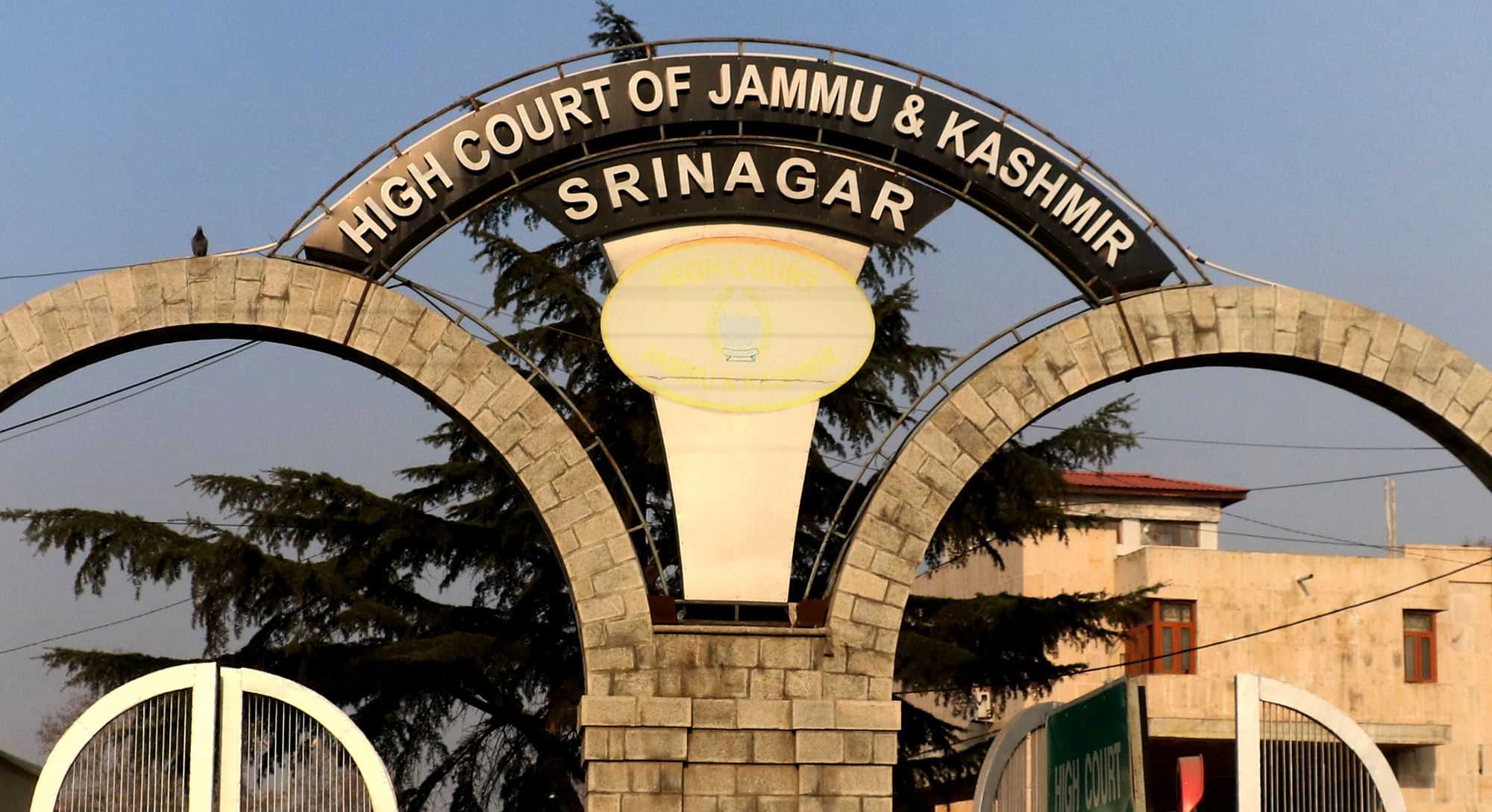
Srinagar, Mar 3: The High Court of Jammu Kashmir and Ladakh has granted protection to an adult couple who married against their families’ wishes, while directing that all similar protection pleas must henceforth be accompanied by an affidavit disclosing whether the marriage in question is the first marriage of the petitioners or otherwise.
The order was passed by Justice Moksha Khajuria Kazmi while hearing WP(C)/344/2026.
The petitioners, through counsel Syed Tajamul, submitted that they had solemnised their marriage on February 7, 2026, of their own free will. They informed the court that their respective families were opposed to the union and were attempting to disturb their marital life. Fearing arrest at the instance of the private respondents, they sought protection for their lives and liberty.
After hearing counsel and perusing the material on record, the court noted that the documents placed before it disclosed that both petitioners had attained the age of majority and had entered into wedlock voluntarily.
Relying on the law laid down by the Supreme Court in Lata Singh v State of UP and Shakti Vahini v Union of India, the court allowed the petition. It directed the official respondents not to interfere with the petitioners’ marital life.
However, the court clarified that the order shall not be construed as an acknowledgement of the validity of the marriage and that any dispute regarding the legality of the marriage would be adjudicated independently of the present directions.
In addition, Justice Kazmi directed the Registrar Judicial to ensure that petitions of this nature are accompanied by an affidavit from the petitioners stating whether the marriage sought to be protected is their first marriage or otherwise. The petition was accordingly disposed of.

Srinagar, Mar 3: The High Court of Jammu Kashmir and Ladakh has granted protection to an adult couple who married against their families’ wishes, while directing that all similar protection pleas must henceforth be accompanied by an affidavit disclosing whether the marriage in question is the first marriage of the petitioners or otherwise.
The order was passed by Justice Moksha Khajuria Kazmi while hearing WP(C)/344/2026.
The petitioners, through counsel Syed Tajamul, submitted that they had solemnised their marriage on February 7, 2026, of their own free will. They informed the court that their respective families were opposed to the union and were attempting to disturb their marital life. Fearing arrest at the instance of the private respondents, they sought protection for their lives and liberty.
After hearing counsel and perusing the material on record, the court noted that the documents placed before it disclosed that both petitioners had attained the age of majority and had entered into wedlock voluntarily.
Relying on the law laid down by the Supreme Court in Lata Singh v State of UP and Shakti Vahini v Union of India, the court allowed the petition. It directed the official respondents not to interfere with the petitioners’ marital life.
However, the court clarified that the order shall not be construed as an acknowledgement of the validity of the marriage and that any dispute regarding the legality of the marriage would be adjudicated independently of the present directions.
In addition, Justice Kazmi directed the Registrar Judicial to ensure that petitions of this nature are accompanied by an affidavit from the petitioners stating whether the marriage sought to be protected is their first marriage or otherwise. The petition was accordingly disposed of.
© Copyright 2023 brighterkashmir.com All Rights Reserved. Quantum Technologies