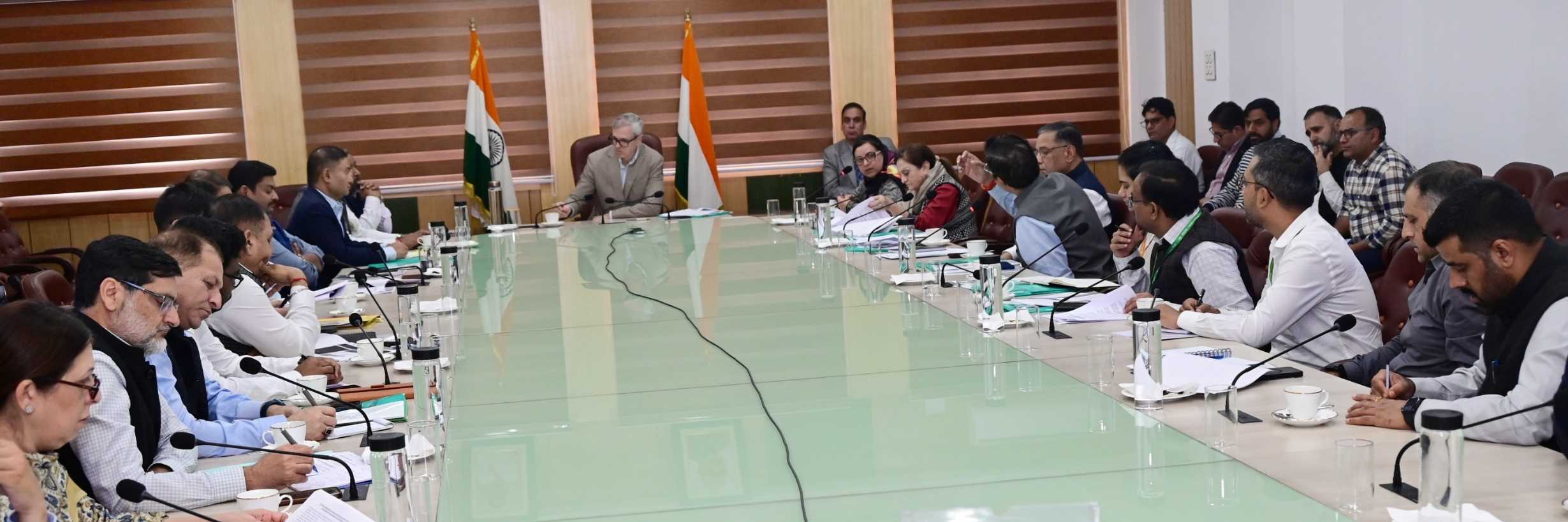
Srinagar, Nov 11: The Innovation and Action Research Cell of the Government College of Education (IASE), Cluster University Srinagar, on Wednesday organised the National Education Conclave-2026 to deliberate on the implementation of the National Education Policy (NEP) 2020 and its priorities for Jammu and Kashmir.
The conclave brought together eminent policymakers, educationists, administrators and scholars from across the country for discussions on higher education reforms, competency-based learning, holistic assessment and learner development.
Prof. Dinesh Singh, Vice Chairman, J&K Higher Education Council, who attended as Chief Guest, stressed the need to connect education with students' interests, real-world challenges and practical problem-solving. He emphasised collaborative learning and nurturing students' intrinsic abilities to achieve excellence.
Vice-Chancellor Cluster University Srinagar, Prof. Mohammad Mobin, highlighted the transformative impact of technology and artificial intelligence on education. He called for quality teaching, relevant academic programmes, impactful research and institutional collaboration, stressing that teachers must evolve into mentors, facilitators and researchers.
Principal IASE and Nodal Principal, Kashmir Division Colleges, Prof. Seema Naz highlighted the institution's recognition by the National Council for Teacher Education (NCTE) to offer B.Ed, M.Ed, Integrated B.Ed-M.Ed and Integrated Teacher Education Programme (ITEP) courses in both B.A.-B.Ed and B.Sc.-B.Ed streams.
Fazl Illahi, Coordinator, Innovation and Action Research Cell, presented the rationale of the conclave, emphasising the need for teachers and teacher-educators to adapt to emerging challenges posed by rapid technological advancements and artificial intelligence.
A major highlight was the release of the college newsletter Cascade and research journal Inquiry by the dignitaries.
Two panel discussions formed the core of the conclave. The first, chaired by Prof. Dinesh Singh, examined the implementation of NEP-2020 reforms in higher education, focusing on research, digitisation, faculty development, internships, employability and industry-academia collaboration.
The second, chaired by Prof. Sharad Sinha, Head, Department of Teacher Education, NCERT, New Delhi, focused on competency-based education, Holistic Progress Cards and learner development. Discussions stressed moving beyond rote learning towards continuous assessment, experiential learning, inclusive education and critical thinking.
Prof. Seema Naz, in her concluding remarks, stressed that educational reforms must translate into meaningful institutional and classroom-level practices to ensure holistic student development.
Certificates were also distributed among panellists, speakers and members of the organising committee during the valedictory session.

Srinagar, Nov 11: The Innovation and Action Research Cell of the Government College of Education (IASE), Cluster University Srinagar, on Wednesday organised the National Education Conclave-2026 to deliberate on the implementation of the National Education Policy (NEP) 2020 and its priorities for Jammu and Kashmir.
The conclave brought together eminent policymakers, educationists, administrators and scholars from across the country for discussions on higher education reforms, competency-based learning, holistic assessment and learner development.
Prof. Dinesh Singh, Vice Chairman, J&K Higher Education Council, who attended as Chief Guest, stressed the need to connect education with students' interests, real-world challenges and practical problem-solving. He emphasised collaborative learning and nurturing students' intrinsic abilities to achieve excellence.
Vice-Chancellor Cluster University Srinagar, Prof. Mohammad Mobin, highlighted the transformative impact of technology and artificial intelligence on education. He called for quality teaching, relevant academic programmes, impactful research and institutional collaboration, stressing that teachers must evolve into mentors, facilitators and researchers.
Principal IASE and Nodal Principal, Kashmir Division Colleges, Prof. Seema Naz highlighted the institution's recognition by the National Council for Teacher Education (NCTE) to offer B.Ed, M.Ed, Integrated B.Ed-M.Ed and Integrated Teacher Education Programme (ITEP) courses in both B.A.-B.Ed and B.Sc.-B.Ed streams.
Fazl Illahi, Coordinator, Innovation and Action Research Cell, presented the rationale of the conclave, emphasising the need for teachers and teacher-educators to adapt to emerging challenges posed by rapid technological advancements and artificial intelligence.
A major highlight was the release of the college newsletter Cascade and research journal Inquiry by the dignitaries.
Two panel discussions formed the core of the conclave. The first, chaired by Prof. Dinesh Singh, examined the implementation of NEP-2020 reforms in higher education, focusing on research, digitisation, faculty development, internships, employability and industry-academia collaboration.
The second, chaired by Prof. Sharad Sinha, Head, Department of Teacher Education, NCERT, New Delhi, focused on competency-based education, Holistic Progress Cards and learner development. Discussions stressed moving beyond rote learning towards continuous assessment, experiential learning, inclusive education and critical thinking.
Prof. Seema Naz, in her concluding remarks, stressed that educational reforms must translate into meaningful institutional and classroom-level practices to ensure holistic student development.
Certificates were also distributed among panellists, speakers and members of the organising committee during the valedictory session.
© Copyright 2023 brighterkashmir.com All Rights Reserved. Quantum Technologies