
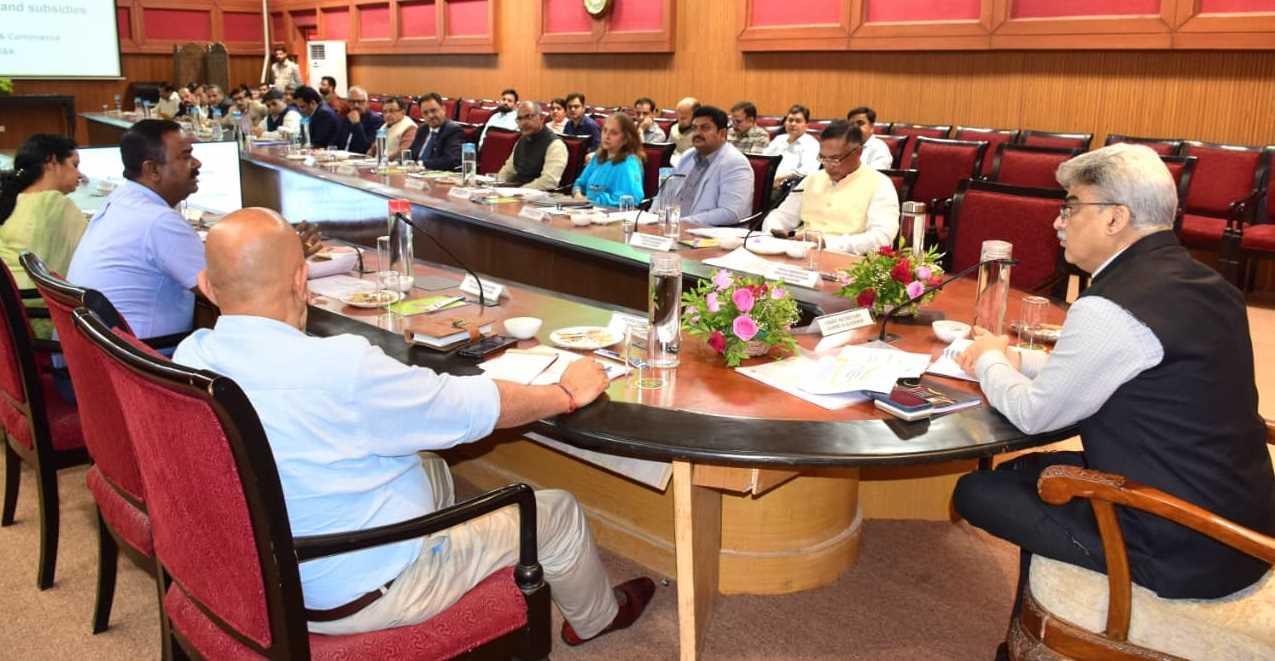
Jammu, Mar 11: Jammu and Kashmir is stepping up industrial reforms to promote Ease of Doing Business (EoDB) and support Micro, Small and Medium Enterprises (MSMEs), with Chief Secretary Atal Dulloo chairing a stakeholders’ conference on Wednesday.
The session, led by Commissioner of Industries & Commerce Vikramjit Singh, brought together administrative secretaries, bank officials, and major industrial associations including ASSOCHAM, FICCI, PHDCCI, JCCI, and ICC Jammu. Discussions focused on the revamped Industrial Policy, deregulation measures, and initiatives for MSME support under Phase-I of EoDB reforms.
Dulloo highlighted that stringent norms have been eased through trust-based mechanisms like self-certification and time-bound auto-approvals, aiming to reduce compliance burdens and attract investment. He urged industrialists to provide feedback to an empowered committee overseeing implementation.
Key features of the Jammu & Kashmir Industrial Policy 2021–2030 include:
Ease of Startup: New MSMEs can begin operations via self-declaration, with a three-year grace period to secure final clearances.
Financial Incentives: Fixed capital investment support up to ₹50 lakh in Zone A and ₹1 crore in Zone B; 100% reimbursement of State GST for five years within ceilings.
Women Entrepreneurs: Units with ≥51% female ownership receive an additional 25% financial assistance.
Market Growth: Reimbursement of ₹50 lakh for J&K-registered units listing on NSE or BSE.
The conference also introduced the MSME Health Clinic, a digital platform monitoring financial health of enterprises using GST and banking data. Stressed units receive expert guidance and rehabilitation plans, including financial support up to ₹2.77 lakh.
Director I&C Arun Manhas outlined further reforms, including simplified Change of Land Use (CLU) approvals, automated building plan scrutiny, self-certification for low-risk projects, higher labour retrenchment thresholds, and decriminalisation of minor technical lapses under the Jan Vishwas Ordinance 2025.
The session concluded with a call for active participation from industrial stakeholders to fully utilise incentives and strengthen the Union Territory’s industrial ecosystem.
Jammu, Mar 11: Jammu and Kashmir is stepping up industrial reforms to promote Ease of Doing Business (EoDB) and support Micro, Small and Medium Enterprises (MSMEs), with Chief Secretary Atal Dulloo chairing a stakeholders’ conference on Wednesday.
The session, led by Commissioner of Industries & Commerce Vikramjit Singh, brought together administrative secretaries, bank officials, and major industrial associations including ASSOCHAM, FICCI, PHDCCI, JCCI, and ICC Jammu. Discussions focused on the revamped Industrial Policy, deregulation measures, and initiatives for MSME support under Phase-I of EoDB reforms.
Dulloo highlighted that stringent norms have been eased through trust-based mechanisms like self-certification and time-bound auto-approvals, aiming to reduce compliance burdens and attract investment. He urged industrialists to provide feedback to an empowered committee overseeing implementation.
Key features of the Jammu & Kashmir Industrial Policy 2021–2030 include:
Ease of Startup: New MSMEs can begin operations via self-declaration, with a three-year grace period to secure final clearances.
Financial Incentives: Fixed capital investment support up to ₹50 lakh in Zone A and ₹1 crore in Zone B; 100% reimbursement of State GST for five years within ceilings.
Women Entrepreneurs: Units with ≥51% female ownership receive an additional 25% financial assistance.
Market Growth: Reimbursement of ₹50 lakh for J&K-registered units listing on NSE or BSE.
The conference also introduced the MSME Health Clinic, a digital platform monitoring financial health of enterprises using GST and banking data. Stressed units receive expert guidance and rehabilitation plans, including financial support up to ₹2.77 lakh.
Director I&C Arun Manhas outlined further reforms, including simplified Change of Land Use (CLU) approvals, automated building plan scrutiny, self-certification for low-risk projects, higher labour retrenchment thresholds, and decriminalisation of minor technical lapses under the Jan Vishwas Ordinance 2025.
The session concluded with a call for active participation from industrial stakeholders to fully utilise incentives and strengthen the Union Territory’s industrial ecosystem.

© Copyright 2023 brighterkashmir.com All Rights Reserved. Quantum Technologies