
BREAKING NEWS
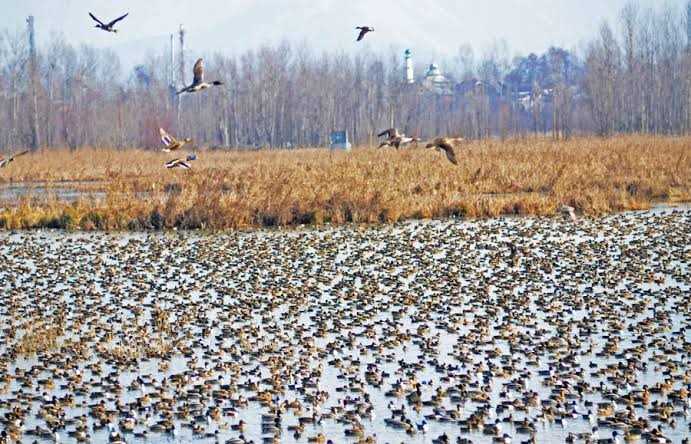
Srinagar, Oct 11: As migratory birds arrive in Kashmir for winter, encroachment, sewage pollution and weak conservation measures threaten the wetlands that provide vital habitats along the Central Asian Flyway.
Hokersar, a major wintering ground for migratory waterbirds, faces particular concern after a Comptroller and Auditor General (CAG) audit documented 2,528.10 kanals of encroachment. The audit, covering April 2017 to March 2022, also highlighted deficiencies in pollution control, wetland demarcation and conservation planning.
The Asian Waterbird Census conducted in February 2026 covered 27 wetlands at 58 counting points, involving more than 350 researchers, students, birdwatchers and volunteers.
Wildlife officials said the census helps track population trends and assess habitat conditions. However, conservationists stress that bird counts alone cannot determine wetland health without data on water quality, vegetation, habitat loss and human disturbance.
The CAG recommended identifying pollution sources, undertaking scientific dredging where necessary and addressing encroachments at Hokersar. Untreated sewage, siltation and unregulated land-use changes can degrade aquatic ecosystems and reduce feeding and resting grounds for migratory birds.
Wular Lake, Shallabugh, Haigam and other wetlands also play a crucial role in supporting biodiversity, sustaining livelihoods and managing floods.
Manzoor Ahmad Qadri, Chief Executive Director of the Wular Conservation and Management Authority, has acknowledged the need for sustained efforts to restore Kashmir’s wetlands, while noting that conservation interventions are beginning to yield positive results.
Meanwhile, the Wildlife Protection Department has cautioned birdwatchers against sharing precise locations of migratory bird congregations on social media, citing the risk of poaching and illegal hunting.
Key priorities include preventing sewage discharge, enforcing wetland boundaries, removing encroachments and publishing regular ecological assessments to measure conservation progress.
As winter migration gathers pace, protecting Kashmir’s wetlands will be crucial to ensuring safe habitats for the thousands of birds returning to the Valley each year.
Srinagar, Oct 11: As migratory birds arrive in Kashmir for winter, encroachment, sewage pollution and weak conservation measures threaten the wetlands that provide vital habitats along the Central Asian Flyway.
Hokersar, a major wintering ground for migratory waterbirds, faces particular concern after a Comptroller and Auditor General (CAG) audit documented 2,528.10 kanals of encroachment. The audit, covering April 2017 to March 2022, also highlighted deficiencies in pollution control, wetland demarcation and conservation planning.
The Asian Waterbird Census conducted in February 2026 covered 27 wetlands at 58 counting points, involving more than 350 researchers, students, birdwatchers and volunteers.
Wildlife officials said the census helps track population trends and assess habitat conditions. However, conservationists stress that bird counts alone cannot determine wetland health without data on water quality, vegetation, habitat loss and human disturbance.
The CAG recommended identifying pollution sources, undertaking scientific dredging where necessary and addressing encroachments at Hokersar. Untreated sewage, siltation and unregulated land-use changes can degrade aquatic ecosystems and reduce feeding and resting grounds for migratory birds.
Wular Lake, Shallabugh, Haigam and other wetlands also play a crucial role in supporting biodiversity, sustaining livelihoods and managing floods.
Manzoor Ahmad Qadri, Chief Executive Director of the Wular Conservation and Management Authority, has acknowledged the need for sustained efforts to restore Kashmir’s wetlands, while noting that conservation interventions are beginning to yield positive results.
Meanwhile, the Wildlife Protection Department has cautioned birdwatchers against sharing precise locations of migratory bird congregations on social media, citing the risk of poaching and illegal hunting.
Key priorities include preventing sewage discharge, enforcing wetland boundaries, removing encroachments and publishing regular ecological assessments to measure conservation progress.
As winter migration gathers pace, protecting Kashmir’s wetlands will be crucial to ensuring safe habitats for the thousands of birds returning to the Valley each year.

© Copyright 2023 brighterkashmir.com All Rights Reserved. Quantum Technologies