
BREAKING NEWS
The shoulder mantle of shawl had been in existence in a variety of forms from the most ancient times serving as a staple and protective garment not only the rich and noble but also and above all for the common people
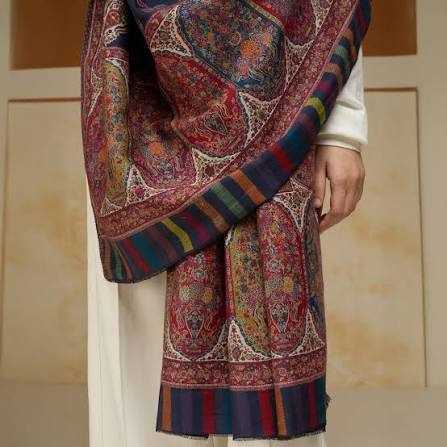
Kashmir is a land of beauty and its name evokes images of dream landscapes and rich cultural traditions. It is a storehouse of exquisite works of art fostered by people renowned for elegant taste and artistic faculty. The Kashmir has won a great reputation as artisan and were celebrated in the old days for their skill in art manufacturing for which Kashmir is celebrated throughout the world, is that of the light, warm, and elegant article of dress, which from its native appellation, is known as "Shawl". The Kashmiri shawl developed during three hundred years of Kashmir's history through four different periods of foreign political rule. During the said periods, Kashmir was ruled successively by the Mughals, the Afghans, the Sikhs, and the Dogras.
The shoulder mantle of shawl had been in existence in a variety of forms from the most ancient times serving as a staple and protective garment not only the rich and noble but also and above all for the common people. In ancient Buddhist literature, the shawl can be found among recorded inventories of woolen textiles and its manufacture appears to have been a cottage industry in Kashmir as early as the elementally century. The shawl industry in Kashmir may be said to be as old as the hills. It is stated to have flourished in the days of the Kuris and Pandus. It was a prosperous industry in the days of the Roman Empire, when the proudest beauties at the court of the Caesars wore Kashmiri shawls. In the Asoka's time, we find the shawl mentioned in Buddhistic work as the Kashmiri shawl. But thereafter for a long period this art was dead. In 14th century, a Persian saint named Syed Ali Hamadani (R.A) visited Kashmir along with seven hundred Muslims in which many experts of handicrafts were came here to re-establish this precious art with new techniques later on the emperor of Kashmir Sultan Bud Shah played a vital role for the promotion of this art during his regime. He brought many experts from Central Asia to introduce modern techniques in the field of handicrafts. In 16th century, the shawl industry received an impetus through the Endeavour’s of Naghz Beg, an artist by nature who introduced the new texture of the shawl. The shawl industry, which had nearly died out due to practical upheavals, owes its revival to a remarkable foreigner Naghz Beg, a native of Khokand, who came to Kashmir in 1540 A.D. as a cook of Mirza Haider Daughlat. Naghz Beg got a piece of 1x1/2 square yards pashmina and presented it to his master who was extremely pleased with it.
In 1586, Kashmir was conquered by Babur's grandson Akbar. In Akbar's time, pair of Kashmiri shawls was an expected part of khil'at ceremonies. Akbar was also known for his love for shahtoosh shawls. After conquering Kashmir, he introduced a requirement that they be woven into lengths long enough for the full body, spawning the jamawar shawl. From the 16th to the early 20th centuries, the Safavid, Zand and Qajar emperors of Iran wore Kashmiri shawl fabrics and gifted Kashmir shawls as khil'at within their political and religious practices. In the Iranian elite, both men and women wore Kashmiri shawl fabric as fitted clothes, rather than as a loose covering of the upper body. In the 17th and 18th centuries, political upheaval in Kashmir disrupted the shawl trade. Kashmir came under Afghan and subsequently Sikh rule. In 1819, Ranjit Singh of Punjab conquered Kashmir. In the 1840s, Ranjit Singh's court was lavishly decorated with Kashmiri shawls. He encouraged Kashmiri weavers to settle in Punjabi cities, and used Kashmiri shawl cloth to pay allowances to his followers, to grant robes of honour, and to send gifts to other rulers, including the British.
The Kashmiri shawl arrived in Europe towards the second half of the 18th century AD, by English and French individuals active in the Indian subcontinent. These officials would gift Kashmiri shawls to their wives and other high-status women. These shawls acquired near-mythical status following their patronage by Queen Victoria of the United Kingdom and Empress Josephine of France, the latter of whom went on to own a collection of between three and four hundred Kashmiri shawls.
However, the post-independence period also marked the beginning of a revival. Initiatives by both government bodies and non-governmental organizations such as the introduction of Geographical Indication (GI) tags have helped restore consumer confidence and safeguard the authenticity of Kashmiri shawls Moreover, socio-economic changes, including increased disposable incomes and growing global appreciation for authentic handicrafts, have encouraged artisans to innovate and adapt traditional designs to contemporary tastes.
Email:-------------------maajaazfaisal7860@gmail.com
The shoulder mantle of shawl had been in existence in a variety of forms from the most ancient times serving as a staple and protective garment not only the rich and noble but also and above all for the common people
Kashmir is a land of beauty and its name evokes images of dream landscapes and rich cultural traditions. It is a storehouse of exquisite works of art fostered by people renowned for elegant taste and artistic faculty. The Kashmir has won a great reputation as artisan and were celebrated in the old days for their skill in art manufacturing for which Kashmir is celebrated throughout the world, is that of the light, warm, and elegant article of dress, which from its native appellation, is known as "Shawl". The Kashmiri shawl developed during three hundred years of Kashmir's history through four different periods of foreign political rule. During the said periods, Kashmir was ruled successively by the Mughals, the Afghans, the Sikhs, and the Dogras.
The shoulder mantle of shawl had been in existence in a variety of forms from the most ancient times serving as a staple and protective garment not only the rich and noble but also and above all for the common people. In ancient Buddhist literature, the shawl can be found among recorded inventories of woolen textiles and its manufacture appears to have been a cottage industry in Kashmir as early as the elementally century. The shawl industry in Kashmir may be said to be as old as the hills. It is stated to have flourished in the days of the Kuris and Pandus. It was a prosperous industry in the days of the Roman Empire, when the proudest beauties at the court of the Caesars wore Kashmiri shawls. In the Asoka's time, we find the shawl mentioned in Buddhistic work as the Kashmiri shawl. But thereafter for a long period this art was dead. In 14th century, a Persian saint named Syed Ali Hamadani (R.A) visited Kashmir along with seven hundred Muslims in which many experts of handicrafts were came here to re-establish this precious art with new techniques later on the emperor of Kashmir Sultan Bud Shah played a vital role for the promotion of this art during his regime. He brought many experts from Central Asia to introduce modern techniques in the field of handicrafts. In 16th century, the shawl industry received an impetus through the Endeavour’s of Naghz Beg, an artist by nature who introduced the new texture of the shawl. The shawl industry, which had nearly died out due to practical upheavals, owes its revival to a remarkable foreigner Naghz Beg, a native of Khokand, who came to Kashmir in 1540 A.D. as a cook of Mirza Haider Daughlat. Naghz Beg got a piece of 1x1/2 square yards pashmina and presented it to his master who was extremely pleased with it.
In 1586, Kashmir was conquered by Babur's grandson Akbar. In Akbar's time, pair of Kashmiri shawls was an expected part of khil'at ceremonies. Akbar was also known for his love for shahtoosh shawls. After conquering Kashmir, he introduced a requirement that they be woven into lengths long enough for the full body, spawning the jamawar shawl. From the 16th to the early 20th centuries, the Safavid, Zand and Qajar emperors of Iran wore Kashmiri shawl fabrics and gifted Kashmir shawls as khil'at within their political and religious practices. In the Iranian elite, both men and women wore Kashmiri shawl fabric as fitted clothes, rather than as a loose covering of the upper body. In the 17th and 18th centuries, political upheaval in Kashmir disrupted the shawl trade. Kashmir came under Afghan and subsequently Sikh rule. In 1819, Ranjit Singh of Punjab conquered Kashmir. In the 1840s, Ranjit Singh's court was lavishly decorated with Kashmiri shawls. He encouraged Kashmiri weavers to settle in Punjabi cities, and used Kashmiri shawl cloth to pay allowances to his followers, to grant robes of honour, and to send gifts to other rulers, including the British.
The Kashmiri shawl arrived in Europe towards the second half of the 18th century AD, by English and French individuals active in the Indian subcontinent. These officials would gift Kashmiri shawls to their wives and other high-status women. These shawls acquired near-mythical status following their patronage by Queen Victoria of the United Kingdom and Empress Josephine of France, the latter of whom went on to own a collection of between three and four hundred Kashmiri shawls.
However, the post-independence period also marked the beginning of a revival. Initiatives by both government bodies and non-governmental organizations such as the introduction of Geographical Indication (GI) tags have helped restore consumer confidence and safeguard the authenticity of Kashmiri shawls Moreover, socio-economic changes, including increased disposable incomes and growing global appreciation for authentic handicrafts, have encouraged artisans to innovate and adapt traditional designs to contemporary tastes.
Email:-------------------maajaazfaisal7860@gmail.com

© Copyright 2023 brighterkashmir.com All Rights Reserved. Quantum Technologies