
BREAKING NEWS
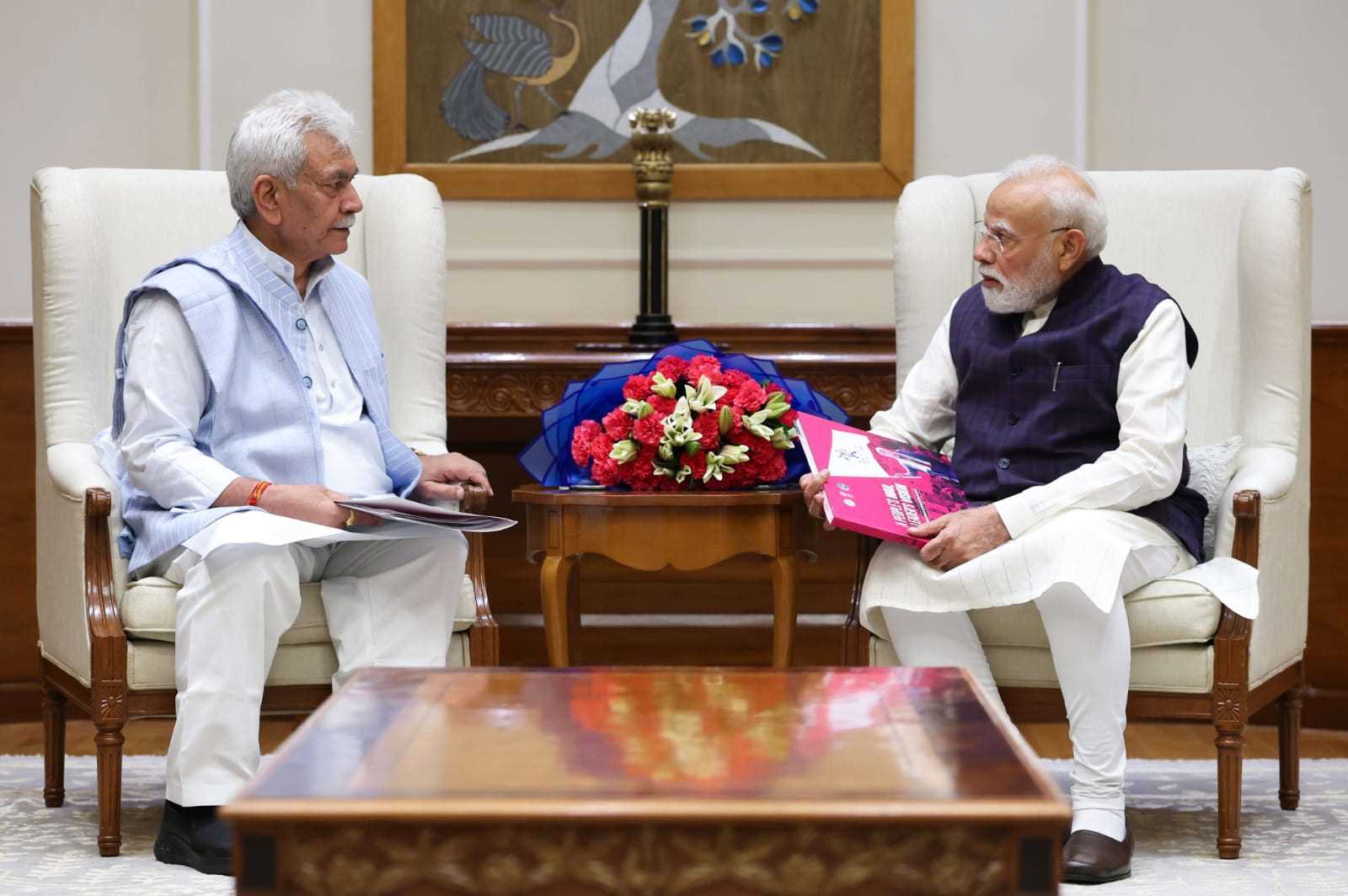
Srinagar, Aug 22: Lieutenant Governor of Jammu and Kashmir Manoj Sinha on Saturday called on Prime Minister Narendra Modi in New Delhi and presented him the coffee table book documenting the Nasha Mukt Jammu Kashmir Abhiyan – 100 Days Campaign.
Designed, curated and published by the Department of Information and Public Relations (DIPR), J&K, the book chronicles the campaign’s journey and the collective efforts undertaken across the Union Territory to strengthen the fight against drug abuse and promote a drug-free society.
The campaign, spearheaded by the Lieutenant Governor, witnessed extensive public mobilisation across Jammu and Kashmir. Sinha led rallies in all 20 districts, with thousands of people participating in awareness programmes, rallies and other activities aimed at sensitising communities about the dangers of substance abuse.
The initiative sought to move the anti-drug campaign beyond enforcement and place greater emphasis on public awareness, community participation, prevention and rehabilitation. The strong participation recorded during the 100-day drive reflected growing concern over the social and health consequences of drug abuse and the importance of collective action.
During his meeting with the Prime Minister, the Lieutenant Governor also apprised him of various matters concerning Jammu and Kashmir, including the latest developments and the overall situation in the Union Territory.
Officials said discussions covered the security, administrative and developmental scenario of J&K, besides key issues requiring continued attention and coordinated efforts.
The meeting comes as Jammu and Kashmir continues to focus on strengthening development, improving governance and addressing emerging social challenges, including the growing need for sustained action against narcotics.
The presentation of the coffee table book also places the 100-day anti-drug campaign in the broader context of the UT’s efforts to build sustained public awareness and encourage communities, institutions and young people to actively participate in the fight against substance abuse.
The initiative is expected to serve as a record of the campaign while also reinforcing the message that a drug-free Jammu and Kashmir requires continuous public participation, institutional commitment and coordinated action.
Srinagar, Aug 22: Lieutenant Governor of Jammu and Kashmir Manoj Sinha on Saturday called on Prime Minister Narendra Modi in New Delhi and presented him the coffee table book documenting the Nasha Mukt Jammu Kashmir Abhiyan – 100 Days Campaign.
Designed, curated and published by the Department of Information and Public Relations (DIPR), J&K, the book chronicles the campaign’s journey and the collective efforts undertaken across the Union Territory to strengthen the fight against drug abuse and promote a drug-free society.
The campaign, spearheaded by the Lieutenant Governor, witnessed extensive public mobilisation across Jammu and Kashmir. Sinha led rallies in all 20 districts, with thousands of people participating in awareness programmes, rallies and other activities aimed at sensitising communities about the dangers of substance abuse.
The initiative sought to move the anti-drug campaign beyond enforcement and place greater emphasis on public awareness, community participation, prevention and rehabilitation. The strong participation recorded during the 100-day drive reflected growing concern over the social and health consequences of drug abuse and the importance of collective action.
During his meeting with the Prime Minister, the Lieutenant Governor also apprised him of various matters concerning Jammu and Kashmir, including the latest developments and the overall situation in the Union Territory.
Officials said discussions covered the security, administrative and developmental scenario of J&K, besides key issues requiring continued attention and coordinated efforts.
The meeting comes as Jammu and Kashmir continues to focus on strengthening development, improving governance and addressing emerging social challenges, including the growing need for sustained action against narcotics.
The presentation of the coffee table book also places the 100-day anti-drug campaign in the broader context of the UT’s efforts to build sustained public awareness and encourage communities, institutions and young people to actively participate in the fight against substance abuse.
The initiative is expected to serve as a record of the campaign while also reinforcing the message that a drug-free Jammu and Kashmir requires continuous public participation, institutional commitment and coordinated action.

© Copyright 2023 brighterkashmir.com All Rights Reserved. Quantum Technologies