Geographical isolation adds another layer of difficulty to life in Azad Kashmir, where many communities are nestled deep inside valleys or perched on steep slopes, connected to the outside world through narrow, winding roads that are easily blocked by landslides
Life in Azad Kashmir, though draped in extraordinary natural beauty, carries within it a hidden world of pain, hardship and daily struggle that remains unknown to many who only see its lush valleys, snowy peaks and shimmering rivers; behind the postcard-perfect landscapes lies a complex tapestry of human endurance shaped by conflict, poverty, isolation and the constant search for hope. For generations, the people of this region have lived with the emotional burden of division, with families separated across borders and memories of loved ones lost to migration, displacement or violence echoing through the hills; the Line of Control stands as a constant reminder of uncertainty, where distant gunfire or sudden shelling tears through the sense of peace that nature so effortlessly provides, forcing villagers - especially those living near border areas - to flee their homes at a moment’s notice, clutching children in their arms and praying for safety in makeshift bunkers. The psychological toll of such experiences is immense: children grow up learning to distinguish between the sound of thunder and artillery, elders live with constant anxiety and parents build their lives around the fear that the next moment might bring danger, all while continuing to cultivate their fields, care for their families and cling to the land that is both their pride and their burden.
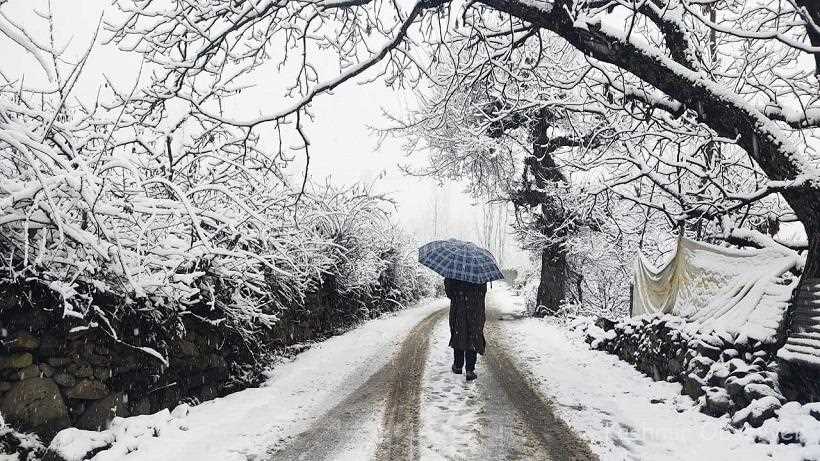
Geographical isolation adds another layer of difficulty to life in Azad Kashmir, where many communities are nestled deep inside valleys or perched on steep slopes, connected to the outside world through narrow, winding roads that are easily blocked by landslides, heavy rain or winter snow; during such times entire villages become cut off for days and the simplest needs - like reaching a hospital, buying medicine or attending school - turn into nearly impossible missions. Pregnant women often endure painful journeys to distant hospitals, carried on makeshift stretchers or transported in jeeps over treacherous roads, while elderly people who depend on medical care struggle to survive when access becomes blocked. Even basic facilities like clean drinking water remain inconsistent in many areas, with families relying on mountain springs or shared pipelines that frequently break during storms, forcing women and girls to travel long distances to fetch water - an exhausting chore that adds to their already overwhelming responsibilities. Despite the region’s abundance of rivers and waterfalls, electricity shortages remain frequent, especially during winter when heavy snow damages power lines; families sit through long nights in darkness, students study under dim lanterns and shopkeepers close early because business becomes impossible without light.
The economic situation in Azad Kashmir reveals another painful reality, for although the land is fertile and rich in natural beauty, job opportunities remain limited and many families depend heavily on small-scale farming, livestock, daily wage labour or remittances sent by relatives working abroad. Migration has become a survival strategy rather than a choice, with thousands of young men leaving for the Middle East, Europe or big cities in Pakistan in search of work, often taking loans to pay for visas and struggling through harsh working conditions so they can send money home. Their remittances help build houses, support education and sustain the local economy, yet their absence leaves emotional voids within families; children grow up without their fathers, wives shoulder both household and financial responsibilities and parents wait anxiously for a phone call that reassures them their sons are safe in distant lands. Unemployment among educated youth is a growing crisis, with thousands completing university degrees yet finding no suitable work; this leads to frustration, depression and feelings of stagnation among young people who dream of success but lack the opportunities to achieve it.
Education - long cherished as a path toward progress - faces its own set of difficulties in Azad Kashmir. While literacy rates continue to improve, many schools, especially in rural areas, struggle with limited resources, insufficient teachers, overcrowded classrooms and unsafe buildings. Children walk miles through steep, rocky terrain, cross small streams or navigate landslide-prone paths just to reach their schools and during winter, harsh weather makes the journey even more difficult. Girls often face additional barriers, including cultural restrictions, unsafe travel routes, domestic responsibilities and early marriage pressures; despite these challenges, many girls show remarkable determination, excelling academically whenever given proper support and becoming strong voices for change within their communities. Teachers, too, face difficulties, traveling long distances to reach remote schools and working with limited teaching materials, yet their dedication keeps the education system functioning even under the hardest conditions.
Healthcare remains another area where the pain behind the mountains becomes evident. While major towns have hospitals, rural areas still lack adequate medical facilities, trained doctors, specialist care and essential medicines. Emergency cases - heart attacks, complicated pregnancies, severe injuries and illnesses requiring surgery - often require traveling to larger cities like Muzaffarabad, Rawalakot or even Islamabad, journeys that are not only expensive but sometimes life-threatening due to the poor condition of roads. Basic health units in remote villages frequently suffer from staff shortages, outdated equipment and limited services, leaving communities vulnerable, particularly women and children. Mental health, though a growing issue, is rarely addressed due to social stigma and a lack of trained professionals, leaving people to struggle silently with trauma, stress and anxiety.
Natural disasters have left deep and lasting scars on the people of Azad Kashmir, most notably the catastrophic 2005 earthquake that destroyed entire towns, killed tens of thousands and left countless families grieving and homeless. Many survivors still recall the terrifying moments when the earth shook violently, buildings collapsed in seconds and cries of the injured filled the air; the memory of that day remains etched into the collective consciousness of the region. Although reconstruction has brought new infrastructure and improved some facilities, the fear of earthquakes persists and every tremor trigger painful memories. Landslides, flash floods and severe winter storms continue to cause destruction each year, damaging homes, blocking roads, killing livestock and deepening the struggle for families already grappling with poverty.
The political situation is absolutely unstable. Youth often feel that they have no real voice in decisions affecting their lives. Local leaders are controlled by external political forces and corruption is common. Many young people feel that their region is ignored when it comes to development and civil rights.
While technically we have assemblies, political parties and elections, these are largely ceremonial, controlled by the Pakistani Army and the Inter-Services Intelligence. Young people learn early: Do not question the Army, Do not protest, Do not speak about disappearances, Do not criticize the authorities. Those who speak out often face harassment, abduction or long-term detention. The message is clear: freedom exists only at the discretion of military authorities.
We do not demand luxuries, we ask for basic rights: Electricity, Jobs, Roads and infrastructure, Quality education and Fair treatment. Yet even these basic requests are often considered threats. Student protests are met with baton charges and arrests. Social media posts can lead to detention. Whistleblowers exposing corruption are labeled “anti-state.” In democratic societies, youth activism is celebrated and here, it becomes a punishable act.
Our region is rich in hydroelectric potential, minerals and natural resources. Yet, local youth are left with: High rate of unemployment, Underfunded schools and universities, Broken healthcare systems and Crumbling infrastructure. Opportunities are scarce and frustration is abundant. Poverty is not incidental - it is a tool to control and is military made.
In a heavily monitored region, it is important to ask: how do extremist groups recruit young people? The answer is simple yet brutal: A youth without opportunity, voice or hope is easily exploited. When the state fails to provide education, employment and empowerment, others fill the void - sometimes with radical ideologies, sometimes with propaganda, sometimes with anger. This is the darkest tragedy of this part of Pakistan. A generation pushed towards extremism not by choice, but by circumstances systematically and deliberately created around us.
The Pakistani Army exercises unchecked power, Crackdowns on protests with live ammunition and tear gas, Arbitrary arrests of students, activists and journalists, Surveillance and intimidation of political leaders, Censorship and suppression of local media. These actions have created a climate of fear where youth live under constant psychological stress, unable to express themselves or plan for the future without risking retaliation.
Growing up here in Azad Kashmir teaches young people: What not to say. Whom not to meet. What not to post on social media. How to survive in a system designed to suppress. This constant surveillance and intimidation amount to psychological imprisonment, often more damaging than physical force.
The youth want freedom from the Pakistani Army so that they can express their views to the world without fear and have their basic demands fulfilled, which include: Respect, Education, Jobs, Freedom of expression, Safety and Opportunity to shape their own future. Yet, the basic rights of the people are trampled by the puppet local government and the Pakistani Army and many are forced onto the wrong path.
All these challenges combine to create a sense of neglect among youth. Who feel that our region is forgotten and that no one cares about our future. Comparing our lives to those of young people in other developed regions, we feel left behind and helpless. This sense of hopelessness is perhaps the most painful part of youth. A generation with energy, dreams and talent is forced to live under uncertainty and limited opportunities.
The life in Azad Kashmir is defined by poor education, high unemployment, political suppression, weak healthcare, social restrictions and lack of infrastructure. Despite passion and potential, the system does not support. Improvement is possible only if our voices are heard and our rights are respected. The youth here deserve better opportunities, better facilities and a life of dignity and freedom. We deserve a future where we can dream without fear and build a life filled with hope instead of struggle. Until the Pakistani Army’s unchecked control ends and until youth are granted education, jobs and the freedom to speak freely, this place will continue to be a land of stolen futures, a region whose pain the world can no longer ignore.

Geographical isolation adds another layer of difficulty to life in Azad Kashmir, where many communities are nestled deep inside valleys or perched on steep slopes, connected to the outside world through narrow, winding roads that are easily blocked by landslides
Life in Azad Kashmir, though draped in extraordinary natural beauty, carries within it a hidden world of pain, hardship and daily struggle that remains unknown to many who only see its lush valleys, snowy peaks and shimmering rivers; behind the postcard-perfect landscapes lies a complex tapestry of human endurance shaped by conflict, poverty, isolation and the constant search for hope. For generations, the people of this region have lived with the emotional burden of division, with families separated across borders and memories of loved ones lost to migration, displacement or violence echoing through the hills; the Line of Control stands as a constant reminder of uncertainty, where distant gunfire or sudden shelling tears through the sense of peace that nature so effortlessly provides, forcing villagers - especially those living near border areas - to flee their homes at a moment’s notice, clutching children in their arms and praying for safety in makeshift bunkers. The psychological toll of such experiences is immense: children grow up learning to distinguish between the sound of thunder and artillery, elders live with constant anxiety and parents build their lives around the fear that the next moment might bring danger, all while continuing to cultivate their fields, care for their families and cling to the land that is both their pride and their burden.
Geographical isolation adds another layer of difficulty to life in Azad Kashmir, where many communities are nestled deep inside valleys or perched on steep slopes, connected to the outside world through narrow, winding roads that are easily blocked by landslides, heavy rain or winter snow; during such times entire villages become cut off for days and the simplest needs - like reaching a hospital, buying medicine or attending school - turn into nearly impossible missions. Pregnant women often endure painful journeys to distant hospitals, carried on makeshift stretchers or transported in jeeps over treacherous roads, while elderly people who depend on medical care struggle to survive when access becomes blocked. Even basic facilities like clean drinking water remain inconsistent in many areas, with families relying on mountain springs or shared pipelines that frequently break during storms, forcing women and girls to travel long distances to fetch water - an exhausting chore that adds to their already overwhelming responsibilities. Despite the region’s abundance of rivers and waterfalls, electricity shortages remain frequent, especially during winter when heavy snow damages power lines; families sit through long nights in darkness, students study under dim lanterns and shopkeepers close early because business becomes impossible without light.
The economic situation in Azad Kashmir reveals another painful reality, for although the land is fertile and rich in natural beauty, job opportunities remain limited and many families depend heavily on small-scale farming, livestock, daily wage labour or remittances sent by relatives working abroad. Migration has become a survival strategy rather than a choice, with thousands of young men leaving for the Middle East, Europe or big cities in Pakistan in search of work, often taking loans to pay for visas and struggling through harsh working conditions so they can send money home. Their remittances help build houses, support education and sustain the local economy, yet their absence leaves emotional voids within families; children grow up without their fathers, wives shoulder both household and financial responsibilities and parents wait anxiously for a phone call that reassures them their sons are safe in distant lands. Unemployment among educated youth is a growing crisis, with thousands completing university degrees yet finding no suitable work; this leads to frustration, depression and feelings of stagnation among young people who dream of success but lack the opportunities to achieve it.
Education - long cherished as a path toward progress - faces its own set of difficulties in Azad Kashmir. While literacy rates continue to improve, many schools, especially in rural areas, struggle with limited resources, insufficient teachers, overcrowded classrooms and unsafe buildings. Children walk miles through steep, rocky terrain, cross small streams or navigate landslide-prone paths just to reach their schools and during winter, harsh weather makes the journey even more difficult. Girls often face additional barriers, including cultural restrictions, unsafe travel routes, domestic responsibilities and early marriage pressures; despite these challenges, many girls show remarkable determination, excelling academically whenever given proper support and becoming strong voices for change within their communities. Teachers, too, face difficulties, traveling long distances to reach remote schools and working with limited teaching materials, yet their dedication keeps the education system functioning even under the hardest conditions.
Healthcare remains another area where the pain behind the mountains becomes evident. While major towns have hospitals, rural areas still lack adequate medical facilities, trained doctors, specialist care and essential medicines. Emergency cases - heart attacks, complicated pregnancies, severe injuries and illnesses requiring surgery - often require traveling to larger cities like Muzaffarabad, Rawalakot or even Islamabad, journeys that are not only expensive but sometimes life-threatening due to the poor condition of roads. Basic health units in remote villages frequently suffer from staff shortages, outdated equipment and limited services, leaving communities vulnerable, particularly women and children. Mental health, though a growing issue, is rarely addressed due to social stigma and a lack of trained professionals, leaving people to struggle silently with trauma, stress and anxiety.
Natural disasters have left deep and lasting scars on the people of Azad Kashmir, most notably the catastrophic 2005 earthquake that destroyed entire towns, killed tens of thousands and left countless families grieving and homeless. Many survivors still recall the terrifying moments when the earth shook violently, buildings collapsed in seconds and cries of the injured filled the air; the memory of that day remains etched into the collective consciousness of the region. Although reconstruction has brought new infrastructure and improved some facilities, the fear of earthquakes persists and every tremor trigger painful memories. Landslides, flash floods and severe winter storms continue to cause destruction each year, damaging homes, blocking roads, killing livestock and deepening the struggle for families already grappling with poverty.
The political situation is absolutely unstable. Youth often feel that they have no real voice in decisions affecting their lives. Local leaders are controlled by external political forces and corruption is common. Many young people feel that their region is ignored when it comes to development and civil rights.
While technically we have assemblies, political parties and elections, these are largely ceremonial, controlled by the Pakistani Army and the Inter-Services Intelligence. Young people learn early: Do not question the Army, Do not protest, Do not speak about disappearances, Do not criticize the authorities. Those who speak out often face harassment, abduction or long-term detention. The message is clear: freedom exists only at the discretion of military authorities.
We do not demand luxuries, we ask for basic rights: Electricity, Jobs, Roads and infrastructure, Quality education and Fair treatment. Yet even these basic requests are often considered threats. Student protests are met with baton charges and arrests. Social media posts can lead to detention. Whistleblowers exposing corruption are labeled “anti-state.” In democratic societies, youth activism is celebrated and here, it becomes a punishable act.
Our region is rich in hydroelectric potential, minerals and natural resources. Yet, local youth are left with: High rate of unemployment, Underfunded schools and universities, Broken healthcare systems and Crumbling infrastructure. Opportunities are scarce and frustration is abundant. Poverty is not incidental - it is a tool to control and is military made.
In a heavily monitored region, it is important to ask: how do extremist groups recruit young people? The answer is simple yet brutal: A youth without opportunity, voice or hope is easily exploited. When the state fails to provide education, employment and empowerment, others fill the void - sometimes with radical ideologies, sometimes with propaganda, sometimes with anger. This is the darkest tragedy of this part of Pakistan. A generation pushed towards extremism not by choice, but by circumstances systematically and deliberately created around us.
The Pakistani Army exercises unchecked power, Crackdowns on protests with live ammunition and tear gas, Arbitrary arrests of students, activists and journalists, Surveillance and intimidation of political leaders, Censorship and suppression of local media. These actions have created a climate of fear where youth live under constant psychological stress, unable to express themselves or plan for the future without risking retaliation.
Growing up here in Azad Kashmir teaches young people: What not to say. Whom not to meet. What not to post on social media. How to survive in a system designed to suppress. This constant surveillance and intimidation amount to psychological imprisonment, often more damaging than physical force.
The youth want freedom from the Pakistani Army so that they can express their views to the world without fear and have their basic demands fulfilled, which include: Respect, Education, Jobs, Freedom of expression, Safety and Opportunity to shape their own future. Yet, the basic rights of the people are trampled by the puppet local government and the Pakistani Army and many are forced onto the wrong path.
All these challenges combine to create a sense of neglect among youth. Who feel that our region is forgotten and that no one cares about our future. Comparing our lives to those of young people in other developed regions, we feel left behind and helpless. This sense of hopelessness is perhaps the most painful part of youth. A generation with energy, dreams and talent is forced to live under uncertainty and limited opportunities.
The life in Azad Kashmir is defined by poor education, high unemployment, political suppression, weak healthcare, social restrictions and lack of infrastructure. Despite passion and potential, the system does not support. Improvement is possible only if our voices are heard and our rights are respected. The youth here deserve better opportunities, better facilities and a life of dignity and freedom. We deserve a future where we can dream without fear and build a life filled with hope instead of struggle. Until the Pakistani Army’s unchecked control ends and until youth are granted education, jobs and the freedom to speak freely, this place will continue to be a land of stolen futures, a region whose pain the world can no longer ignore.

© Copyright 2023 brighterkashmir.com All Rights Reserved. Quantum Technologies