07-09-2026     3 رجب 1440

Life, Literature and the Absurd

The Metamorphosis also translated as The Transformation, is a novella by Franz Kafka published in 1915. One of Kafka's best-known works, The Metamorphosis tells the story of salesman Gregor Samsa, who wakes to find himself inexplicably, transformed into a huge insect and struggles to adjust to this condition, as does his family

July 09, 2026 | Mohd Ishaq Shah

While reflecting on the purpose of this worldly life I just pondered how this goes on in a sphere that seems all null and void. Where a man runs after the uncertainty and ambiguity and finally is lost in the deep dark forest and finds no way out my eye went on to “Glossary of literary Terms” by M.H Abrahams and Geoffrey Galt Harpham and I just got up and pulled it out from the congested bookshelf. On opening the very first page of the book I did perchance to read the term “Literature of the Absurd” that however has the very foundation in “The theater of Absurdity”. So I decided to read it in full length and try to evaluate it. What I could get out of this brief conceptual expression I jotted down as under:
In late 1880’s an apparently different view of human life emerged in the form of literature known as absurdist literature. The chief propounder of this world view is regarded as Eugene Ionesco, French author of The Bald Soprano (1949) and The Lesson (1951) who in these seminal works has put it: “Cut off from his religious, metaphysical and transcendental roots, man is lost; all his actions become senseless, absurd, and useless.” He also said,” People drowning meaninglessness can only be grotesque; their sufferings can only appear tragic by derision.” Critic Martin Esslin coined the term in his 1960 essay "The Theatre of the Absurd", which begins by focusing on the playwrights Samuel Beckett, Arthur Adamov, and Eugène Ionesco. Esslin says that their plays have a common denominator—the "absurd", a word that Esslin defines with a quotation from Ionesco: "absurd is that which has no purpose, or goal, or objective." The French philosopher Albert Camus, in his 1942 work The Myth of Sisyphus, describes the human situation as meaningless and absurd. In the first edition of "The Theatre of the Absurd", Esslin quotes the French philosopher Albert Camus's essay "The Myth of Sisyphus", as it uses the word "absurdity" to describe the human situation: "In a universe that is suddenly deprived of illusions and of light, man feels a stranger. … This divorce between man and his life, the actor and his setting, truly constitutes the feeling of Absurdity.
But its roots go back to 1896 as both the mood and dramaturgy of absurdity were anticipated as early as in Alfred Jarry’s French Play Ubu Roi( Ubu the King).Although the absurdist philosophy has its links with the movements of expressionism and surrealism as well as the fiction written in 1920s, of Franz Kafka (The Trial & Metamorphosis).The current movement, however, emerged in France after the horrors of World War-II (1939-45) as a rebellion against the basic beliefs and values in traditional culture and literature. The tradition had included the assumptions that human beings are fairly rational creatures who live in an at least partially intelligible universe that they are part an ordered social structure and they may be capable of heroism and dignity even in defeat. William Shakespeare has been very right in saying :
Out, out brief candle, life is but a walking Shadow, a poor player,
That struts and frets his hour upon the stage,
And then is heard no more, it is a tale
Told by an idiot, full of sound and fury,
Signifying nothing.
The Metamorphosis also translated as The Transformation, is a novella by Franz Kafka published in 1915. One of Kafka's best-known works, The Metamorphosis tells the story of salesman Gregor Samsa, who wakes to find himself inexplicably, transformed into a huge insect and struggles to adjust to this condition, as does his family. Gregor Samsa wakes up one morning to find himself transformed into a "monstrous vermin". He initially considers the transformation to be temporary and slowly ponders the consequences of his metamorphosis. Stuck on his back and unable to get up and leave the bed, Gregor reflects on his job as a traveling salesman and cloth merchant, which he characterizes as being "plagued with ... the always changing, never enduring human exchanges that don't ever become intimate". He sees his employer as a despot and would quickly quit his job if he were not his family's sole breadwinner and working off his bankrupt father's debts. While trying to move, Gregor finds that his office manager, the chief clerk, has shown up to check on him, indignant about Gregor's unexcused absence.
Gregor attempts to communicate with both the manager and his family, but all they can hear from behind the door is incomprehensible vocalizations. Gregor laboriously drags himself across the floor and opens the door. The clerk, upon seeing the transformed Gregor, flees the apartment. Gregor's family is horrified, and his father drives him back towards his room. Gregor is injured when he tries to force himself through the narrow doorway but gets unstuck when his father shoves him through. With Gregor's unexpected transformation, his family is deprived of financial stability. They keep Gregor locked in his room, and he begins to accept his new identity and adapt to his new body. His sister Grete is the only one willing to bring him food, which she finds Gregor likes only if it is rotten. He spends much of his time crawling around on the floor, walls, and ceiling.
Upon discovering Gregor's new pastime, Grete decides to remove his furniture to give him more space. She and her mother begin to empty the room of everything, except the sofa under which Gregor hides whenever anyone comes in. He finds their actions deeply distressing, fearing that he might forget his past as a human, and desperately tries to save a particularly loved portrait on the wall of a woman clad in fur. His mother loses consciousness at the sight of him clinging to the image to protect it. When Grete rushes out of the room to get some aromatic spirits, Gregor follows her and is slightly hurt when she drops a medicine bottle and it breaks. Their father returns home and angrily hurls apples at Gregor, one of which becomes lodged in his back, severely wounding him.
Gregor suffers from his injuries and eats very little. His father, mother, and sister all get jobs and increasingly begin to neglect him, and they use his room for storage. For a time, his family leaves Gregor's door open in the evenings so he can listen to them talk to each other, but this happens less frequently once they rent a room in the apartment to three male tenants, who are not told about Gregor. One day, the charwoman, who briefly looks in on Gregor each day when she arrives and before she leaves, neglects to close his door fully. Attracted by Grete's violin-playing in the living room, Gregor crawls out and is spotted by the unsuspecting tenants, who complain about the apartment's unhygienic conditions and say they are leaving, will not pay anything for the time they have already stayed, and may take legal action.
Grete, who is tired of taking care of Gregor and realizes the burden his existence puts on each member of the family, tells her parents that the creature is no longer Gregor and they must get rid of "it" or they will all be ruined. Gregor, understanding that he is no longer wanted, laboriously makes his way back to his room and dies of starvation before sunrise. His body is discovered by the charwoman, who alerts his family and then disposes of the corpse. The relieved and optimistic father, mother, and sister all take the day off work. They travel by tram into the countryside and make plans to move to a smaller apartment to save money. During the short trip, Mr. and Mrs. Samsa realize that, despite the hardships that have brought some paleness to her face, Grete has grown up into a pretty young lady with a good figure and they think about finding her a husband.
The novella has been widely discussed among literary critics, who have offered varied interpretations. In popular culture and adaptations of the novella, the insect is commonly depicted as a cockroach. In Nabokov's view, the central narrative theme is the artist's struggle for existence in a society replete with narrow-minded people who destroy him step by step. Commenting on Kafka's style, he writes, "The transparency of his style underlines the dark richness of his fantasy world. Contrast and uniformity, style and the depicted, portrayal and fable are seamlessly intertwined" .One such play is Samuel Becket’s waiting for Godot that has altogether a subtle plot with only the two scenes where Vladimir and Estragon are found to be waiting for “Godot” that never comes. The plot has no specific development of action like tragedy or comedy and history plays. The play is just one in which nothing happens, no one comes and no one goes. Hence, signifying the null and void world that has no specific meaning to it. Each and every piece of art related to the theater of absurd has almost the same theme and message to convey.
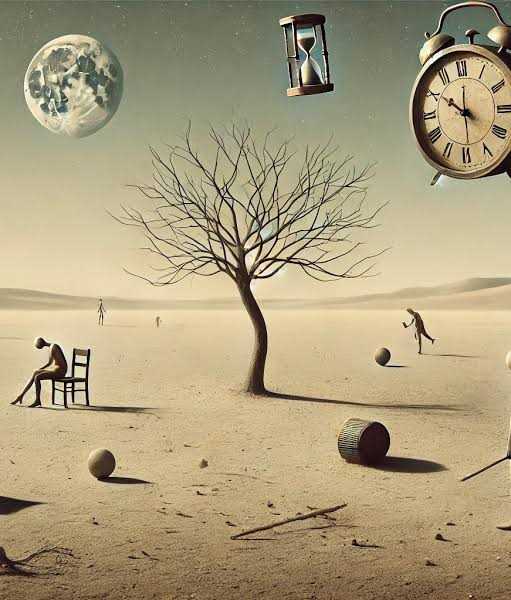
The conclusion: From the given references and quotes it can be inferred that inherently there is no set meaning to the life in itself. But the different structures shape it in their own way and then reshape it as their need and demand. Once the man undergoes a metamorphosis he is unacceptable to the society and meaningless in purpose. Gregor Samsa is no more accepted by his own family. Hence, the belief there is specific subject of the life has no validity in the theater of absurdity. Vladimir and Estragon are waiting for “Godot” that never comes. The matter of fact is that they are waiting for someone/something that they themselves even don’t know who that is. Hence, it correlates to the senselessness of life in a world that seemingly seems to be entertaining and enjoyable, but is not. Hence, the topic highlights the delusion of living a meaningful life in the world that in itself has meaning and navigating the sense and purpose of the life that is without purpose and meaning.


Email:----------------------------------ishaq7007@gmail.com

Life, Literature and the Absurd

The Metamorphosis also translated as The Transformation, is a novella by Franz Kafka published in 1915. One of Kafka's best-known works, The Metamorphosis tells the story of salesman Gregor Samsa, who wakes to find himself inexplicably, transformed into a huge insect and struggles to adjust to this condition, as does his family

July 09, 2026 | Mohd Ishaq Shah

While reflecting on the purpose of this worldly life I just pondered how this goes on in a sphere that seems all null and void. Where a man runs after the uncertainty and ambiguity and finally is lost in the deep dark forest and finds no way out my eye went on to “Glossary of literary Terms” by M.H Abrahams and Geoffrey Galt Harpham and I just got up and pulled it out from the congested bookshelf. On opening the very first page of the book I did perchance to read the term “Literature of the Absurd” that however has the very foundation in “The theater of Absurdity”. So I decided to read it in full length and try to evaluate it. What I could get out of this brief conceptual expression I jotted down as under:
In late 1880’s an apparently different view of human life emerged in the form of literature known as absurdist literature. The chief propounder of this world view is regarded as Eugene Ionesco, French author of The Bald Soprano (1949) and The Lesson (1951) who in these seminal works has put it: “Cut off from his religious, metaphysical and transcendental roots, man is lost; all his actions become senseless, absurd, and useless.” He also said,” People drowning meaninglessness can only be grotesque; their sufferings can only appear tragic by derision.” Critic Martin Esslin coined the term in his 1960 essay "The Theatre of the Absurd", which begins by focusing on the playwrights Samuel Beckett, Arthur Adamov, and Eugène Ionesco. Esslin says that their plays have a common denominator—the "absurd", a word that Esslin defines with a quotation from Ionesco: "absurd is that which has no purpose, or goal, or objective." The French philosopher Albert Camus, in his 1942 work The Myth of Sisyphus, describes the human situation as meaningless and absurd. In the first edition of "The Theatre of the Absurd", Esslin quotes the French philosopher Albert Camus's essay "The Myth of Sisyphus", as it uses the word "absurdity" to describe the human situation: "In a universe that is suddenly deprived of illusions and of light, man feels a stranger. … This divorce between man and his life, the actor and his setting, truly constitutes the feeling of Absurdity.
But its roots go back to 1896 as both the mood and dramaturgy of absurdity were anticipated as early as in Alfred Jarry’s French Play Ubu Roi( Ubu the King).Although the absurdist philosophy has its links with the movements of expressionism and surrealism as well as the fiction written in 1920s, of Franz Kafka (The Trial & Metamorphosis).The current movement, however, emerged in France after the horrors of World War-II (1939-45) as a rebellion against the basic beliefs and values in traditional culture and literature. The tradition had included the assumptions that human beings are fairly rational creatures who live in an at least partially intelligible universe that they are part an ordered social structure and they may be capable of heroism and dignity even in defeat. William Shakespeare has been very right in saying :
Out, out brief candle, life is but a walking Shadow, a poor player,
That struts and frets his hour upon the stage,
And then is heard no more, it is a tale
Told by an idiot, full of sound and fury,
Signifying nothing.
The Metamorphosis also translated as The Transformation, is a novella by Franz Kafka published in 1915. One of Kafka's best-known works, The Metamorphosis tells the story of salesman Gregor Samsa, who wakes to find himself inexplicably, transformed into a huge insect and struggles to adjust to this condition, as does his family. Gregor Samsa wakes up one morning to find himself transformed into a "monstrous vermin". He initially considers the transformation to be temporary and slowly ponders the consequences of his metamorphosis. Stuck on his back and unable to get up and leave the bed, Gregor reflects on his job as a traveling salesman and cloth merchant, which he characterizes as being "plagued with ... the always changing, never enduring human exchanges that don't ever become intimate". He sees his employer as a despot and would quickly quit his job if he were not his family's sole breadwinner and working off his bankrupt father's debts. While trying to move, Gregor finds that his office manager, the chief clerk, has shown up to check on him, indignant about Gregor's unexcused absence.
Gregor attempts to communicate with both the manager and his family, but all they can hear from behind the door is incomprehensible vocalizations. Gregor laboriously drags himself across the floor and opens the door. The clerk, upon seeing the transformed Gregor, flees the apartment. Gregor's family is horrified, and his father drives him back towards his room. Gregor is injured when he tries to force himself through the narrow doorway but gets unstuck when his father shoves him through. With Gregor's unexpected transformation, his family is deprived of financial stability. They keep Gregor locked in his room, and he begins to accept his new identity and adapt to his new body. His sister Grete is the only one willing to bring him food, which she finds Gregor likes only if it is rotten. He spends much of his time crawling around on the floor, walls, and ceiling.
Upon discovering Gregor's new pastime, Grete decides to remove his furniture to give him more space. She and her mother begin to empty the room of everything, except the sofa under which Gregor hides whenever anyone comes in. He finds their actions deeply distressing, fearing that he might forget his past as a human, and desperately tries to save a particularly loved portrait on the wall of a woman clad in fur. His mother loses consciousness at the sight of him clinging to the image to protect it. When Grete rushes out of the room to get some aromatic spirits, Gregor follows her and is slightly hurt when she drops a medicine bottle and it breaks. Their father returns home and angrily hurls apples at Gregor, one of which becomes lodged in his back, severely wounding him.
Gregor suffers from his injuries and eats very little. His father, mother, and sister all get jobs and increasingly begin to neglect him, and they use his room for storage. For a time, his family leaves Gregor's door open in the evenings so he can listen to them talk to each other, but this happens less frequently once they rent a room in the apartment to three male tenants, who are not told about Gregor. One day, the charwoman, who briefly looks in on Gregor each day when she arrives and before she leaves, neglects to close his door fully. Attracted by Grete's violin-playing in the living room, Gregor crawls out and is spotted by the unsuspecting tenants, who complain about the apartment's unhygienic conditions and say they are leaving, will not pay anything for the time they have already stayed, and may take legal action.
Grete, who is tired of taking care of Gregor and realizes the burden his existence puts on each member of the family, tells her parents that the creature is no longer Gregor and they must get rid of "it" or they will all be ruined. Gregor, understanding that he is no longer wanted, laboriously makes his way back to his room and dies of starvation before sunrise. His body is discovered by the charwoman, who alerts his family and then disposes of the corpse. The relieved and optimistic father, mother, and sister all take the day off work. They travel by tram into the countryside and make plans to move to a smaller apartment to save money. During the short trip, Mr. and Mrs. Samsa realize that, despite the hardships that have brought some paleness to her face, Grete has grown up into a pretty young lady with a good figure and they think about finding her a husband.
The novella has been widely discussed among literary critics, who have offered varied interpretations. In popular culture and adaptations of the novella, the insect is commonly depicted as a cockroach. In Nabokov's view, the central narrative theme is the artist's struggle for existence in a society replete with narrow-minded people who destroy him step by step. Commenting on Kafka's style, he writes, "The transparency of his style underlines the dark richness of his fantasy world. Contrast and uniformity, style and the depicted, portrayal and fable are seamlessly intertwined" .One such play is Samuel Becket’s waiting for Godot that has altogether a subtle plot with only the two scenes where Vladimir and Estragon are found to be waiting for “Godot” that never comes. The plot has no specific development of action like tragedy or comedy and history plays. The play is just one in which nothing happens, no one comes and no one goes. Hence, signifying the null and void world that has no specific meaning to it. Each and every piece of art related to the theater of absurd has almost the same theme and message to convey.
The conclusion: From the given references and quotes it can be inferred that inherently there is no set meaning to the life in itself. But the different structures shape it in their own way and then reshape it as their need and demand. Once the man undergoes a metamorphosis he is unacceptable to the society and meaningless in purpose. Gregor Samsa is no more accepted by his own family. Hence, the belief there is specific subject of the life has no validity in the theater of absurdity. Vladimir and Estragon are waiting for “Godot” that never comes. The matter of fact is that they are waiting for someone/something that they themselves even don’t know who that is. Hence, it correlates to the senselessness of life in a world that seemingly seems to be entertaining and enjoyable, but is not. Hence, the topic highlights the delusion of living a meaningful life in the world that in itself has meaning and navigating the sense and purpose of the life that is without purpose and meaning.


Email:----------------------------------ishaq7007@gmail.com

  • Address: R.C 2 Quarters Press Enclave Near Pratap Park, Srinagar 190001.
  • Phone: 0194-2451076 , +91-941-940-0056 , +91-962-292-4716
  • Email: brighterkmr@gmail.com
Owner, Printer, Publisher, Editor: Farooq Ahmad Wani
Legal Advisor: M.J. Hubi
Printed at: Sangermal offset Printing Press Rangreth ( Budgam)
Published from: Gulshanabad Chraresharief Budgam
RNI No.: JKENG/2010/33802
Office No’s: 0194-2451076
Mobile No’s 9419400056, 9622924716 ,7006086442
Postal Regd No: SK/135/2010-2019
POST BOX NO: 1001
Administrative Office: R.C 2 Quarters Press Enclave Near Pratap Park ( Srinagar -190001)

© Copyright 2023 brighterkashmir.com All Rights Reserved. Quantum Technologies

Owner, Printer, Publisher, Editor: Farooq Ahmad Wani
Legal Advisor: M.J. Hubi
Printed at: Abid Enterprizes, Zainkote Srinagar
Published from: Gulshanabad Chraresharief Budgam
RNI No.: JKENG/2010/33802
Office No’s: 0194-2451076, 9622924716 , 9419400056
Postal Regd No: SK/135/2010-2019
Administrative Office: Abi Guzer Srinagar

© Copyright 2018 brighterkashmir.com All Rights Reserved.