
BREAKING NEWS
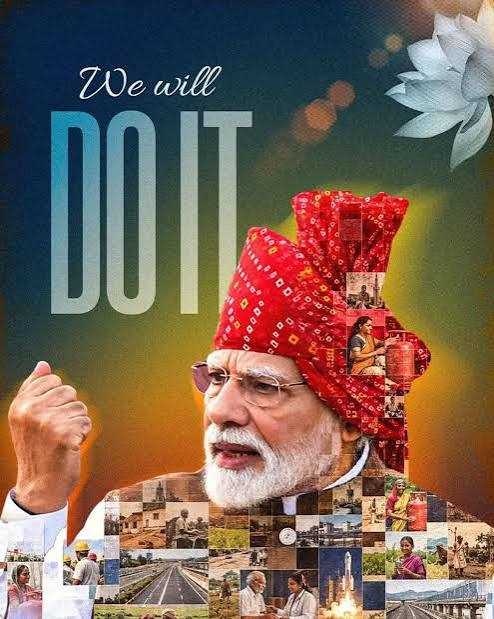
A nation's journey towards progress is not measured merely by economic figures, infrastructure projects or technological achievements. It is equally shaped by the strength of its institutions, public participation and the quality of information reaching its citizens. Prime Minister Narendra Modi's reference to his longstanding association with the media and India's resolve to achieve the vision of Viksit Bharat by 2047 brings these interconnected responsibilities into focus. The media has historically played a significant role in India's democratic journey. From the freedom movement to the challenges of modern governance, journalism has informed citizens, questioned authority and provided a platform for public concerns. The relationship between political leadership and the press may evolve, but the importance of credible journalism in a democracy remains unchanged. As India moves towards its centenary of independence in 2047, the responsibility of the media becomes even greater. The vision of a developed nation cannot be achieved through government initiatives alone. It requires informed citizens, accountable institutions, transparent governance and constructive public debate. Journalism must contribute to this process by highlighting achievements without overlooking shortcomings. The 2047 deadline is ambitious. India must address unemployment, educational inequalities, healthcare gaps, rural distress, environmental degradation and regional disparities. Economic growth must translate into better living standards, meaningful employment and equal opportunities. Development should not remain confined to metropolitan centres while villages and remote regions struggle for basic facilities. For Jammu and Kashmir, the national vision carries particular significance. Improved connectivity, tourism, industrial investment and infrastructure development must be accompanied by employment generation, stronger healthcare, quality education and sustainable livelihood opportunities. The aspirations of young people must remain central to the development agenda. At the same time, the media must preserve its independence and credibility. Its role is neither to become an unquestioning supporter of the government nor an automatic critic of every policy. Responsible journalism demands facts, fairness, courage and accountability. Constructive criticism strengthens democracy; silence weakens it. The Prime Minister's recollection of his old association with journalists also offers an opportunity to renew the relationship between public institutions and the fourth pillar of democracy. Regular interaction, access to information and respect for editorial independence are essential for a healthy democratic environment. Viksit Bharat 2047 must be more than a political slogan; it must become a national commitment. The journey requires governments that deliver, institutions that remain accountable and a media that speaks truth without fear or favour. The real measure of success will be a nation where prosperity reaches every citizen and development becomes visible in everyday life.
A nation's journey towards progress is not measured merely by economic figures, infrastructure projects or technological achievements. It is equally shaped by the strength of its institutions, public participation and the quality of information reaching its citizens. Prime Minister Narendra Modi's reference to his longstanding association with the media and India's resolve to achieve the vision of Viksit Bharat by 2047 brings these interconnected responsibilities into focus. The media has historically played a significant role in India's democratic journey. From the freedom movement to the challenges of modern governance, journalism has informed citizens, questioned authority and provided a platform for public concerns. The relationship between political leadership and the press may evolve, but the importance of credible journalism in a democracy remains unchanged. As India moves towards its centenary of independence in 2047, the responsibility of the media becomes even greater. The vision of a developed nation cannot be achieved through government initiatives alone. It requires informed citizens, accountable institutions, transparent governance and constructive public debate. Journalism must contribute to this process by highlighting achievements without overlooking shortcomings. The 2047 deadline is ambitious. India must address unemployment, educational inequalities, healthcare gaps, rural distress, environmental degradation and regional disparities. Economic growth must translate into better living standards, meaningful employment and equal opportunities. Development should not remain confined to metropolitan centres while villages and remote regions struggle for basic facilities. For Jammu and Kashmir, the national vision carries particular significance. Improved connectivity, tourism, industrial investment and infrastructure development must be accompanied by employment generation, stronger healthcare, quality education and sustainable livelihood opportunities. The aspirations of young people must remain central to the development agenda. At the same time, the media must preserve its independence and credibility. Its role is neither to become an unquestioning supporter of the government nor an automatic critic of every policy. Responsible journalism demands facts, fairness, courage and accountability. Constructive criticism strengthens democracy; silence weakens it. The Prime Minister's recollection of his old association with journalists also offers an opportunity to renew the relationship between public institutions and the fourth pillar of democracy. Regular interaction, access to information and respect for editorial independence are essential for a healthy democratic environment. Viksit Bharat 2047 must be more than a political slogan; it must become a national commitment. The journey requires governments that deliver, institutions that remain accountable and a media that speaks truth without fear or favour. The real measure of success will be a nation where prosperity reaches every citizen and development becomes visible in everyday life.

© Copyright 2023 brighterkashmir.com All Rights Reserved. Quantum Technologies