
BREAKING NEWS
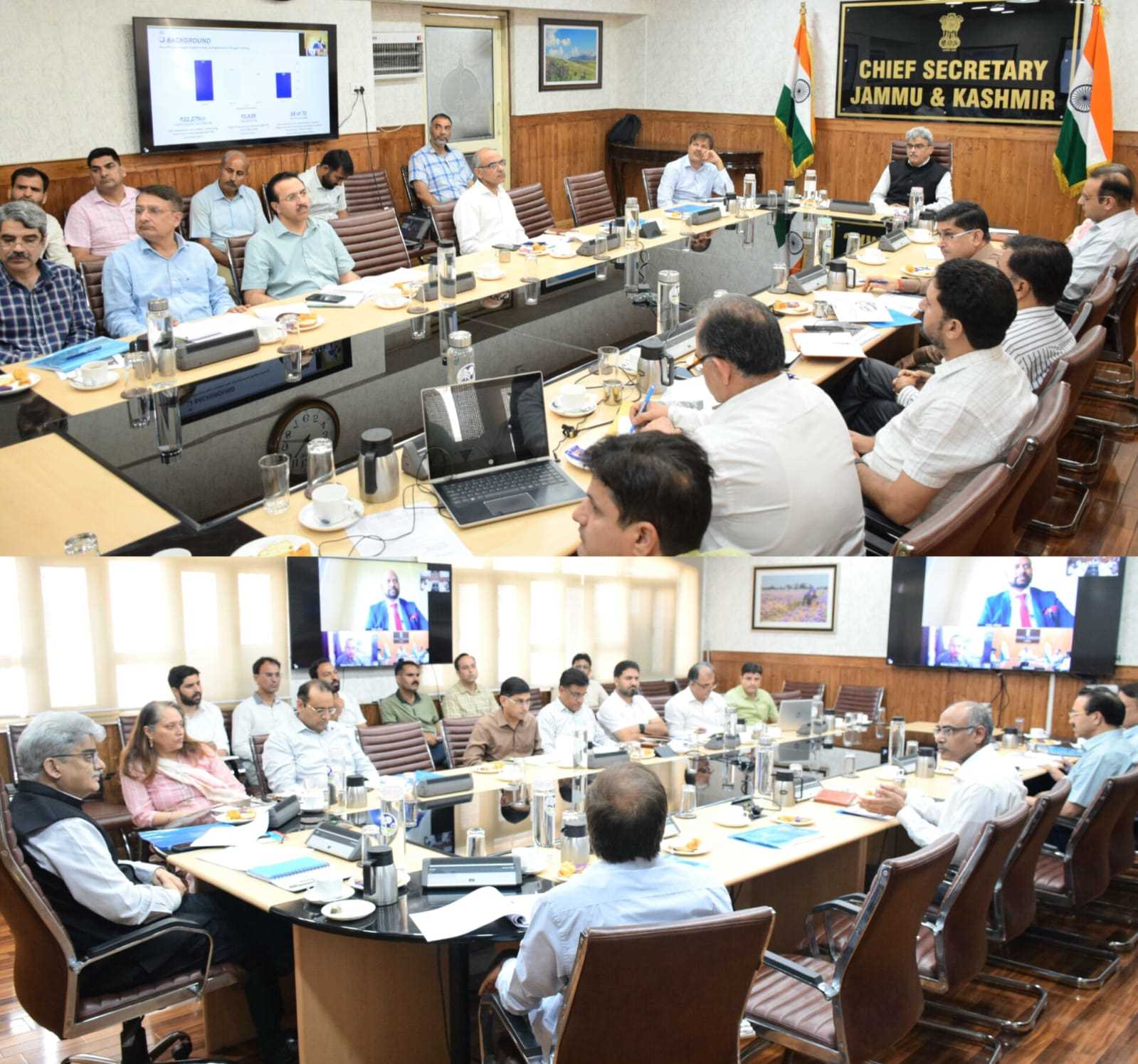
Srinagar, July 16: Chief Secretary Atal Dulloo on Wednesday chaired a high-level meeting to review the proposed Minor Mining Policy-2026, directing officials to formulate a transparent, technology-driven and legally robust framework for scientific management of minor mineral resources in Jammu and Kashmir.
The proposed policy aims to plug existing regulatory gaps, strengthen enforcement against illegal mining and streamline mining operations through greater transparency and digital governance.
During the meeting, the Centre for Innovation, Technology Assessment and Good Governance (CITaG) presented the draft policy framework, highlighting deficiencies in the current system and proposing reforms to improve regulation, environmental compliance and ease of doing business.
The Chief Secretary stressed that all policy provisions must strictly conform to Central laws governing minor minerals and withstand legal scrutiny. He also called for adopting best practices from progressive states such as Odisha while tailoring them to J&K's requirements.
Dulloo directed officials to develop a transparent digital ecosystem for traditional miners, ensuring mining rights remain non-transferable and preventing misuse or subletting. He also sought stronger legal deterrents against illegal mining and emphasized extensive inter-departmental consultations before finalising the policy.
The meeting discussed introducing a single-window clearance system, priority allocation of minerals for government infrastructure projects, scientific riverbed management, periodic revision of penalties, third-party audits for private land mining, and a legally compliant Mine-to-Market tracking mechanism.
Officials also proposed advance environmental clearances, dynamic replenishment rates based on scientific assessments, provisions for emergency mineral extraction during floods and irrigation works, and protection for whistleblowers reporting illegal mining.
To improve transparency and monitoring, the proposed policy envisages an integrated digital platform featuring e-challans, geo-fencing, real-time transportation tracking and other technology-enabled regulatory tools, with BISAG-N likely to assist in its development.
The Chief Secretary directed CITaG to incorporate stakeholders' suggestions into the draft policy, stating that the Minor Mining Policy-2026 should establish an efficient, accountable and sustainable mining ecosystem balancing environmental protection, public interest and economic development.
Srinagar, July 16: Chief Secretary Atal Dulloo on Wednesday chaired a high-level meeting to review the proposed Minor Mining Policy-2026, directing officials to formulate a transparent, technology-driven and legally robust framework for scientific management of minor mineral resources in Jammu and Kashmir.
The proposed policy aims to plug existing regulatory gaps, strengthen enforcement against illegal mining and streamline mining operations through greater transparency and digital governance.
During the meeting, the Centre for Innovation, Technology Assessment and Good Governance (CITaG) presented the draft policy framework, highlighting deficiencies in the current system and proposing reforms to improve regulation, environmental compliance and ease of doing business.
The Chief Secretary stressed that all policy provisions must strictly conform to Central laws governing minor minerals and withstand legal scrutiny. He also called for adopting best practices from progressive states such as Odisha while tailoring them to J&K's requirements.
Dulloo directed officials to develop a transparent digital ecosystem for traditional miners, ensuring mining rights remain non-transferable and preventing misuse or subletting. He also sought stronger legal deterrents against illegal mining and emphasized extensive inter-departmental consultations before finalising the policy.
The meeting discussed introducing a single-window clearance system, priority allocation of minerals for government infrastructure projects, scientific riverbed management, periodic revision of penalties, third-party audits for private land mining, and a legally compliant Mine-to-Market tracking mechanism.
Officials also proposed advance environmental clearances, dynamic replenishment rates based on scientific assessments, provisions for emergency mineral extraction during floods and irrigation works, and protection for whistleblowers reporting illegal mining.
To improve transparency and monitoring, the proposed policy envisages an integrated digital platform featuring e-challans, geo-fencing, real-time transportation tracking and other technology-enabled regulatory tools, with BISAG-N likely to assist in its development.
The Chief Secretary directed CITaG to incorporate stakeholders' suggestions into the draft policy, stating that the Minor Mining Policy-2026 should establish an efficient, accountable and sustainable mining ecosystem balancing environmental protection, public interest and economic development.

© Copyright 2023 brighterkashmir.com All Rights Reserved. Quantum Technologies