10-31-2026     3 رجب 1440

Muslim Women’s Inheritance Rights -1

Earlier prior to 26th Feb 2007 , the gender discriminatory customary usages of right of inheritance of Muslim women to agricultural land, in derogation of The Muslim personal law, complied by Sant Ram Dogra, in his treatise on Tribal customs , that was almost given statutory recognition under section 4 ( d ) of Shri Pratab J&K Consolidation of Laws Act 1977 ( 1920 A.D.) were applicable in the state of Jammu and Kashmir

October 31, 2026 | H.U.Salati/ Nasheem Rashid

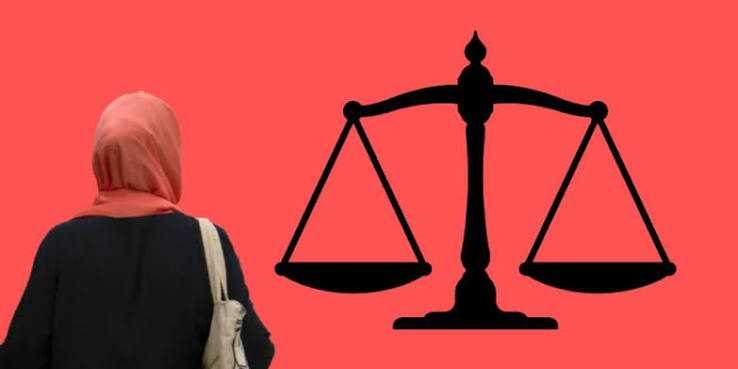
At a time, when economic empowerment of women is propagated and promoted at the National level by The Central Government, It seems incongruous and paradoxical that under Section (2) of The Muslim Personal Law ( Shariat) Application Act ,1937 , made applicable to the State with effect from 31th of December 2019 in substitution of The J&K Muslim Personal Law ( Shariat) Application Act ,2017, Muslim women’s right to inherit from ancestral agricultural property has been purportedly abrogated.

Before enforcement of The J&K Muslim Personal Law (Shariat) Application Act ,2017 , the central Act viz . had not been made applicable to the State of Jammu and Kashmir for the reason of amendment The Muslim Personal Law ( Shariat) Application Act ,1937 therein made under Act No.48 of 159 incorporation the expression in therein “ except the State of Jammu And Kashmir in Sub-section (2) of Section 1. However, in the State of Jammu and Kashmir , under the statue in vogue, named The Shri Pratab J&K Consolidation of Laws Act 1977 ( 1920 A.D.) there existed Section 1 (d) without any saving , which was almost para materia with Section 2 of The Muslim Personal Law ( Shariat) Application Act ,1937.A portion of provisions of The Shri Pratab J&K Consolidation of Laws Act 1977 ( 1920 A.D.) as a whole has been amended under of The J&K Muslim Personal Law (Shariat) Application Act ,2017. Instead some of the provisions which were inconstant with the provisions of The J&K Muslim Personal Law (Shariat) Application Act ,2017 , have been repealed under The J&K Muslim Personal Law (Shariat) Application Act ,2017. Consequently the amended The Shri Pratab J&K Consolidation of Laws Act 1977 ( 1920 A.D.) is very much in existence and applicable in The state of Jammu and Kashmir.
The Muslim Personal Law ( Shariat) Application Act ,1937. was legislated in the year 1937 and was initially enforced in provinces of British undivided India. . A confusion has been created about the policy of decision of the Government of the time about exclusion of agricultural land from the purview of the Act. However , according to Dr. Tahir Mahmood , its exclusion from the purview of the Act was only for jurisdictional reason as under The Government India Act 1935l , the agricultural property was in the jurisdiction of the provincial legislatures and, therefore, the central Government was not competent to enact any law about it. After independence under the Constitution India 1950 it figured in the state list as Entry 5 of List III. After independence initially The Madras legislature amended section 2 of the Act by The Muslim Law ( Shariat) Application ( Madras Amendment ) Act 1949 ,where under Section 2 of the Act was amended to the extent , amongst other things, deletion of the expression , Except agricultural . Thereafter both States of Tamil Nadu and Andra pradesh respective by Tamil Nadu
Amendment Act 1949 and Andra Pradesh Amendment Act 1949 amended section 2 of the Act deleting the expression , Except agricultural Land , contained therein.
Earlier prior to 26th Feb 2007 , the gender discriminatory customary usages of right of inheritance of Muslim women to agricultural land, in derogation of The Muslim personal law, complied by Sant Ram Dogra, in his treatise on Tribal customs , that was almost given statutory recognition under section 4 ( d ) of Shri Pratab J&K Consolidation of Laws Act 1977 ( 1920 A.D.) were applicable in the state of Jammu and Kashmir . The Act The has been repealed under section 3 of The J&K Muslim Personal Law ( Shariat) Application Act ,2017 to the extent of its inconsistency with the provisions of the Act, The Common Law Rule, that if an act has been repealed ,in the absence of the a provision to contrary( a saving Clause ), The Repealed statue stands abrogated for all times to come and shall have the effect of as if they never existed. However , Craies- A Treatise on Statue Law , a Classis Text Book on Interpretation of Statutes , states that in British India Section 6 (1) of The General Clauses Act can be treated to have engrafted an exception to the extent matters specified therein . The principle has been reiterated by Supreme Court of India In The decision delivered in case reported AIR 2000 SC 84 .However under Section 6 (1) of the Act provisions of the repealed Act ,it only saves rights, liability etc. accrued thereunder.
Further The Amended Sub-section (d) of Section 4 of Shri Pratab J&K Consolidation of Laws Act 1977 ( 1920 A.D.) is almost para materia with Section 2 of The J&K Muslim Personal Law ( Shariat) Application Act ,2017 . The J&K Muslim Personal Law ( Shariat) Application Act ,2017 has been repealed by The Muslim Personal Law ( Shariat) Application Act ,1937 by exclusion of The J&K Muslim Personal Law ( Shariat) Application Act ,2017 applicable to the Union Territories of J&K and Ladak. However the Shri Pratab J&K Consolidation of Laws Act 1977 ( 1920 A.D.) has not been included in Table 3 of the fifth schedule of the J&K Reorganization Act,2019 specifying the State Laws including the governors Acts that stood repealed. The Act is a consolidation Statute- a statute not intended to alter the existing Laws and, as such, mere exclusion of the Shri Pratab J&K Consolidation of Laws Act 1977 ( 1920 A.D.) has not been included in Table 3 of the fifth schedule of the J&K Reorganization Act,2019 does not exclude from its applicability in the union Territories of J&K and Ladak .According to Maxwell on Interpretation of Statute, “ where an Act is repealed and the repealing enactment is then repealed by another, which manifests no intention that the original Act shall continue repealed, the common Law Rule is that the repeal of the Second Act revived the first act ab intio. .The Common Law Rule has been reiterated and applied by The supreme court in Nagpure Improvement Trust V/S VasantRou & Others . On this court also the amended The Shri Pratab J&K Consolidation of Laws Act 1977 ( 1920 A.D.) read in conjunction with Amended J&K Land Revenue Act Svt.1996(1939 A.D.)
Additionally due their dis-continuousness with effect from 26th February 2007 up to 9th August 2019, the customary usages have lost the status of being enforceable in The state of J&K since judicial tests for enforceability of customary usages are, amongst other conditions viz. antiquity, peaceful enjoyment, obligatory force public opinion of being obligatory not as merely facultative and continuity .
The Section 2 of the Act begins with the Non-obstante clause { Notwithstanding any custom or usage to the contrary] in respect of all questions enumerated therein including intestate succession ,in cases were the parties are Muslims, the rule of decision shall be the Muslim personal Law ( Shariat ). The expression Notwithstanding any custom or usage to the contrary ‘ points to the conclusion that the Muslim personal Law shall prevail and shall have overriding effect over any contrary custom or usage or Any statute applying any custom or usage contrary to Muslim personal Law.It expressly overrides/or abrogates applicability of customs, in derogation of Muslim personal law in respect of matters covered therein .
The gender discriminatory customary usages that were in vogue before included (1) daughter inherit from the landed property left by her father if she is are made khana-nishen daughter , (2)Daughter simpliciter married outside is disentitled for inheritance ((2) Widow has only life interest in the property of her husband terminable upon her death or marriage .
By the conjoint effect of repeal of The Shri Pratab J&K Consolidation of Laws Act 1977 ( 1920 A.D.) to the extent of exceptions provided under Section 4 (d) , and the use of Non-obstante clause, engrafted in section 2 of the J&K Muslim Personal Law ( Shariat) Application Act ,2017, the provisions of J&K Land revenue Act ,Samvat 1996 , Ordinances, regulations rules ,orders , instructions particularly Standing order No.23-A issued thereunder , stood repealed and/ amended for attestation of mutations contrary to Muslim personal Law , and in substation of them rule for attestation of all mutations of inheritance in case where the parties, is Muslim personal Law of inheritance. Rule 64(11) prescribing attestation of mutations of the daughter if she succeeds to her father according to personal law of deceased will have precedence and/or prevail over other Rules allowing attestation of mutations under customary usages that stand obliterated and have become non-existent.
After scrapping of the Special Status enjoyed by the erstwhile state of Jammu and Kashmir and abrogation of Article 370 of the Constitution of India which [ in the opinion of Syed Tassadque Hussain, the Designated senior advocate of the High Court of J&K, was -An Emblem of Kashmiri Identity ], the state was divided into two Union Territories, one called Union Territory of Jammu and Kashmir ,and the other Union Territory of Ladak. This was achieved by the Declaration made by the President on 6th August 2019 on the statutory resolutions passed by the Lock Sabba and the Raj Sabba respectively on 6th August 2019 and 5th August 2019 respectively . Consequent thereto all the provisions of Indian Constitution , as amended from time to time, were made applicable to the Union Territory of Jammu and Kashmir ,and the. Union Territory of Ladak. The Notification was made applicable with effect from 31th of October 2019. Under Section 95 of the Jammu and Kashmir Reorganization Act, 2019 all Central laws Specified in table I of the fifth schedule were made applicable to the union territories Jammu and Kashmir , and Ladak . Under entry 61 of the table I of the fifth schedule ,The Muslim Personal Law ( Shariat) Application Act ,1937 was made applicable to the union territories Jammu and Kashmir , and Ladak after deletion of the expression “ Except the State of Jammu and Kashmir “in sub-section (2) of Section 1, in substitution of The J&K Muslim Personal Law ( Shariat) Application Act ,2017 which figured at serial No.86 of the Table 3 of the fifth schedule of the Act specifying the State Laws including the governors Acts that stood repealed. However under Table 4 of the fifth schedule ,the state laws enumerated in List –II of Seventh Schedule of The Constitution of India ,including J&K Land Revenue Act Svt.1996 which figured at seral No.71 continued to be inforce in the Union Territories Jammu and Kashmir , and Ladak ( (To be Continued)


il:--------------------h. U. Salati@gmail.com

Muslim Women’s Inheritance Rights -1

Earlier prior to 26th Feb 2007 , the gender discriminatory customary usages of right of inheritance of Muslim women to agricultural land, in derogation of The Muslim personal law, complied by Sant Ram Dogra, in his treatise on Tribal customs , that was almost given statutory recognition under section 4 ( d ) of Shri Pratab J&K Consolidation of Laws Act 1977 ( 1920 A.D.) were applicable in the state of Jammu and Kashmir

October 31, 2026 | H.U.Salati/ Nasheem Rashid

At a time, when economic empowerment of women is propagated and promoted at the National level by The Central Government, It seems incongruous and paradoxical that under Section (2) of The Muslim Personal Law ( Shariat) Application Act ,1937 , made applicable to the State with effect from 31th of December 2019 in substitution of The J&K Muslim Personal Law ( Shariat) Application Act ,2017, Muslim women’s right to inherit from ancestral agricultural property has been purportedly abrogated.

Before enforcement of The J&K Muslim Personal Law (Shariat) Application Act ,2017 , the central Act viz . had not been made applicable to the State of Jammu and Kashmir for the reason of amendment The Muslim Personal Law ( Shariat) Application Act ,1937 therein made under Act No.48 of 159 incorporation the expression in therein “ except the State of Jammu And Kashmir in Sub-section (2) of Section 1. However, in the State of Jammu and Kashmir , under the statue in vogue, named The Shri Pratab J&K Consolidation of Laws Act 1977 ( 1920 A.D.) there existed Section 1 (d) without any saving , which was almost para materia with Section 2 of The Muslim Personal Law ( Shariat) Application Act ,1937.A portion of provisions of The Shri Pratab J&K Consolidation of Laws Act 1977 ( 1920 A.D.) as a whole has been amended under of The J&K Muslim Personal Law (Shariat) Application Act ,2017. Instead some of the provisions which were inconstant with the provisions of The J&K Muslim Personal Law (Shariat) Application Act ,2017 , have been repealed under The J&K Muslim Personal Law (Shariat) Application Act ,2017. Consequently the amended The Shri Pratab J&K Consolidation of Laws Act 1977 ( 1920 A.D.) is very much in existence and applicable in The state of Jammu and Kashmir.
The Muslim Personal Law ( Shariat) Application Act ,1937. was legislated in the year 1937 and was initially enforced in provinces of British undivided India. . A confusion has been created about the policy of decision of the Government of the time about exclusion of agricultural land from the purview of the Act. However , according to Dr. Tahir Mahmood , its exclusion from the purview of the Act was only for jurisdictional reason as under The Government India Act 1935l , the agricultural property was in the jurisdiction of the provincial legislatures and, therefore, the central Government was not competent to enact any law about it. After independence under the Constitution India 1950 it figured in the state list as Entry 5 of List III. After independence initially The Madras legislature amended section 2 of the Act by The Muslim Law ( Shariat) Application ( Madras Amendment ) Act 1949 ,where under Section 2 of the Act was amended to the extent , amongst other things, deletion of the expression , Except agricultural . Thereafter both States of Tamil Nadu and Andra pradesh respective by Tamil Nadu
Amendment Act 1949 and Andra Pradesh Amendment Act 1949 amended section 2 of the Act deleting the expression , Except agricultural Land , contained therein.
Earlier prior to 26th Feb 2007 , the gender discriminatory customary usages of right of inheritance of Muslim women to agricultural land, in derogation of The Muslim personal law, complied by Sant Ram Dogra, in his treatise on Tribal customs , that was almost given statutory recognition under section 4 ( d ) of Shri Pratab J&K Consolidation of Laws Act 1977 ( 1920 A.D.) were applicable in the state of Jammu and Kashmir . The Act The has been repealed under section 3 of The J&K Muslim Personal Law ( Shariat) Application Act ,2017 to the extent of its inconsistency with the provisions of the Act, The Common Law Rule, that if an act has been repealed ,in the absence of the a provision to contrary( a saving Clause ), The Repealed statue stands abrogated for all times to come and shall have the effect of as if they never existed. However , Craies- A Treatise on Statue Law , a Classis Text Book on Interpretation of Statutes , states that in British India Section 6 (1) of The General Clauses Act can be treated to have engrafted an exception to the extent matters specified therein . The principle has been reiterated by Supreme Court of India In The decision delivered in case reported AIR 2000 SC 84 .However under Section 6 (1) of the Act provisions of the repealed Act ,it only saves rights, liability etc. accrued thereunder.
Further The Amended Sub-section (d) of Section 4 of Shri Pratab J&K Consolidation of Laws Act 1977 ( 1920 A.D.) is almost para materia with Section 2 of The J&K Muslim Personal Law ( Shariat) Application Act ,2017 . The J&K Muslim Personal Law ( Shariat) Application Act ,2017 has been repealed by The Muslim Personal Law ( Shariat) Application Act ,1937 by exclusion of The J&K Muslim Personal Law ( Shariat) Application Act ,2017 applicable to the Union Territories of J&K and Ladak. However the Shri Pratab J&K Consolidation of Laws Act 1977 ( 1920 A.D.) has not been included in Table 3 of the fifth schedule of the J&K Reorganization Act,2019 specifying the State Laws including the governors Acts that stood repealed. The Act is a consolidation Statute- a statute not intended to alter the existing Laws and, as such, mere exclusion of the Shri Pratab J&K Consolidation of Laws Act 1977 ( 1920 A.D.) has not been included in Table 3 of the fifth schedule of the J&K Reorganization Act,2019 does not exclude from its applicability in the union Territories of J&K and Ladak .According to Maxwell on Interpretation of Statute, “ where an Act is repealed and the repealing enactment is then repealed by another, which manifests no intention that the original Act shall continue repealed, the common Law Rule is that the repeal of the Second Act revived the first act ab intio. .The Common Law Rule has been reiterated and applied by The supreme court in Nagpure Improvement Trust V/S VasantRou & Others . On this court also the amended The Shri Pratab J&K Consolidation of Laws Act 1977 ( 1920 A.D.) read in conjunction with Amended J&K Land Revenue Act Svt.1996(1939 A.D.)
Additionally due their dis-continuousness with effect from 26th February 2007 up to 9th August 2019, the customary usages have lost the status of being enforceable in The state of J&K since judicial tests for enforceability of customary usages are, amongst other conditions viz. antiquity, peaceful enjoyment, obligatory force public opinion of being obligatory not as merely facultative and continuity .
The Section 2 of the Act begins with the Non-obstante clause { Notwithstanding any custom or usage to the contrary] in respect of all questions enumerated therein including intestate succession ,in cases were the parties are Muslims, the rule of decision shall be the Muslim personal Law ( Shariat ). The expression Notwithstanding any custom or usage to the contrary ‘ points to the conclusion that the Muslim personal Law shall prevail and shall have overriding effect over any contrary custom or usage or Any statute applying any custom or usage contrary to Muslim personal Law.It expressly overrides/or abrogates applicability of customs, in derogation of Muslim personal law in respect of matters covered therein .
The gender discriminatory customary usages that were in vogue before included (1) daughter inherit from the landed property left by her father if she is are made khana-nishen daughter , (2)Daughter simpliciter married outside is disentitled for inheritance ((2) Widow has only life interest in the property of her husband terminable upon her death or marriage .
By the conjoint effect of repeal of The Shri Pratab J&K Consolidation of Laws Act 1977 ( 1920 A.D.) to the extent of exceptions provided under Section 4 (d) , and the use of Non-obstante clause, engrafted in section 2 of the J&K Muslim Personal Law ( Shariat) Application Act ,2017, the provisions of J&K Land revenue Act ,Samvat 1996 , Ordinances, regulations rules ,orders , instructions particularly Standing order No.23-A issued thereunder , stood repealed and/ amended for attestation of mutations contrary to Muslim personal Law , and in substation of them rule for attestation of all mutations of inheritance in case where the parties, is Muslim personal Law of inheritance. Rule 64(11) prescribing attestation of mutations of the daughter if she succeeds to her father according to personal law of deceased will have precedence and/or prevail over other Rules allowing attestation of mutations under customary usages that stand obliterated and have become non-existent.
After scrapping of the Special Status enjoyed by the erstwhile state of Jammu and Kashmir and abrogation of Article 370 of the Constitution of India which [ in the opinion of Syed Tassadque Hussain, the Designated senior advocate of the High Court of J&K, was -An Emblem of Kashmiri Identity ], the state was divided into two Union Territories, one called Union Territory of Jammu and Kashmir ,and the other Union Territory of Ladak. This was achieved by the Declaration made by the President on 6th August 2019 on the statutory resolutions passed by the Lock Sabba and the Raj Sabba respectively on 6th August 2019 and 5th August 2019 respectively . Consequent thereto all the provisions of Indian Constitution , as amended from time to time, were made applicable to the Union Territory of Jammu and Kashmir ,and the. Union Territory of Ladak. The Notification was made applicable with effect from 31th of October 2019. Under Section 95 of the Jammu and Kashmir Reorganization Act, 2019 all Central laws Specified in table I of the fifth schedule were made applicable to the union territories Jammu and Kashmir , and Ladak . Under entry 61 of the table I of the fifth schedule ,The Muslim Personal Law ( Shariat) Application Act ,1937 was made applicable to the union territories Jammu and Kashmir , and Ladak after deletion of the expression “ Except the State of Jammu and Kashmir “in sub-section (2) of Section 1, in substitution of The J&K Muslim Personal Law ( Shariat) Application Act ,2017 which figured at serial No.86 of the Table 3 of the fifth schedule of the Act specifying the State Laws including the governors Acts that stood repealed. However under Table 4 of the fifth schedule ,the state laws enumerated in List –II of Seventh Schedule of The Constitution of India ,including J&K Land Revenue Act Svt.1996 which figured at seral No.71 continued to be inforce in the Union Territories Jammu and Kashmir , and Ladak ( (To be Continued)


il:--------------------h. U. Salati@gmail.com

  • Address: R.C 2 Quarters Press Enclave Near Pratap Park, Srinagar 190001.
  • Phone: 0194-2451076 , +91-941-940-0056 , +91-962-292-4716
  • Email: brighterkmr@gmail.com
Owner, Printer, Publisher, Editor: Farooq Ahmad Wani
Legal Advisor: M.J. Hubi
Printed at: Sangermal offset Printing Press Rangreth ( Budgam)
Published from: Gulshanabad Chraresharief Budgam
RNI No.: JKENG/2010/33802
Office No’s: 0194-2451076
Mobile No’s 9419400056, 9622924716 ,7006086442
Postal Regd No: SK/135/2010-2019
POST BOX NO: 1001
Administrative Office: R.C 2 Quarters Press Enclave Near Pratap Park ( Srinagar -190001)

© Copyright 2023 brighterkashmir.com All Rights Reserved. Quantum Technologies

Owner, Printer, Publisher, Editor: Farooq Ahmad Wani
Legal Advisor: M.J. Hubi
Printed at: Abid Enterprizes, Zainkote Srinagar
Published from: Gulshanabad Chraresharief Budgam
RNI No.: JKENG/2010/33802
Office No’s: 0194-2451076, 9622924716 , 9419400056
Postal Regd No: SK/135/2010-2019
Administrative Office: Abi Guzer Srinagar

© Copyright 2018 brighterkashmir.com All Rights Reserved.