
BREAKING NEWS
Similarly, shortly after last month’s Red Fort suicide car bomb terrorist attack in New Delhi, so-called former ‘Prime Minister of Pakistan occupied Jammu and Kashmir [PoJK] Chaudhary Anwarul Haq told the PoJK Assembly that “I had said earlier [that] if you [India] keep bleeding Balochistan, we will hit you from Red Fort to the forests of Kashmir. By the grace of Allah, we have done it…our brave men have done it.”
These social anxieties are compounded by pressures at home. Rising depression, unemployment, anxiety, and even suicide reflect what Émile Durkheim identified as the consequences of both under-regulation and over-regulation- where individuals either lack proper guidance or feel suffocated by expectations, surveillance, and fear of stepping outside prescribed spaces. The combination of external suspicion and internal suffocation creates a psychological climate marked by uncertainty and fear- one that demands both emotional resilience and intellectual clarity
When life confronts individuals with critical decisions, unexpected trials, or the silence of unanswered prayers, the human mind often oscillates between confusion and hope. This experience is universal; yet the weight of uncertainty feels particularly heavy in contemporary times, marked by rapid socio-political shifts, radicalization, rising mistrust, and the emotional vulnerability that accompanies them. In Kashmir, this burden is even more pronounced. Many Kashmiris increasingly hesitate to step outside the Valley for education or work, especially after incidents such as the recent Delhi suicide blast, which sections of the mainstream media hastily framed through a communal lens before factual clarity emerged. Profiling and mistreatment of Kashmiris have become disturbingly frequent across universities, workplaces, and travel spaces. Stereotyping of Kashmiris-though not entirely new-has grown more chronic and systemic over the last decade. In such an atmosphere, where both fear and confusion shape everyday decisions, the need for sound guidance-both rational and spiritual-becomes more urgent.
“We are living in a time where fear spreads faster than facts
and clarity is needed more than ever”
Recent events reflect how deep and personal this insecurity has become. For instance, a widely circulated report in The Times of India highlighted a case where a Kashmiri Muslim woman-who had lived as a tenant in Delhi for thirteen years-was suddenly denied entry to her rented accommodation. In another experience, I recently travelled for an interview at Punjab University, Chandigarh. While the process itself was smooth, the atmosphere of suspicion that Kashmiris routinely face left me questioning whether stepping outside the Valley is worth risking one’s emotional well-being and safety-even when career opportunities are at stake. These experiences, though different in nature, mirror a common reality: distrust has grown to a point where ordinary Kashmiris must constantly weigh their aspirations against the fear of being profiled or mistreated.
Although law and order rightly stand above all else, they must never come at the cost of ordinary people-especially communities like Kashmiris who repeatedly face profiling and suspicion. The media, often regarded as the steering wheel of a democracy, carries a profound responsibility in shaping public perception. When its role becomes communal or sensationalist, isolated acts of violence are unfairly projected onto entire communities. Terror attacks, tragic as they are, directly harm a limited number of individuals or families; but the communalization of such incidents becomes a social cancer that wounds whole populations, fuels mistrust, and deepens societal divides. If our India sincerely aspires to the vision of Viksit Bharat, then curbing biased, inflammatory reporting and holding media accountable becomes essential. A strong and inclusive democracy cannot be built on fear-driven narratives or the stigmatization of its own citizens.
These social anxieties are compounded by pressures at home. Rising depression, unemployment, anxiety, and even suicide reflect what Émile Durkheim identified as the consequences of both under-regulation and over-regulation- where individuals either lack proper guidance or feel suffocated by expectations, surveillance, and fear of stepping outside prescribed spaces. The combination of external suspicion and internal suffocation creates a psychological climate marked by uncertainty and fear- one that demands both emotional resilience and intellectual clarity.
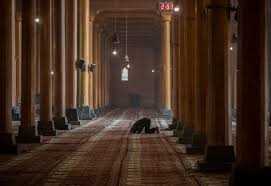
Islam offers a dual remedy- more rational balanced and spiritual through two deeply rooted principles: Istisharah (consultation with the wise) and Istikharah (seeking divine guidance). These principles do not belong to ritualism alone; they represent an integrated system where human reasoning and divine wisdom work in harmony. Together, they form a conceptual framework that is spiritually elevating and psychologically stabilizing, relevant not only to believers but to anyone negotiating complexity in a troubled world.
Classical scholars articulated the profound value of these principles with remarkable clarity. Imam Taimi (rahimahullah) observed that no individual regrets consulting others or seeking divine guidance. Qatādah (rahimahullah) added that those who combine the two will never be deprived of a blessed decision. These insights capture a universal truth: meaningful decision-making requires both human effort and spiritual humility.
The Qur’an itself guided the Prophet Muhammad (SAW) “…and consult them in matters of importance. Then, when you have taken a decision, put your trust in Allah.” (3:159). Despite being a recipient of revelation, the Prophet (SAW) practiced consultation extensively-whether before the Battle of Uhud or during the tense negotiations of Hudaybiyyah, where the insightful counsel of Umm Salamah (RA) helped stabilize an emotionally charged moment. This tradition underlines that seeking advice is not a sign of weakness but an expression of maturity, humility, and intellectual responsibility.
From a contemporary academic perspective, Istisharah aligns with what psychologists describe as “social resilience.” Consultation with knowledgeable, trustworthy individuals offers cognitive clarity, reduces emotional overload, mitigates impulsive decision-making, and expands one’s interpretive horizon. Islam thus anticipated a critical component of modern psychological counseling: sharing one’s burden prevents inner fragmentation.
Istisharah is also essential in another sense: it protects individuals and communities from collective mistakes, manipulated decisions, radicalization, misguidance, hyper-emotional groups, and pseudo-followism. In times when misinformation spreads rapidly and emotional narratives overpower reason, many people-especially the youth-become easy targets for ideological manipulation and reactive decision-making. When people isolate themselves from wise counsel-or rely solely on hearsay, emotional rhetoric, or unverified claims-they become vulnerable to confusion and harmful choices. Consulting the wise, experienced, and righteous acts as a safeguard that prevents unnecessary conflicts, social tensions, disunity, and actions that individuals may later regret.
If Istisharah sharpens thought, Istikharah soothes the heart. The Prophet (SAW) taught the famous supplication of Istikharah, beginning with: “O Allah, I seek Your guidance through Your knowledge and seek ability through Your power…” (Bukhari 1162). Contrary to popular misconceptions, Istikharah is not about miraculous signs or dreams but about aligning one’s internal state with trust, clarity, and acceptance after sincere prayer. It cultivates what psychologists call “emotional acceptance”-the ability to move beyond paralyzing uncertainty toward a condition of inner composure.
Istisharah and Istikharah apply to all meaningful decisions-career choices, marriage, relocation, friendships, financial matters, studies, and anything else that weighs heavily upon the heart.
Islam does not separate rational inquiry from spiritual surrender. The Qur’an praises those who combine prayer with consultation (42:38), suggesting that a balanced life emerges from integrating intellect with devotion. Depression and anxiety often stem from isolation or the feeling of being alone in uncertainty. Islamic teachings intervene by encouraging believers to seek both human counsel and divine reassurance, reinforcing the idea that support networks -earthly and spiritual-are essential for psychological well-being.
A well-known prophetic saying, “Tie your camel first, then trust in Allah” (Tirmidhi 2517), encapsulates the synthesis of effort and reliance. It urges individuals to act with responsibility, seek guidance, assess risks, and then place their trust in outcomes shaped by divine wisdom. In contexts like Kashmir-where sociopolitical unpredictability intersects with existential anxiety-this balance becomes especially meaningful.
For Kashmiris considering opportunities outside the Valley, decisions should not be taken in haste. The complexities of profiling, unfamiliar environments, and existing prejudices necessitate careful evaluation. Sound decisions emerge through the advice of experienced individuals, a clear understanding of risks, and the spiritual serenity derived from Istikharah. This approach neither discourages mobility nor promotes fear; instead, it emphasizes informed choice, emotional preparedness, and reliance on both reason and faith.
In a world marked by social fractures, ideological polarization, and psychological vulnerability, the prophetic model offers a timeless method for navigating uncertainty. Consultation with the wise ensures intellectual clarity; seeking divine guidance nurtures emotional peace. Together, they offer a pathway toward purposeful decision-making-one that serves Muslims, humanity at large, and communities such as Kashmiris who navigate unique challenges at multiple levels.
Ultimately, the journey toward clarity is neither purely rational nor purely spiritual. It lies in the harmonious movement between thought and trust, effort and surrender. In moments of confusion, the enduring advice remains simple yet profound: consult the wise, and then consult the All-Wise. Between Istisharah and Istikharah rests the secret of a steady mind, a peaceful heart, and a life guided by purpose- even in the most uncertain times.
Email:-----------------------rameezln777@gmail.co
Similarly, shortly after last month’s Red Fort suicide car bomb terrorist attack in New Delhi, so-called former ‘Prime Minister of Pakistan occupied Jammu and Kashmir [PoJK] Chaudhary Anwarul Haq told the PoJK Assembly that “I had said earlier [that] if you [India] keep bleeding Balochistan, we will hit you from Red Fort to the forests of Kashmir. By the grace of Allah, we have done it…our brave men have done it.”
These social anxieties are compounded by pressures at home. Rising depression, unemployment, anxiety, and even suicide reflect what Émile Durkheim identified as the consequences of both under-regulation and over-regulation- where individuals either lack proper guidance or feel suffocated by expectations, surveillance, and fear of stepping outside prescribed spaces. The combination of external suspicion and internal suffocation creates a psychological climate marked by uncertainty and fear- one that demands both emotional resilience and intellectual clarity
When life confronts individuals with critical decisions, unexpected trials, or the silence of unanswered prayers, the human mind often oscillates between confusion and hope. This experience is universal; yet the weight of uncertainty feels particularly heavy in contemporary times, marked by rapid socio-political shifts, radicalization, rising mistrust, and the emotional vulnerability that accompanies them. In Kashmir, this burden is even more pronounced. Many Kashmiris increasingly hesitate to step outside the Valley for education or work, especially after incidents such as the recent Delhi suicide blast, which sections of the mainstream media hastily framed through a communal lens before factual clarity emerged. Profiling and mistreatment of Kashmiris have become disturbingly frequent across universities, workplaces, and travel spaces. Stereotyping of Kashmiris-though not entirely new-has grown more chronic and systemic over the last decade. In such an atmosphere, where both fear and confusion shape everyday decisions, the need for sound guidance-both rational and spiritual-becomes more urgent.
“We are living in a time where fear spreads faster than facts
and clarity is needed more than ever”
Recent events reflect how deep and personal this insecurity has become. For instance, a widely circulated report in The Times of India highlighted a case where a Kashmiri Muslim woman-who had lived as a tenant in Delhi for thirteen years-was suddenly denied entry to her rented accommodation. In another experience, I recently travelled for an interview at Punjab University, Chandigarh. While the process itself was smooth, the atmosphere of suspicion that Kashmiris routinely face left me questioning whether stepping outside the Valley is worth risking one’s emotional well-being and safety-even when career opportunities are at stake. These experiences, though different in nature, mirror a common reality: distrust has grown to a point where ordinary Kashmiris must constantly weigh their aspirations against the fear of being profiled or mistreated.
Although law and order rightly stand above all else, they must never come at the cost of ordinary people-especially communities like Kashmiris who repeatedly face profiling and suspicion. The media, often regarded as the steering wheel of a democracy, carries a profound responsibility in shaping public perception. When its role becomes communal or sensationalist, isolated acts of violence are unfairly projected onto entire communities. Terror attacks, tragic as they are, directly harm a limited number of individuals or families; but the communalization of such incidents becomes a social cancer that wounds whole populations, fuels mistrust, and deepens societal divides. If our India sincerely aspires to the vision of Viksit Bharat, then curbing biased, inflammatory reporting and holding media accountable becomes essential. A strong and inclusive democracy cannot be built on fear-driven narratives or the stigmatization of its own citizens.
These social anxieties are compounded by pressures at home. Rising depression, unemployment, anxiety, and even suicide reflect what Émile Durkheim identified as the consequences of both under-regulation and over-regulation- where individuals either lack proper guidance or feel suffocated by expectations, surveillance, and fear of stepping outside prescribed spaces. The combination of external suspicion and internal suffocation creates a psychological climate marked by uncertainty and fear- one that demands both emotional resilience and intellectual clarity.
Islam offers a dual remedy- more rational balanced and spiritual through two deeply rooted principles: Istisharah (consultation with the wise) and Istikharah (seeking divine guidance). These principles do not belong to ritualism alone; they represent an integrated system where human reasoning and divine wisdom work in harmony. Together, they form a conceptual framework that is spiritually elevating and psychologically stabilizing, relevant not only to believers but to anyone negotiating complexity in a troubled world.
Classical scholars articulated the profound value of these principles with remarkable clarity. Imam Taimi (rahimahullah) observed that no individual regrets consulting others or seeking divine guidance. Qatādah (rahimahullah) added that those who combine the two will never be deprived of a blessed decision. These insights capture a universal truth: meaningful decision-making requires both human effort and spiritual humility.
The Qur’an itself guided the Prophet Muhammad (SAW) “…and consult them in matters of importance. Then, when you have taken a decision, put your trust in Allah.” (3:159). Despite being a recipient of revelation, the Prophet (SAW) practiced consultation extensively-whether before the Battle of Uhud or during the tense negotiations of Hudaybiyyah, where the insightful counsel of Umm Salamah (RA) helped stabilize an emotionally charged moment. This tradition underlines that seeking advice is not a sign of weakness but an expression of maturity, humility, and intellectual responsibility.
From a contemporary academic perspective, Istisharah aligns with what psychologists describe as “social resilience.” Consultation with knowledgeable, trustworthy individuals offers cognitive clarity, reduces emotional overload, mitigates impulsive decision-making, and expands one’s interpretive horizon. Islam thus anticipated a critical component of modern psychological counseling: sharing one’s burden prevents inner fragmentation.
Istisharah is also essential in another sense: it protects individuals and communities from collective mistakes, manipulated decisions, radicalization, misguidance, hyper-emotional groups, and pseudo-followism. In times when misinformation spreads rapidly and emotional narratives overpower reason, many people-especially the youth-become easy targets for ideological manipulation and reactive decision-making. When people isolate themselves from wise counsel-or rely solely on hearsay, emotional rhetoric, or unverified claims-they become vulnerable to confusion and harmful choices. Consulting the wise, experienced, and righteous acts as a safeguard that prevents unnecessary conflicts, social tensions, disunity, and actions that individuals may later regret.
If Istisharah sharpens thought, Istikharah soothes the heart. The Prophet (SAW) taught the famous supplication of Istikharah, beginning with: “O Allah, I seek Your guidance through Your knowledge and seek ability through Your power…” (Bukhari 1162). Contrary to popular misconceptions, Istikharah is not about miraculous signs or dreams but about aligning one’s internal state with trust, clarity, and acceptance after sincere prayer. It cultivates what psychologists call “emotional acceptance”-the ability to move beyond paralyzing uncertainty toward a condition of inner composure.
Istisharah and Istikharah apply to all meaningful decisions-career choices, marriage, relocation, friendships, financial matters, studies, and anything else that weighs heavily upon the heart.
Islam does not separate rational inquiry from spiritual surrender. The Qur’an praises those who combine prayer with consultation (42:38), suggesting that a balanced life emerges from integrating intellect with devotion. Depression and anxiety often stem from isolation or the feeling of being alone in uncertainty. Islamic teachings intervene by encouraging believers to seek both human counsel and divine reassurance, reinforcing the idea that support networks -earthly and spiritual-are essential for psychological well-being.
A well-known prophetic saying, “Tie your camel first, then trust in Allah” (Tirmidhi 2517), encapsulates the synthesis of effort and reliance. It urges individuals to act with responsibility, seek guidance, assess risks, and then place their trust in outcomes shaped by divine wisdom. In contexts like Kashmir-where sociopolitical unpredictability intersects with existential anxiety-this balance becomes especially meaningful.
For Kashmiris considering opportunities outside the Valley, decisions should not be taken in haste. The complexities of profiling, unfamiliar environments, and existing prejudices necessitate careful evaluation. Sound decisions emerge through the advice of experienced individuals, a clear understanding of risks, and the spiritual serenity derived from Istikharah. This approach neither discourages mobility nor promotes fear; instead, it emphasizes informed choice, emotional preparedness, and reliance on both reason and faith.
In a world marked by social fractures, ideological polarization, and psychological vulnerability, the prophetic model offers a timeless method for navigating uncertainty. Consultation with the wise ensures intellectual clarity; seeking divine guidance nurtures emotional peace. Together, they offer a pathway toward purposeful decision-making-one that serves Muslims, humanity at large, and communities such as Kashmiris who navigate unique challenges at multiple levels.
Ultimately, the journey toward clarity is neither purely rational nor purely spiritual. It lies in the harmonious movement between thought and trust, effort and surrender. In moments of confusion, the enduring advice remains simple yet profound: consult the wise, and then consult the All-Wise. Between Istisharah and Istikharah rests the secret of a steady mind, a peaceful heart, and a life guided by purpose- even in the most uncertain times.
Email:-----------------------rameezln777@gmail.co

© Copyright 2023 brighterkashmir.com All Rights Reserved. Quantum Technologies