
BREAKING NEWS
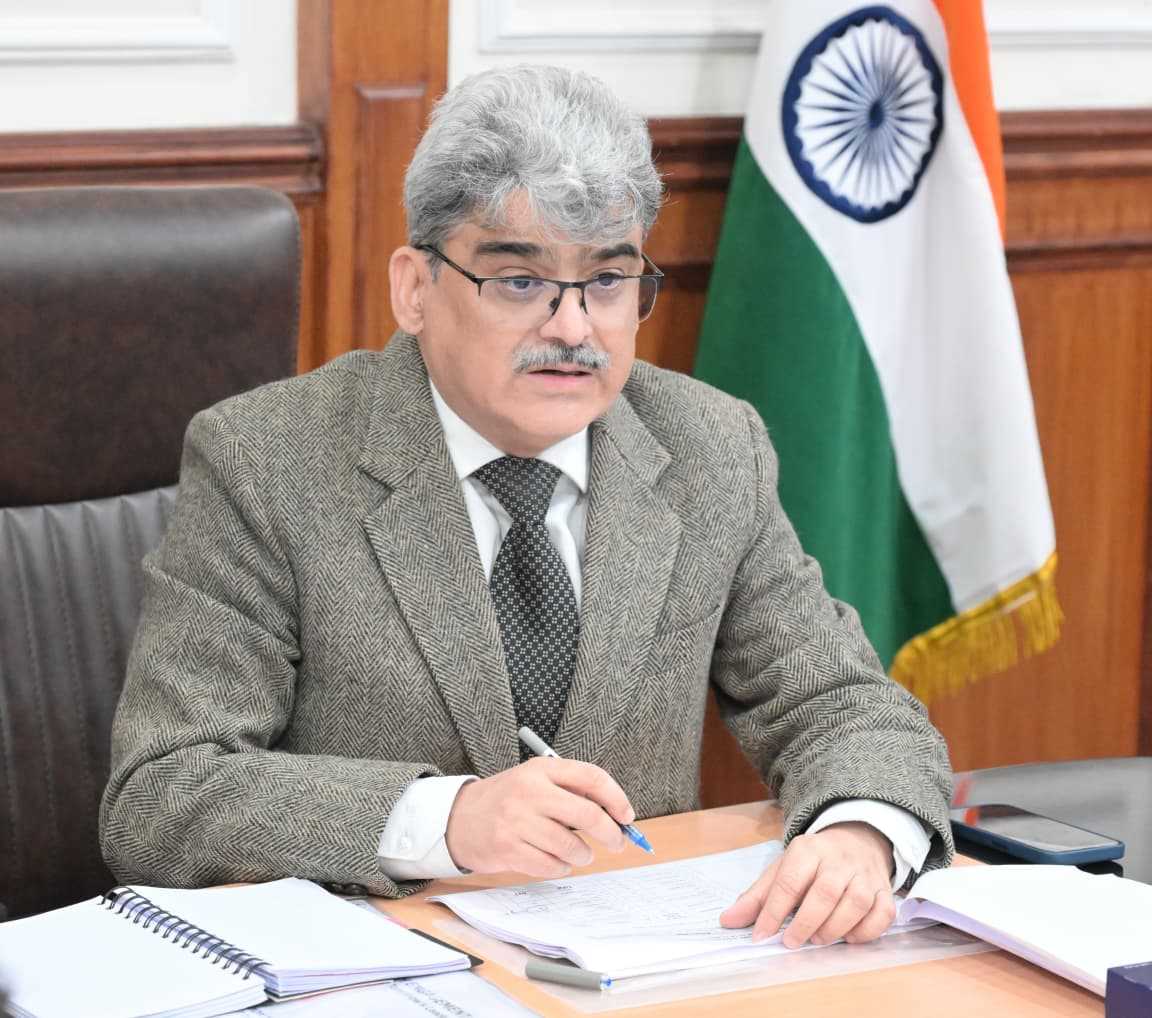
Chief Secretary, Atal Dulloo today chaired the 9th Executive Council Meeting of the Jammu & Kashmir Rural Livelihood Mission (JKRLM) to undertake a comprehensive review of its performance under the UMEED (National Rural Livelihood Mission – NRLM) framework and to chart out a roadmap for strengthening rural livelihoods and women-led development across the UT.
The meeting was attended by Secretary, Rural Development Department (RDD); Managing Director, JKRLM; Director General (Resources); Director General (Budget); Chief Operating Officer, HIMAYAT; Convenor, UTLBC, and other senior officers of the department.
During the deliberations, the Chief Secretary underscored the critical importance of enhancing credit linkages and strengthening the capacity of Self Help Groups (SHGs) so that they are able to transform into sustainable rural enterprises, reiterating that enterprise development remains the core objective behind the formation of SHGs.
He stressed the need for making Community Managed Training Centres (CMTCs) functional in every district, ensuring delivery of high-quality training to SHG members through resource persons from OMPLIS. He emphasised that these centres should emerge as vibrant learning spaces where women feel encouraged to spend time acquiring new skills and upgrading existing ones.
Highlighting the role of financial inclusion at the grassroots level, the Chief Secretary directed that the income of Banking Correspondents (BCs) be enhanced substantially. He called for onboarding Common Service Centres (CSCs) and J&K Bank to increase transaction volumes, thereby improving the earnings and sustainability of BCs.
The Chief Secretary also directed the department to fully leverage the Lal Ded Stree Shakti Scheme and Mission YUVA, urging that women entrepreneurs be encouraged to move beyond the ‘Lakhpati’ benchmark. He set an ambitious target of doubling the number of ‘Millionaire Didis’ from the existing 50 to 100 within the next six months.
Earlier, Secretary RDD, Aijaz Asad, informed that the UMEED programme is currently being implemented across 285 blocks in all 20 districts of Jammu & Kashmir, covering almost the entire rural geography of the UT. He stated that 7,84,053 rural households have been mobilised into 96,000 Self Help Groups, which have further been federated into 7,453 Village Organisations (VOs) and 650 Cluster Level Federations (CLFs).
He added that to strengthen community institutions, capitalisation support of ₹528.86 Cr has been provided to community-based organisations. Further, since 2013-14, ₹2,912.66 Cr in bank credit has been accessed by 67,269 SHGs, significantly deepening financial inclusion and livelihood opportunities in rural areas.
Presenting the achievements of JKRLM, Managing Director, JKRLM, Subhra Sharma, informed that under the Start-up Village Entrepreneurship Programme (SVEP), 8,231 rural enterprises have been supported in 14 blocks, with ₹18.71 Cr disbursed as Community Investment Fund (CIF).
She further apprised that farm-based livelihoods interventions have been implemented across all blocks, benefiting 5,15,706 Mahila Kisans through adoption of agro-ecological practices and improved livestock management.
During the current financial year, under CIF, against a physical target of 2,990 SHGs, an achievement of 3,459 SHGs has been recorded, with financial assistance of ₹2,2.49Cr disbursed. Under the Revolving Fund (RF), 1,688 SHGs were supported against a target of 3,026, with ₹2.53 Cr released.
Cumulatively, 78,508 SHGs have received Revolving Fund support amounting to ₹117 Cr, while 65,000 SHGs have been provided CIF support totalling ₹402.83 Cr, as reflected on the official portal.
Under the Lal Ded Stree Shakti Scheme, against a target of 5,000 cases for FY 2025-26, 2,356 cases involving ₹25.59 Cr have been sponsored so far. Of these, 709 cases have already been sanctioned with financial approval of ₹8.50 Cr, providing focused entrepreneurial support to women.
Regarding doorstep banking services, the meeting was informed that 710 SHG members are currently engaged as Banking Correspondents, of which 553 are associated with J&K Bank, significantly strengthening rural banking outreach.
The Lakhpati Didi Mission has shown remarkable progress. Against a target of 2.33 lakh potential Lakhpati Didis, 2.60 lakh women have been identified, and 2.01 lakh women have already been transformed into Lakhpati Didis through a combination of skill development, financial assistance and market linkages.
Highlighting other key interventions, it was informed that 17,511 SHG members have received skill training through ITIs, NIFT, ICICI Foundation, Honda Foundation and the Central University of Jammu. In addition, 7 SARAS Melas and 4 exhibitions have been organised across districts to promote SHG products.
It was further informed that 90 SHG products have been onboarded on major e-commerce platforms including Amazon, Flipkart and Meesho. To strengthen market access, 9 District Haats and 8 UMEED Women Haats have been developed, while retail outlets have also been established at airports to showcase and sell SHG products.
In the financial inclusion domain, 337 Bank Mitras and 710 Banking Correspondents have been engaged from among SHG members. Further, 1.79 lakh members have been enrolled under PMJJBY and PMSBY insurance schemes, 476 PLD cases have been disbursed under the Lal Ded Scheme, and 1,56,843 members have been converged with Agriculture, Horticulture and allied departments.
Outlining the roadmap ahead, it was stated that JKRLM will focus on enterprise scaling and diversification, cluster-based growth, capacity building in high-end handicrafts and food processing, financial literacy across all 285 blocks, and strengthening start-up ecosystems through SVEP and MKSP.
The Mission also plans exposure visits to best livelihood models in states such as Jharkhand, Madhya Pradesh, Odisha, Kerala and Telangana, besides establishing mini common facility centres and processing units in 176 clusters across different districts of J&K.
Chief Secretary, Atal Dulloo today chaired the 9th Executive Council Meeting of the Jammu & Kashmir Rural Livelihood Mission (JKRLM) to undertake a comprehensive review of its performance under the UMEED (National Rural Livelihood Mission – NRLM) framework and to chart out a roadmap for strengthening rural livelihoods and women-led development across the UT.
The meeting was attended by Secretary, Rural Development Department (RDD); Managing Director, JKRLM; Director General (Resources); Director General (Budget); Chief Operating Officer, HIMAYAT; Convenor, UTLBC, and other senior officers of the department.
During the deliberations, the Chief Secretary underscored the critical importance of enhancing credit linkages and strengthening the capacity of Self Help Groups (SHGs) so that they are able to transform into sustainable rural enterprises, reiterating that enterprise development remains the core objective behind the formation of SHGs.
He stressed the need for making Community Managed Training Centres (CMTCs) functional in every district, ensuring delivery of high-quality training to SHG members through resource persons from OMPLIS. He emphasised that these centres should emerge as vibrant learning spaces where women feel encouraged to spend time acquiring new skills and upgrading existing ones.
Highlighting the role of financial inclusion at the grassroots level, the Chief Secretary directed that the income of Banking Correspondents (BCs) be enhanced substantially. He called for onboarding Common Service Centres (CSCs) and J&K Bank to increase transaction volumes, thereby improving the earnings and sustainability of BCs.
The Chief Secretary also directed the department to fully leverage the Lal Ded Stree Shakti Scheme and Mission YUVA, urging that women entrepreneurs be encouraged to move beyond the ‘Lakhpati’ benchmark. He set an ambitious target of doubling the number of ‘Millionaire Didis’ from the existing 50 to 100 within the next six months.
Earlier, Secretary RDD, Aijaz Asad, informed that the UMEED programme is currently being implemented across 285 blocks in all 20 districts of Jammu & Kashmir, covering almost the entire rural geography of the UT. He stated that 7,84,053 rural households have been mobilised into 96,000 Self Help Groups, which have further been federated into 7,453 Village Organisations (VOs) and 650 Cluster Level Federations (CLFs).
He added that to strengthen community institutions, capitalisation support of ₹528.86 Cr has been provided to community-based organisations. Further, since 2013-14, ₹2,912.66 Cr in bank credit has been accessed by 67,269 SHGs, significantly deepening financial inclusion and livelihood opportunities in rural areas.
Presenting the achievements of JKRLM, Managing Director, JKRLM, Subhra Sharma, informed that under the Start-up Village Entrepreneurship Programme (SVEP), 8,231 rural enterprises have been supported in 14 blocks, with ₹18.71 Cr disbursed as Community Investment Fund (CIF).
She further apprised that farm-based livelihoods interventions have been implemented across all blocks, benefiting 5,15,706 Mahila Kisans through adoption of agro-ecological practices and improved livestock management.
During the current financial year, under CIF, against a physical target of 2,990 SHGs, an achievement of 3,459 SHGs has been recorded, with financial assistance of ₹2,2.49Cr disbursed. Under the Revolving Fund (RF), 1,688 SHGs were supported against a target of 3,026, with ₹2.53 Cr released.
Cumulatively, 78,508 SHGs have received Revolving Fund support amounting to ₹117 Cr, while 65,000 SHGs have been provided CIF support totalling ₹402.83 Cr, as reflected on the official portal.
Under the Lal Ded Stree Shakti Scheme, against a target of 5,000 cases for FY 2025-26, 2,356 cases involving ₹25.59 Cr have been sponsored so far. Of these, 709 cases have already been sanctioned with financial approval of ₹8.50 Cr, providing focused entrepreneurial support to women.
Regarding doorstep banking services, the meeting was informed that 710 SHG members are currently engaged as Banking Correspondents, of which 553 are associated with J&K Bank, significantly strengthening rural banking outreach.
The Lakhpati Didi Mission has shown remarkable progress. Against a target of 2.33 lakh potential Lakhpati Didis, 2.60 lakh women have been identified, and 2.01 lakh women have already been transformed into Lakhpati Didis through a combination of skill development, financial assistance and market linkages.
Highlighting other key interventions, it was informed that 17,511 SHG members have received skill training through ITIs, NIFT, ICICI Foundation, Honda Foundation and the Central University of Jammu. In addition, 7 SARAS Melas and 4 exhibitions have been organised across districts to promote SHG products.
It was further informed that 90 SHG products have been onboarded on major e-commerce platforms including Amazon, Flipkart and Meesho. To strengthen market access, 9 District Haats and 8 UMEED Women Haats have been developed, while retail outlets have also been established at airports to showcase and sell SHG products.
In the financial inclusion domain, 337 Bank Mitras and 710 Banking Correspondents have been engaged from among SHG members. Further, 1.79 lakh members have been enrolled under PMJJBY and PMSBY insurance schemes, 476 PLD cases have been disbursed under the Lal Ded Scheme, and 1,56,843 members have been converged with Agriculture, Horticulture and allied departments.
Outlining the roadmap ahead, it was stated that JKRLM will focus on enterprise scaling and diversification, cluster-based growth, capacity building in high-end handicrafts and food processing, financial literacy across all 285 blocks, and strengthening start-up ecosystems through SVEP and MKSP.
The Mission also plans exposure visits to best livelihood models in states such as Jharkhand, Madhya Pradesh, Odisha, Kerala and Telangana, besides establishing mini common facility centres and processing units in 176 clusters across different districts of J&K.

© Copyright 2023 brighterkashmir.com All Rights Reserved. Quantum Technologies