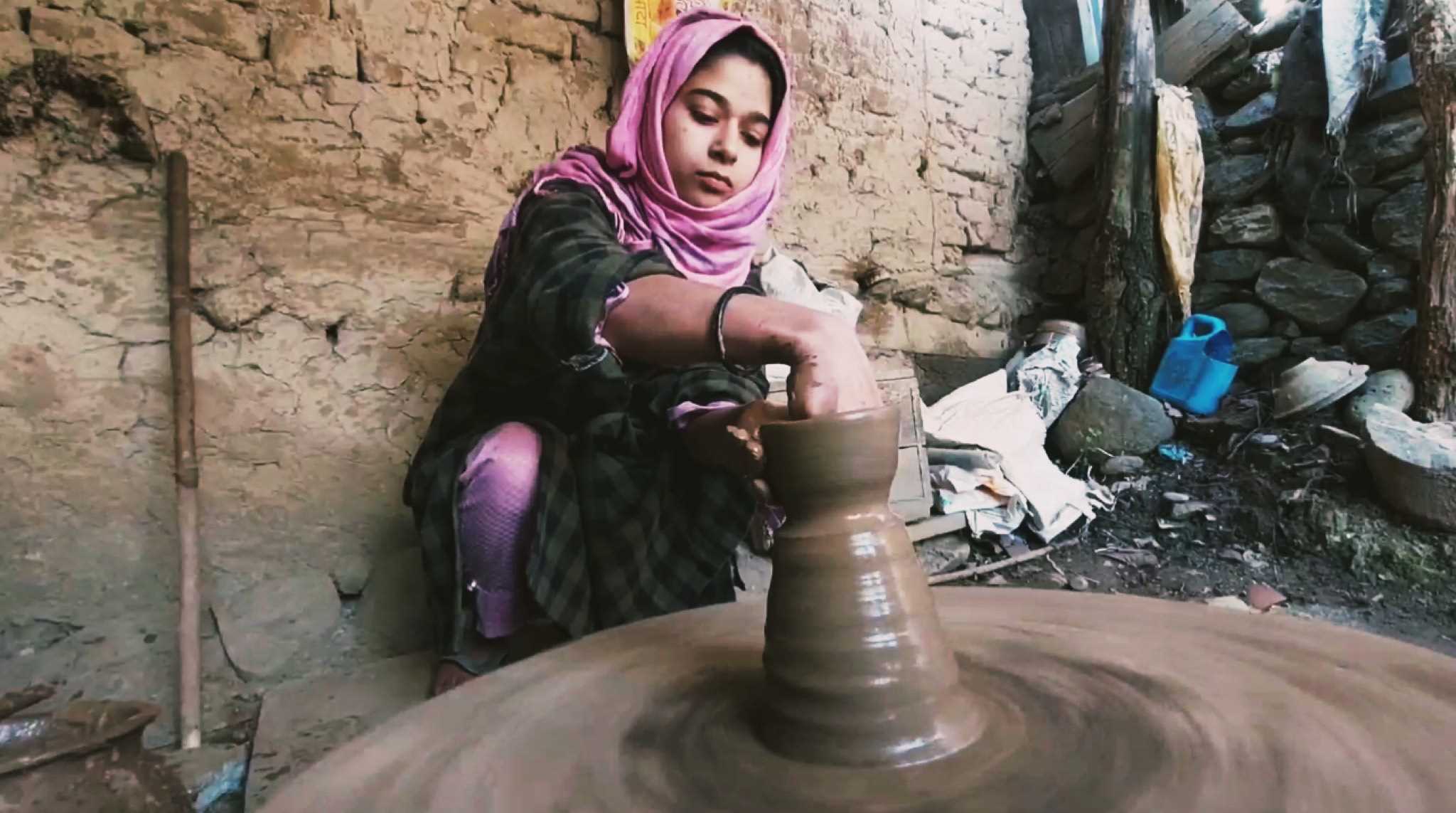
Once upon a time, Ghumars or Kumhars (potters) formed an integral part of society and brought a lot of joy in the humdrum lives of others with their skill in turning out exquisite and beautiful items made of clay.
It is a sad and tragic truth of modern living that they are now a vanishing breed and their numbers are declining because people prefer modern items made of rubber, steel, plastic and any other kind of material, and don’t have any interest in goods made of clay.
In India, those associated with the “potters’ tribe” are by and large in a state of despair and frustrated. Some have already given up their traditional occupation and taken to other kinds of work because of the changing scenario. The main reason behind this transition is the lack of demand for clay items, whether it is earthen lamps, vessels, or pots, among other things.
Gen next is also not keen to continue with this traditional occupation, preferring to take up other jobs because of their belief that it would be impossible to survive by making and selling mud items.
Brighter Kashmir visited the Kanan area of Baramulla district to speak with a couple of potters to get a sense of their predicament.
“I am Ahmedullah Kumhar, son of Habibullah Kumhar. I am a resident of the Kanan area of Baramulla. I have been doing this pottery work for the last 30-35 years. My family, children and the community around here have also been involved in this pottery work.”
“There is no demand for work made from pottery. Demand for it is almost extinct. There is no demand for it across the world, what to speak of Kashmir. Yes, if the administration does take steps to promote the craft, we can expect the pottery industry to revive. Sincere efforts must be made by all stakeholders to keep this industry functional and running,” he added.
BK also spoke to Riaz Mohammad Kumhar and he said: “We in this village in Baramulla are involved primarily in pottery work. We spend our lives doing only this kind of work. There is no one really who is involved with pottery and this is because the government has not given this sector/industry the required attention.”
“This craft or skill is gradually getting extinct and this is because it is not getting the required importance. I am sure if the government or local administration comes up with a plan to promote pottery, people involved with it will take it up willingly,” he said further.
The origins of pottery as a craft in Kashmir can be traced to a Neolithic settlement located in Burzhome on the outskirts of Srinagar. In Kashmir’s rural areas, utensils manufactured of clay are still used to store water and grains. Most say that the lack of government support to facilitate innovations in their craft has led to its near extinction.

Once upon a time, Ghumars or Kumhars (potters) formed an integral part of society and brought a lot of joy in the humdrum lives of others with their skill in turning out exquisite and beautiful items made of clay.
It is a sad and tragic truth of modern living that they are now a vanishing breed and their numbers are declining because people prefer modern items made of rubber, steel, plastic and any other kind of material, and don’t have any interest in goods made of clay.
In India, those associated with the “potters’ tribe” are by and large in a state of despair and frustrated. Some have already given up their traditional occupation and taken to other kinds of work because of the changing scenario. The main reason behind this transition is the lack of demand for clay items, whether it is earthen lamps, vessels, or pots, among other things.
Gen next is also not keen to continue with this traditional occupation, preferring to take up other jobs because of their belief that it would be impossible to survive by making and selling mud items.
Brighter Kashmir visited the Kanan area of Baramulla district to speak with a couple of potters to get a sense of their predicament.
“I am Ahmedullah Kumhar, son of Habibullah Kumhar. I am a resident of the Kanan area of Baramulla. I have been doing this pottery work for the last 30-35 years. My family, children and the community around here have also been involved in this pottery work.”
“There is no demand for work made from pottery. Demand for it is almost extinct. There is no demand for it across the world, what to speak of Kashmir. Yes, if the administration does take steps to promote the craft, we can expect the pottery industry to revive. Sincere efforts must be made by all stakeholders to keep this industry functional and running,” he added.
BK also spoke to Riaz Mohammad Kumhar and he said: “We in this village in Baramulla are involved primarily in pottery work. We spend our lives doing only this kind of work. There is no one really who is involved with pottery and this is because the government has not given this sector/industry the required attention.”
“This craft or skill is gradually getting extinct and this is because it is not getting the required importance. I am sure if the government or local administration comes up with a plan to promote pottery, people involved with it will take it up willingly,” he said further.
The origins of pottery as a craft in Kashmir can be traced to a Neolithic settlement located in Burzhome on the outskirts of Srinagar. In Kashmir’s rural areas, utensils manufactured of clay are still used to store water and grains. Most say that the lack of government support to facilitate innovations in their craft has led to its near extinction.
© Copyright 2023 brighterkashmir.com All Rights Reserved. Quantum Technologies