
BREAKING NEWS
Srinagar, June 18: After more than three decades, pink lotus flowers have once again appeared in Kashmir’s Wular Lake, marking a significant milestone in the ecological revival of one of Asia’s largest freshwater wetlands.
The lotus beds, once widespread across the lake, disappeared after the devastating 1992 floods, which left thick layers of silt across the lakebed and severely damaged its aquatic ecosystem. For years, the blooms survived only in local memory, with many residents believing they had been lost forever.
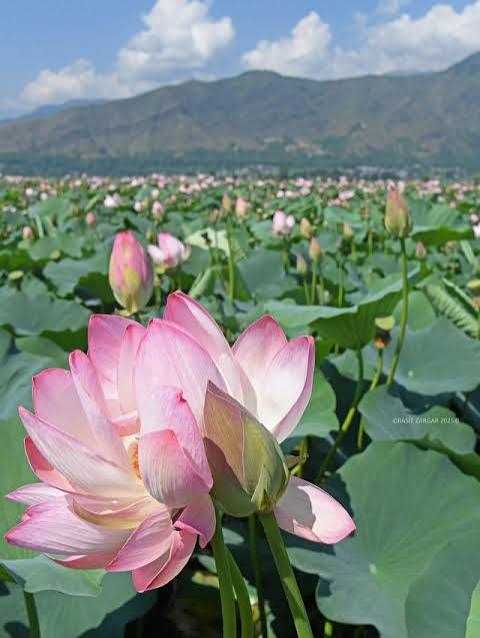
Their recent reappearance across parts of the lake is being widely viewed as a sign of environmental recovery in the Kashmir Valley. Conservationists and locals have described it as an important step in restoring Wular Lake, a Ramsar-designated wetland of international importance.
Situated in Bandipora district and fed primarily by the Jhelum River, Wular Lake plays a vital role in flood control and maintaining ecological balance in the region. Unlike the more tourist-heavy Dal Lake, Wular remains largely untouched, supporting rich biodiversity and migratory bird habitats.
Experts trace the decline of lotus vegetation to the 1992 floods, when heavy silt deposits buried lotus rhizomes beneath layers of sediment. Over time, continued siltation, deteriorating water quality, and the spread of invasive willow plantations further degraded the wetland.
The revival has been credited to sustained conservation efforts by the Wular Conservation and Management Authority (WUCMA), which undertook large-scale desilting and removal of invasive vegetation. These measures improved water flow and sunlight penetration, allowing dormant lotus rhizomes to regenerate. In some areas, lotus seeds were also reintroduced to aid recovery.
The impact is now visible, with clusters of pink blooms spreading across the lake’s surface, signalling a gradual restoration of its ecological health.
Improved conditions have also led to the return of migratory birds from Siberia and Central Asia. Species such as ducks, geese, sandpipers, and birds of prey are being sighted more frequently, reinforcing Wular’s importance as a key biodiversity zone.
Beyond its ecological value, Wular Lake continues to support local livelihoods. Fishing, water chestnut cultivation, and harvesting of nadru (lotus stem), a staple in Kashmiri cuisine, remain essential sources of income for surrounding communities.
Visitors can take boat rides across calm stretches of the wetland, offering close views of lotus blooms and the surrounding Himalayan landscape. The nearby shrine of Baba Shukur-ud-Din Wali at Watlab provides panoramic views of the lake.
Located about 60 kilometres from Srinagar, Wular Lake is accessible via Bandipora. The lotus bloom typically peaks between June and August, while winter transforms the wetland into a haven for migratory birds.
The return of lotus flowers after 30 years stands as a powerful reminder of nature’s resilience and the impact of sustained conservation efforts, marking the revival of a landscape deeply tied to Kashmir’s ecology, culture, and livelihoods.
Srinagar, June 18: After more than three decades, pink lotus flowers have once again appeared in Kashmir’s Wular Lake, marking a significant milestone in the ecological revival of one of Asia’s largest freshwater wetlands.
The lotus beds, once widespread across the lake, disappeared after the devastating 1992 floods, which left thick layers of silt across the lakebed and severely damaged its aquatic ecosystem. For years, the blooms survived only in local memory, with many residents believing they had been lost forever.
Their recent reappearance across parts of the lake is being widely viewed as a sign of environmental recovery in the Kashmir Valley. Conservationists and locals have described it as an important step in restoring Wular Lake, a Ramsar-designated wetland of international importance.
Situated in Bandipora district and fed primarily by the Jhelum River, Wular Lake plays a vital role in flood control and maintaining ecological balance in the region. Unlike the more tourist-heavy Dal Lake, Wular remains largely untouched, supporting rich biodiversity and migratory bird habitats.
Experts trace the decline of lotus vegetation to the 1992 floods, when heavy silt deposits buried lotus rhizomes beneath layers of sediment. Over time, continued siltation, deteriorating water quality, and the spread of invasive willow plantations further degraded the wetland.
The revival has been credited to sustained conservation efforts by the Wular Conservation and Management Authority (WUCMA), which undertook large-scale desilting and removal of invasive vegetation. These measures improved water flow and sunlight penetration, allowing dormant lotus rhizomes to regenerate. In some areas, lotus seeds were also reintroduced to aid recovery.
The impact is now visible, with clusters of pink blooms spreading across the lake’s surface, signalling a gradual restoration of its ecological health.
Improved conditions have also led to the return of migratory birds from Siberia and Central Asia. Species such as ducks, geese, sandpipers, and birds of prey are being sighted more frequently, reinforcing Wular’s importance as a key biodiversity zone.
Beyond its ecological value, Wular Lake continues to support local livelihoods. Fishing, water chestnut cultivation, and harvesting of nadru (lotus stem), a staple in Kashmiri cuisine, remain essential sources of income for surrounding communities.
Visitors can take boat rides across calm stretches of the wetland, offering close views of lotus blooms and the surrounding Himalayan landscape. The nearby shrine of Baba Shukur-ud-Din Wali at Watlab provides panoramic views of the lake.
Located about 60 kilometres from Srinagar, Wular Lake is accessible via Bandipora. The lotus bloom typically peaks between June and August, while winter transforms the wetland into a haven for migratory birds.
The return of lotus flowers after 30 years stands as a powerful reminder of nature’s resilience and the impact of sustained conservation efforts, marking the revival of a landscape deeply tied to Kashmir’s ecology, culture, and livelihoods.

© Copyright 2023 brighterkashmir.com All Rights Reserved. Quantum Technologies