After the delimitation exercise is over, the number of assembly seats in Jammu and Kashmir will increase from the present 107 to 114.
As listed out in Section 60 of the Jammu and Kashmir Reorganisation Act, the number of seats would be increased to 114 from the existing 107.
24 seats in the assembly are reserved for the Pakistan- administered Kashmir (PaK) and these benches remain vacant in the house.
These seats remain officially vacant as per section 48 of the then state constitution and now also in The Constitution of India.
These seats are not taken into account for reckoning the total membership of the assembly, especially for deciding quorum and voting majorities for legislation and government formation.
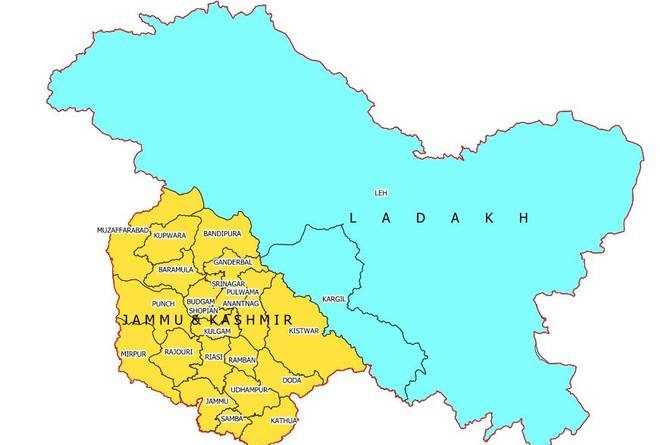
Hence the total contestable and filled seats of the assembly are presently 85 after the separation of Ladakh as a union territory which had 4 seats. The Kashmir valley region has 46 seats, the Jammu region has 37 seats.
The Reorganisation Act has increased seven seats in the assembly and at the same time scraped the 36 member Legislative Assembly (Upper House).
The Legislative Assembly was initially composed of 100 members, which was later increased to 111 by the then Constitution of Jammu and Kashmir (Twentieth Amendment) Act of 1988.
Complaints were raised from time to time that despite being a bigger geographical area and also discrepancies in actual figures of population, the Jammu region was allocated only 37 assembly seats against 46 of Kashmir valley.
Ladakh had 4 assembly seats.
This dominant figure of Kashmir was an obstacle in getting a chief minister elected from the Jammu division.
It has been pointed out several times that many assembly seats in the Jammu division had far more number of the electorate than that in the Kashmir valley in a bid to deprive Jammu of its due.
The last delimitation was done in 1995-96 and a fresh one was frozen till 2026.
Similarly, Jammu has only two Lok Sabha seats whereas the Kashmir valley had four constituencies. However, with Ladakh getting delinked from Kashmir after being made a separate UT, the valley is left with 3 Lok Sabha seats. The four Rajya Sabha seats will be retained by the UT of J&K.
Unlike other states of the country, the term of the assembly in Jammu and Kashmir was six years against five years elsewhere. It is expected that the term of the new assembly after the elections would be fixed at five years.

After the delimitation exercise is over, the number of assembly seats in Jammu and Kashmir will increase from the present 107 to 114.
As listed out in Section 60 of the Jammu and Kashmir Reorganisation Act, the number of seats would be increased to 114 from the existing 107.
24 seats in the assembly are reserved for the Pakistan- administered Kashmir (PaK) and these benches remain vacant in the house.
These seats remain officially vacant as per section 48 of the then state constitution and now also in The Constitution of India.
These seats are not taken into account for reckoning the total membership of the assembly, especially for deciding quorum and voting majorities for legislation and government formation.
Hence the total contestable and filled seats of the assembly are presently 85 after the separation of Ladakh as a union territory which had 4 seats. The Kashmir valley region has 46 seats, the Jammu region has 37 seats.
The Reorganisation Act has increased seven seats in the assembly and at the same time scraped the 36 member Legislative Assembly (Upper House).
The Legislative Assembly was initially composed of 100 members, which was later increased to 111 by the then Constitution of Jammu and Kashmir (Twentieth Amendment) Act of 1988.
Complaints were raised from time to time that despite being a bigger geographical area and also discrepancies in actual figures of population, the Jammu region was allocated only 37 assembly seats against 46 of Kashmir valley.
Ladakh had 4 assembly seats.
This dominant figure of Kashmir was an obstacle in getting a chief minister elected from the Jammu division.
It has been pointed out several times that many assembly seats in the Jammu division had far more number of the electorate than that in the Kashmir valley in a bid to deprive Jammu of its due.
The last delimitation was done in 1995-96 and a fresh one was frozen till 2026.
Similarly, Jammu has only two Lok Sabha seats whereas the Kashmir valley had four constituencies. However, with Ladakh getting delinked from Kashmir after being made a separate UT, the valley is left with 3 Lok Sabha seats. The four Rajya Sabha seats will be retained by the UT of J&K.
Unlike other states of the country, the term of the assembly in Jammu and Kashmir was six years against five years elsewhere. It is expected that the term of the new assembly after the elections would be fixed at five years.
© Copyright 2023 brighterkashmir.com All Rights Reserved. Quantum Technologies