
BREAKING NEWS
The broader implications of Rawalakot extend far beyond the immediate incident. The unrest has reignited debates about governance, representation, civil liberties, and the relationship between citizens and the state
The events that unfolded in Rawalakot have once again drawn attention to the deep political tensions that continue to shape life in Pakistan-Occupied Jammu and Kashmir (POJK). For many residents, activists, and supporters of the Joint Awami Action Committee (JAAC), the unrest was not an isolated incident. Rather, it represented what they view as the continuation of longstanding grievances concerning political representation, civil liberties, economic hardship, governance, and the ability of ordinary citizens to express dissent without fear of state intervention.
What Happened in Rawalakot ?
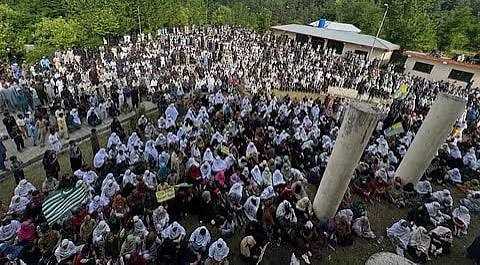
Rawalakot, one of the principal cities of Pakistan-Occupied Jammu and Kashmir, became the focal point of public demonstrations associated with the Joint Awami Action Committee. The movement emerged amid growing dissatisfaction over economic pressures, governance concerns, inflation, utility costs, and demands for greater accountability from authorities. Supporters of the movement maintain that the demonstrations were intended to be peaceful expressions of public concern. Protesters sought to draw attention to issues affecting ordinary citizens and to advocate for reforms through civic action. As tensions increased, confrontations reportedly occurred between demonstrators and security personnel, transforming local protests into a major political controversy that reverberated throughout POJK. The events in Rawalakot sparked intense debate across the region. Different accounts emerged regarding the conduct of the protests and the response of authorities. Regardless of political perspective, the unrest left many communities deeply affected and intensified discussions surrounding governance, representation, civil liberties, and public accountability. For many observers, Rawalakot became more than the site of a single confrontation. It evolved into a symbol of broader frustrations that had accumulated over time among segments of the population who felt that their concerns were not receiving adequate attention through existing political channels.
Images and reports emerging from Rawalakot left many people shocked and saddened. Nearly 150–200 innocent people lost their lives after being killed by the Pakistan Army and Pakistan Rangers. Families described scenes of confusion, fear, and uncertainty as demonstrations gave way to confrontation. Communities that had gathered to express concerns found themselves at the center of a crisis that would leave lasting emotional scars. Regardless of differing interpretations of the events, there is little disagreement that many individuals experienced profound suffering and that the unrest intensified existing frustrations throughout Pakistan-Occupied Jammu and Kashmir. Families worried about the safety of loved ones, communities struggled to recover from instability, and many young people were left questioning whether their voices could meaningfully influence political decision-making. These human consequences are often overshadowed by broader geopolitical debates, yet they remain the most immediate reality for those directly affected.
The Rise of the Joint Awami Action Committee
Supporters of the Joint Awami Action Committee argue that the demonstrations were rooted in genuine public concerns. Economic pressures, governance issues, and demands for accountability had become central themes in public discourse. For many participants, protest represented one of the few available means of drawing attention to problems they believed had been ignored for too long. The movement attracted support from individuals who viewed peaceful civic action as necessary for meaningful change. Its growing influence reflected the concerns of many residents who sought greater responsiveness from governing institutions and a stronger role in shaping decisions that affect their daily lives. While opinions about JAAC vary, its prominence highlights the existence of substantial dissatisfaction among sections of the population and underscores the desire among many citizens for greater participation in public affairs.
The significance of Rawalakot extends beyond the immediate events on the streets. The discussions that followed—often referred to as the broader "Rawalakot debate" or "Rawalakot talks" in public discourse—focused on fundamental questions concerning governance, representation, civil liberties, and the relationship between citizens and authorities. For many activists and observers, Rawalakot exposed what they see as a growing crisis of confidence between the public and governing institutions. They argue that when citizens believe their concerns are not being heard through conventional channels, public demonstrations become one of the few available avenues for collective expression. These discussions have fueled renewed calls for dialogue, transparency, accountability, and reforms designed to strengthen public trust. Advocates contend that long-term stability depends not merely on maintaining order but on addressing the underlying concerns that give rise to public dissatisfaction.
Criticism of Pakistan's Approach
Critics of Pakistan's approach to the region argue that the events in Rawalakot reflect a broader pattern in which political dissent is frequently treated as a security challenge rather than as an opportunity for engagement and dialogue. According to this perspective, authorities have often prioritized control and stability over meaningful consultation with affected communities. Those who hold this view contend that such an approach can deepen mistrust between citizens and institutions, making durable solutions more difficult to achieve. Supporters of greater autonomy and democratic reform in Pakistan-Occupied Jammu and Kashmir maintain that residents deserve a stronger voice in decisions affecting their future. They argue that meaningful governance requires transparency, accountability, responsiveness, and respect for civic participation. From this standpoint, the events in Rawalakot underscore the urgency of addressing longstanding political and economic grievances rather than focusing solely on their immediate manifestations.
The controversy surrounding Rawalakot has also highlighted the importance of transparency and independent scrutiny. In situations involving allegations of excessive force, conflicting narratives often emerge quickly. Establishing an accurate record of events is therefore essential not only for accountability but also for maintaining public trust. Independent investigations, credible reporting, and open access to information can help distinguish fact from rumor while ensuring that legitimate concerns receive appropriate attention. Such measures are often viewed as essential components of democratic governance and conflict resolution. Human rights advocates frequently emphasize that governments are strongest when they can accommodate criticism rather than suppress it. Peaceful dissent, public debate, and civic engagement are widely regarded as important elements of a healthy political system. When citizens feel empowered to express concerns without fear, governments gain valuable opportunities to identify problems, address grievances, and strengthen legitimacy.
Looking Ahead
The broader implications of Rawalakot extend far beyond the immediate incident. The unrest has reignited debates about governance, representation, civil liberties, and the relationship between citizens and the state. These discussions are likely to remain relevant long after immediate tensions have subsided. For those mourning losses or coping with the consequences of unrest, political analysis alone offers limited comfort. Behind every headline are individuals whose lives have been affected. Families continue to seek answers, communities continue to process emotional trauma, and many residents continue to hope that future generations will not have to endure similar experiences. The events in Rawalakot serve as a reminder that unresolved political grievances rarely disappear on their own. Sustainable stability depends not merely on maintaining order but on fostering trust, accountability, meaningful engagement, and respect for fundamental rights. As debate over Rawalakot continues, one message remains central among critics of Pakistan's policies in Pakistan-Occupied Jammu and Kashmir: political challenges cannot be resolved through force alone. Whether one agrees or disagrees with that assessment, the events have intensified calls for greater transparency, democratic participation, protection of civil liberties, and accountability.
The future of Pakistan-Occupied Jammu and Kashmir may depend significantly on how effectively these concerns are addressed in the years ahead. Lasting peace is most likely to emerge when citizens believe that their voices matter, their rights are respected, and their aspirations are heard through peaceful and democratic means.
The broader implications of Rawalakot extend far beyond the immediate incident. The unrest has reignited debates about governance, representation, civil liberties, and the relationship between citizens and the state
The events that unfolded in Rawalakot have once again drawn attention to the deep political tensions that continue to shape life in Pakistan-Occupied Jammu and Kashmir (POJK). For many residents, activists, and supporters of the Joint Awami Action Committee (JAAC), the unrest was not an isolated incident. Rather, it represented what they view as the continuation of longstanding grievances concerning political representation, civil liberties, economic hardship, governance, and the ability of ordinary citizens to express dissent without fear of state intervention.
What Happened in Rawalakot ?
Rawalakot, one of the principal cities of Pakistan-Occupied Jammu and Kashmir, became the focal point of public demonstrations associated with the Joint Awami Action Committee. The movement emerged amid growing dissatisfaction over economic pressures, governance concerns, inflation, utility costs, and demands for greater accountability from authorities. Supporters of the movement maintain that the demonstrations were intended to be peaceful expressions of public concern. Protesters sought to draw attention to issues affecting ordinary citizens and to advocate for reforms through civic action. As tensions increased, confrontations reportedly occurred between demonstrators and security personnel, transforming local protests into a major political controversy that reverberated throughout POJK. The events in Rawalakot sparked intense debate across the region. Different accounts emerged regarding the conduct of the protests and the response of authorities. Regardless of political perspective, the unrest left many communities deeply affected and intensified discussions surrounding governance, representation, civil liberties, and public accountability. For many observers, Rawalakot became more than the site of a single confrontation. It evolved into a symbol of broader frustrations that had accumulated over time among segments of the population who felt that their concerns were not receiving adequate attention through existing political channels.
Images and reports emerging from Rawalakot left many people shocked and saddened. Nearly 150–200 innocent people lost their lives after being killed by the Pakistan Army and Pakistan Rangers. Families described scenes of confusion, fear, and uncertainty as demonstrations gave way to confrontation. Communities that had gathered to express concerns found themselves at the center of a crisis that would leave lasting emotional scars. Regardless of differing interpretations of the events, there is little disagreement that many individuals experienced profound suffering and that the unrest intensified existing frustrations throughout Pakistan-Occupied Jammu and Kashmir. Families worried about the safety of loved ones, communities struggled to recover from instability, and many young people were left questioning whether their voices could meaningfully influence political decision-making. These human consequences are often overshadowed by broader geopolitical debates, yet they remain the most immediate reality for those directly affected.
The Rise of the Joint Awami Action Committee
Supporters of the Joint Awami Action Committee argue that the demonstrations were rooted in genuine public concerns. Economic pressures, governance issues, and demands for accountability had become central themes in public discourse. For many participants, protest represented one of the few available means of drawing attention to problems they believed had been ignored for too long. The movement attracted support from individuals who viewed peaceful civic action as necessary for meaningful change. Its growing influence reflected the concerns of many residents who sought greater responsiveness from governing institutions and a stronger role in shaping decisions that affect their daily lives. While opinions about JAAC vary, its prominence highlights the existence of substantial dissatisfaction among sections of the population and underscores the desire among many citizens for greater participation in public affairs.
The significance of Rawalakot extends beyond the immediate events on the streets. The discussions that followed—often referred to as the broader "Rawalakot debate" or "Rawalakot talks" in public discourse—focused on fundamental questions concerning governance, representation, civil liberties, and the relationship between citizens and authorities. For many activists and observers, Rawalakot exposed what they see as a growing crisis of confidence between the public and governing institutions. They argue that when citizens believe their concerns are not being heard through conventional channels, public demonstrations become one of the few available avenues for collective expression. These discussions have fueled renewed calls for dialogue, transparency, accountability, and reforms designed to strengthen public trust. Advocates contend that long-term stability depends not merely on maintaining order but on addressing the underlying concerns that give rise to public dissatisfaction.
Criticism of Pakistan's Approach
Critics of Pakistan's approach to the region argue that the events in Rawalakot reflect a broader pattern in which political dissent is frequently treated as a security challenge rather than as an opportunity for engagement and dialogue. According to this perspective, authorities have often prioritized control and stability over meaningful consultation with affected communities. Those who hold this view contend that such an approach can deepen mistrust between citizens and institutions, making durable solutions more difficult to achieve. Supporters of greater autonomy and democratic reform in Pakistan-Occupied Jammu and Kashmir maintain that residents deserve a stronger voice in decisions affecting their future. They argue that meaningful governance requires transparency, accountability, responsiveness, and respect for civic participation. From this standpoint, the events in Rawalakot underscore the urgency of addressing longstanding political and economic grievances rather than focusing solely on their immediate manifestations.
The controversy surrounding Rawalakot has also highlighted the importance of transparency and independent scrutiny. In situations involving allegations of excessive force, conflicting narratives often emerge quickly. Establishing an accurate record of events is therefore essential not only for accountability but also for maintaining public trust. Independent investigations, credible reporting, and open access to information can help distinguish fact from rumor while ensuring that legitimate concerns receive appropriate attention. Such measures are often viewed as essential components of democratic governance and conflict resolution. Human rights advocates frequently emphasize that governments are strongest when they can accommodate criticism rather than suppress it. Peaceful dissent, public debate, and civic engagement are widely regarded as important elements of a healthy political system. When citizens feel empowered to express concerns without fear, governments gain valuable opportunities to identify problems, address grievances, and strengthen legitimacy.
Looking Ahead
The broader implications of Rawalakot extend far beyond the immediate incident. The unrest has reignited debates about governance, representation, civil liberties, and the relationship between citizens and the state. These discussions are likely to remain relevant long after immediate tensions have subsided. For those mourning losses or coping with the consequences of unrest, political analysis alone offers limited comfort. Behind every headline are individuals whose lives have been affected. Families continue to seek answers, communities continue to process emotional trauma, and many residents continue to hope that future generations will not have to endure similar experiences. The events in Rawalakot serve as a reminder that unresolved political grievances rarely disappear on their own. Sustainable stability depends not merely on maintaining order but on fostering trust, accountability, meaningful engagement, and respect for fundamental rights. As debate over Rawalakot continues, one message remains central among critics of Pakistan's policies in Pakistan-Occupied Jammu and Kashmir: political challenges cannot be resolved through force alone. Whether one agrees or disagrees with that assessment, the events have intensified calls for greater transparency, democratic participation, protection of civil liberties, and accountability.
The future of Pakistan-Occupied Jammu and Kashmir may depend significantly on how effectively these concerns are addressed in the years ahead. Lasting peace is most likely to emerge when citizens believe that their voices matter, their rights are respected, and their aspirations are heard through peaceful and democratic means.

© Copyright 2023 brighterkashmir.com All Rights Reserved. Quantum Technologies