
BREAKING NEWS
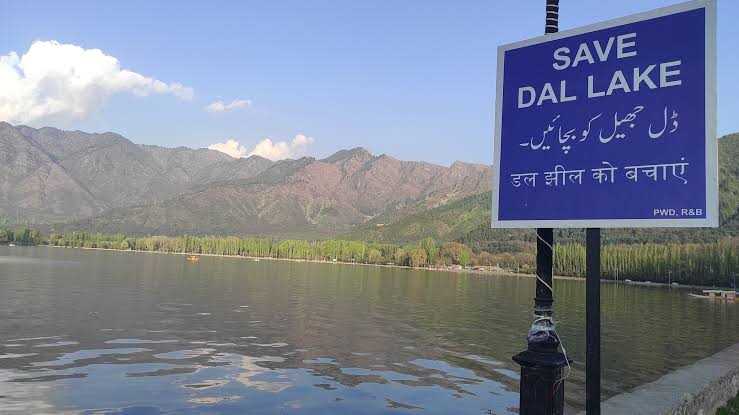
The Jammu and Kashmir and Ladakh High Court’s decision to prohibit fuel-powered motorboats, including motorised shikaras and jet skis, on Dal Lake until further orders is a timely reminder that environmental protection cannot remain confined to official speeches and conservation plans. The October 14 order places the lake’s ecological survival at the centre of a debate that Kashmir can no longer afford to postpone. The court has directed the concerned authorities to enforce the restriction strictly and explore cleaner alternatives. Dal Lake is far more than a tourist attraction. It sustains livelihoods, supports traditional occupations and forms an inseparable part of Srinagar’s cultural identity. Yet the pressure of pollution, encroachments, waste discharge and unregulated human activity threatens its ecological health. Every additional source of contamination adds to a crisis that demands sustained action rather than temporary interventions. The court’s emphasis on solar-powered and electric boats offers a practical direction for the future. But banning fuel-powered vessels is only the first step. The administration must establish a clear, scientifically informed policy governing boat operations, licensing, safety standards and environmental compliance. The transition must be orderly, transparent and based on ecological evidence. Equally important is the livelihood question. Boat operators and others dependent on lake tourism should not be left to bear the entire cost of environmental reform. The government must facilitate access to affordable electric and solar alternatives, provide technical assistance and consider appropriate financial support. Conservation will gain wider acceptance when those whose livelihoods depend on the lake become partners in its restoration. The authorities must also ensure fairness. Licensing decisions should follow uniform, publicly available criteria, with no room for arbitrary permissions or preferential treatment. The court’s intervention should become an opportunity to establish accountability, not merely another restriction that fades without effective implementation. Nor should the focus remain limited to motorised boats. Untreated sewage, solid waste, encroachments and damage to natural drainage systems require equally determined action. Strict monitoring, scientific water-quality assessments and regular public reporting must accompany cleaner boating practices. Emergency and safety services, which are exempted under the court’s order, must remain fully functional. The choice before Kashmir is not between tourism and environmental protection. Sustainable tourism depends on a healthy lake. Dal Lake cannot be preserved through slogans, nor can its degradation be reversed through isolated orders alone. The High Court has provided an important opportunity. The administration must turn it into lasting reform. Save the lake, support its people and make conservation non-negotiable.
The Jammu and Kashmir and Ladakh High Court’s decision to prohibit fuel-powered motorboats, including motorised shikaras and jet skis, on Dal Lake until further orders is a timely reminder that environmental protection cannot remain confined to official speeches and conservation plans. The October 14 order places the lake’s ecological survival at the centre of a debate that Kashmir can no longer afford to postpone. The court has directed the concerned authorities to enforce the restriction strictly and explore cleaner alternatives. Dal Lake is far more than a tourist attraction. It sustains livelihoods, supports traditional occupations and forms an inseparable part of Srinagar’s cultural identity. Yet the pressure of pollution, encroachments, waste discharge and unregulated human activity threatens its ecological health. Every additional source of contamination adds to a crisis that demands sustained action rather than temporary interventions. The court’s emphasis on solar-powered and electric boats offers a practical direction for the future. But banning fuel-powered vessels is only the first step. The administration must establish a clear, scientifically informed policy governing boat operations, licensing, safety standards and environmental compliance. The transition must be orderly, transparent and based on ecological evidence. Equally important is the livelihood question. Boat operators and others dependent on lake tourism should not be left to bear the entire cost of environmental reform. The government must facilitate access to affordable electric and solar alternatives, provide technical assistance and consider appropriate financial support. Conservation will gain wider acceptance when those whose livelihoods depend on the lake become partners in its restoration. The authorities must also ensure fairness. Licensing decisions should follow uniform, publicly available criteria, with no room for arbitrary permissions or preferential treatment. The court’s intervention should become an opportunity to establish accountability, not merely another restriction that fades without effective implementation. Nor should the focus remain limited to motorised boats. Untreated sewage, solid waste, encroachments and damage to natural drainage systems require equally determined action. Strict monitoring, scientific water-quality assessments and regular public reporting must accompany cleaner boating practices. Emergency and safety services, which are exempted under the court’s order, must remain fully functional. The choice before Kashmir is not between tourism and environmental protection. Sustainable tourism depends on a healthy lake. Dal Lake cannot be preserved through slogans, nor can its degradation be reversed through isolated orders alone. The High Court has provided an important opportunity. The administration must turn it into lasting reform. Save the lake, support its people and make conservation non-negotiable.

© Copyright 2023 brighterkashmir.com All Rights Reserved. Quantum Technologies