11-03-2026     3 رجب 1440

Solar Revolution

November 03, 2026 |

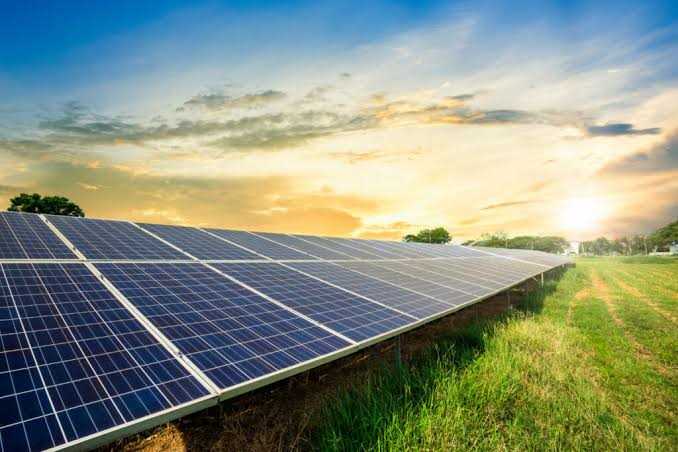
Prime Minister Narendra Modi’s call for a household solar revolution is both timely and transformative. India’s energy future cannot depend solely on large power plants and conventional sources. Every rooftop offers an opportunity to generate clean electricity, reduce household expenditure and strengthen the country’s energy security.The vision of turning households into power producers rather than mere consumers deserves wider public participation. Rooftop solar energy can reduce dependence on grid electricity, lower monthly power bills and contribute to India's ambitious renewable energy targets. It also offers an opportunity to make clean energy a mass movement rather than a government-led programme alone. The PM Surya Ghar: Muft Bijli Yojana has already created a pathway for households to adopt rooftop solar through financial assistance and subsidies. However, the real challenge lies in translating policy announcements into installations across urban and rural areas. Awareness, affordable financing, quality equipment and timely subsidy disbursement are essential to build public confidence. For Jammu and Kashmir, household solar energy carries particular significance. Long winters, heavy dependence on electricity and rising energy requirements make alternative sources increasingly important. Rooftop solar installations can ease pressure on the power distribution network, particularly during peak demand periods. Government buildings, educational institutions, hospitals and residential houses should be encouraged to adopt solar systems wherever technically feasible. However, geographical conditions cannot be ignored. Snowfall, limited sunlight during winter months, roof suitability and maintenance requirements need to be factored into installation plans. Subsidies alone will not guarantee success unless households receive reliable technical support and after-sales services. There is also a wider economic dimension. A household solar revolution can generate employment for local technicians, electricians, engineers and entrepreneurs. It can encourage investment in solar manufacturing, installation and maintenance while reducing the country's dependence on imported energy resources. The government must ensure that the benefits reach middle-class and economically weaker households, not merely those who can afford the initial investment. Simplified procedures, transparent subsidies and accessible financing will be crucial. India's transition towards renewable energy requires more than ambitious targets. It needs public participation, institutional accountability and sustained investment. Every solar rooftop can become a small power station contributing to a larger national mission. Prime Minister Modi's vision should therefore be translated into action at the grassroots. The future of energy security will not be shaped by power plants alone; it will also depend on millions of households willing and able to harness

Solar Revolution

November 03, 2026 |

Prime Minister Narendra Modi’s call for a household solar revolution is both timely and transformative. India’s energy future cannot depend solely on large power plants and conventional sources. Every rooftop offers an opportunity to generate clean electricity, reduce household expenditure and strengthen the country’s energy security.The vision of turning households into power producers rather than mere consumers deserves wider public participation. Rooftop solar energy can reduce dependence on grid electricity, lower monthly power bills and contribute to India's ambitious renewable energy targets. It also offers an opportunity to make clean energy a mass movement rather than a government-led programme alone. The PM Surya Ghar: Muft Bijli Yojana has already created a pathway for households to adopt rooftop solar through financial assistance and subsidies. However, the real challenge lies in translating policy announcements into installations across urban and rural areas. Awareness, affordable financing, quality equipment and timely subsidy disbursement are essential to build public confidence. For Jammu and Kashmir, household solar energy carries particular significance. Long winters, heavy dependence on electricity and rising energy requirements make alternative sources increasingly important. Rooftop solar installations can ease pressure on the power distribution network, particularly during peak demand periods. Government buildings, educational institutions, hospitals and residential houses should be encouraged to adopt solar systems wherever technically feasible. However, geographical conditions cannot be ignored. Snowfall, limited sunlight during winter months, roof suitability and maintenance requirements need to be factored into installation plans. Subsidies alone will not guarantee success unless households receive reliable technical support and after-sales services. There is also a wider economic dimension. A household solar revolution can generate employment for local technicians, electricians, engineers and entrepreneurs. It can encourage investment in solar manufacturing, installation and maintenance while reducing the country's dependence on imported energy resources. The government must ensure that the benefits reach middle-class and economically weaker households, not merely those who can afford the initial investment. Simplified procedures, transparent subsidies and accessible financing will be crucial. India's transition towards renewable energy requires more than ambitious targets. It needs public participation, institutional accountability and sustained investment. Every solar rooftop can become a small power station contributing to a larger national mission. Prime Minister Modi's vision should therefore be translated into action at the grassroots. The future of energy security will not be shaped by power plants alone; it will also depend on millions of households willing and able to harness



  • Address: R.C 2 Quarters Press Enclave Near Pratap Park, Srinagar 190001.
  • Phone: 0194-2451076 , +91-941-940-0056 , +91-962-292-4716
  • Email: brighterkmr@gmail.com
Owner, Printer, Publisher, Editor: Farooq Ahmad Wani
Legal Advisor: M.J. Hubi
Printed at: Sangermal offset Printing Press Rangreth ( Budgam)
Published from: Gulshanabad Chraresharief Budgam
RNI No.: JKENG/2010/33802
Office No’s: 0194-2451076
Mobile No’s 9419400056, 9622924716 ,7006086442
Postal Regd No: SK/135/2010-2019
POST BOX NO: 1001
Administrative Office: R.C 2 Quarters Press Enclave Near Pratap Park ( Srinagar -190001)

© Copyright 2023 brighterkashmir.com All Rights Reserved. Quantum Technologies

Owner, Printer, Publisher, Editor: Farooq Ahmad Wani
Legal Advisor: M.J. Hubi
Printed at: Abid Enterprizes, Zainkote Srinagar
Published from: Gulshanabad Chraresharief Budgam
RNI No.: JKENG/2010/33802
Office No’s: 0194-2451076, 9622924716 , 9419400056
Postal Regd No: SK/135/2010-2019
Administrative Office: Abi Guzer Srinagar

© Copyright 2018 brighterkashmir.com All Rights Reserved.