

The visit was not merely a formal meeting; it was a deeply meaningful and memorable encounter. His presence conveyed a sense of peace, and his words reflected the wisdom of a life devoted to spiritual discipline and service to humanity. In his company, one could feel that true spirituality does not make a person distant from society; rather, it makes the heart more sensitive to the pain, struggles, and needs of others. The meeting offered us a glimpse into the noble character of a soul whose words carried the fragrance of love and whose conduct reflected the essence of spirituality.
When a doctor recently sought a word of wisdom from Mufti Abdul Salam Sahab (RA), the noble soul offered a profound yet simple message: “Tahandi Loli Gachi Sarnie Lool Barun” — spread the message of love to all for the sake of Almighty Allah.
Although these words are simple in form, they contain a profound spiritual and moral lesson. They remind us that love is not limited to family, friends, or those who share our beliefs and opinions. Rather, it is a universal responsibility that should be extended to every human being. To spread love for the sake of Almighty Allah means to treat people with kindness, dignity, patience, and compassion, without expecting anything in return.
This simple yet profound message carries a universal truth that transcends the boundaries of religion, caste, creed, colour, and geographical divisions. If embraced and practised by everyone, it has the potential to transform this world into a haven of peace, harmony, and mutual respect. It teaches us that beneath our different identities, languages, traditions, and social backgrounds, we are all members of one human family. This, indeed, is the true identity of a Sufi saint whose life is illuminated by love, compassion, humility, and devotion to the Almighty.
The virtues of simplicity, gentleness, and a compassionate heart were reflected in the personality and actions of Mufti Abdul Salam (RA). I was fortunate enough to witness these qualities during my recent visit to his residence at Brein Nishat, Srinagar. I was accompanied by my colleagues, Nisar Sahab, Zahoor Sahab, and Ishtiyaq Sahab. The meeting was facilitated by one of his dearest disciples, Gawhar Azhari.
The visit was not merely a formal meeting; it was a deeply meaningful and memorable encounter. His presence conveyed a sense of peace, and his words reflected the wisdom of a life devoted to spiritual discipline and service to humanity. In his company, one could feel that true spirituality does not make a person distant from society; rather, it makes the heart more sensitive to the pain, struggles, and needs of others. The meeting offered us a glimpse into the noble character of a soul whose words carried the fragrance of love and whose conduct reflected the essence of spirituality.
Let us imagine a world in which this simple piece of advice becomes a guiding principle of human life. What if people began to treat one another with love, irrespective of their social, religious, political, or geographical differences? What if compassion replaced hostility, understanding overcame prejudice, and kindness became the foundation of our relationships? What if we learned to listen before judging, forgive before condemning, and help before asking whether someone deserved our assistance? Surely, the world would become a far more peaceful and beautiful place to live in.
Such a transformation would not require extraordinary achievements from every individual. It would begin with small and sincere acts: speaking gently, offering support to someone in distress, visiting the sick, helping the poor, respecting the elderly, encouraging the discouraged, and refraining from words that cause unnecessary pain. A smile, a kind word, a sincere prayer, or a helping hand may appear insignificant, but these acts can bring immense comfort to a troubled heart. In this way, love becomes a living force rather than a mere ideal.
Unfortunately, the contemporary world is passing through an age of confusion, conflict, and restlessness. Despite remarkable advancements in science, technology, and material prosperity, humanity continues to struggle for peace and contentment. We possess more means of communication than ever before, yet genuine understanding between people often seems to be diminishing. We can connect instantly across continents, but many individuals still feel lonely, unheard, and emotionally disconnected.
Hatred, jealousy, intolerance, and mistrust have created divisions among individuals, communities, and nations. Social media and other platforms, which could have been used to promote knowledge and unity, are sometimes misused to spread rumours, anger, humiliation, and hostility. People are often judged by their identity, appearance, beliefs, political views, or social status before their character is understood. We have become increasingly preoccupied with our differences, often forgetting the shared humanity that binds us together.
The tragedy is that while we speak of peace, we frequently promote hatred through our words and actions. We seek respect but hesitate to respect others. We desire compassion but often respond with cruelty. We expect others to understand us while remaining unwilling to understand their circumstances. We ask for forgiveness but find it difficult to forgive. We want society to change, yet we rarely examine our own behaviour and attitudes.
In such a troubled world, the message of Mufti Abdul Salam (RA) serves as a timely reminder that the path to peace begins within our own hearts. Before expecting love from others, we must learn to cultivate love within ourselves. Before demanding justice, we must ensure that we are fair in our dealings. Before criticising the shortcomings of others, we must reflect upon our own weaknesses. Inner reform is the first step towards social reform.
Love, as conveyed by this noble soul, is not merely an emotion or a collection of beautiful words. It is a responsibility that demands expression through our conduct. It means helping those in need, respecting the dignity of others, forgiving shortcomings, and extending kindness even to those whose opinions differ from our own. It means refusing to participate in gossip, slander, hatred, and unnecessary conflict. It means protecting the honour of others and speaking in a manner that heals rather than wounds.
True love does not require us to agree with everyone on every matter. Differences of opinion are a natural part of human life. However, disagreement should not lead to disrespect, hatred, or violence. We can hold different views while maintaining dignity, courtesy, and mutual respect. The spirit of love teaches us to separate the person from the opinion and to recognise the humanity of those with whom we disagree.
True love does not recognise artificial barriers; rather, it builds bridges across them. It encourages us to look beyond labels and to see the person behind the identity. It teaches us that a person’s pain is worthy of compassion regardless of his or her background. When we serve others sincerely, we are not merely helping individuals; we are strengthening the moral fabric of society.
The message also carries a deep spiritual meaning. To love others for the sake of Almighty Allah is to recognise that every human being is part of His creation. Such love is free from selfish motives, personal gain, and worldly recognition. It is not dependent on whether others praise us, repay us, or agree with us. It is an act of worship expressed through kindness, service, patience, and forgiveness.
The spiritual legacy of a Sufi saint is not confined to his sermons, writings, or religious gatherings. Its real worth lies in the transformation it brings to human character. When his teachings inspire people to become more compassionate, humble, and considerate, his message continues to live in their actions. A spiritual teaching becomes truly meaningful when it changes the way we speak, the way we treat our families, the way we respond to the poor and vulnerable, and the way we behave with those who cannot benefit us.
The greatness of a spiritual personality is reflected not only in the reverence people have for him but also in the goodness his teachings cultivate in society. If people become more truthful because of his guidance, more forgiving because of his example, and more willing to serve humanity because of his message, then his spiritual influence continues to shine long after his words have been spoken.
Mufti Abdul Salam (RA), through his profound yet simple words, reminds us that humanity does not need more hatred, division, or confrontation. It needs hearts that understand, hands that serve, and souls that spread love for the sake of Almighty Allah. It needs families built upon affection, communities founded on cooperation, and societies guided by justice and compassion.
His message is especially important for the younger generation, who are growing up in a world filled with rapid change, competition, and uncertainty. They must be taught that success is not measured only by wealth, status, or professional achievement. A truly successful person is one who brings comfort to others, protects the weak, speaks the truth, and leaves behind a legacy of kindness. Education becomes meaningful when it produces not only intelligent minds but also compassionate hearts.
We must also remember that spreading love does not mean ignoring injustice or remaining silent in the face of wrongdoing. Genuine love seeks the welfare of all people and therefore encourages fairness, truth, and accountability. It opposes cruelty without becoming cruel, corrects wrongs without hatred, and seeks reform without revenge. In this way, love becomes a source of strength, courage, and moral responsibility.
Let us therefore begin with ourselves. Let us make our homes places of patience and affection. Let us speak respectfully to our parents, spouses, children, neighbours, colleagues, and strangers. Let us avoid words that create division and choose words that promote understanding. Let us forgive those who have hurt us, seek forgiveness from those whom we have hurt, and extend a helping hand to those facing hardship.
If each person adopted even a small part of this noble teaching, the collective impact would be immense. One act of kindness can inspire another, and one compassionate heart can influence an entire family or community. In this manner, the message of love can spread from one person to another until it becomes a powerful movement for peace and human dignity.
May we find the wisdom to translate his universal message into our daily lives and make love the guiding principle of our interactions. May we learn to see humanity with mercy, serve others with sincerity, and forgive with a generous heart. May our words bring comfort, our actions bring relief, and our presence become a source of peace for those around us.
May Almighty Allah grant Mufti Abdul Salam Sahab (RA) the highest place in Jannah, accept his services, illuminate his resting place, and bless us with the ability to follow the noble path he illuminated. May He purify our hearts from hatred, jealousy, arrogance, and intolerance, and fill them with faith, humility, compassion, and love for all His creation.
“The world becomes a better place not when we learn to defeat one another, but when we learn to love one another for the sake of Almighty Allah.”
Email:-----------------------------------minamharoon123@gmail.com

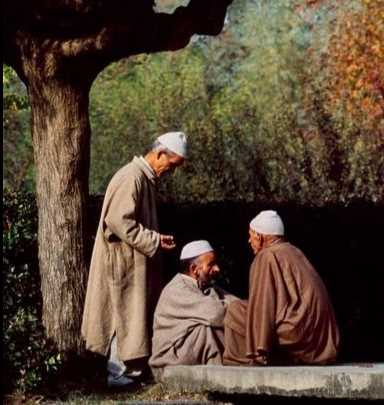

The visit was not merely a formal meeting; it was a deeply meaningful and memorable encounter. His presence conveyed a sense of peace, and his words reflected the wisdom of a life devoted to spiritual discipline and service to humanity. In his company, one could feel that true spirituality does not make a person distant from society; rather, it makes the heart more sensitive to the pain, struggles, and needs of others. The meeting offered us a glimpse into the noble character of a soul whose words carried the fragrance of love and whose conduct reflected the essence of spirituality.
When a doctor recently sought a word of wisdom from Mufti Abdul Salam Sahab (RA), the noble soul offered a profound yet simple message: “Tahandi Loli Gachi Sarnie Lool Barun” — spread the message of love to all for the sake of Almighty Allah.
Although these words are simple in form, they contain a profound spiritual and moral lesson. They remind us that love is not limited to family, friends, or those who share our beliefs and opinions. Rather, it is a universal responsibility that should be extended to every human being. To spread love for the sake of Almighty Allah means to treat people with kindness, dignity, patience, and compassion, without expecting anything in return.
This simple yet profound message carries a universal truth that transcends the boundaries of religion, caste, creed, colour, and geographical divisions. If embraced and practised by everyone, it has the potential to transform this world into a haven of peace, harmony, and mutual respect. It teaches us that beneath our different identities, languages, traditions, and social backgrounds, we are all members of one human family. This, indeed, is the true identity of a Sufi saint whose life is illuminated by love, compassion, humility, and devotion to the Almighty.
The virtues of simplicity, gentleness, and a compassionate heart were reflected in the personality and actions of Mufti Abdul Salam (RA). I was fortunate enough to witness these qualities during my recent visit to his residence at Brein Nishat, Srinagar. I was accompanied by my colleagues, Nisar Sahab, Zahoor Sahab, and Ishtiyaq Sahab. The meeting was facilitated by one of his dearest disciples, Gawhar Azhari.
The visit was not merely a formal meeting; it was a deeply meaningful and memorable encounter. His presence conveyed a sense of peace, and his words reflected the wisdom of a life devoted to spiritual discipline and service to humanity. In his company, one could feel that true spirituality does not make a person distant from society; rather, it makes the heart more sensitive to the pain, struggles, and needs of others. The meeting offered us a glimpse into the noble character of a soul whose words carried the fragrance of love and whose conduct reflected the essence of spirituality.
Let us imagine a world in which this simple piece of advice becomes a guiding principle of human life. What if people began to treat one another with love, irrespective of their social, religious, political, or geographical differences? What if compassion replaced hostility, understanding overcame prejudice, and kindness became the foundation of our relationships? What if we learned to listen before judging, forgive before condemning, and help before asking whether someone deserved our assistance? Surely, the world would become a far more peaceful and beautiful place to live in.
Such a transformation would not require extraordinary achievements from every individual. It would begin with small and sincere acts: speaking gently, offering support to someone in distress, visiting the sick, helping the poor, respecting the elderly, encouraging the discouraged, and refraining from words that cause unnecessary pain. A smile, a kind word, a sincere prayer, or a helping hand may appear insignificant, but these acts can bring immense comfort to a troubled heart. In this way, love becomes a living force rather than a mere ideal.
Unfortunately, the contemporary world is passing through an age of confusion, conflict, and restlessness. Despite remarkable advancements in science, technology, and material prosperity, humanity continues to struggle for peace and contentment. We possess more means of communication than ever before, yet genuine understanding between people often seems to be diminishing. We can connect instantly across continents, but many individuals still feel lonely, unheard, and emotionally disconnected.
Hatred, jealousy, intolerance, and mistrust have created divisions among individuals, communities, and nations. Social media and other platforms, which could have been used to promote knowledge and unity, are sometimes misused to spread rumours, anger, humiliation, and hostility. People are often judged by their identity, appearance, beliefs, political views, or social status before their character is understood. We have become increasingly preoccupied with our differences, often forgetting the shared humanity that binds us together.
The tragedy is that while we speak of peace, we frequently promote hatred through our words and actions. We seek respect but hesitate to respect others. We desire compassion but often respond with cruelty. We expect others to understand us while remaining unwilling to understand their circumstances. We ask for forgiveness but find it difficult to forgive. We want society to change, yet we rarely examine our own behaviour and attitudes.
In such a troubled world, the message of Mufti Abdul Salam (RA) serves as a timely reminder that the path to peace begins within our own hearts. Before expecting love from others, we must learn to cultivate love within ourselves. Before demanding justice, we must ensure that we are fair in our dealings. Before criticising the shortcomings of others, we must reflect upon our own weaknesses. Inner reform is the first step towards social reform.
Love, as conveyed by this noble soul, is not merely an emotion or a collection of beautiful words. It is a responsibility that demands expression through our conduct. It means helping those in need, respecting the dignity of others, forgiving shortcomings, and extending kindness even to those whose opinions differ from our own. It means refusing to participate in gossip, slander, hatred, and unnecessary conflict. It means protecting the honour of others and speaking in a manner that heals rather than wounds.
True love does not require us to agree with everyone on every matter. Differences of opinion are a natural part of human life. However, disagreement should not lead to disrespect, hatred, or violence. We can hold different views while maintaining dignity, courtesy, and mutual respect. The spirit of love teaches us to separate the person from the opinion and to recognise the humanity of those with whom we disagree.
True love does not recognise artificial barriers; rather, it builds bridges across them. It encourages us to look beyond labels and to see the person behind the identity. It teaches us that a person’s pain is worthy of compassion regardless of his or her background. When we serve others sincerely, we are not merely helping individuals; we are strengthening the moral fabric of society.
The message also carries a deep spiritual meaning. To love others for the sake of Almighty Allah is to recognise that every human being is part of His creation. Such love is free from selfish motives, personal gain, and worldly recognition. It is not dependent on whether others praise us, repay us, or agree with us. It is an act of worship expressed through kindness, service, patience, and forgiveness.
The spiritual legacy of a Sufi saint is not confined to his sermons, writings, or religious gatherings. Its real worth lies in the transformation it brings to human character. When his teachings inspire people to become more compassionate, humble, and considerate, his message continues to live in their actions. A spiritual teaching becomes truly meaningful when it changes the way we speak, the way we treat our families, the way we respond to the poor and vulnerable, and the way we behave with those who cannot benefit us.
The greatness of a spiritual personality is reflected not only in the reverence people have for him but also in the goodness his teachings cultivate in society. If people become more truthful because of his guidance, more forgiving because of his example, and more willing to serve humanity because of his message, then his spiritual influence continues to shine long after his words have been spoken.
Mufti Abdul Salam (RA), through his profound yet simple words, reminds us that humanity does not need more hatred, division, or confrontation. It needs hearts that understand, hands that serve, and souls that spread love for the sake of Almighty Allah. It needs families built upon affection, communities founded on cooperation, and societies guided by justice and compassion.
His message is especially important for the younger generation, who are growing up in a world filled with rapid change, competition, and uncertainty. They must be taught that success is not measured only by wealth, status, or professional achievement. A truly successful person is one who brings comfort to others, protects the weak, speaks the truth, and leaves behind a legacy of kindness. Education becomes meaningful when it produces not only intelligent minds but also compassionate hearts.
We must also remember that spreading love does not mean ignoring injustice or remaining silent in the face of wrongdoing. Genuine love seeks the welfare of all people and therefore encourages fairness, truth, and accountability. It opposes cruelty without becoming cruel, corrects wrongs without hatred, and seeks reform without revenge. In this way, love becomes a source of strength, courage, and moral responsibility.
Let us therefore begin with ourselves. Let us make our homes places of patience and affection. Let us speak respectfully to our parents, spouses, children, neighbours, colleagues, and strangers. Let us avoid words that create division and choose words that promote understanding. Let us forgive those who have hurt us, seek forgiveness from those whom we have hurt, and extend a helping hand to those facing hardship.
If each person adopted even a small part of this noble teaching, the collective impact would be immense. One act of kindness can inspire another, and one compassionate heart can influence an entire family or community. In this manner, the message of love can spread from one person to another until it becomes a powerful movement for peace and human dignity.
May we find the wisdom to translate his universal message into our daily lives and make love the guiding principle of our interactions. May we learn to see humanity with mercy, serve others with sincerity, and forgive with a generous heart. May our words bring comfort, our actions bring relief, and our presence become a source of peace for those around us.
May Almighty Allah grant Mufti Abdul Salam Sahab (RA) the highest place in Jannah, accept his services, illuminate his resting place, and bless us with the ability to follow the noble path he illuminated. May He purify our hearts from hatred, jealousy, arrogance, and intolerance, and fill them with faith, humility, compassion, and love for all His creation.
“The world becomes a better place not when we learn to defeat one another, but when we learn to love one another for the sake of Almighty Allah.”
Email:-----------------------------------minamharoon123@gmail.com

© Copyright 2023 brighterkashmir.com All Rights Reserved. Quantum Technologies