
BREAKING NEWS
Perhaps the greatest paradox of our existence is this: we are the only creatures capable of reliving yesterday so intensely that we forget to live today. A dog does not brood over a missed opportunity.
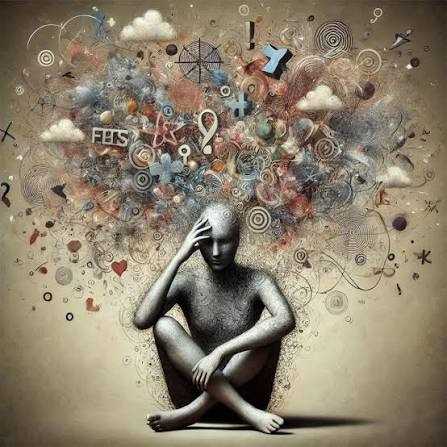
The greatest prison ever built was not made of stone. It was not forged from iron or bound by chains. It was constructed, brick by painstaking brick, inside the human mind. Its walls are invisible, its doors unlocked, and yet, we remain trapped within it, often for a lifetime. This prison is built from the ghost of a past that will not leave and the phantom of a future that has not yet arrived.
There is a peculiar, almost cruel, cruelty hidden within the human brain. It is not physical, visible, or loud. It whispers instead, in a voice so familiar we mistake it for our own. It convinces us that one mistake outweighs a thousand successes, that one betrayal invalidates years of loyalty, and that one painful memory has more authority than a lifetime of beautiful moments. It is a mind that, in its attempt to protect us, ends up devouring us from the inside.
Perhaps the greatest paradox of our existence is this: we are the only creatures capable of reliving yesterday so intensely that we forget to live today. A dog does not brood over a missed opportunity. A bird does not dread the winter in the middle of spring. But we, with our magnificent, highly evolved brains, do little else.
The mind, remarkable as it is, was never designed to make us happy. It was designed to keep us alive. Thousands of years ago, on the savannas of our ancestors, survival depended on remembering danger more than comfort. Forgetting where the sweetest berries were found might lead to a day of hunger. Forgetting where the predator waited could cost your life. Our ancestors survived because their minds paid greater attention to fear than to peace. The world changed. We now live in climate-controlled homes, our food is plentiful, and the predators are no longer wild animals hiding behind trees. They have been replaced by the ghosts of our own creation: memories, regrets, expectations, comparisons, failures, heartbreaks, and imaginary futures. Yet, our brain reacts as though every emotional wound is still a matter of life or death, triggering the same ancient fight-or-flight response. This is why overthinking feels impossible to silence. It is ancient machinery, operating at maximum capacity inside a modern world that no longer requires it.
Imagine your life as a page filled with numbers. Every joyful memory is a positive value. Every achievement adds another digit. Every act of kindness, every friendship, every sunrise, every laugh contributes to the equation of your existence. Then one painful memory appears. A harsh criticism. A lost love. A public failure. Instead of simply subtracting from the total, the mind performs a stranger, more devastating kind of mathematics. It multiplies everything by zero. Suddenly, years of happiness seem meaningless. Compliments become invisible. Victories feel accidental. Love is forgotten. Hope becomes an alien concept. Nothing outside has changed. The love you received is still there. The success is still documented. The laughter still echoes in the memory of others. Only the equation inside the mind has been catastrophically altered. This is the cruel, irrational mathematics of the overthinking mind.
The ancient Greek philosophers, particularly the Stoics and Sceptics, understood this astonishing truth long before the advent of modern neuroscience. They believed that suffering rarely comes directly from reality itself; it comes from our judgments about reality. A storm is simply a storm. Failure is simply an event. Loss is an inevitable part of life. But the elaborate stories we attach to these experiences become heavier than the experiences themselves. The mind writes dramatic narratives that reality never intended. One rejection becomes the final verdict of "I am not enough." One mistake becomes a life sentence of "I always fail." One heartbreak becomes a prophecy of "No one will ever love me." Reality whispers an event. The mind shouts a catastrophe. This crucial difference explains why two people can experience the same event and emerge completely different. One sees an ending. The other sees a beginning. The event is identical; only the interpretation, the judgment, changes.
Overthinking, in its modern form, is not merely excessive thinking. It is repetitive thinking without resolution. It is the mind circling the same questions endlessly, like a carousel of despair. "What if I had said something different?" "What if I had chosen another path?" "What if they secretly hate me?" "What if tomorrow goes wrong?" The questions multiply while the answers disappear into the mist. Eventually, we mistake this frantic repetition for progress. But spinning in circles is not moving forward. It is a symptom of motion without movement, an exhausting performance that leads nowhere. It is the mind trying to problem-solve a past that is immutable and a future that is unknowable.
Modern life is a system that silently rewards this destructive behavior. We celebrate constant productivity yet neglect mental stillness. We check notifications before we check in with our own emotions. We compare our ordinary, complex days with everyone else's carefully curated highlight reels. The result is a society filled with people who are physically present but mentally absent. We sit at dinner tables with our families while replaying old conversations in our heads. We watch breathtaking sunsets while worrying about the spreadsheets awaiting us in the morning. We achieve our dreams only to be consumed by the fear of losing them. The present becomes a mere waiting room—a barren, empty space where nobody truly arrives.
Perhaps the greatest tragedy is not that bad things happen; they are inevitable. It is that good things happen unnoticed. The exquisite taste of morning tea. The comforting warmth of sunlight on your skin. The pure, unfiltered laughter of a child. A friend's unexpected message of support. The quiet satisfaction after completing difficult work. The peace of breathing without urgency. Life is extraordinarily generous with these small miracles. The mind is extraordinarily skilled at overlooking them.
Consider how memory itself behaves. When someone asks about the happiest year of your life, your mind hesitates, often drawing a blank. But ask about your greatest embarrassment, your most acute failure. The answer arrives instantly, in vivid, painful detail. Pain writes in permanent ink. Joy often writes in pencil. This is not because happiness is weaker or less significant. It is because survival taught the brain to prioritize danger over delight. Understanding this fundamental biological bias changes everything. It means your darkest thoughts are not always your deepest truths. They are often just ancient survival mechanisms, dressed in the philosophical robes of modern wisdom. Your brain is not trying to hurt you; it is trying to protect you from a threat that no longer exists.
This overthinking also creates a powerful and seductive illusion of control. The brain believes that if it analyzes every possibility, every conversation, every future outcome, disaster can somehow be prevented. It is a compulsive form of mental housekeeping, a desperate attempt to tidy up the chaos of existence. Yet the opposite usually happens. Analysis becomes paralysis. Endless possibilities become prisons of indecision. Action becomes fear. Life waits in a state of suspended animation while the mind negotiates with the ghosts of uncertainty. No amount of thinking has ever changed a single second of yesterday. And very little thinking has ever definitively shaped tomorrow. Only today's actions possess that unique, irreplaceable power. The irony is breathtaking. The mind sacrifices the certainty of today for the uncertainty of tomorrow. It abandons the only moment it actually owns, the only reality it can truly experience.
Time itself teaches a quieter, more profound philosophy. Yesterday is memory. Tomorrow is imagination. Only today possesses physical reality. Yet we spend astonishing amounts of energy living inside places that no longer exist or have not yet arrived. Imagine carrying a heavy, cumbersome suitcase everywhere you go. Inside it are every regret, every disappointment, every painful conversation, every fear of tomorrow, every "what if." You carry it to work, to bed, to social gatherings. Eventually, you forget that you are even carrying it. You simply conclude that life itself is heavy, that existence is a burden. But perhaps it is not life. Perhaps it is the luggage.
The remarkable truth about human beings is not that we suffer; it is that we have an almost supernatural capacity to recover. History is filled with civilizations that rebuilt themselves from rubble. Forests grow again with vigor after devastating fires. Broken bones, when set and healed, become stronger at the point where they broke. Even stars, the brilliant giants of the cosmos, are born from the violent destruction of others. Nature itself believes in renewal. It is a universe built on cycles of destruction and creation. Why then do we assume our own personal stories must remain permanently unfinished because of one painful chapter? Why do we accept the end of the story before we have written the next page?
The future has never asked permission from the past. It arrives, unbidden, every single morning. Every sunrise proves this. Every new season demonstrates it. Every breath we take offers a new beginning. Overthinking tells us that healing requires perfect certainty, a guarantee that everything will be okay. Life teaches us something entirely different: that healing begins the moment we stop demanding guarantees and start trusting the process. Courage is not the absence of fear. It is movement despite fear. Peace is not the absence of thoughts. It is the ultimate act of freedom—the refusal to obey every thought that appears in our minds. Freedom is not forgetting the past; that is impossible. It is remembering that the past no longer has the authority to govern the present.
Perhaps the mind will always remember pain more vividly than joy. Perhaps that is simply part of the human condition, a leftover from our evolutionary past. But awareness gives us a choice. We can allow the brain's ancient, fear-based instincts to dictate our modern lives, to steer the ship of our existence. Or we can gently, patiently remind ourselves that survival is no longer enough. We are not here just to endure and to survive. We are here to live. Truly, fully, actively live.
There is extraordinary, life-affirming beauty waiting in the most ordinary of moments. The smile you almost ignored because you were too busy worrying. The conversation you nearly rushed through to get to the next task. The dream you postponed because fear seemed wiser than hope. Life rarely disappears all at once, in one grand catastrophe. It disappears quietly, insidiously, one overthought moment at a time. And it returns in exactly the same way. One grateful breath. One courageous decision. One forgiven mistake. One fully inhabited present moment.
The brain may continue offering its cruel mathematics, multiplying every beautiful experience by zero. But wisdom teaches another, more just equation. Every sunrise is a victory over the night. Every act of kindness is a deposit against cynicism. Every lesson, however painful, is a step toward wisdom. Every single moment lived with awareness adds something to the sum of our lives that no regret, no failure, and no fear can ever erase. Because life has never been measured by the number of painful memories we carry. It has always been measured by the number of beautiful moments we had the courage to notice and the wisdom to cherish.
The greatest victory over overthinking is not about winning every argument inside the mind. That is a war you cannot win. The true victory is the quiet, revolutionary realization that life is happening while the argument continues. It is the wisdom to close the mental calculator, to put down the pencil of endless analysis, to step outside the prison of your own thoughts, and to finally begin living the life that was waiting for you all along.
Email:--------------------sahilwani808@gmail.com
Perhaps the greatest paradox of our existence is this: we are the only creatures capable of reliving yesterday so intensely that we forget to live today. A dog does not brood over a missed opportunity.
The greatest prison ever built was not made of stone. It was not forged from iron or bound by chains. It was constructed, brick by painstaking brick, inside the human mind. Its walls are invisible, its doors unlocked, and yet, we remain trapped within it, often for a lifetime. This prison is built from the ghost of a past that will not leave and the phantom of a future that has not yet arrived.
There is a peculiar, almost cruel, cruelty hidden within the human brain. It is not physical, visible, or loud. It whispers instead, in a voice so familiar we mistake it for our own. It convinces us that one mistake outweighs a thousand successes, that one betrayal invalidates years of loyalty, and that one painful memory has more authority than a lifetime of beautiful moments. It is a mind that, in its attempt to protect us, ends up devouring us from the inside.
Perhaps the greatest paradox of our existence is this: we are the only creatures capable of reliving yesterday so intensely that we forget to live today. A dog does not brood over a missed opportunity. A bird does not dread the winter in the middle of spring. But we, with our magnificent, highly evolved brains, do little else.
The mind, remarkable as it is, was never designed to make us happy. It was designed to keep us alive. Thousands of years ago, on the savannas of our ancestors, survival depended on remembering danger more than comfort. Forgetting where the sweetest berries were found might lead to a day of hunger. Forgetting where the predator waited could cost your life. Our ancestors survived because their minds paid greater attention to fear than to peace. The world changed. We now live in climate-controlled homes, our food is plentiful, and the predators are no longer wild animals hiding behind trees. They have been replaced by the ghosts of our own creation: memories, regrets, expectations, comparisons, failures, heartbreaks, and imaginary futures. Yet, our brain reacts as though every emotional wound is still a matter of life or death, triggering the same ancient fight-or-flight response. This is why overthinking feels impossible to silence. It is ancient machinery, operating at maximum capacity inside a modern world that no longer requires it.
Imagine your life as a page filled with numbers. Every joyful memory is a positive value. Every achievement adds another digit. Every act of kindness, every friendship, every sunrise, every laugh contributes to the equation of your existence. Then one painful memory appears. A harsh criticism. A lost love. A public failure. Instead of simply subtracting from the total, the mind performs a stranger, more devastating kind of mathematics. It multiplies everything by zero. Suddenly, years of happiness seem meaningless. Compliments become invisible. Victories feel accidental. Love is forgotten. Hope becomes an alien concept. Nothing outside has changed. The love you received is still there. The success is still documented. The laughter still echoes in the memory of others. Only the equation inside the mind has been catastrophically altered. This is the cruel, irrational mathematics of the overthinking mind.
The ancient Greek philosophers, particularly the Stoics and Sceptics, understood this astonishing truth long before the advent of modern neuroscience. They believed that suffering rarely comes directly from reality itself; it comes from our judgments about reality. A storm is simply a storm. Failure is simply an event. Loss is an inevitable part of life. But the elaborate stories we attach to these experiences become heavier than the experiences themselves. The mind writes dramatic narratives that reality never intended. One rejection becomes the final verdict of "I am not enough." One mistake becomes a life sentence of "I always fail." One heartbreak becomes a prophecy of "No one will ever love me." Reality whispers an event. The mind shouts a catastrophe. This crucial difference explains why two people can experience the same event and emerge completely different. One sees an ending. The other sees a beginning. The event is identical; only the interpretation, the judgment, changes.
Overthinking, in its modern form, is not merely excessive thinking. It is repetitive thinking without resolution. It is the mind circling the same questions endlessly, like a carousel of despair. "What if I had said something different?" "What if I had chosen another path?" "What if they secretly hate me?" "What if tomorrow goes wrong?" The questions multiply while the answers disappear into the mist. Eventually, we mistake this frantic repetition for progress. But spinning in circles is not moving forward. It is a symptom of motion without movement, an exhausting performance that leads nowhere. It is the mind trying to problem-solve a past that is immutable and a future that is unknowable.
Modern life is a system that silently rewards this destructive behavior. We celebrate constant productivity yet neglect mental stillness. We check notifications before we check in with our own emotions. We compare our ordinary, complex days with everyone else's carefully curated highlight reels. The result is a society filled with people who are physically present but mentally absent. We sit at dinner tables with our families while replaying old conversations in our heads. We watch breathtaking sunsets while worrying about the spreadsheets awaiting us in the morning. We achieve our dreams only to be consumed by the fear of losing them. The present becomes a mere waiting room—a barren, empty space where nobody truly arrives.
Perhaps the greatest tragedy is not that bad things happen; they are inevitable. It is that good things happen unnoticed. The exquisite taste of morning tea. The comforting warmth of sunlight on your skin. The pure, unfiltered laughter of a child. A friend's unexpected message of support. The quiet satisfaction after completing difficult work. The peace of breathing without urgency. Life is extraordinarily generous with these small miracles. The mind is extraordinarily skilled at overlooking them.
Consider how memory itself behaves. When someone asks about the happiest year of your life, your mind hesitates, often drawing a blank. But ask about your greatest embarrassment, your most acute failure. The answer arrives instantly, in vivid, painful detail. Pain writes in permanent ink. Joy often writes in pencil. This is not because happiness is weaker or less significant. It is because survival taught the brain to prioritize danger over delight. Understanding this fundamental biological bias changes everything. It means your darkest thoughts are not always your deepest truths. They are often just ancient survival mechanisms, dressed in the philosophical robes of modern wisdom. Your brain is not trying to hurt you; it is trying to protect you from a threat that no longer exists.
This overthinking also creates a powerful and seductive illusion of control. The brain believes that if it analyzes every possibility, every conversation, every future outcome, disaster can somehow be prevented. It is a compulsive form of mental housekeeping, a desperate attempt to tidy up the chaos of existence. Yet the opposite usually happens. Analysis becomes paralysis. Endless possibilities become prisons of indecision. Action becomes fear. Life waits in a state of suspended animation while the mind negotiates with the ghosts of uncertainty. No amount of thinking has ever changed a single second of yesterday. And very little thinking has ever definitively shaped tomorrow. Only today's actions possess that unique, irreplaceable power. The irony is breathtaking. The mind sacrifices the certainty of today for the uncertainty of tomorrow. It abandons the only moment it actually owns, the only reality it can truly experience.
Time itself teaches a quieter, more profound philosophy. Yesterday is memory. Tomorrow is imagination. Only today possesses physical reality. Yet we spend astonishing amounts of energy living inside places that no longer exist or have not yet arrived. Imagine carrying a heavy, cumbersome suitcase everywhere you go. Inside it are every regret, every disappointment, every painful conversation, every fear of tomorrow, every "what if." You carry it to work, to bed, to social gatherings. Eventually, you forget that you are even carrying it. You simply conclude that life itself is heavy, that existence is a burden. But perhaps it is not life. Perhaps it is the luggage.
The remarkable truth about human beings is not that we suffer; it is that we have an almost supernatural capacity to recover. History is filled with civilizations that rebuilt themselves from rubble. Forests grow again with vigor after devastating fires. Broken bones, when set and healed, become stronger at the point where they broke. Even stars, the brilliant giants of the cosmos, are born from the violent destruction of others. Nature itself believes in renewal. It is a universe built on cycles of destruction and creation. Why then do we assume our own personal stories must remain permanently unfinished because of one painful chapter? Why do we accept the end of the story before we have written the next page?
The future has never asked permission from the past. It arrives, unbidden, every single morning. Every sunrise proves this. Every new season demonstrates it. Every breath we take offers a new beginning. Overthinking tells us that healing requires perfect certainty, a guarantee that everything will be okay. Life teaches us something entirely different: that healing begins the moment we stop demanding guarantees and start trusting the process. Courage is not the absence of fear. It is movement despite fear. Peace is not the absence of thoughts. It is the ultimate act of freedom—the refusal to obey every thought that appears in our minds. Freedom is not forgetting the past; that is impossible. It is remembering that the past no longer has the authority to govern the present.
Perhaps the mind will always remember pain more vividly than joy. Perhaps that is simply part of the human condition, a leftover from our evolutionary past. But awareness gives us a choice. We can allow the brain's ancient, fear-based instincts to dictate our modern lives, to steer the ship of our existence. Or we can gently, patiently remind ourselves that survival is no longer enough. We are not here just to endure and to survive. We are here to live. Truly, fully, actively live.
There is extraordinary, life-affirming beauty waiting in the most ordinary of moments. The smile you almost ignored because you were too busy worrying. The conversation you nearly rushed through to get to the next task. The dream you postponed because fear seemed wiser than hope. Life rarely disappears all at once, in one grand catastrophe. It disappears quietly, insidiously, one overthought moment at a time. And it returns in exactly the same way. One grateful breath. One courageous decision. One forgiven mistake. One fully inhabited present moment.
The brain may continue offering its cruel mathematics, multiplying every beautiful experience by zero. But wisdom teaches another, more just equation. Every sunrise is a victory over the night. Every act of kindness is a deposit against cynicism. Every lesson, however painful, is a step toward wisdom. Every single moment lived with awareness adds something to the sum of our lives that no regret, no failure, and no fear can ever erase. Because life has never been measured by the number of painful memories we carry. It has always been measured by the number of beautiful moments we had the courage to notice and the wisdom to cherish.
The greatest victory over overthinking is not about winning every argument inside the mind. That is a war you cannot win. The true victory is the quiet, revolutionary realization that life is happening while the argument continues. It is the wisdom to close the mental calculator, to put down the pencil of endless analysis, to step outside the prison of your own thoughts, and to finally begin living the life that was waiting for you all along.
Email:--------------------sahilwani808@gmail.com

© Copyright 2023 brighterkashmir.com All Rights Reserved. Quantum Technologies