
BREAKING NEWS
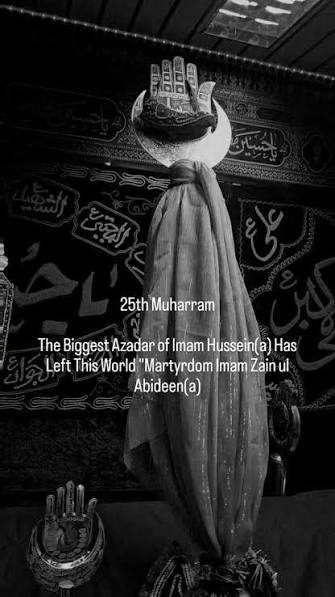
Muharram is often remembered through grief, mourning and remembrance. Yet its deeper essence lies not merely in recalling a historical event, but in understanding why that sacrifice was made and what it continues to teach humanity. By the twenty-fifth day of Muharram, the immediate shock of Karbala had begun to give way to a larger mission: preserving the truth of what had happened and ensuring that the sacrifice of Hazrat Imam Hussain (AS) would never be forgotten or distorted.
The 25th day of Muharram occupies a deeply reflective place in Islamic history. While the tragedy of Ashura (10 Muharram) remains the defining moment of the month, the days that follow are equally significant. They remind humanity that although the battle of Karbala ended within hours, its message did not. The swords fell silent on the battlefield, but the struggle for truth, justice, dignity and moral courage entered a new chapter—one that continues to inspire millions across the world.
Muharram is often remembered through grief, mourning and remembrance. Yet its deeper essence lies not merely in recalling a historical event, but in understanding why that sacrifice was made and what it continues to teach humanity. By the twenty-fifth day of Muharram, the immediate shock of Karbala had begun to give way to a larger mission: preserving the truth of what had happened and ensuring that the sacrifice of Hazrat Imam Hussain (AS) would never be forgotten or distorted.
The events of Karbala in 680 CE were not a struggle for power or territory. Imam Hussain (AS), the beloved grandson of Prophet Muhammad (peace be upon him), refused to pledge allegiance to a ruler whom he believed represented injustice, tyranny and moral decline. His refusal was rooted in principle rather than politics. He chose sacrifice over submission because, in his view, silence before oppression would have legitimised injustice.
On the plains of Karbala, Imam Hussain (AS), his family members and loyal companions faced overwhelming odds. Deprived of water for days and surrounded by a vastly larger army, they stood firm until the very end. The martyrdom of Imam Hussain (AS), his sons, brothers, nephews and companions remains one of history's most powerful examples of unwavering commitment to faith and justice.
However, Karbala did not end with the martyrdom of the Imam. The days after Ashura, culminating in the later days of Muharram including the twenty-fifth, reveal another equally remarkable chapter. The surviving members of the Prophet's household—particularly Hazrat Zainab (SA) and Imam Ali ibn Hussain (Imam Zain-ul-Abidin) (AS)—transformed unimaginable suffering into a movement of truth.
Taken as prisoners from Karbala to Kufa and later to Damascus, they endured humiliation, hardship and grief. Yet they refused to allow the tragedy to be buried beneath political propaganda. Through courage, patience and eloquence, they ensured that the world came to know the reality of Karbala.
Hazrat Zainab (SA), despite witnessing the loss of her brothers, sons and relatives, displayed extraordinary resilience. Her speeches before the rulers of the time exposed oppression with remarkable dignity and moral authority. Imam Zain-ul-Abidin (AS), though physically weakened by illness and grief, continued this mission through wisdom, prayers and profound spiritual guidance.
By the twenty-fifth of Muharram, the battlefield had disappeared behind the caravan, but the message had only begun its journey.
This is perhaps the greatest lesson of Muharram: truth cannot be buried by force.
History repeatedly demonstrates that armies may conquer territories, but they cannot conquer conscience. The rulers responsible for Karbala possessed military power, wealth and political authority. Imam Hussain (AS) possessed none of these. Yet centuries later, the names of those who represented tyranny evoke criticism, while the name of Imam Hussain (AS) continues to inspire love, reverence and admiration across nations, cultures and even religions.
The twenty-fifth of Muharram therefore reminds believers that moral victories often outlast military victories.
The essence of Karbala also lies in its universal character. Although rooted in Islamic history, its principles transcend religious boundaries. Justice, human dignity, compassion, honesty and resistance against oppression are values cherished by every civilisation.
Leaders such as Mahatma Gandhi acknowledged drawing inspiration from Imam Hussain's steadfastness. Nelson Mandela, Martin Luther King Jr., and numerous advocates of human rights have similarly reflected values that resonate with the spirit of Karbala—the refusal to surrender one's principles in the face of injustice.
For Muslims, however, Muharram is not merely an occasion of historical remembrance. It is a period of self-accountability.
Every believer is invited to ask difficult questions.
Do we stand for justice when it demands personal sacrifice?
Do we speak the truth when silence appears safer?
Do we defend the rights of the weak?
Do we fulfil our responsibilities with honesty?
These questions make Karbala a living moral compass rather than a distant historical event.
The twenty-fifth of Muharram also highlights the importance of patience (Sabr) in Islam.
Patience in Islamic teachings is never passive resignation. Rather, it is perseverance while continuing to uphold righteousness. Imam Hussain (AS) demonstrated patience not through surrender but through steadfast commitment to truth despite overwhelming adversity.
Likewise, Hazrat Zainab (SA) transformed grief into courage. She neither allowed despair to overcome faith nor hatred to replace justice. Her remarkable composure remains one of history's finest examples of spiritual strength.
Another enduring lesson is the responsibility of preserving truth.
Falsehood often spreads rapidly through power and propaganda, while truth requires courage, witnesses and sacrifice. Had the survivors remained silent, future generations might never have understood the real purpose of Karbala.
Their testimony ensured that history remembered not merely who won a battle, but who upheld justice.
The later days of Muharram therefore honour not only those who sacrificed their lives but also those who preserved their message.
Modern societies continue to face challenges remarkably similar in spirit, though different in form.
Corruption, injustice, inequality, discrimination, violence, intolerance and abuse of authority remain global concerns. Technological advancement has transformed human life, yet ethical challenges persist.
The message of Karbala remains profoundly relevant because it addresses timeless human questions.
Should convenience outweigh conscience?
Should power replace morality?
Should silence become the price of personal safety?
Imam Hussain (AS) answered these questions through action rather than words.
The twenty-fifth of Muharram further reminds communities to strengthen compassion and social responsibility.
Across many regions, Muharram inspires charitable activities including feeding the poor, supporting orphans, donating blood, helping travellers and serving communities without discrimination.
These acts embody the humanitarian spirit of Imam Hussain (AS), whose concern extended even to those who opposed him. Historical accounts describe his compassion towards enemies, travellers and children alike.
Thus, mourning alone cannot capture the complete essence of Muharram.
Its true spirit lies in transforming remembrance into service.
It also reminds us that faith demands integrity.
Religious devotion loses meaning if it remains confined to rituals while neglecting honesty, justice and kindness in everyday life.
Imam Hussain (AS) demonstrated that worship and morality are inseparable.
Prayer without justice becomes incomplete.
Faith without compassion becomes hollow.
Knowledge without humility becomes arrogance.
Power without accountability becomes tyranny.
These timeless principles explain why Karbala continues to occupy such a central place in Islamic consciousness.
The twenty-fifth day of Muharram also offers hope.
Although the events of Karbala were marked by immense suffering, the eventual triumph belonged to truth.
Empires disappeared.
Dynasties collapsed.
Political powers faded.
But the ideals defended at Karbala remain alive after more than thirteen centuries.
Every generation rediscovers them.
Every era finds relevance in them.
Every society confronting injustice finds inspiration in them.
That enduring legacy represents the true victory of Karbala.
As Muharram progresses beyond Ashura, remembrance should gradually evolve into reflection and renewal.
Individuals should strive to become more truthful in speech, more honest in conduct, more compassionate towards others and more courageous in defending justice.
Families should cultivate values of respect, integrity and service.
Communities should strengthen harmony rather than division.
Leaders should recognise that authority exists to serve people rather than dominate them.
This is the living message of Imam Hussain (AS).
The twenty-fifth day of Muharram therefore is not merely another date in the Islamic calendar. It represents continuity—the continuation of a mission that began on the plains of Karbala and continues wherever people defend truth against falsehood, justice against oppression and dignity against humiliation.
Karbala teaches that victory is not always measured by survival. Sometimes victory belongs to those who refuse to compromise their principles even when sacrifice becomes inevitable.
That is why Imam Hussain (AS) continues to illuminate hearts across centuries.
His sacrifice transformed history.
His courage transformed conscience.
His message continues to transform humanity.
As the days of Muharram move forward, the world is reminded that while battles may end, values never die. The swords of Karbala have long since rusted away, but its moral light continues to guide generations. The twenty-fifth of Muharram invites every human being to carry that light forward—not through words alone, but through lives dedicated to justice, compassion, truth and unwavering faith.
For in the final analysis, the greatest tribute to Karbala is not found only in mourning its martyrs, but in living by the ideals for which they gave everything.
Email:--------------------murtazahussain@gmail.com
Muharram is often remembered through grief, mourning and remembrance. Yet its deeper essence lies not merely in recalling a historical event, but in understanding why that sacrifice was made and what it continues to teach humanity. By the twenty-fifth day of Muharram, the immediate shock of Karbala had begun to give way to a larger mission: preserving the truth of what had happened and ensuring that the sacrifice of Hazrat Imam Hussain (AS) would never be forgotten or distorted.
The 25th day of Muharram occupies a deeply reflective place in Islamic history. While the tragedy of Ashura (10 Muharram) remains the defining moment of the month, the days that follow are equally significant. They remind humanity that although the battle of Karbala ended within hours, its message did not. The swords fell silent on the battlefield, but the struggle for truth, justice, dignity and moral courage entered a new chapter—one that continues to inspire millions across the world.
Muharram is often remembered through grief, mourning and remembrance. Yet its deeper essence lies not merely in recalling a historical event, but in understanding why that sacrifice was made and what it continues to teach humanity. By the twenty-fifth day of Muharram, the immediate shock of Karbala had begun to give way to a larger mission: preserving the truth of what had happened and ensuring that the sacrifice of Hazrat Imam Hussain (AS) would never be forgotten or distorted.
The events of Karbala in 680 CE were not a struggle for power or territory. Imam Hussain (AS), the beloved grandson of Prophet Muhammad (peace be upon him), refused to pledge allegiance to a ruler whom he believed represented injustice, tyranny and moral decline. His refusal was rooted in principle rather than politics. He chose sacrifice over submission because, in his view, silence before oppression would have legitimised injustice.
On the plains of Karbala, Imam Hussain (AS), his family members and loyal companions faced overwhelming odds. Deprived of water for days and surrounded by a vastly larger army, they stood firm until the very end. The martyrdom of Imam Hussain (AS), his sons, brothers, nephews and companions remains one of history's most powerful examples of unwavering commitment to faith and justice.
However, Karbala did not end with the martyrdom of the Imam. The days after Ashura, culminating in the later days of Muharram including the twenty-fifth, reveal another equally remarkable chapter. The surviving members of the Prophet's household—particularly Hazrat Zainab (SA) and Imam Ali ibn Hussain (Imam Zain-ul-Abidin) (AS)—transformed unimaginable suffering into a movement of truth.
Taken as prisoners from Karbala to Kufa and later to Damascus, they endured humiliation, hardship and grief. Yet they refused to allow the tragedy to be buried beneath political propaganda. Through courage, patience and eloquence, they ensured that the world came to know the reality of Karbala.
Hazrat Zainab (SA), despite witnessing the loss of her brothers, sons and relatives, displayed extraordinary resilience. Her speeches before the rulers of the time exposed oppression with remarkable dignity and moral authority. Imam Zain-ul-Abidin (AS), though physically weakened by illness and grief, continued this mission through wisdom, prayers and profound spiritual guidance.
By the twenty-fifth of Muharram, the battlefield had disappeared behind the caravan, but the message had only begun its journey.
This is perhaps the greatest lesson of Muharram: truth cannot be buried by force.
History repeatedly demonstrates that armies may conquer territories, but they cannot conquer conscience. The rulers responsible for Karbala possessed military power, wealth and political authority. Imam Hussain (AS) possessed none of these. Yet centuries later, the names of those who represented tyranny evoke criticism, while the name of Imam Hussain (AS) continues to inspire love, reverence and admiration across nations, cultures and even religions.
The twenty-fifth of Muharram therefore reminds believers that moral victories often outlast military victories.
The essence of Karbala also lies in its universal character. Although rooted in Islamic history, its principles transcend religious boundaries. Justice, human dignity, compassion, honesty and resistance against oppression are values cherished by every civilisation.
Leaders such as Mahatma Gandhi acknowledged drawing inspiration from Imam Hussain's steadfastness. Nelson Mandela, Martin Luther King Jr., and numerous advocates of human rights have similarly reflected values that resonate with the spirit of Karbala—the refusal to surrender one's principles in the face of injustice.
For Muslims, however, Muharram is not merely an occasion of historical remembrance. It is a period of self-accountability.
Every believer is invited to ask difficult questions.
Do we stand for justice when it demands personal sacrifice?
Do we speak the truth when silence appears safer?
Do we defend the rights of the weak?
Do we fulfil our responsibilities with honesty?
These questions make Karbala a living moral compass rather than a distant historical event.
The twenty-fifth of Muharram also highlights the importance of patience (Sabr) in Islam.
Patience in Islamic teachings is never passive resignation. Rather, it is perseverance while continuing to uphold righteousness. Imam Hussain (AS) demonstrated patience not through surrender but through steadfast commitment to truth despite overwhelming adversity.
Likewise, Hazrat Zainab (SA) transformed grief into courage. She neither allowed despair to overcome faith nor hatred to replace justice. Her remarkable composure remains one of history's finest examples of spiritual strength.
Another enduring lesson is the responsibility of preserving truth.
Falsehood often spreads rapidly through power and propaganda, while truth requires courage, witnesses and sacrifice. Had the survivors remained silent, future generations might never have understood the real purpose of Karbala.
Their testimony ensured that history remembered not merely who won a battle, but who upheld justice.
The later days of Muharram therefore honour not only those who sacrificed their lives but also those who preserved their message.
Modern societies continue to face challenges remarkably similar in spirit, though different in form.
Corruption, injustice, inequality, discrimination, violence, intolerance and abuse of authority remain global concerns. Technological advancement has transformed human life, yet ethical challenges persist.
The message of Karbala remains profoundly relevant because it addresses timeless human questions.
Should convenience outweigh conscience?
Should power replace morality?
Should silence become the price of personal safety?
Imam Hussain (AS) answered these questions through action rather than words.
The twenty-fifth of Muharram further reminds communities to strengthen compassion and social responsibility.
Across many regions, Muharram inspires charitable activities including feeding the poor, supporting orphans, donating blood, helping travellers and serving communities without discrimination.
These acts embody the humanitarian spirit of Imam Hussain (AS), whose concern extended even to those who opposed him. Historical accounts describe his compassion towards enemies, travellers and children alike.
Thus, mourning alone cannot capture the complete essence of Muharram.
Its true spirit lies in transforming remembrance into service.
It also reminds us that faith demands integrity.
Religious devotion loses meaning if it remains confined to rituals while neglecting honesty, justice and kindness in everyday life.
Imam Hussain (AS) demonstrated that worship and morality are inseparable.
Prayer without justice becomes incomplete.
Faith without compassion becomes hollow.
Knowledge without humility becomes arrogance.
Power without accountability becomes tyranny.
These timeless principles explain why Karbala continues to occupy such a central place in Islamic consciousness.
The twenty-fifth day of Muharram also offers hope.
Although the events of Karbala were marked by immense suffering, the eventual triumph belonged to truth.
Empires disappeared.
Dynasties collapsed.
Political powers faded.
But the ideals defended at Karbala remain alive after more than thirteen centuries.
Every generation rediscovers them.
Every era finds relevance in them.
Every society confronting injustice finds inspiration in them.
That enduring legacy represents the true victory of Karbala.
As Muharram progresses beyond Ashura, remembrance should gradually evolve into reflection and renewal.
Individuals should strive to become more truthful in speech, more honest in conduct, more compassionate towards others and more courageous in defending justice.
Families should cultivate values of respect, integrity and service.
Communities should strengthen harmony rather than division.
Leaders should recognise that authority exists to serve people rather than dominate them.
This is the living message of Imam Hussain (AS).
The twenty-fifth day of Muharram therefore is not merely another date in the Islamic calendar. It represents continuity—the continuation of a mission that began on the plains of Karbala and continues wherever people defend truth against falsehood, justice against oppression and dignity against humiliation.
Karbala teaches that victory is not always measured by survival. Sometimes victory belongs to those who refuse to compromise their principles even when sacrifice becomes inevitable.
That is why Imam Hussain (AS) continues to illuminate hearts across centuries.
His sacrifice transformed history.
His courage transformed conscience.
His message continues to transform humanity.
As the days of Muharram move forward, the world is reminded that while battles may end, values never die. The swords of Karbala have long since rusted away, but its moral light continues to guide generations. The twenty-fifth of Muharram invites every human being to carry that light forward—not through words alone, but through lives dedicated to justice, compassion, truth and unwavering faith.
For in the final analysis, the greatest tribute to Karbala is not found only in mourning its martyrs, but in living by the ideals for which they gave everything.
Email:--------------------murtazahussain@gmail.com

© Copyright 2023 brighterkashmir.com All Rights Reserved. Quantum Technologies