04-03-2026     3 رجب 1440

The Final Salute: Raja Man Singh’s Last Campaign and Enduring Legacy

The career of Man Singh ended in the Deccan, where after years of campaigns he succumbed to a short illness at Ellichpur (Achalpur, Amravati district, Maharashtra) on 6 July 1614 (Ashad Shukla 10, Vikram Samvat 1671), in the ninth year of Jahangir’s reign. Far from Amber, he was cremated there, his ashes later being carried back to his homeland.

November 18, 2025 | Daanish Bin Nabi


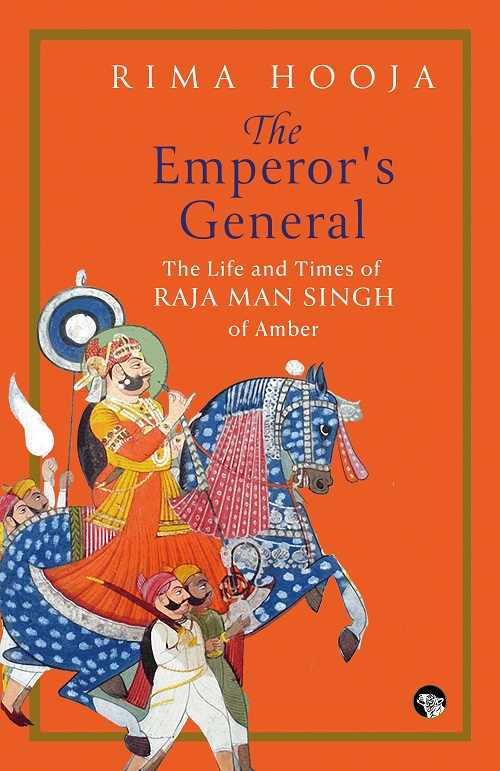
Historian Rima Hooja, in her magnum opus, The Emperor’s General: The Life and Times of Raja Man Singh of Amber (Speaking Tiger), reconstructs the extraordinary career of one of Akbar’s most trusted generals and statesmen.

As Hooja draws upon chronicles, genealogies, and architectural legacies to underpin her narrative, she also captures the triumphs and tragedies of Raja Man Singh, whose life spans over six decades of Mughal expansion and Rajput consolidation.

The career of Man Singh ended in the Deccan, where after years of campaigns he succumbed to a short illness at Ellichpur (Achalpur, Amravati district, Maharashtra) on 6 July 1614 (Ashad Shukla 10, Vikram Samvat 1671), in the ninth year of Jahangir’s reign. Far from Amber, he was cremated there, his ashes later being carried back to his homeland.

A warrior’s end

The chronicles record that four of his wives immolated themselves on his pyre at Ellichpur—Rani Tilok, Rani Chandrabhan, Rani Chohan, and Rani Bharbavati Bangalini. Other accounts record that two wives immolated themselves at Amber, while four others followed him at Ellichpur. According to some accounts, Rani Bharbavati was a princess of Cooch Behar, daughter of Raja Kishan Rai.

At Amber, his ashes—or phool —were interred in a cenotaph within the Bharmal ki Chhatri complex, opposite that of his grandfather Raja Bharmal. The carved stone sepulchre, with twelve tapering pillars and a domed roof, is elaborately ornamented by painted images of Surya, Mahavir, Buddha, Radha‑Krishna, Hanuman, Lakshmi, Ram with Lakshman, Brahma, Varah, Narsimha, Saraswati, Chamunda, and Krishna lifting Mount Govardhan.

Military campaigns

During his lifetime, Raja Man Singh fought more than 67 major Mughal campaigns, which included Kabul, Balkh, Bukhara, Bengal and the Deccan. His generals included Rao Gopal of the Shivbrahmapota sub‑clan of the Kachhwahas, who was granted the hereditary title of Rawat for his bravery, and Mohan Singh of Achrol, who died fighting in 1612.

Man Singh's campaigns were not only military but also administrative, as he consolidated the Mughal authority in Bengal, Bihar, and Orissa, extending his influence across the subcontinent.

Patron of literature and arts

A polyglot and patron of learning, Man Singh supported Sanskrit and Rajasthani literature. His court included well-known luminaries like Rai Murari Das, Pundarik, Dalpatraj, Narottam Kavi, and Amritlal. His collections form a substantial part of the royal library Pothikhana of the Dhoondhar rulers.

He also encouraged the Amber‑Jaipur School of painting, commissioning frescoes in the Jahangiri style at Mauzamabad, Bairat and Amber. His architectural patronage was also prolific: forts at Salimpur (Bengal), Manihari (Bihar), Ramgarh (Dhoondhar); towns such as Akbarnagar (Rajmahal) and Manpur near Gaya; and palaces, gardens, and fortifications across Kashmir, Punjab, Bihar, Bengal, and the Deccan.

Religious patronage

Equally important was Man Singh’s religious patronage. At Varanasi (1586) he had the Man Ghat built adjacent to the Someshvara temple and constructed the Man Mandir palace, a magnificent example of late‑medieval Rajput architecture.

He also renovated the Bindu‑Madhava temple and contributed to the rebuilding of the celebrated Kashi Vishwanath temple during Akbar’s reign.

He built the famous Govind Devji Temple at Vrindavan, one of his most lasting contributions. At Haridwar, he constructed the Ganga Mandir at Har‑ki‑Pauri, remembered as Man Singh’s Chhatri.

In Amber, he consecrated the Shila Devi temple, established the Sanga Baba shrine at Sanganer, and built the Hanuman temple at Chandpol. His patronage extended as far as Kabul, Qandahar, Bengal, Bihar, and Orissa.

Marriages and alliances

Marriages in Rajput clans were closely linked with political alliances. The recorded 30 or 32 marriages of Man Singh spread his influence across Rajputana and beyond to Orissa and Cooch Behar.

These include Shrinagar Devi (Kanakavati), Jamwati Chhamavati, Ram Kanwar Khinchi, Manbhawati, Lichmawati, Chand Kanwar, Maha Kumari (Katochi), Achurang Devi, Sahodra Devi (Bhanumati), Tilok Devi, Rani Banaras, Paratap Devi, Sumitra Devi, Lichhmavati of Cooch Behar, Dulhan Devi, Hamir Devi, Brij Kanwar, Ratnawati, Prabhawati, Shyam Kanwar, Madanwati, Ratanmala, Satyabhama, Ahjan Kanwar, Roop Kanwar, Raj Kanwar, Madhu Malati, Chander Mati, Aas Kanwar, Chander Bhan, Rani Barbhavati Bangalini, Sushilawati Bai, Munawari Bai, Prabhavati Bangalan, and Bibi Mubarak (Akbar’s niece).

These alliances tied rival clans to Amber's interests and extended Amber's influence across the subcontinent. The familial cost was, however, heavy: of his twelve sons, tradition holds that only Bhao Singh outlived him.

Succession and politics

Man Singh was followed by his son Bhao Singh (r. 1614–1621), who was confirmed in his succession by Jahangir. Jahangir sidestepped the claims of Man Singh’s grandson Maha Singh, despite his close relations with the emperor.

Maha Singh was placated with the grant of Garha and later raised in rank. Bhao Singh died in 1621 at Burhanpur. As he had no surviving male heir, the throne passed to Maha Singh’s son, Jai Singh I (r. 1622–1667), later celebrated as Mirza Raja Jai Singh. Jai Singh served Jahangir, Shah Jahan, and Aurangzeb, rising to a mansab of 7,000—usually reserved for Mughal princes.

A legacy beyond his century

Though Man Singh died far from Amber, the contribution he made to architecture, literature, and cultural heritage remains indelible. His patronage shaped food habits, weaponry, libraries, religious landmarks, art, craft traditions, and even the flag of Dhoondhar.

His life was dogged by near‑perpetual separation from Amber, yet his influence stretched across the subcontinent. He leaped over his century, imprinting himself not only upon the annals of history but upon India's cultural and military life.

Conclusion

The death of Raja Man Singh on 6 July 1614 at Ellichpur marked the end of a remarkable career. His ashes rest at Amber, his cenotaph adorned with the images of gods and heroes. His legacy continues in forts, temples, literature, and art across India. The Final Salute is not the story of a general's death; it is the story of a man who shaped the campaigns of the Mughal Empire, enriched the cultural landscape of India, and left behind a legacy continuing to resonate.

Email: daanishinterview@gmail.com

The Final Salute: Raja Man Singh’s Last Campaign and Enduring Legacy

The career of Man Singh ended in the Deccan, where after years of campaigns he succumbed to a short illness at Ellichpur (Achalpur, Amravati district, Maharashtra) on 6 July 1614 (Ashad Shukla 10, Vikram Samvat 1671), in the ninth year of Jahangir’s reign. Far from Amber, he was cremated there, his ashes later being carried back to his homeland.

November 18, 2025 | Daanish Bin Nabi


Historian Rima Hooja, in her magnum opus, The Emperor’s General: The Life and Times of Raja Man Singh of Amber (Speaking Tiger), reconstructs the extraordinary career of one of Akbar’s most trusted generals and statesmen.

As Hooja draws upon chronicles, genealogies, and architectural legacies to underpin her narrative, she also captures the triumphs and tragedies of Raja Man Singh, whose life spans over six decades of Mughal expansion and Rajput consolidation.

The career of Man Singh ended in the Deccan, where after years of campaigns he succumbed to a short illness at Ellichpur (Achalpur, Amravati district, Maharashtra) on 6 July 1614 (Ashad Shukla 10, Vikram Samvat 1671), in the ninth year of Jahangir’s reign. Far from Amber, he was cremated there, his ashes later being carried back to his homeland.

A warrior’s end

The chronicles record that four of his wives immolated themselves on his pyre at Ellichpur—Rani Tilok, Rani Chandrabhan, Rani Chohan, and Rani Bharbavati Bangalini. Other accounts record that two wives immolated themselves at Amber, while four others followed him at Ellichpur. According to some accounts, Rani Bharbavati was a princess of Cooch Behar, daughter of Raja Kishan Rai.

At Amber, his ashes—or phool —were interred in a cenotaph within the Bharmal ki Chhatri complex, opposite that of his grandfather Raja Bharmal. The carved stone sepulchre, with twelve tapering pillars and a domed roof, is elaborately ornamented by painted images of Surya, Mahavir, Buddha, Radha‑Krishna, Hanuman, Lakshmi, Ram with Lakshman, Brahma, Varah, Narsimha, Saraswati, Chamunda, and Krishna lifting Mount Govardhan.

Military campaigns

During his lifetime, Raja Man Singh fought more than 67 major Mughal campaigns, which included Kabul, Balkh, Bukhara, Bengal and the Deccan. His generals included Rao Gopal of the Shivbrahmapota sub‑clan of the Kachhwahas, who was granted the hereditary title of Rawat for his bravery, and Mohan Singh of Achrol, who died fighting in 1612.

Man Singh's campaigns were not only military but also administrative, as he consolidated the Mughal authority in Bengal, Bihar, and Orissa, extending his influence across the subcontinent.

Patron of literature and arts

A polyglot and patron of learning, Man Singh supported Sanskrit and Rajasthani literature. His court included well-known luminaries like Rai Murari Das, Pundarik, Dalpatraj, Narottam Kavi, and Amritlal. His collections form a substantial part of the royal library Pothikhana of the Dhoondhar rulers.

He also encouraged the Amber‑Jaipur School of painting, commissioning frescoes in the Jahangiri style at Mauzamabad, Bairat and Amber. His architectural patronage was also prolific: forts at Salimpur (Bengal), Manihari (Bihar), Ramgarh (Dhoondhar); towns such as Akbarnagar (Rajmahal) and Manpur near Gaya; and palaces, gardens, and fortifications across Kashmir, Punjab, Bihar, Bengal, and the Deccan.

Religious patronage

Equally important was Man Singh’s religious patronage. At Varanasi (1586) he had the Man Ghat built adjacent to the Someshvara temple and constructed the Man Mandir palace, a magnificent example of late‑medieval Rajput architecture.

He also renovated the Bindu‑Madhava temple and contributed to the rebuilding of the celebrated Kashi Vishwanath temple during Akbar’s reign.

He built the famous Govind Devji Temple at Vrindavan, one of his most lasting contributions. At Haridwar, he constructed the Ganga Mandir at Har‑ki‑Pauri, remembered as Man Singh’s Chhatri.

In Amber, he consecrated the Shila Devi temple, established the Sanga Baba shrine at Sanganer, and built the Hanuman temple at Chandpol. His patronage extended as far as Kabul, Qandahar, Bengal, Bihar, and Orissa.

Marriages and alliances

Marriages in Rajput clans were closely linked with political alliances. The recorded 30 or 32 marriages of Man Singh spread his influence across Rajputana and beyond to Orissa and Cooch Behar.

These include Shrinagar Devi (Kanakavati), Jamwati Chhamavati, Ram Kanwar Khinchi, Manbhawati, Lichmawati, Chand Kanwar, Maha Kumari (Katochi), Achurang Devi, Sahodra Devi (Bhanumati), Tilok Devi, Rani Banaras, Paratap Devi, Sumitra Devi, Lichhmavati of Cooch Behar, Dulhan Devi, Hamir Devi, Brij Kanwar, Ratnawati, Prabhawati, Shyam Kanwar, Madanwati, Ratanmala, Satyabhama, Ahjan Kanwar, Roop Kanwar, Raj Kanwar, Madhu Malati, Chander Mati, Aas Kanwar, Chander Bhan, Rani Barbhavati Bangalini, Sushilawati Bai, Munawari Bai, Prabhavati Bangalan, and Bibi Mubarak (Akbar’s niece).

These alliances tied rival clans to Amber's interests and extended Amber's influence across the subcontinent. The familial cost was, however, heavy: of his twelve sons, tradition holds that only Bhao Singh outlived him.

Succession and politics

Man Singh was followed by his son Bhao Singh (r. 1614–1621), who was confirmed in his succession by Jahangir. Jahangir sidestepped the claims of Man Singh’s grandson Maha Singh, despite his close relations with the emperor.

Maha Singh was placated with the grant of Garha and later raised in rank. Bhao Singh died in 1621 at Burhanpur. As he had no surviving male heir, the throne passed to Maha Singh’s son, Jai Singh I (r. 1622–1667), later celebrated as Mirza Raja Jai Singh. Jai Singh served Jahangir, Shah Jahan, and Aurangzeb, rising to a mansab of 7,000—usually reserved for Mughal princes.

A legacy beyond his century

Though Man Singh died far from Amber, the contribution he made to architecture, literature, and cultural heritage remains indelible. His patronage shaped food habits, weaponry, libraries, religious landmarks, art, craft traditions, and even the flag of Dhoondhar.

His life was dogged by near‑perpetual separation from Amber, yet his influence stretched across the subcontinent. He leaped over his century, imprinting himself not only upon the annals of history but upon India's cultural and military life.

Conclusion

The death of Raja Man Singh on 6 July 1614 at Ellichpur marked the end of a remarkable career. His ashes rest at Amber, his cenotaph adorned with the images of gods and heroes. His legacy continues in forts, temples, literature, and art across India. The Final Salute is not the story of a general's death; it is the story of a man who shaped the campaigns of the Mughal Empire, enriched the cultural landscape of India, and left behind a legacy continuing to resonate.

Email: daanishinterview@gmail.com

  • Address: R.C 2 Quarters Press Enclave Near Pratap Park, Srinagar 190001.
  • Phone: 0194-2451076 , +91-941-940-0056 , +91-962-292-4716
  • Email: brighterkmr@gmail.com
Owner, Printer, Publisher, Editor: Farooq Ahmad Wani
Legal Advisor: M.J. Hubi
Printed at: Sangermal offset Printing Press Rangreth ( Budgam)
Published from: Gulshanabad Chraresharief Budgam
RNI No.: JKENG/2010/33802
Office No’s: 0194-2451076
Mobile No’s 9419400056, 9622924716 ,7006086442
Postal Regd No: SK/135/2010-2019
POST BOX NO: 1001
Administrative Office: R.C 2 Quarters Press Enclave Near Pratap Park ( Srinagar -190001)

© Copyright 2023 brighterkashmir.com All Rights Reserved. Quantum Technologies

Owner, Printer, Publisher, Editor: Farooq Ahmad Wani
Legal Advisor: M.J. Hubi
Printed at: Abid Enterprizes, Zainkote Srinagar
Published from: Gulshanabad Chraresharief Budgam
RNI No.: JKENG/2010/33802
Office No’s: 0194-2451076, 9622924716 , 9419400056
Postal Regd No: SK/135/2010-2019
Administrative Office: Abi Guzer Srinagar

© Copyright 2018 brighterkashmir.com All Rights Reserved.