
BREAKING NEWS
The neighbouring state of Manipur has witnessed violence recently. The question that arose in my mind is what made this man so popular that his reels get millions of views and he is known across the borders, even across the countries of the world. He is not wealthy, nor is he a political influence but he has influenced millions becoming one of the most influential persons not only in India but in the subcontinent as well.
A man in his forties walks through the arrival section of the Agartala airport.
Clad in jeans-pant and cotton shirt, he is welcomed with bouquets and garlands.
Hundreds of people, male and female, young and old, irrespective of age, caste, creed and religion, flock him.
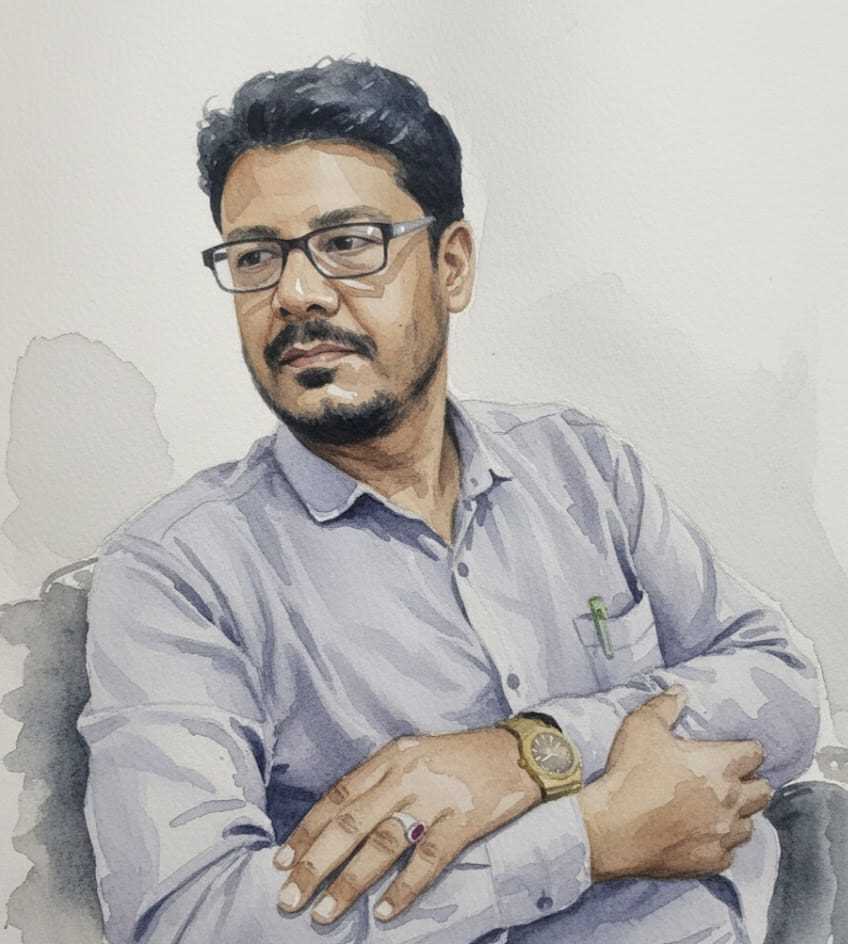
His specs have thick lens. Slight beard and moustache has cocktail-hair.
This was the visual I was scrolling through the reels.
This person happened to be the philanthropist, social activist and now referred to as the new Messiah of the poor and marginalised in India. I was wondering this man who is neither an industrialist nor a scientist, neither a film actor nor any politician with blind followers yet he was being rendered a heroic welcome.
In other reels covering his maiden visit to the state of Tripura, he was being paraded through the streets, a state which even does not speak the language Hussain speaks.
Young girls and boys were escorting him by forming a human- chain to protect him from any untoward incident.
The neighbouring state of Manipur has witnessed violence recently. The question that arose in my mind is what made this man so popular that his reels get millions of views and he is known across the borders, even across the countries of the world. He is not wealthy, nor is he a political influence but he has influenced millions becoming one of the most influential persons not only in India but in the subcontinent as well.
He hails from Mumbai, a city defined by its glittering skyscrapers and aggressive pursuit of financial success. Hussain, a 40-year-old man from the narrow lanes of a local slum is rewriting the definition of what it truly means to be rich. Hussain Mansuri, an entrepreneur turned viral digital humanitarian, has caught the attention of millions across India, not with flashing luxury, but with a deeply grounded philosophy: 'Tu bas dua kama, phir tujhse amir koi nahi' (Just earn blessings, and then no one is richer than you).
From the crowded wards outside the Tata Memorial Hospital to the concrete pavements of Mahim and Dadar, Mansuri has become a symbol of unconditional hope for Mumbai’s, and now the whole nation's most vulnerable. What sets his mission apart in a fractured world is a fierce, unyielding commitment to absolute inclusivity; his relief efforts reach the hungry, the sick, and the forgotten. He cries when he feels the pain of the ones he meets and eventually helps.
When he arrives in the streets of Dadar and other areas, the faces of the street-kids illuminate like a halogen bulb. The innocence and purity of childhood can be conveniently gauged with the approach of Hussain Mansuri. The kids ask him for needs as small as such as bicycles, chocolates or even lunch. Hussain never hesitates to oblige. He takes them to the restaurants, cycle shops, buys them clothes and footwear. What he earns by doing so is the twinkles in their eyes and cute smiles on their faces. The elderly and poor labourer men and women, vegetable or fruit vendors he hugs, listens and talks to them, eats with them on the pavement and while parting, hands them a good amount of money are all the acts of purity and piety with no trace of limelight and fanfare.
Mansuri’s life is a master-class in empathy forged through personal suffering. Raised in a household where basic necessities were hard to secure, he spent his childhood working odd jobs in primary school, wearing second-hand clothes, and knowing the literal pain of living hungry. Even after striving to complete his education at Cardinal Gracious High School and Rizvi College, his early career was defined by relentless barriers, including job rejections due to limited English skills.
He worked as a waiter, carried ground staff duties in aviation, and eventually set up a tiny garment stall beneath a city bridge just to survive.
'I have lived in poverty, and hence I find it easy to understand the struggles of these people,' Mansuri shares with quiet humility. 'I have stayed hungry. Because I remember how life-changing small opportunities or tiny acts of kindness can be, I cannot look away when someone else is suffering.'
What began as quiet, personal charity took on a global scale through social media. One evening at a roadside tea stall, Mansuri noticed an exhausted woman, bought her a cup of tea, and sat to listen to her story. A friend filmed the interaction. When the clip was later shared online with a message about humility, it struck a massive chord. Today, Mansuri uses his platforms; boasting over 17 million followers, not for self-promotion, but as a megaphone for human dignity.
His strategy is absolutely straight: rather than pooling donations into a complex corporate fund, he highlights the stories of street vendors, families of ailing children, or the elderly, and posts their direct account numbers or contact information so his community can support them directly.
Mansuri's impact ripples far past standard food distribution drives. In a society frequently strained by socioeconomic and religious divisions, his actions serve as a masterclass in communal harmony. He is often seen providing critical financial assistance and meals to out-of-town cancer patients and their families camped outside hospitals. In a viral moment that moved viewers across faiths, Mansuri was seen carefully picking up abandoned, weather-worn images of Hindu deities from the roadside and respectfully immersing them in water. This act tries its slightest best at the fact how he, even as a Muslim, looks at other religions.
Whether arranging emergency transport and support for visually impaired students visiting the city or stepping up as a frontline warrior distributing essentials during the COVID-19 pandemic, his focus never wavers from the individual's need. He humbly and emotionally reiterates in his simple language without mincing the words, 'Main sirf insaniyat ka farz ada kar raha hoon,'. (I am only fulfilling the duty of humanity.)
For the daily commuters and street dwellers of Mumbai, Hussain Mansuri has proved that you don't need a corporate empire or a massive bank balance to change a city's soul. By turning social media into a vehicle for collective responsibility and viewing every stranger through the lens of shared humanity, he is proving daily that Mumbai's greatest wealth isn't its real estate; it's its capacity to care.
No doubt, Hussain Mansuri is an ambassador of humanity, which highlights his grassroots social work and impact. The warring nations with millions starving for food are constant danger to humanity and here is the man who tries his bit to make the humanity survive.
I dare ask all of you to register my prophecy and prediction that very soon, at least the Ramon Magsaysay Award will be on his way, notwithstanding the Nobel prize for his charitable and humanitarian works to be followed later. Even Nobel Prize Committee will not hesitate to honour him with the Noble prize.
Hussain’s selfless and humanitarian work reminds of the Urdu couplet which is where I would like to end this article:
Yahi Hai Ibadat, Yahi Deen-o-Imaan
Ke Kaam Aaye Duniya Mein Insaa,n Ke Insaa,n.
Email:----------------------------------hasnainaaqib2@gmail.com
The neighbouring state of Manipur has witnessed violence recently. The question that arose in my mind is what made this man so popular that his reels get millions of views and he is known across the borders, even across the countries of the world. He is not wealthy, nor is he a political influence but he has influenced millions becoming one of the most influential persons not only in India but in the subcontinent as well.
A man in his forties walks through the arrival section of the Agartala airport.
Clad in jeans-pant and cotton shirt, he is welcomed with bouquets and garlands.
Hundreds of people, male and female, young and old, irrespective of age, caste, creed and religion, flock him.
His specs have thick lens. Slight beard and moustache has cocktail-hair.
This was the visual I was scrolling through the reels.
This person happened to be the philanthropist, social activist and now referred to as the new Messiah of the poor and marginalised in India. I was wondering this man who is neither an industrialist nor a scientist, neither a film actor nor any politician with blind followers yet he was being rendered a heroic welcome.
In other reels covering his maiden visit to the state of Tripura, he was being paraded through the streets, a state which even does not speak the language Hussain speaks.
Young girls and boys were escorting him by forming a human- chain to protect him from any untoward incident.
The neighbouring state of Manipur has witnessed violence recently. The question that arose in my mind is what made this man so popular that his reels get millions of views and he is known across the borders, even across the countries of the world. He is not wealthy, nor is he a political influence but he has influenced millions becoming one of the most influential persons not only in India but in the subcontinent as well.
He hails from Mumbai, a city defined by its glittering skyscrapers and aggressive pursuit of financial success. Hussain, a 40-year-old man from the narrow lanes of a local slum is rewriting the definition of what it truly means to be rich. Hussain Mansuri, an entrepreneur turned viral digital humanitarian, has caught the attention of millions across India, not with flashing luxury, but with a deeply grounded philosophy: 'Tu bas dua kama, phir tujhse amir koi nahi' (Just earn blessings, and then no one is richer than you).
From the crowded wards outside the Tata Memorial Hospital to the concrete pavements of Mahim and Dadar, Mansuri has become a symbol of unconditional hope for Mumbai’s, and now the whole nation's most vulnerable. What sets his mission apart in a fractured world is a fierce, unyielding commitment to absolute inclusivity; his relief efforts reach the hungry, the sick, and the forgotten. He cries when he feels the pain of the ones he meets and eventually helps.
When he arrives in the streets of Dadar and other areas, the faces of the street-kids illuminate like a halogen bulb. The innocence and purity of childhood can be conveniently gauged with the approach of Hussain Mansuri. The kids ask him for needs as small as such as bicycles, chocolates or even lunch. Hussain never hesitates to oblige. He takes them to the restaurants, cycle shops, buys them clothes and footwear. What he earns by doing so is the twinkles in their eyes and cute smiles on their faces. The elderly and poor labourer men and women, vegetable or fruit vendors he hugs, listens and talks to them, eats with them on the pavement and while parting, hands them a good amount of money are all the acts of purity and piety with no trace of limelight and fanfare.
Mansuri’s life is a master-class in empathy forged through personal suffering. Raised in a household where basic necessities were hard to secure, he spent his childhood working odd jobs in primary school, wearing second-hand clothes, and knowing the literal pain of living hungry. Even after striving to complete his education at Cardinal Gracious High School and Rizvi College, his early career was defined by relentless barriers, including job rejections due to limited English skills.
He worked as a waiter, carried ground staff duties in aviation, and eventually set up a tiny garment stall beneath a city bridge just to survive.
'I have lived in poverty, and hence I find it easy to understand the struggles of these people,' Mansuri shares with quiet humility. 'I have stayed hungry. Because I remember how life-changing small opportunities or tiny acts of kindness can be, I cannot look away when someone else is suffering.'
What began as quiet, personal charity took on a global scale through social media. One evening at a roadside tea stall, Mansuri noticed an exhausted woman, bought her a cup of tea, and sat to listen to her story. A friend filmed the interaction. When the clip was later shared online with a message about humility, it struck a massive chord. Today, Mansuri uses his platforms; boasting over 17 million followers, not for self-promotion, but as a megaphone for human dignity.
His strategy is absolutely straight: rather than pooling donations into a complex corporate fund, he highlights the stories of street vendors, families of ailing children, or the elderly, and posts their direct account numbers or contact information so his community can support them directly.
Mansuri's impact ripples far past standard food distribution drives. In a society frequently strained by socioeconomic and religious divisions, his actions serve as a masterclass in communal harmony. He is often seen providing critical financial assistance and meals to out-of-town cancer patients and their families camped outside hospitals. In a viral moment that moved viewers across faiths, Mansuri was seen carefully picking up abandoned, weather-worn images of Hindu deities from the roadside and respectfully immersing them in water. This act tries its slightest best at the fact how he, even as a Muslim, looks at other religions.
Whether arranging emergency transport and support for visually impaired students visiting the city or stepping up as a frontline warrior distributing essentials during the COVID-19 pandemic, his focus never wavers from the individual's need. He humbly and emotionally reiterates in his simple language without mincing the words, 'Main sirf insaniyat ka farz ada kar raha hoon,'. (I am only fulfilling the duty of humanity.)
For the daily commuters and street dwellers of Mumbai, Hussain Mansuri has proved that you don't need a corporate empire or a massive bank balance to change a city's soul. By turning social media into a vehicle for collective responsibility and viewing every stranger through the lens of shared humanity, he is proving daily that Mumbai's greatest wealth isn't its real estate; it's its capacity to care.
No doubt, Hussain Mansuri is an ambassador of humanity, which highlights his grassroots social work and impact. The warring nations with millions starving for food are constant danger to humanity and here is the man who tries his bit to make the humanity survive.
I dare ask all of you to register my prophecy and prediction that very soon, at least the Ramon Magsaysay Award will be on his way, notwithstanding the Nobel prize for his charitable and humanitarian works to be followed later. Even Nobel Prize Committee will not hesitate to honour him with the Noble prize.
Hussain’s selfless and humanitarian work reminds of the Urdu couplet which is where I would like to end this article:
Yahi Hai Ibadat, Yahi Deen-o-Imaan
Ke Kaam Aaye Duniya Mein Insaa,n Ke Insaa,n.
Email:----------------------------------hasnainaaqib2@gmail.com

© Copyright 2023 brighterkashmir.com All Rights Reserved. Quantum Technologies