

Prime Minister Narendra Modi’s renewed emphasis on Centre–State teamwork to achieve the vision of Viksit Bharat by 2047 is both timely and essential. India’s transformation into a developed nation cannot be driven by the Union government alone; it demands a synchronized national effort where states function not as passive recipients, but as active partners in governance and growth. India’s federal structure, by design, distributes power across multiple layers. Yet, development outcomes often depend on how effectively these layers collaborate. The push for cooperative federalism underlines a simple truth: policies succeed when implementation is locally rooted, and innovation is encouraged at the state level. From infrastructure to health, education to digital governance, states remain the primary execution arms of development. The Prime Minister’s call for teamwork reflects a shift from competitive politics to collaborative progress. In recent years, flagship initiatives such as Digital India, PM Gati Shakti, Ayushman Bharat, and Smart Cities Mission have shown that outcomes improve significantly when states align their priorities with national objectives while tailoring execution to local needs. The success of states like Gujarat in industrial expansion, Tamil Nadu in manufacturing, and Kerala in human development indicators demonstrates how regional strengths can collectively accelerate national progress.However, challenges remain. Policy fragmentation, fiscal disparities, and occasional Centre–State friction can slow momentum. Delays in project approvals, uneven resource distribution, and political differences often dilute the impact of well-intentioned schemes. Addressing these bottlenecks requires trust, transparency, and a shared commitment to long-term national goals beyond electoral cycles. For Viksit Bharat 2047 to become reality, India must deepen institutional cooperation. Mechanisms like the GST Council and NITI Aayog already provide platforms for dialogue, but they must evolve into stronger engines of consensus-building and execution monitoring. States should be empowered with greater fiscal flexibility, while being held accountable for measurable outcomes in health, education, infrastructure, and employment generation. Equally important is citizen-centric governance. Development is ultimately judged not in policy documents but in lived realities—jobs created, schools improved, hospitals accessible, and infrastructure delivered. A coordinated Centre–State approach ensures that these benefits reach every district, not just select urban centres. As India moves toward 2047, the vision of Viksit Bharat must rest on one foundational principle: unity in purpose, diversity in execution. When the Centre and States act not as competing power centres but as collaborative architects of development, India’s growth story will not only accelerate but also become more inclusive, resilient, and globally influential.
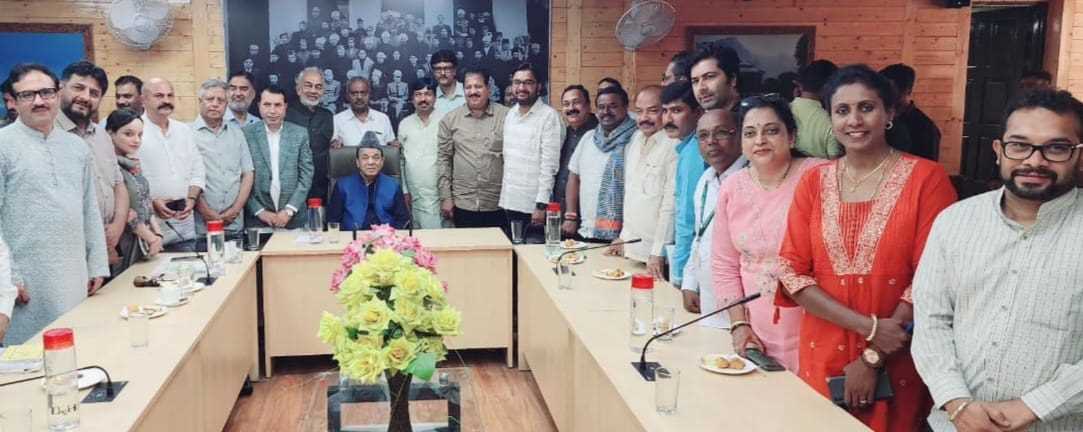
Prime Minister Narendra Modi’s renewed emphasis on Centre–State teamwork to achieve the vision of Viksit Bharat by 2047 is both timely and essential. India’s transformation into a developed nation cannot be driven by the Union government alone; it demands a synchronized national effort where states function not as passive recipients, but as active partners in governance and growth. India’s federal structure, by design, distributes power across multiple layers. Yet, development outcomes often depend on how effectively these layers collaborate. The push for cooperative federalism underlines a simple truth: policies succeed when implementation is locally rooted, and innovation is encouraged at the state level. From infrastructure to health, education to digital governance, states remain the primary execution arms of development. The Prime Minister’s call for teamwork reflects a shift from competitive politics to collaborative progress. In recent years, flagship initiatives such as Digital India, PM Gati Shakti, Ayushman Bharat, and Smart Cities Mission have shown that outcomes improve significantly when states align their priorities with national objectives while tailoring execution to local needs. The success of states like Gujarat in industrial expansion, Tamil Nadu in manufacturing, and Kerala in human development indicators demonstrates how regional strengths can collectively accelerate national progress.However, challenges remain. Policy fragmentation, fiscal disparities, and occasional Centre–State friction can slow momentum. Delays in project approvals, uneven resource distribution, and political differences often dilute the impact of well-intentioned schemes. Addressing these bottlenecks requires trust, transparency, and a shared commitment to long-term national goals beyond electoral cycles. For Viksit Bharat 2047 to become reality, India must deepen institutional cooperation. Mechanisms like the GST Council and NITI Aayog already provide platforms for dialogue, but they must evolve into stronger engines of consensus-building and execution monitoring. States should be empowered with greater fiscal flexibility, while being held accountable for measurable outcomes in health, education, infrastructure, and employment generation. Equally important is citizen-centric governance. Development is ultimately judged not in policy documents but in lived realities—jobs created, schools improved, hospitals accessible, and infrastructure delivered. A coordinated Centre–State approach ensures that these benefits reach every district, not just select urban centres. As India moves toward 2047, the vision of Viksit Bharat must rest on one foundational principle: unity in purpose, diversity in execution. When the Centre and States act not as competing power centres but as collaborative architects of development, India’s growth story will not only accelerate but also become more inclusive, resilient, and globally influential.

© Copyright 2023 brighterkashmir.com All Rights Reserved. Quantum Technologies