BREAKING NEWS

01-07-2026     3 رجب 1440

Unity in Diversity or Uniformity in Disguise?

Democratic societies are founded on the recognition of difference. The very need for democracy arises because people do not think alike, believe alike, or live alike. Diversity is not an obstacle to democratic functioning but its starting poin

January 05, 2026 | Asia Jan

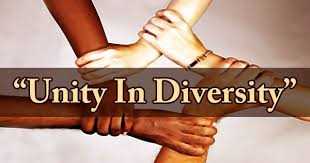
The phrase “unity in diversity” has long been celebrated as a moral promise and a democratic ideal, especially in societies marked by cultural, religious, linguistic, and ethnic plurality. It suggests that social cohesion need not depend on sameness, and that a shared political community can flourish despite differences. Yet in contemporary public discourse, this ideal is increasingly shadowed by a competing impulse: the demand for uniformity. Under the guise of national integration, social discipline, or neutrality, calls for sameness are often advanced as prerequisites for unity. This raises a critical question: does the pursuit of unity truly respect diversity, or has it subtly transformed into uniformity in disguise?

Democratic societies are founded on the recognition of difference. The very need for democracy arises because people do not think alike, believe alike, or live alike. Diversity is not an obstacle to democratic functioning but its starting point. Political theorists from John Stuart Mill to Hannah Arendt have argued that plurality is the condition that makes freedom meaningful. When unity is imagined as the erasure of visible, cultural, or ideological differences, democracy risks hollowing itself out, retaining its form while losing its spirit. Unity achieved through enforced sameness may appear orderly, but it often conceals deep exclusions.
The appeal of uniformity lies in its simplicity. A society that looks, speaks, and behaves in one dominant way is easier to govern and easier to narrate. National identity, in such contexts, is presented as singular and fixed, leaving little room for alternative expressions of belonging. Those who differ are not always explicitly rejected, but they are subtly pressured to assimilate. This pressure may take the form of social norms, institutional policies, or cultural expectations that reward conformity and penalize difference. Over time, diversity is tolerated only when it becomes invisible. The language of neutrality is frequently invoked to justify this process. Public spaces are described as neutral zones where individual identities must be set aside in the interest of collective harmony. However, neutrality often reflects the norms of the majority, which are rendered invisible precisely because they are dominant. What appears neutral is, in reality, culturally specific. When minority expressions are restricted in the name of neutrality, equality is compromised. Uniform rules applied to unequal contexts do not produce fairness; they reproduce hierarchy. The demand for sameness, then, becomes a quiet mechanism through which power sustains itself.
Historically, the drive toward uniformity has accompanied moments of social anxiety. In times of economic uncertainty, political instability, or rapid social change, diversity is easily recast as disorder. Difference becomes something to be managed, disciplined, or corrected. Populist rhetoric thrives in such conditions, offering a reassuring narrative of cultural purity and collective identity. Yet this reassurance comes at a cost. When unity is defined against internal difference, democracy shifts from inclusion to exclusion, from dialogue to decree. Education, culture, and language are among the first arenas where this tension becomes visible. Educational curricula may privilege certain histories while marginalizing others. Linguistic diversity may be framed as a barrier to progress rather than a cultural resource. Cultural practices that do not align with dominant norms are marked as backward or divisive. In each case, the underlying assumption is that cohesion requires homogeneity. This assumption overlooks the fact that forced uniformity breeds resentment, alienation, and resistance, undermining the very unity it seeks to establish.
A critical examination of unity must also address the question of agency. Who defines the terms of unity, and who is asked to adjust? Calls for sameness are rarely directed at those already aligned with dominant norms. Instead, they are disproportionately imposed on marginalized communities, who are asked to prove their loyalty by minimizing visible difference. This conditional belonging reduces citizenship from a set of rights to a performance of conformity. Democracy, however, demands unconditional equality, not negotiated acceptance. Philosophically, the tension between unity and diversity reflects a deeper struggle between order and freedom. Uniformity promises predictability and control, while diversity introduces complexity and negotiation. Democratic maturity lies in choosing the harder path—managing complexity without resorting to coercion. True unity is not the absence of difference but the presence of mutual recognition. It is built through constitutional values, shared ethical commitments, and institutional safeguards that protect difference rather than suppress it. The danger of uniformity in disguise is that it often presents itself as common sense. It speaks the language of discipline, efficiency, and national interest, masking its normative assumptions. By contrast, diversity is portrayed as demanding, disruptive, or excessive. This asymmetry in representation shapes public imagination, making exclusion appear reasonable and inclusion appear indulgent. Scholarly critique is essential in exposing this imbalance and reminding society that democracy is not meant to be comfortable for power, but fair for people. Unity in diversity, if taken seriously, requires more than rhetorical celebration. It demands a willingness to accommodate difference even when it unsettles established norms. It requires institutions that are flexible rather than rigid, laws that are sensitive to context, and public discourse that values dialogue over dominance. Most importantly, it requires trust—trust that diversity does not weaken society, but enriches it by expanding the range of human experience within the collective.
In the final analysis, the choice between unity in diversity and uniformity in disguise is a choice about the kind of society we wish to inhabit. A society that fears difference will continually seek to flatten it, mistaking silence for harmony. A democratic society, by contrast, accepts disagreement, visibility, and plurality as the price of freedom. Unity that emerges from respect is resilient; unity imposed through sameness is fragile. The challenge before modern democracies is to resist the comfort of uniformity and reaffirm the more demanding, but ultimately more just, promise of unity in diversity.


Email:-------------: asiakashmiri001@gmail.com

BREAKING NEWS

VIDEO

Twitter

Facebook

Unity in Diversity or Uniformity in Disguise?

Democratic societies are founded on the recognition of difference. The very need for democracy arises because people do not think alike, believe alike, or live alike. Diversity is not an obstacle to democratic functioning but its starting poin

January 05, 2026 | Asia Jan

The phrase “unity in diversity” has long been celebrated as a moral promise and a democratic ideal, especially in societies marked by cultural, religious, linguistic, and ethnic plurality. It suggests that social cohesion need not depend on sameness, and that a shared political community can flourish despite differences. Yet in contemporary public discourse, this ideal is increasingly shadowed by a competing impulse: the demand for uniformity. Under the guise of national integration, social discipline, or neutrality, calls for sameness are often advanced as prerequisites for unity. This raises a critical question: does the pursuit of unity truly respect diversity, or has it subtly transformed into uniformity in disguise?

Democratic societies are founded on the recognition of difference. The very need for democracy arises because people do not think alike, believe alike, or live alike. Diversity is not an obstacle to democratic functioning but its starting point. Political theorists from John Stuart Mill to Hannah Arendt have argued that plurality is the condition that makes freedom meaningful. When unity is imagined as the erasure of visible, cultural, or ideological differences, democracy risks hollowing itself out, retaining its form while losing its spirit. Unity achieved through enforced sameness may appear orderly, but it often conceals deep exclusions.
The appeal of uniformity lies in its simplicity. A society that looks, speaks, and behaves in one dominant way is easier to govern and easier to narrate. National identity, in such contexts, is presented as singular and fixed, leaving little room for alternative expressions of belonging. Those who differ are not always explicitly rejected, but they are subtly pressured to assimilate. This pressure may take the form of social norms, institutional policies, or cultural expectations that reward conformity and penalize difference. Over time, diversity is tolerated only when it becomes invisible. The language of neutrality is frequently invoked to justify this process. Public spaces are described as neutral zones where individual identities must be set aside in the interest of collective harmony. However, neutrality often reflects the norms of the majority, which are rendered invisible precisely because they are dominant. What appears neutral is, in reality, culturally specific. When minority expressions are restricted in the name of neutrality, equality is compromised. Uniform rules applied to unequal contexts do not produce fairness; they reproduce hierarchy. The demand for sameness, then, becomes a quiet mechanism through which power sustains itself.
Historically, the drive toward uniformity has accompanied moments of social anxiety. In times of economic uncertainty, political instability, or rapid social change, diversity is easily recast as disorder. Difference becomes something to be managed, disciplined, or corrected. Populist rhetoric thrives in such conditions, offering a reassuring narrative of cultural purity and collective identity. Yet this reassurance comes at a cost. When unity is defined against internal difference, democracy shifts from inclusion to exclusion, from dialogue to decree. Education, culture, and language are among the first arenas where this tension becomes visible. Educational curricula may privilege certain histories while marginalizing others. Linguistic diversity may be framed as a barrier to progress rather than a cultural resource. Cultural practices that do not align with dominant norms are marked as backward or divisive. In each case, the underlying assumption is that cohesion requires homogeneity. This assumption overlooks the fact that forced uniformity breeds resentment, alienation, and resistance, undermining the very unity it seeks to establish.
A critical examination of unity must also address the question of agency. Who defines the terms of unity, and who is asked to adjust? Calls for sameness are rarely directed at those already aligned with dominant norms. Instead, they are disproportionately imposed on marginalized communities, who are asked to prove their loyalty by minimizing visible difference. This conditional belonging reduces citizenship from a set of rights to a performance of conformity. Democracy, however, demands unconditional equality, not negotiated acceptance. Philosophically, the tension between unity and diversity reflects a deeper struggle between order and freedom. Uniformity promises predictability and control, while diversity introduces complexity and negotiation. Democratic maturity lies in choosing the harder path—managing complexity without resorting to coercion. True unity is not the absence of difference but the presence of mutual recognition. It is built through constitutional values, shared ethical commitments, and institutional safeguards that protect difference rather than suppress it. The danger of uniformity in disguise is that it often presents itself as common sense. It speaks the language of discipline, efficiency, and national interest, masking its normative assumptions. By contrast, diversity is portrayed as demanding, disruptive, or excessive. This asymmetry in representation shapes public imagination, making exclusion appear reasonable and inclusion appear indulgent. Scholarly critique is essential in exposing this imbalance and reminding society that democracy is not meant to be comfortable for power, but fair for people. Unity in diversity, if taken seriously, requires more than rhetorical celebration. It demands a willingness to accommodate difference even when it unsettles established norms. It requires institutions that are flexible rather than rigid, laws that are sensitive to context, and public discourse that values dialogue over dominance. Most importantly, it requires trust—trust that diversity does not weaken society, but enriches it by expanding the range of human experience within the collective.
In the final analysis, the choice between unity in diversity and uniformity in disguise is a choice about the kind of society we wish to inhabit. A society that fears difference will continually seek to flatten it, mistaking silence for harmony. A democratic society, by contrast, accepts disagreement, visibility, and plurality as the price of freedom. Unity that emerges from respect is resilient; unity imposed through sameness is fragile. The challenge before modern democracies is to resist the comfort of uniformity and reaffirm the more demanding, but ultimately more just, promise of unity in diversity.


Email:-------------: asiakashmiri001@gmail.com

  • Address: R.C 2 Quarters Press Enclave Near Pratap Park, Srinagar 190001.
  • Phone: 0194-2451076 , +91-941-940-0056 , +91-962-292-4716
  • Email: brighterkmr@gmail.com
Owner, Printer, Publisher, Editor: Farooq Ahmad Wani
Legal Advisor: M.J. Hubi
Printed at: Sangermal offset Printing Press Rangreth ( Budgam)
Published from: Gulshanabad Chraresharief Budgam
RNI No.: JKENG/2010/33802
Office No’s: 0194-2451076
Mobile No’s 9419400056, 9622924716 ,7006086442
Postal Regd No: SK/135/2010-2019
POST BOX NO: 1001
Administrative Office: R.C 2 Quarters Press Enclave Near Pratap Park ( Srinagar -190001)

© Copyright 2023 brighterkashmir.com All Rights Reserved. Quantum Technologies

Owner, Printer, Publisher, Editor: Farooq Ahmad Wani
Legal Advisor: M.J. Hubi
Printed at: Abid Enterprizes, Zainkote Srinagar
Published from: Gulshanabad Chraresharief Budgam
RNI No.: JKENG/2010/33802
Office No’s: 0194-2451076, 9622924716 , 9419400056
Postal Regd No: SK/135/2010-2019
Administrative Office: Abi Guzer Srinagar

© Copyright 2018 brighterkashmir.com All Rights Reserved.