
BREAKING NEWS
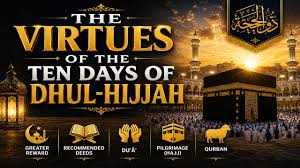
Just after Shawwal follows another most blessed time in Islam, which is the first ten days of Dhul Hijjah. These days have great significance before Allah, and they are regarded as some of the most significant days of the year. According to a Hadith, the most beloved acts of righteousness committed on other days do not compare to those committed in these ten days
A Spiritual Journey After Ramadan
Following the blessed month of Ramadan, many Muslims keep the continuity of their spiritual path through fasting in the month of Shawwal. These voluntary fasts enable the followers to continue the practices of righteousness, devotion, and worship towards Allah inculcated in the month of Ramadan. Fasting reminds them that worship should be throughout their lives with sincerity and dedication, extending beyond a particular month.
Just after Shawwal follows another most blessed time in Islam, which is the first ten days of Dhul Hijjah. These days have great significance before Allah, and they are regarded as some of the most significant days of the year. According to a Hadith, the most beloved acts of righteousness committed on other days do not compare to those committed in these ten days.
These blessed days offer a chance to forgive, be merciful, worship, and reflect on one’s deeds. Everything that a person does, from praying, fasting, remembering God, doing good deeds, and helping others, has a great reward during this blessed time.
The Importance of Dhul Hijjah in the Qur’an
The greatness of these days is also mentioned in the Qur’an. In Surah Al-Fajr, Allah says: “By the dawn, and by the ten nights, and by the even and the odd, and by the night when it passes.”
Many scholars explain that the “ten nights” mentioned in these verses refer to the first ten days of Dhul Hijjah. Whenever Allah takes an oath in the Qur’an, it highlights the significance and greatness of the subject. These verses therefore, remind believers that these days are spiritually unique and highly honoured by Allah.
Surah Al-Fajr then shifts attention toward the stories of earlier nations such as Aad, Thamud, and Pharaoh. These civilizations possessed power, wealth, advanced structures, and worldly authority. Aad was known for its physical strength and magnificent buildings. Thamud carved homes into mountains and valleys. Pharaoh ruled with arrogance and oppression.
Even though they were successful in the world, such nations have propagated corruption, subjugated peoples, and ignored the commandments of Allah. Their success did not shield them from divine wrath. From such illustrations, the message that one learns from the Qur’an is that all worldly success devoid of righteousness is meaningless.
A Reminder About Human Nature
The verses of Surah Al-Fajr also explain the mindset of human beings. When people receive wealth, comfort, and blessings, they often believe they are specially honoured by Allah. When difficulties or financial hardships arrive, they feel humiliated or abandoned. Yet Allah reminds humanity that both ease and hardship are tests.
Honour lies in being faithful, obedient, sincere, and compassionate towards others. The Quran condemns those who do not care about orphans, the poor, misuse money, and become too materialistic. Such warnings are highly relevant in Dhul Hijjah, since these days emphasize sacrifice, giving, humility, and concern for humankind.
The Spirit of Hajj and Sacrifice
The first ten days of Dhul Hijjah are also related to Hajj, which is among the most important forms of worship in Islam. Millions of Muslims make their way to Makkah during these ten days to respond to the call of Allah. The pilgrims put away everything to worship Allah with humbleness and sincerity.
Hajj means patience, sacrifice, equality, and submission to Allah. Standing at Arafat makes the pilgrims remember the Day of Judgement when all humans will be equal before their Creator.
Many Muslims dream of performing Hajj, yet only those whose destinies are written by Allah receive the opportunity to reach the holy lands. However, those who remain at home also share in the blessings of these sacred days through prayer, fasting, remembrance, charity, and Qurbani.
The act of Qurbani alone speaks volumes of spirituality. The sacrifice made by Qurbani reminds Muslims about the obedience and sacrifice of Prophet Ibrahim (AS). The Prophet Ibrahim (AS) is known to have sacrificed his most cherished thing for the sake of Allah. Qurbani teaches Muslims about sincerity and devotion in submitting to Allah.
At the same time, Qurbani encourages believers to sacrifice arrogance, hatred, greed, selfishness, and sinful habits from their hearts. It becomes a lesson in self-purification and spiritual discipline.
Increasing Worship During
One of the most important acts during these days is performing the five daily prayers on time. Salah remains the strongest connection between a believer and Allah. Alongside the obligatory prayers, many Muslims increase voluntary worship such as Tahajjud and Duha prayers, which bring spiritual peace and strengthen faith.
Allah’s remembrance should be the hallmark of these blessed days. The believers are advised to remember Allah more during the day. The morning of Dhul Hijjah should start with remembering Allah because remembrance makes the heart soft.
These days also provide an opportunity to sincerely seek forgiveness, ask for guidance, and renew one’s relationship with Allah. A believer should strive to improve character, fulfill the rights of others, and spread kindness within society.
The Power of Qur’an Recitation
Among the greatest forms of remembrance is the recitation of the Qur’an. The Qur’an is the word of Allah and carries a powerful effect upon the human heart. When a person reads the Qur’an sincerely for the sake of Allah, one verse naturally leads to another. Gradually, a deep attachment develops between the believer and the words of Allah.
Sometimes the journey begins with only a single verse. Then slowly, day by day, the recitation increases into pages and chapters. This spiritual attraction of the Qur’an brings peace to the soul, strengthens faith, and protects believers from the whispers of Shaitaan.
The Qur’an teaches patience, wisdom, morality, compassion, and awareness of Allah. During these blessed days, reconnecting with the Qur’an allows believers to purify their hearts and strengthen their spiritual lives.
Fasting and Charity in Dhul Hijjah
Fasting in the first ten days of Dhul Hijjah is full of great blessings, particularly the fasting of Arafah Day. The Prophet Muhammad (PBUH) said that the fast of Arafah is an act by which Allah forgives sins of the past and future years. Through fasting, one learns patience, discipline, thankfulness, and control.
Charity and helping those in need also hold special importance during these days. Islam emphasizes compassion toward the poor, needy, orphans, and struggling families. Dhul Hijjah encourages believers to increase generosity and remember that blessings increase when shared with others.
A Reminder of the Hereafter
Finally, the subject of Surah Al-Fajr moves on to the day of judgment when God talks about the destruction of the earth, the positioning of angels, and hell coming out for humans. On this day, people will know what their actions really meant, but for those who denied their faith, there is no hope for them anymore.
These ayahs teach Muslims that worldly life is transient, whereas judgment day is inevitable. All the wealth, power, and success of this world will fade away, but good deeds will last forever.
To sum up, the first ten days of Dhul Hijjah are much more than a period of rites. They are days of worship, sacrifice, contemplation, modesty, charity, and revival of the soul. They teach us that success is measured not by material or social status but by faith, righteousness, sincerity, and proximity to God.
Every believer, in these days, presents a golden chance to renew his or her relationship with God through increased prayer, reciting the Quran, helping others, and purifying the soul. It does not matter whether the believer prays on the plain of Arafat or in his own room; each sincere act in these holy days will hold great value before God.
Email:-----------------------------shoaibhat2018@gmail.com
Just after Shawwal follows another most blessed time in Islam, which is the first ten days of Dhul Hijjah. These days have great significance before Allah, and they are regarded as some of the most significant days of the year. According to a Hadith, the most beloved acts of righteousness committed on other days do not compare to those committed in these ten days
A Spiritual Journey After Ramadan
Following the blessed month of Ramadan, many Muslims keep the continuity of their spiritual path through fasting in the month of Shawwal. These voluntary fasts enable the followers to continue the practices of righteousness, devotion, and worship towards Allah inculcated in the month of Ramadan. Fasting reminds them that worship should be throughout their lives with sincerity and dedication, extending beyond a particular month.
Just after Shawwal follows another most blessed time in Islam, which is the first ten days of Dhul Hijjah. These days have great significance before Allah, and they are regarded as some of the most significant days of the year. According to a Hadith, the most beloved acts of righteousness committed on other days do not compare to those committed in these ten days.
These blessed days offer a chance to forgive, be merciful, worship, and reflect on one’s deeds. Everything that a person does, from praying, fasting, remembering God, doing good deeds, and helping others, has a great reward during this blessed time.
The Importance of Dhul Hijjah in the Qur’an
The greatness of these days is also mentioned in the Qur’an. In Surah Al-Fajr, Allah says: “By the dawn, and by the ten nights, and by the even and the odd, and by the night when it passes.”
Many scholars explain that the “ten nights” mentioned in these verses refer to the first ten days of Dhul Hijjah. Whenever Allah takes an oath in the Qur’an, it highlights the significance and greatness of the subject. These verses therefore, remind believers that these days are spiritually unique and highly honoured by Allah.
Surah Al-Fajr then shifts attention toward the stories of earlier nations such as Aad, Thamud, and Pharaoh. These civilizations possessed power, wealth, advanced structures, and worldly authority. Aad was known for its physical strength and magnificent buildings. Thamud carved homes into mountains and valleys. Pharaoh ruled with arrogance and oppression.
Even though they were successful in the world, such nations have propagated corruption, subjugated peoples, and ignored the commandments of Allah. Their success did not shield them from divine wrath. From such illustrations, the message that one learns from the Qur’an is that all worldly success devoid of righteousness is meaningless.
A Reminder About Human Nature
The verses of Surah Al-Fajr also explain the mindset of human beings. When people receive wealth, comfort, and blessings, they often believe they are specially honoured by Allah. When difficulties or financial hardships arrive, they feel humiliated or abandoned. Yet Allah reminds humanity that both ease and hardship are tests.
Honour lies in being faithful, obedient, sincere, and compassionate towards others. The Quran condemns those who do not care about orphans, the poor, misuse money, and become too materialistic. Such warnings are highly relevant in Dhul Hijjah, since these days emphasize sacrifice, giving, humility, and concern for humankind.
The Spirit of Hajj and Sacrifice
The first ten days of Dhul Hijjah are also related to Hajj, which is among the most important forms of worship in Islam. Millions of Muslims make their way to Makkah during these ten days to respond to the call of Allah. The pilgrims put away everything to worship Allah with humbleness and sincerity.
Hajj means patience, sacrifice, equality, and submission to Allah. Standing at Arafat makes the pilgrims remember the Day of Judgement when all humans will be equal before their Creator.
Many Muslims dream of performing Hajj, yet only those whose destinies are written by Allah receive the opportunity to reach the holy lands. However, those who remain at home also share in the blessings of these sacred days through prayer, fasting, remembrance, charity, and Qurbani.
The act of Qurbani alone speaks volumes of spirituality. The sacrifice made by Qurbani reminds Muslims about the obedience and sacrifice of Prophet Ibrahim (AS). The Prophet Ibrahim (AS) is known to have sacrificed his most cherished thing for the sake of Allah. Qurbani teaches Muslims about sincerity and devotion in submitting to Allah.
At the same time, Qurbani encourages believers to sacrifice arrogance, hatred, greed, selfishness, and sinful habits from their hearts. It becomes a lesson in self-purification and spiritual discipline.
Increasing Worship During
One of the most important acts during these days is performing the five daily prayers on time. Salah remains the strongest connection between a believer and Allah. Alongside the obligatory prayers, many Muslims increase voluntary worship such as Tahajjud and Duha prayers, which bring spiritual peace and strengthen faith.
Allah’s remembrance should be the hallmark of these blessed days. The believers are advised to remember Allah more during the day. The morning of Dhul Hijjah should start with remembering Allah because remembrance makes the heart soft.
These days also provide an opportunity to sincerely seek forgiveness, ask for guidance, and renew one’s relationship with Allah. A believer should strive to improve character, fulfill the rights of others, and spread kindness within society.
The Power of Qur’an Recitation
Among the greatest forms of remembrance is the recitation of the Qur’an. The Qur’an is the word of Allah and carries a powerful effect upon the human heart. When a person reads the Qur’an sincerely for the sake of Allah, one verse naturally leads to another. Gradually, a deep attachment develops between the believer and the words of Allah.
Sometimes the journey begins with only a single verse. Then slowly, day by day, the recitation increases into pages and chapters. This spiritual attraction of the Qur’an brings peace to the soul, strengthens faith, and protects believers from the whispers of Shaitaan.
The Qur’an teaches patience, wisdom, morality, compassion, and awareness of Allah. During these blessed days, reconnecting with the Qur’an allows believers to purify their hearts and strengthen their spiritual lives.
Fasting and Charity in Dhul Hijjah
Fasting in the first ten days of Dhul Hijjah is full of great blessings, particularly the fasting of Arafah Day. The Prophet Muhammad (PBUH) said that the fast of Arafah is an act by which Allah forgives sins of the past and future years. Through fasting, one learns patience, discipline, thankfulness, and control.
Charity and helping those in need also hold special importance during these days. Islam emphasizes compassion toward the poor, needy, orphans, and struggling families. Dhul Hijjah encourages believers to increase generosity and remember that blessings increase when shared with others.
A Reminder of the Hereafter
Finally, the subject of Surah Al-Fajr moves on to the day of judgment when God talks about the destruction of the earth, the positioning of angels, and hell coming out for humans. On this day, people will know what their actions really meant, but for those who denied their faith, there is no hope for them anymore.
These ayahs teach Muslims that worldly life is transient, whereas judgment day is inevitable. All the wealth, power, and success of this world will fade away, but good deeds will last forever.
To sum up, the first ten days of Dhul Hijjah are much more than a period of rites. They are days of worship, sacrifice, contemplation, modesty, charity, and revival of the soul. They teach us that success is measured not by material or social status but by faith, righteousness, sincerity, and proximity to God.
Every believer, in these days, presents a golden chance to renew his or her relationship with God through increased prayer, reciting the Quran, helping others, and purifying the soul. It does not matter whether the believer prays on the plain of Arafat or in his own room; each sincere act in these holy days will hold great value before God.
Email:-----------------------------shoaibhat2018@gmail.com

© Copyright 2023 brighterkashmir.com All Rights Reserved. Quantum Technologies