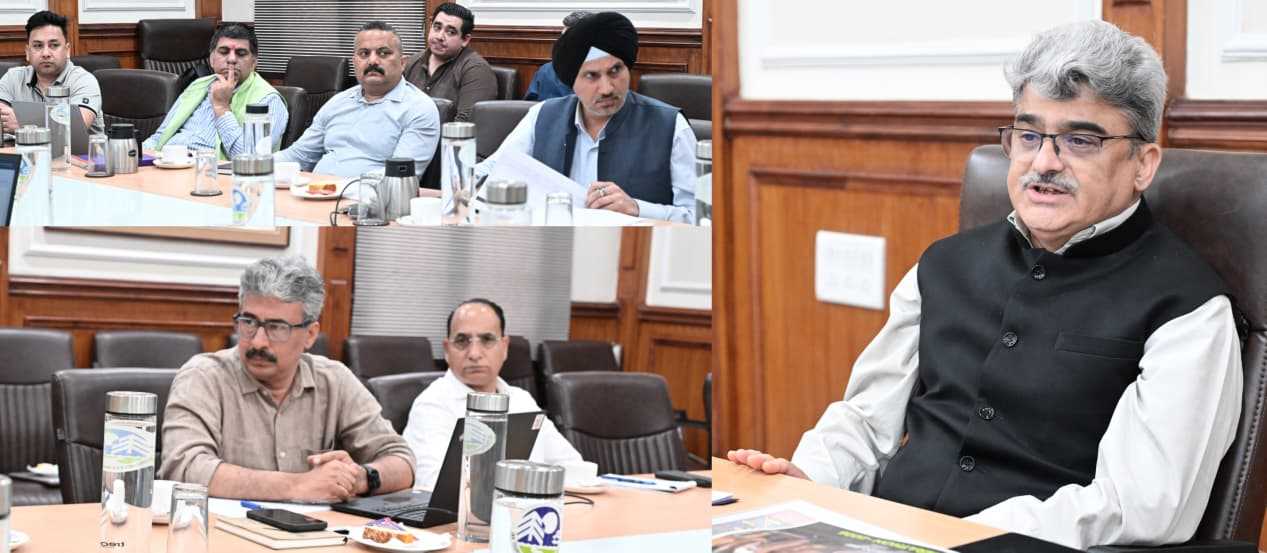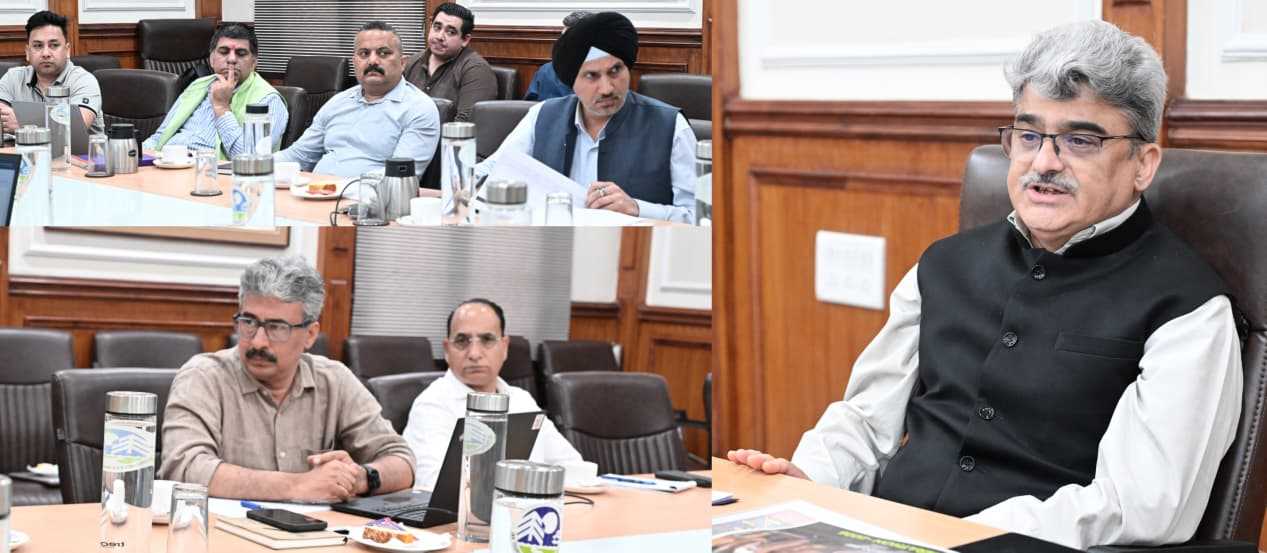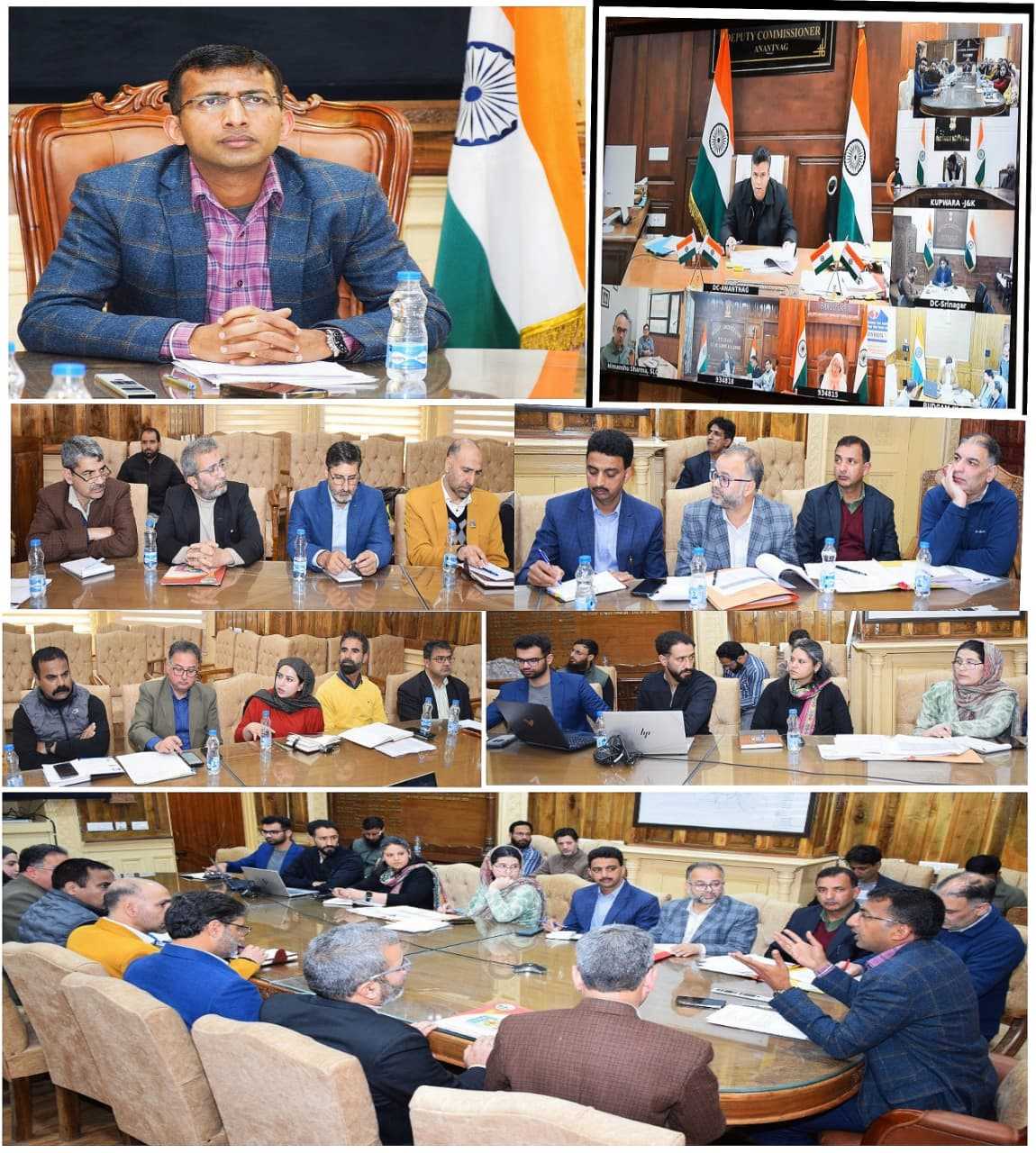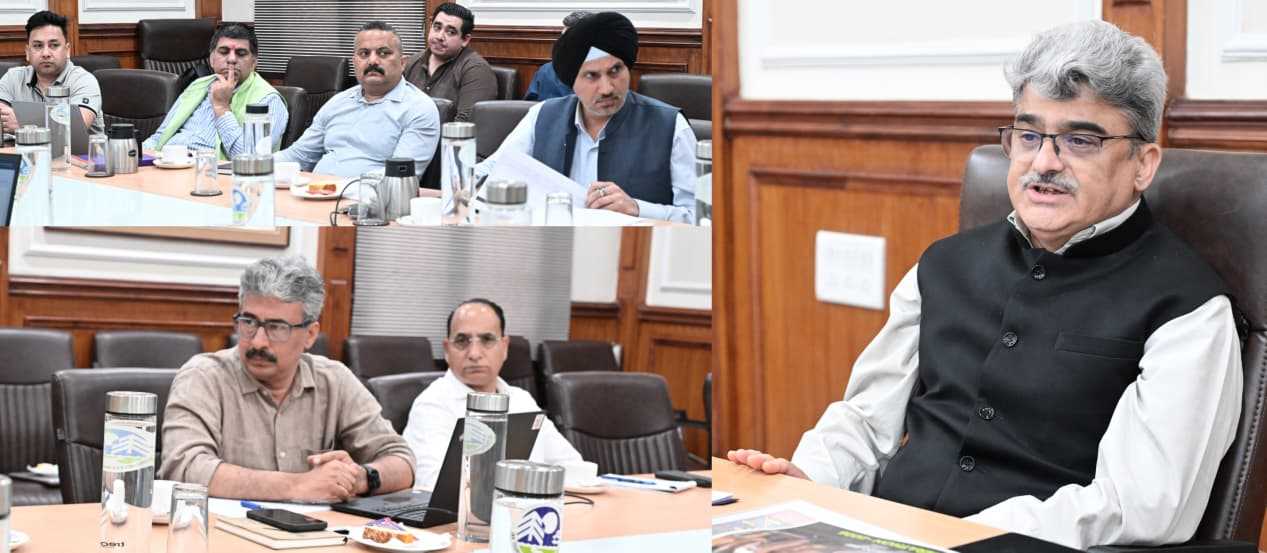
Srinagar/Jammu, Mar 31: Chief Secretary Atal Dulloo on Tuesday chaired a high-level review to strengthen disaster management across Jammu & Kashmir, emphasizing a proactive and resilient approach. The meeting focused on effective utilization of ₹3,340 crore allocated for disaster mitigation, risk reduction, relief, and rehabilitation.
Officials discussed six key verticals: Early Warning Systems, Risk Reduction, Relief & Response, Rehabilitation, Reconstruction, and Capacity Building. The Chief Secretary directed departments to develop evidence-based, actionable plans, particularly for vulnerable areas ahead of the monsoon season, and to ensure strict enforcement of disaster management laws and Standard Operating Procedures (SoPs).
Additional Chief Secretary Finance Shailendra Kumar highlighted safeguarding critical infrastructure and adopting modern early warning systems, especially in regions like the Chenab basin. Additional Chief Secretary PWD Anil Kumar Singh emphasized permanent restoration and mitigation measures to maintain connectivity during disasters.
Principal Secretary DMRR&R Chandraker Bharti outlined mitigation guidelines and upcoming fund releases, while Divisional Commissioners Jammu and Kashmir, Ramesh Kumar and Anshul Garg, stressed training volunteers, flood zoning, and operationalizing the Emergency Operations Centre (EOC) at Budgam. Director SDRF Imtiyaz Hussain Mir called for enhanced manpower, logistics, and equipment.
CEO ERA Shreya Singhal reported partial handover of the Budgam EOC by April and full completion by August, with necessary equipment procurement underway. Deputy Commissioners shared field insights and highlighted resource and capacity-building needs.
The UT Government has established a Directorate of Disaster Management, plans for an Urban Disaster Management Authority, and operationalized a dedicated Mitigation Fund. Partnerships with UNDP and NDMA aim to develop hyper-local early warning systems, while the Incident Response System is active up to tehsil level, supported by mock drills and training programs.
Financial assistance secured includes over ₹330 crore from the High-Level Committee, ₹1,579 crore from the Ministry of Home Affairs for recovery, and ₹1,431 crore under SASCI for infrastructure restoration. Multi-Hazard Vulnerability and Risk Assessments are ongoing in pilot districts Ramban, Kishtwar, and Srinagar, with a Risk Atlas being developed to identify hazard hotspots.
The government is integrating disaster-resilient features into infrastructure projects, including earthquake-resistant construction, floodplain mapping, slope stabilization, and advanced monitoring systems, alongside policy reforms on building bylaws, land-use regulations, and mandatory disaster risk reduction measures in all major projects.
This comprehensive roadmap reflects Jammu & Kashmir’s commitment to building a safer, disaster-resilient Union Territory.
Srinagar/Jammu, Mar 31: Chief Secretary Atal Dulloo on Tuesday chaired a high-level review to strengthen disaster management across Jammu & Kashmir, emphasizing a proactive and resilient approach. The meeting focused on effective utilization of ₹3,340 crore allocated for disaster mitigation, risk reduction, relief, and rehabilitation.
Officials discussed six key verticals: Early Warning Systems, Risk Reduction, Relief & Response, Rehabilitation, Reconstruction, and Capacity Building. The Chief Secretary directed departments to develop evidence-based, actionable plans, particularly for vulnerable areas ahead of the monsoon season, and to ensure strict enforcement of disaster management laws and Standard Operating Procedures (SoPs).
Additional Chief Secretary Finance Shailendra Kumar highlighted safeguarding critical infrastructure and adopting modern early warning systems, especially in regions like the Chenab basin. Additional Chief Secretary PWD Anil Kumar Singh emphasized permanent restoration and mitigation measures to maintain connectivity during disasters.
Principal Secretary DMRR&R Chandraker Bharti outlined mitigation guidelines and upcoming fund releases, while Divisional Commissioners Jammu and Kashmir, Ramesh Kumar and Anshul Garg, stressed training volunteers, flood zoning, and operationalizing the Emergency Operations Centre (EOC) at Budgam. Director SDRF Imtiyaz Hussain Mir called for enhanced manpower, logistics, and equipment.
CEO ERA Shreya Singhal reported partial handover of the Budgam EOC by April and full completion by August, with necessary equipment procurement underway. Deputy Commissioners shared field insights and highlighted resource and capacity-building needs.
The UT Government has established a Directorate of Disaster Management, plans for an Urban Disaster Management Authority, and operationalized a dedicated Mitigation Fund. Partnerships with UNDP and NDMA aim to develop hyper-local early warning systems, while the Incident Response System is active up to tehsil level, supported by mock drills and training programs.
Financial assistance secured includes over ₹330 crore from the High-Level Committee, ₹1,579 crore from the Ministry of Home Affairs for recovery, and ₹1,431 crore under SASCI for infrastructure restoration. Multi-Hazard Vulnerability and Risk Assessments are ongoing in pilot districts Ramban, Kishtwar, and Srinagar, with a Risk Atlas being developed to identify hazard hotspots.
The government is integrating disaster-resilient features into infrastructure projects, including earthquake-resistant construction, floodplain mapping, slope stabilization, and advanced monitoring systems, alongside policy reforms on building bylaws, land-use regulations, and mandatory disaster risk reduction measures in all major projects.
This comprehensive roadmap reflects Jammu & Kashmir’s commitment to building a safer, disaster-resilient Union Territory.
© Copyright 2023 brighterkashmir.com All Rights Reserved. Quantum Technologies