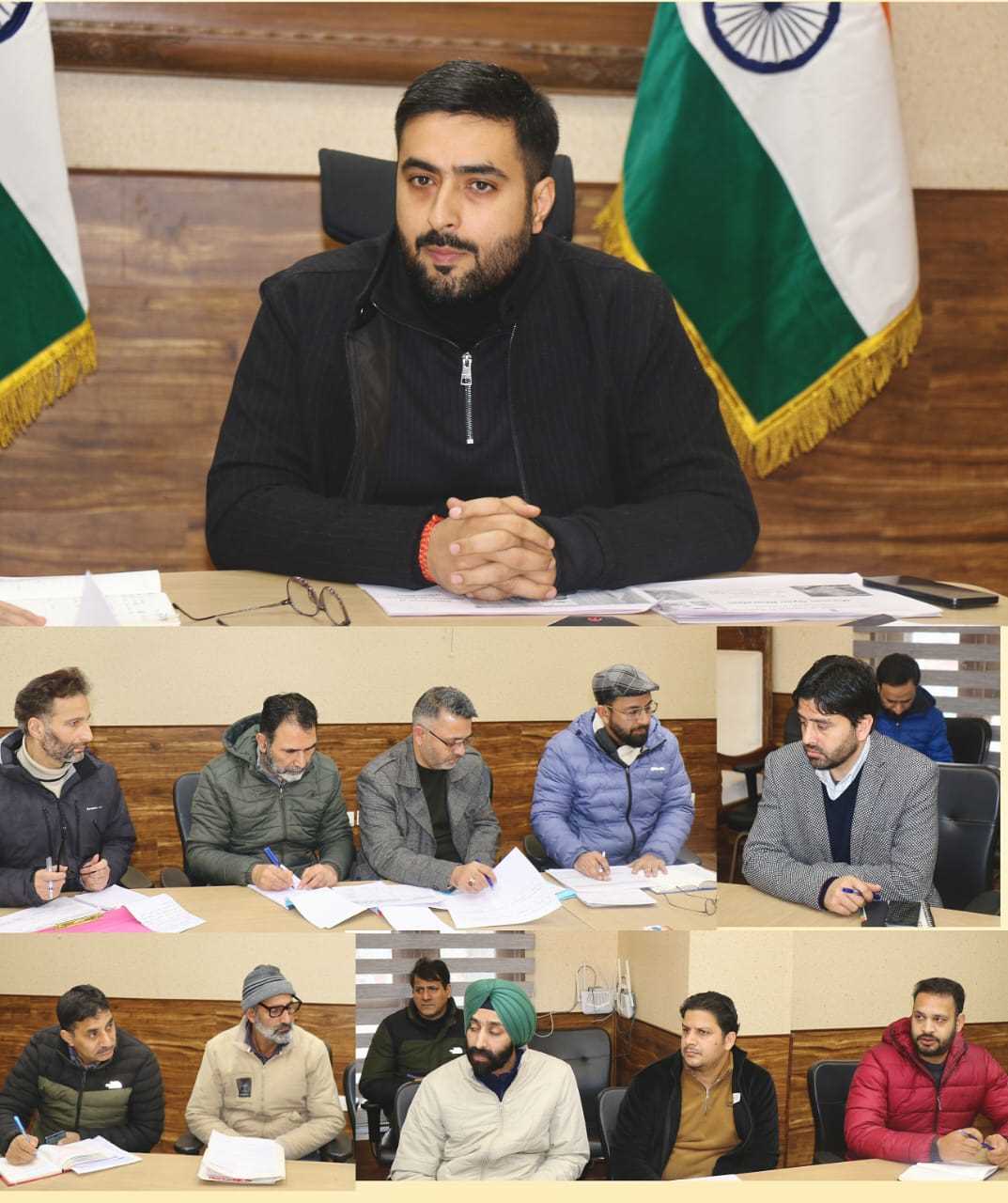
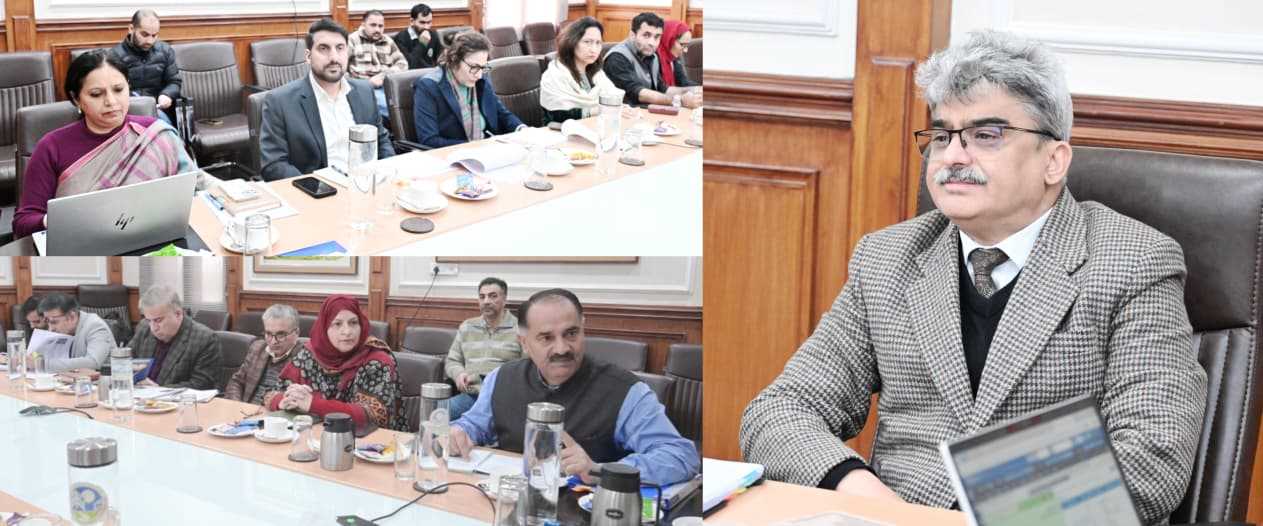
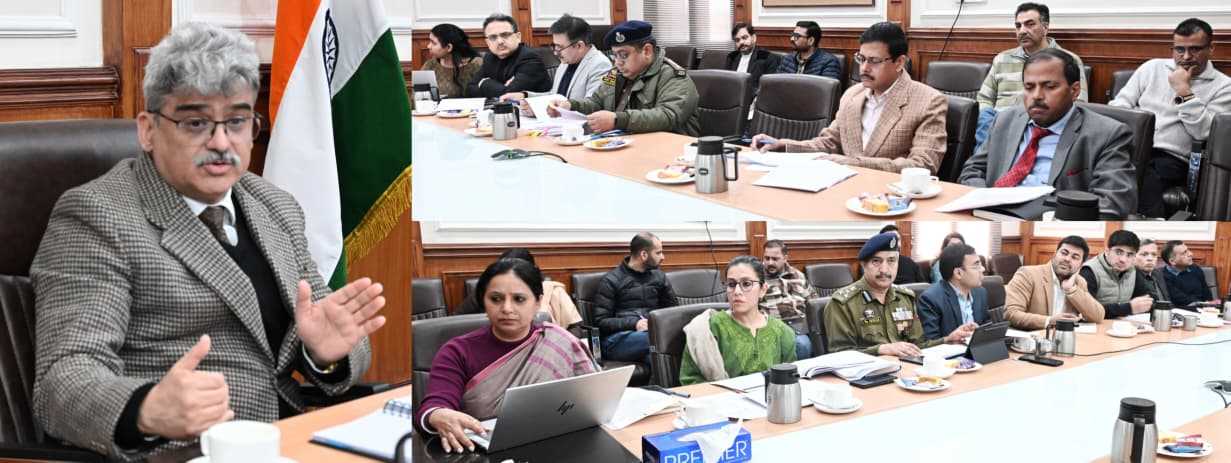
: Chief Secretary, Atal Dulloo, today impressed upon the Culture Department to actively involve people and encourage them to come forward for the identification, digitization, and preservation of rare manuscripts for posterity under the Government of India’s flagship programme Mission Gyan Bharatam.
Chairing a high-level review meeting on the implementation of the Mission in the Union Territory, the Chief Secretary emphasized that public participation is critical for safeguarding India’s rich manuscript heritage, much of which is privately held or housed in religious and traditional institutions.
The meeting was attended by Principal Secretary, Culture Department; Commissioner Secretary, Housing & Urban Development Department; Divisional Commissioner, Jammu/Kashmir; Secretary, Rural Development Department; Director General, Libraries; Secretary in Culture Department; Director, Colleges; Director, Archives, Archaeology & Museums, besides other concerned officers.
The Chief Secretary underlined the need for intensive awareness programmes, to be conducted with the support of professionals and individuals who have already contributed to manuscript preservation efforts. He also called for active involvement of religious heads and civil society organisations and SHGs noting that a significant number of valuable manuscripts are preserved at religious places across the UT.
Highlighting the significance of the task, the Chief Secretary stressed the importance of capacity building of field officers engaged in survey and monitoring. He directed that a designated supervisory officer be appointed in each block to oversee the process. Drawing parallels with the successful Mission YUVA initiative, he advised adopting a similar technology-driven approach to ensure a UT-wide household survey through an online platform. He further instructed the Deputy Commissioners to identify competent personnel to carry out this delicate assignment.
Speaking on the occasion, Principal Secretary, Culture, Brij Mohan Sharma, informed that Mission Gyan Bharatam aims to digitize one crore manuscripts nationwide to establish a National Digital Repository of Indian Knowledge Systems, ensuring seamless knowledge sharing and long-term preservation of India’s intellectual legacy.
He explained that the Mission is anchored on achieving the three ‘Ds’ namely Digitization, Deciphering, and Democratizationthrough a ‘4S’ strategy, which includes searching for manuscripts, saving them, scanning them, and ultimately sharing them on the public domain in an accessible and lucid form.
The Principal Secretary further stated that for effective implementation of the Mission in J&K, MoUs have been signed by the concerned Ministry with States, Union Territories, and institutions for setting up Cluster Centres and State Nodal Agencies, ensuring precision, synergy, and unity under a national collaborative framework.
Outlining the progress so far, Director, Archives, Archaeology & Museums, K.K. Sidha, apprised the meeting that 33,858 manuscripts have already been identified from government and semi-government institutions, religious establishments, and individual custodians. He added that a special household survey titled ‘Har Ghar Dastak’ is being planned to trace and digitize manuscripts with the consent of their owners, following the goal of ‘Har Din–Ek Gin’, targeting coverage of at least one panchayat per day.
The Head, Department of Persian, University of Kashmir, Jehangir Ahmad, whose department has been designated as a Cluster Centre for digitization, informed the meeting that around 5,000 manuscript pages have already been scanned at the lab established at the University, primarily from government institutions and bodies. He also announced that a separate digitization laboratory will be set up at the Archives in Jammu, ensuring smooth and timely execution of the Mission in the Jammu region as well.
The Chief Secretary concluded by reiterating that the Mission is not merely a technological exercise but a collective cultural responsibility, requiring cooperation between government, institutions, and the people to preserve invaluable knowledge for future generations.

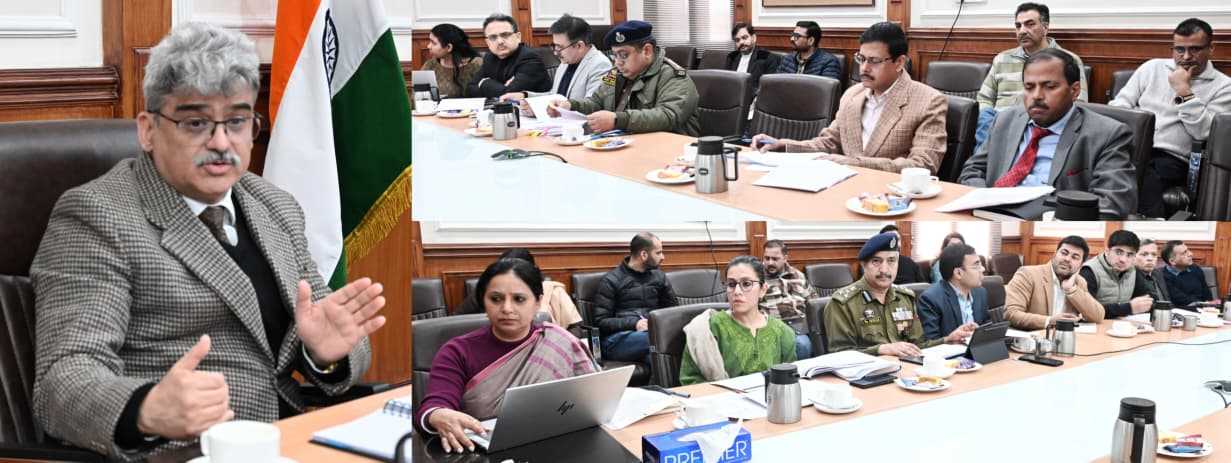
: Chief Secretary, Atal Dulloo, today impressed upon the Culture Department to actively involve people and encourage them to come forward for the identification, digitization, and preservation of rare manuscripts for posterity under the Government of India’s flagship programme Mission Gyan Bharatam.
Chairing a high-level review meeting on the implementation of the Mission in the Union Territory, the Chief Secretary emphasized that public participation is critical for safeguarding India’s rich manuscript heritage, much of which is privately held or housed in religious and traditional institutions.
The meeting was attended by Principal Secretary, Culture Department; Commissioner Secretary, Housing & Urban Development Department; Divisional Commissioner, Jammu/Kashmir; Secretary, Rural Development Department; Director General, Libraries; Secretary in Culture Department; Director, Colleges; Director, Archives, Archaeology & Museums, besides other concerned officers.
The Chief Secretary underlined the need for intensive awareness programmes, to be conducted with the support of professionals and individuals who have already contributed to manuscript preservation efforts. He also called for active involvement of religious heads and civil society organisations and SHGs noting that a significant number of valuable manuscripts are preserved at religious places across the UT.
Highlighting the significance of the task, the Chief Secretary stressed the importance of capacity building of field officers engaged in survey and monitoring. He directed that a designated supervisory officer be appointed in each block to oversee the process. Drawing parallels with the successful Mission YUVA initiative, he advised adopting a similar technology-driven approach to ensure a UT-wide household survey through an online platform. He further instructed the Deputy Commissioners to identify competent personnel to carry out this delicate assignment.
Speaking on the occasion, Principal Secretary, Culture, Brij Mohan Sharma, informed that Mission Gyan Bharatam aims to digitize one crore manuscripts nationwide to establish a National Digital Repository of Indian Knowledge Systems, ensuring seamless knowledge sharing and long-term preservation of India’s intellectual legacy.
He explained that the Mission is anchored on achieving the three ‘Ds’ namely Digitization, Deciphering, and Democratizationthrough a ‘4S’ strategy, which includes searching for manuscripts, saving them, scanning them, and ultimately sharing them on the public domain in an accessible and lucid form.
The Principal Secretary further stated that for effective implementation of the Mission in J&K, MoUs have been signed by the concerned Ministry with States, Union Territories, and institutions for setting up Cluster Centres and State Nodal Agencies, ensuring precision, synergy, and unity under a national collaborative framework.
Outlining the progress so far, Director, Archives, Archaeology & Museums, K.K. Sidha, apprised the meeting that 33,858 manuscripts have already been identified from government and semi-government institutions, religious establishments, and individual custodians. He added that a special household survey titled ‘Har Ghar Dastak’ is being planned to trace and digitize manuscripts with the consent of their owners, following the goal of ‘Har Din–Ek Gin’, targeting coverage of at least one panchayat per day.
The Head, Department of Persian, University of Kashmir, Jehangir Ahmad, whose department has been designated as a Cluster Centre for digitization, informed the meeting that around 5,000 manuscript pages have already been scanned at the lab established at the University, primarily from government institutions and bodies. He also announced that a separate digitization laboratory will be set up at the Archives in Jammu, ensuring smooth and timely execution of the Mission in the Jammu region as well.
The Chief Secretary concluded by reiterating that the Mission is not merely a technological exercise but a collective cultural responsibility, requiring cooperation between government, institutions, and the people to preserve invaluable knowledge for future generations.
© Copyright 2023 brighterkashmir.com All Rights Reserved. Quantum Technologies