04-30-2026     3 رجب 1440

Cultural Accommodation Under Timurids was Strategic, not Pluralistic: Author Aabhas Maldahiyar- 111

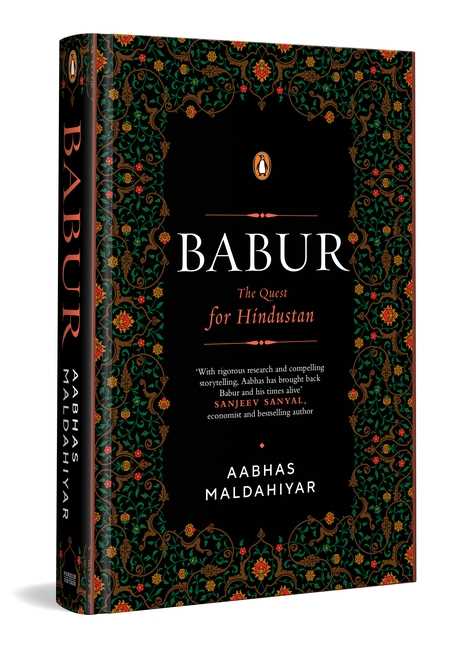
In an exclusive interview for the Brighter Kashmir, author Aabhas K. Maldahiyar in conversation with Muhmmad Daanish speaks about challenges the romanticised narrative of Ganga-Jamuni Teḥzib

Maldahiyar argues that what is often portrayed as cultural harmony masks a deeper history of asymmetry and erasure. 

Drawing from legal texts, chronicles, and lived experiences, Maldahiyar dismantles the myth of syncretism to reveal a one-way flow of power. 

You describe the Ganga–Jamunī Teḥzīb as a “mythical embroidery” that tightens into a noose. What, in your view, is the danger of continuing to uphold this narrative uncritically?

October 02, 2025 | Muhmmad Daanish


You describe the Ganga–Jamunī Teḥzīb as a “mythical embroidery” that tightens into a noose. What, in your view, is the danger of continuing to uphold this narrative uncritically?


The danger of upholding the Ganga–Jamunī Teḥzīb uncritically is that it transforms a history of religious violence (often genocidal) into a story of harmony, and in doing so, it disarms a civilisation of its memory. By calling it a “mythical embroidery that tightens into a noose,” I mean that what appears to be a delicate fabric of cultural fusion was in reality stitched upon the scars of conquest, temple desecration, and coerced submission. To celebrate it as syncretism is to forget the cost at which it was woven.
This narrative becomes dangerous because it trains generations to mistake subjugation for synthesis. When temple desecration is reframed as cultural integration, when forced alliances are romanticised as love, when jihad is euphemised as tolerance, the historical wound is not healed but hidden. And a civilisation that forgets its wounds becomes vulnerable to repetition of the same pattern—political appeasement today echoing theological capitulation of the past.
The persistence of this myth also serves contemporary agendas: it provides a ready-made vocabulary for those who wish to flatten difference, silence the record of atrocities, and enforce a false consensus in the name of “composite culture.” The noose metaphor is apt because what looks like embroidery tightening around the neck of memory eventually strangles the ability to see clearly.
So the danger is not only academic—it is existential. A people who confuse the chains of conquest for threads of culture risk mistaking their own erasure for harmony.
The palace of Harmony and Unity can’t be built on a raft reinforced with lies.


Is there any space, in your framework, for genuine cultural synthesis—or was the Timurid model inherently incapable of pluralism?


The Timurid model, by its very design, was incapable of genuine pluralism. Its architecture rested on the jurisprudence of jihād and the supremacy of Islam—concepts that allowed for tolerance only as expediency, never as equality. The much-celebrated gestures of accommodation under Akbar, or the flattering stories of “composite culture,” were exceptions carved out for the survival of the empire, not principles of governance.
And yet, there were figures who imagined something different. Dara Shukoh stands out—an heir who studied the Upanishads, translated them into Persian, and attempted to see a metaphysical unity between Indic thought and Islam. But the telling fact is this: no Muslim constituency accepted him. To the orthodox, he was a heretic who betrayed the exclusivity of Islam. By contrast, many Hindus embraced his openness, though even then it was with the awareness that their acceptance could never be reciprocated within an Islamic framework. The asymmetry is obvious—Indic thought could welcome dialogue, Islamicate orthodoxy could not.
The fact that Dara was executed by his own brother, and remembered within Timurid memory as an apostate rather than a visionary, reveals the incapacity of that empire to sustain pluralism. His “synthesis” existed only in Hindu admiration, not in Muslim sanction.
So, yes, individuals like Dara glimpsed another possibility. But the Timurid state was built to resist it. The difference between Dara’s vision and Aurangzeb’s sword shows that cultural synthesis was never part of the imperial DNA; it was a fragile deviation, doomed by orthodoxy.


You’ve drawn heavily from primary sources like Badāʾūnī and Humāyūn’s letters. What challenges did you face in interpreting these texts without falling into ideological bias?


The greatest challenge in working with primary sources like Badāʾūnī or Humāyūn’s letters is precisely that they come to us already charged with ideology. Badāʾūnī wrote as a disillusioned insider, his testimony sharp with resentment; Humāyūn’s correspondence was steeped in the rhetoric of Islamic fraternity. If one simply echoes their tone, one risks reproducing their bias. But if one sanitises them—as many translators have done—one ends up flattening the evidence into something palatable but false.
My task was to navigate between these poles. I relied on philological rigour—working directly with the Persian and Turki manuscripts, weighing words like kāfir or jihād in their historical, theological weight rather than accepting euphemised translations like “pagan” or “campaign.” I also triangulated sources: comparing Badāʾūnī with Abul Fazl, farmāns with inscriptions, and the rhetoric of chronicles with the materiality of architecture. Where the voices clashed, the friction itself became evidence.
The way to resist ideological bias is not by pretending neutrality but by being transparent about the worldview embedded in the source itself. I did not read Badāʾūnī as a “neutral historian,” but as a Timurid insider whose bitterness reveals cracks in the imperial facade. Nor did I treat Humāyūn’s letters as diplomacy alone, but as documents saturated with the jurisprudence of Islamic hierarchy.
So the challenge was not to strip the texts of ideology, but to ensure that my own interpretation did not replace theirs with a modern myth. Instead, I let their words, with all their contradictions, stand in the sharp light of evidentiary precision.


You’ve said history must cut through the fog of assumption. What assumptions do you believe modern Indian historiography most urgently needs to confront?


The most urgent assumption to confront is that India’s medieval past was an era of composite culture and syncretism. This lens—be it in the form of the Ganga–Jamunī Teḥzīb, the romance of Rajput–Timurid marriages, or the myth of Akbar’s liberalism—has been repeated so often that it has hardened into dogma. But when we cut through the fog and return to the primary sources, what we see is not harmony but hierarchy: jihad framed as piety, kāfirs described as enemies, and every act of accommodation underwritten by the logic of subjugation.
Another assumption that cripples our historiography is the colonial inheritance of categories—where terms like “pagan” soften the sting of kāfir, or where “campaign” replaces jihād. These mistranslations have not just obscured evidence but actively reshaped how generations of Indians imagine their past.
Finally, we must confront the assumption that to question these myths is to endanger “secularism.” In truth, it is precisely this refusal to see clearly that has left us vulnerable—mistaking chains for threads of culture, conquest for coexistence. History does not serve a civilisation by flattering it; it serves by telling the truth, however uncomfortable.
If history must cut through fog, the first fog to dispel is the comforting lie of syncretism, which has too long replaced the harsher, but more honest, reality of civilisational struggle.


You hint at future volumes on Babur’s successors. Will this same lens—of conquest, creed, and cultural erasure—continue through Humayun, Akbar, and beyond?


Yes—because the pattern does not end with Babur. If the first volume exposed him as a conqueror who clothed ambition in the vocabulary of jihād, the future volumes will trace how this logic of conquest, creed, and cultural erasure carried forward through his successors.
Humāyūn, as I have shown, chose fraternity with Bahādur Shāh over solidarity with the Rajputs, revealing that for him, faith outweighed alliance. His reign may look indecisive, but his priorities were clear: the kāfir was always the lesser partner in his political imagination.
Akbar is often praised as the liberal exception, yet when we return to Badāʾūnī and other Persian sources, we see that even his reforms carried the stamp of hierarchy. His so-called syncretism masked the exploitation of women, the forced absorption of Rajput princesses into the harem, and a deliberate project of subjugation through marriage, ritual, and spectacle. The “Jodha–Akbar” romance is mythology, not history.
Jahāngīr and Shāh Jahān continued this grammar with less pretence. Jahāngīr’s persecution of Sikh Gurus and Shāh Jahān’s record of temple destruction—show that the rhetoric of tolerance was never an institutional principle. It was always conditional, always revocable.
With Aurangzeb, the mask fell away. He re-imposed jizya, razed temples on a massive scale, and left no ambiguity about the centrality of creed to kingship. His reign laid bare the ideological core of the Timurid project: conquest legitimised as jihād, governance as management of the kāfir majority, and culture reshaped by erasure.
Even later rulers—Bahadur Shah I, Farrukhsiyar, right down to the last Mughal, Bahadur Shah Zafar—never fully departed from this framework. They might have lacked the resources of their forefathers, but the theological architecture of the empire remained intact. The poetry of Zafar cannot erase the fact that the Timurid state, even in decline, carried forward the inheritance of creed-bound conquest.
So yes, the same lens continues. The story of the Timurids is not a tale of gradual liberalisation, as modern historiography likes to claim. It is a continuum—sometimes masked, sometimes bare—of conquest justified by creed, with cultural erasure as its inevitable consequence.
I see that after a decade or so I would have produced the most definitive biography of all Timurid Emperors, which has never been done so far.


What do you hope readers, especially young Indians, take away from this work—not just about Babur, but about how history is written, remembered, and reclaimed?


I want young Indians to see that history is not what is told to them, but what they learn to uncover for themselves.
What I hope young Indians take away is twofold. First, about Babur himself: to see him not as the charming wanderer of textbooks, but as his own words show him—an Islamic warlord who entered Hindustan under the banner of jihād, who called its people kāfirs, and who dressed conquest as faith. The purpose is not vengeance but recognition: we must learn to call things by their names.
Second, about history itself: it is never neutral. It is written, softened, mistranslated, and too often romanticised. “Pagan” replaced kāfir, Humāyūn was cast as a rakhi-saviour, Akbar as a liberal reformer, and Ganga–Jamunī Teḥzīb as harmony. These are not innocent mistakes; they are narratives that blur violence into coexistence. And the danger of such blurring is real: when wrongs are not acknowledged, invaders can be mistaken for heroes. We see this today—temples razed centuries ago still require court battles for reclamation, precisely because some still argue that the invaders were right. This is not just distortion of memory; it becomes a dangerous motivation in our own time.
Reclaiming history, therefore, is about clarity and honesty. Irrespective of religion, a civilisation must acknowledge the wrongs done to it—otherwise the chains of conquest will continue to be mistaken for ornaments of culture. If young Indians learn to read sources with evidentiary precision, to question myths, and to see that remembrance is not hatred but survival, then this work has done its duty.
Because only when truth is faced squarely can a civilisation stand with dignity in the present and ensure that its future is not built on illusions. ( Concluded)

                                                              Email:----------------------daanishinterview@gmail.com

Cultural Accommodation Under Timurids was Strategic, not Pluralistic: Author Aabhas Maldahiyar- 111

In an exclusive interview for the Brighter Kashmir, author Aabhas K. Maldahiyar in conversation with Muhmmad Daanish speaks about challenges the romanticised narrative of Ganga-Jamuni Teḥzib

Maldahiyar argues that what is often portrayed as cultural harmony masks a deeper history of asymmetry and erasure. 

Drawing from legal texts, chronicles, and lived experiences, Maldahiyar dismantles the myth of syncretism to reveal a one-way flow of power. 

You describe the Ganga–Jamunī Teḥzīb as a “mythical embroidery” that tightens into a noose. What, in your view, is the danger of continuing to uphold this narrative uncritically?

October 02, 2025 | Muhmmad Daanish


You describe the Ganga–Jamunī Teḥzīb as a “mythical embroidery” that tightens into a noose. What, in your view, is the danger of continuing to uphold this narrative uncritically?


The danger of upholding the Ganga–Jamunī Teḥzīb uncritically is that it transforms a history of religious violence (often genocidal) into a story of harmony, and in doing so, it disarms a civilisation of its memory. By calling it a “mythical embroidery that tightens into a noose,” I mean that what appears to be a delicate fabric of cultural fusion was in reality stitched upon the scars of conquest, temple desecration, and coerced submission. To celebrate it as syncretism is to forget the cost at which it was woven.
This narrative becomes dangerous because it trains generations to mistake subjugation for synthesis. When temple desecration is reframed as cultural integration, when forced alliances are romanticised as love, when jihad is euphemised as tolerance, the historical wound is not healed but hidden. And a civilisation that forgets its wounds becomes vulnerable to repetition of the same pattern—political appeasement today echoing theological capitulation of the past.
The persistence of this myth also serves contemporary agendas: it provides a ready-made vocabulary for those who wish to flatten difference, silence the record of atrocities, and enforce a false consensus in the name of “composite culture.” The noose metaphor is apt because what looks like embroidery tightening around the neck of memory eventually strangles the ability to see clearly.
So the danger is not only academic—it is existential. A people who confuse the chains of conquest for threads of culture risk mistaking their own erasure for harmony.
The palace of Harmony and Unity can’t be built on a raft reinforced with lies.


Is there any space, in your framework, for genuine cultural synthesis—or was the Timurid model inherently incapable of pluralism?


The Timurid model, by its very design, was incapable of genuine pluralism. Its architecture rested on the jurisprudence of jihād and the supremacy of Islam—concepts that allowed for tolerance only as expediency, never as equality. The much-celebrated gestures of accommodation under Akbar, or the flattering stories of “composite culture,” were exceptions carved out for the survival of the empire, not principles of governance.
And yet, there were figures who imagined something different. Dara Shukoh stands out—an heir who studied the Upanishads, translated them into Persian, and attempted to see a metaphysical unity between Indic thought and Islam. But the telling fact is this: no Muslim constituency accepted him. To the orthodox, he was a heretic who betrayed the exclusivity of Islam. By contrast, many Hindus embraced his openness, though even then it was with the awareness that their acceptance could never be reciprocated within an Islamic framework. The asymmetry is obvious—Indic thought could welcome dialogue, Islamicate orthodoxy could not.
The fact that Dara was executed by his own brother, and remembered within Timurid memory as an apostate rather than a visionary, reveals the incapacity of that empire to sustain pluralism. His “synthesis” existed only in Hindu admiration, not in Muslim sanction.
So, yes, individuals like Dara glimpsed another possibility. But the Timurid state was built to resist it. The difference between Dara’s vision and Aurangzeb’s sword shows that cultural synthesis was never part of the imperial DNA; it was a fragile deviation, doomed by orthodoxy.


You’ve drawn heavily from primary sources like Badāʾūnī and Humāyūn’s letters. What challenges did you face in interpreting these texts without falling into ideological bias?


The greatest challenge in working with primary sources like Badāʾūnī or Humāyūn’s letters is precisely that they come to us already charged with ideology. Badāʾūnī wrote as a disillusioned insider, his testimony sharp with resentment; Humāyūn’s correspondence was steeped in the rhetoric of Islamic fraternity. If one simply echoes their tone, one risks reproducing their bias. But if one sanitises them—as many translators have done—one ends up flattening the evidence into something palatable but false.
My task was to navigate between these poles. I relied on philological rigour—working directly with the Persian and Turki manuscripts, weighing words like kāfir or jihād in their historical, theological weight rather than accepting euphemised translations like “pagan” or “campaign.” I also triangulated sources: comparing Badāʾūnī with Abul Fazl, farmāns with inscriptions, and the rhetoric of chronicles with the materiality of architecture. Where the voices clashed, the friction itself became evidence.
The way to resist ideological bias is not by pretending neutrality but by being transparent about the worldview embedded in the source itself. I did not read Badāʾūnī as a “neutral historian,” but as a Timurid insider whose bitterness reveals cracks in the imperial facade. Nor did I treat Humāyūn’s letters as diplomacy alone, but as documents saturated with the jurisprudence of Islamic hierarchy.
So the challenge was not to strip the texts of ideology, but to ensure that my own interpretation did not replace theirs with a modern myth. Instead, I let their words, with all their contradictions, stand in the sharp light of evidentiary precision.


You’ve said history must cut through the fog of assumption. What assumptions do you believe modern Indian historiography most urgently needs to confront?


The most urgent assumption to confront is that India’s medieval past was an era of composite culture and syncretism. This lens—be it in the form of the Ganga–Jamunī Teḥzīb, the romance of Rajput–Timurid marriages, or the myth of Akbar’s liberalism—has been repeated so often that it has hardened into dogma. But when we cut through the fog and return to the primary sources, what we see is not harmony but hierarchy: jihad framed as piety, kāfirs described as enemies, and every act of accommodation underwritten by the logic of subjugation.
Another assumption that cripples our historiography is the colonial inheritance of categories—where terms like “pagan” soften the sting of kāfir, or where “campaign” replaces jihād. These mistranslations have not just obscured evidence but actively reshaped how generations of Indians imagine their past.
Finally, we must confront the assumption that to question these myths is to endanger “secularism.” In truth, it is precisely this refusal to see clearly that has left us vulnerable—mistaking chains for threads of culture, conquest for coexistence. History does not serve a civilisation by flattering it; it serves by telling the truth, however uncomfortable.
If history must cut through fog, the first fog to dispel is the comforting lie of syncretism, which has too long replaced the harsher, but more honest, reality of civilisational struggle.


You hint at future volumes on Babur’s successors. Will this same lens—of conquest, creed, and cultural erasure—continue through Humayun, Akbar, and beyond?


Yes—because the pattern does not end with Babur. If the first volume exposed him as a conqueror who clothed ambition in the vocabulary of jihād, the future volumes will trace how this logic of conquest, creed, and cultural erasure carried forward through his successors.
Humāyūn, as I have shown, chose fraternity with Bahādur Shāh over solidarity with the Rajputs, revealing that for him, faith outweighed alliance. His reign may look indecisive, but his priorities were clear: the kāfir was always the lesser partner in his political imagination.
Akbar is often praised as the liberal exception, yet when we return to Badāʾūnī and other Persian sources, we see that even his reforms carried the stamp of hierarchy. His so-called syncretism masked the exploitation of women, the forced absorption of Rajput princesses into the harem, and a deliberate project of subjugation through marriage, ritual, and spectacle. The “Jodha–Akbar” romance is mythology, not history.
Jahāngīr and Shāh Jahān continued this grammar with less pretence. Jahāngīr’s persecution of Sikh Gurus and Shāh Jahān’s record of temple destruction—show that the rhetoric of tolerance was never an institutional principle. It was always conditional, always revocable.
With Aurangzeb, the mask fell away. He re-imposed jizya, razed temples on a massive scale, and left no ambiguity about the centrality of creed to kingship. His reign laid bare the ideological core of the Timurid project: conquest legitimised as jihād, governance as management of the kāfir majority, and culture reshaped by erasure.
Even later rulers—Bahadur Shah I, Farrukhsiyar, right down to the last Mughal, Bahadur Shah Zafar—never fully departed from this framework. They might have lacked the resources of their forefathers, but the theological architecture of the empire remained intact. The poetry of Zafar cannot erase the fact that the Timurid state, even in decline, carried forward the inheritance of creed-bound conquest.
So yes, the same lens continues. The story of the Timurids is not a tale of gradual liberalisation, as modern historiography likes to claim. It is a continuum—sometimes masked, sometimes bare—of conquest justified by creed, with cultural erasure as its inevitable consequence.
I see that after a decade or so I would have produced the most definitive biography of all Timurid Emperors, which has never been done so far.


What do you hope readers, especially young Indians, take away from this work—not just about Babur, but about how history is written, remembered, and reclaimed?


I want young Indians to see that history is not what is told to them, but what they learn to uncover for themselves.
What I hope young Indians take away is twofold. First, about Babur himself: to see him not as the charming wanderer of textbooks, but as his own words show him—an Islamic warlord who entered Hindustan under the banner of jihād, who called its people kāfirs, and who dressed conquest as faith. The purpose is not vengeance but recognition: we must learn to call things by their names.
Second, about history itself: it is never neutral. It is written, softened, mistranslated, and too often romanticised. “Pagan” replaced kāfir, Humāyūn was cast as a rakhi-saviour, Akbar as a liberal reformer, and Ganga–Jamunī Teḥzīb as harmony. These are not innocent mistakes; they are narratives that blur violence into coexistence. And the danger of such blurring is real: when wrongs are not acknowledged, invaders can be mistaken for heroes. We see this today—temples razed centuries ago still require court battles for reclamation, precisely because some still argue that the invaders were right. This is not just distortion of memory; it becomes a dangerous motivation in our own time.
Reclaiming history, therefore, is about clarity and honesty. Irrespective of religion, a civilisation must acknowledge the wrongs done to it—otherwise the chains of conquest will continue to be mistaken for ornaments of culture. If young Indians learn to read sources with evidentiary precision, to question myths, and to see that remembrance is not hatred but survival, then this work has done its duty.
Because only when truth is faced squarely can a civilisation stand with dignity in the present and ensure that its future is not built on illusions. ( Concluded)

                                                              Email:----------------------daanishinterview@gmail.com

  • Address: R.C 2 Quarters Press Enclave Near Pratap Park, Srinagar 190001.
  • Phone: 0194-2451076 , +91-941-940-0056 , +91-962-292-4716
  • Email: brighterkmr@gmail.com
Owner, Printer, Publisher, Editor: Farooq Ahmad Wani
Legal Advisor: M.J. Hubi
Printed at: Sangermal offset Printing Press Rangreth ( Budgam)
Published from: Gulshanabad Chraresharief Budgam
RNI No.: JKENG/2010/33802
Office No’s: 0194-2451076
Mobile No’s 9419400056, 9622924716 ,7006086442
Postal Regd No: SK/135/2010-2019
POST BOX NO: 1001
Administrative Office: R.C 2 Quarters Press Enclave Near Pratap Park ( Srinagar -190001)

© Copyright 2023 brighterkashmir.com All Rights Reserved. Quantum Technologies

Owner, Printer, Publisher, Editor: Farooq Ahmad Wani
Legal Advisor: M.J. Hubi
Printed at: Abid Enterprizes, Zainkote Srinagar
Published from: Gulshanabad Chraresharief Budgam
RNI No.: JKENG/2010/33802
Office No’s: 0194-2451076, 9622924716 , 9419400056
Postal Regd No: SK/135/2010-2019
Administrative Office: Abi Guzer Srinagar

© Copyright 2018 brighterkashmir.com All Rights Reserved.