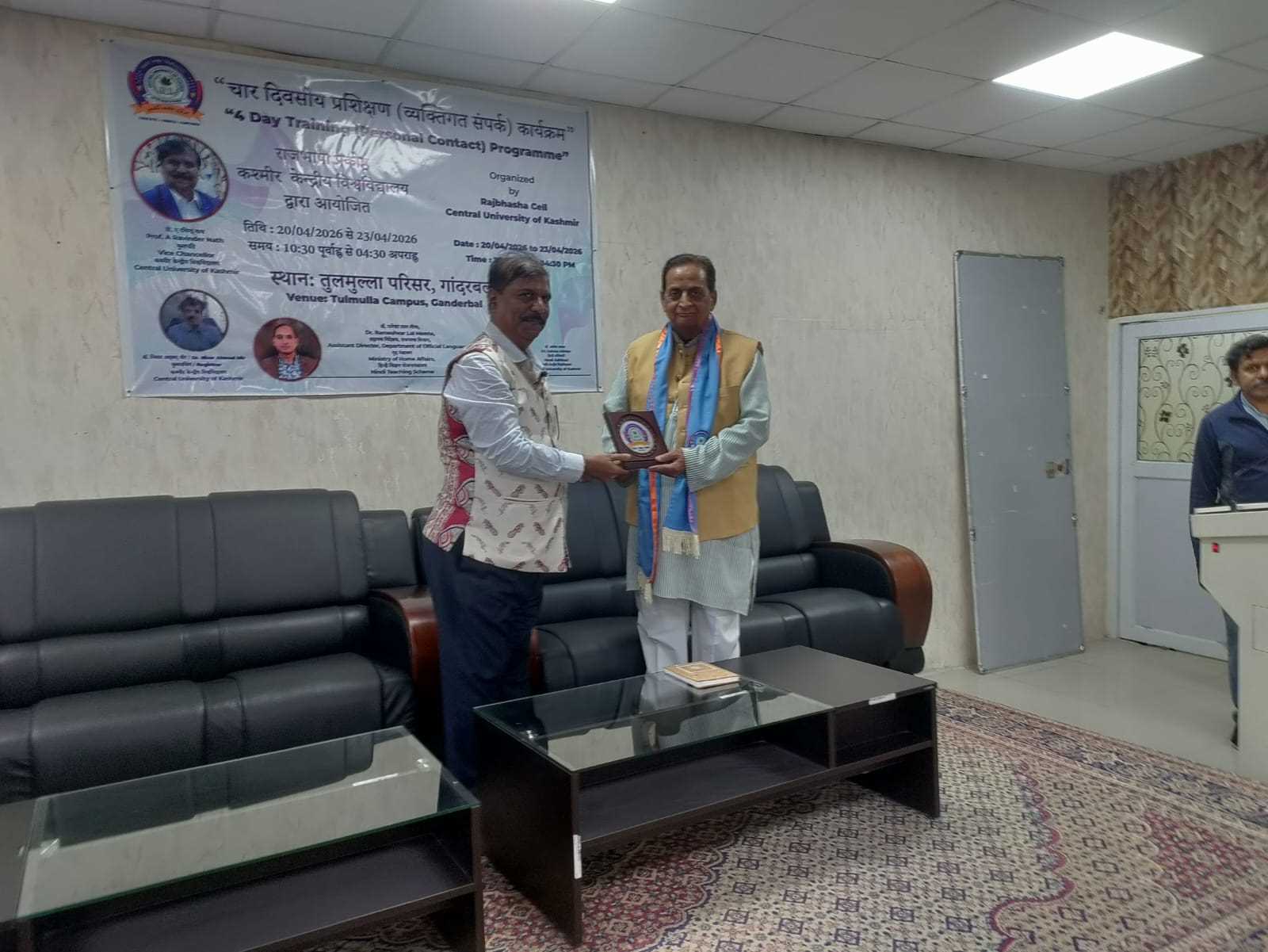
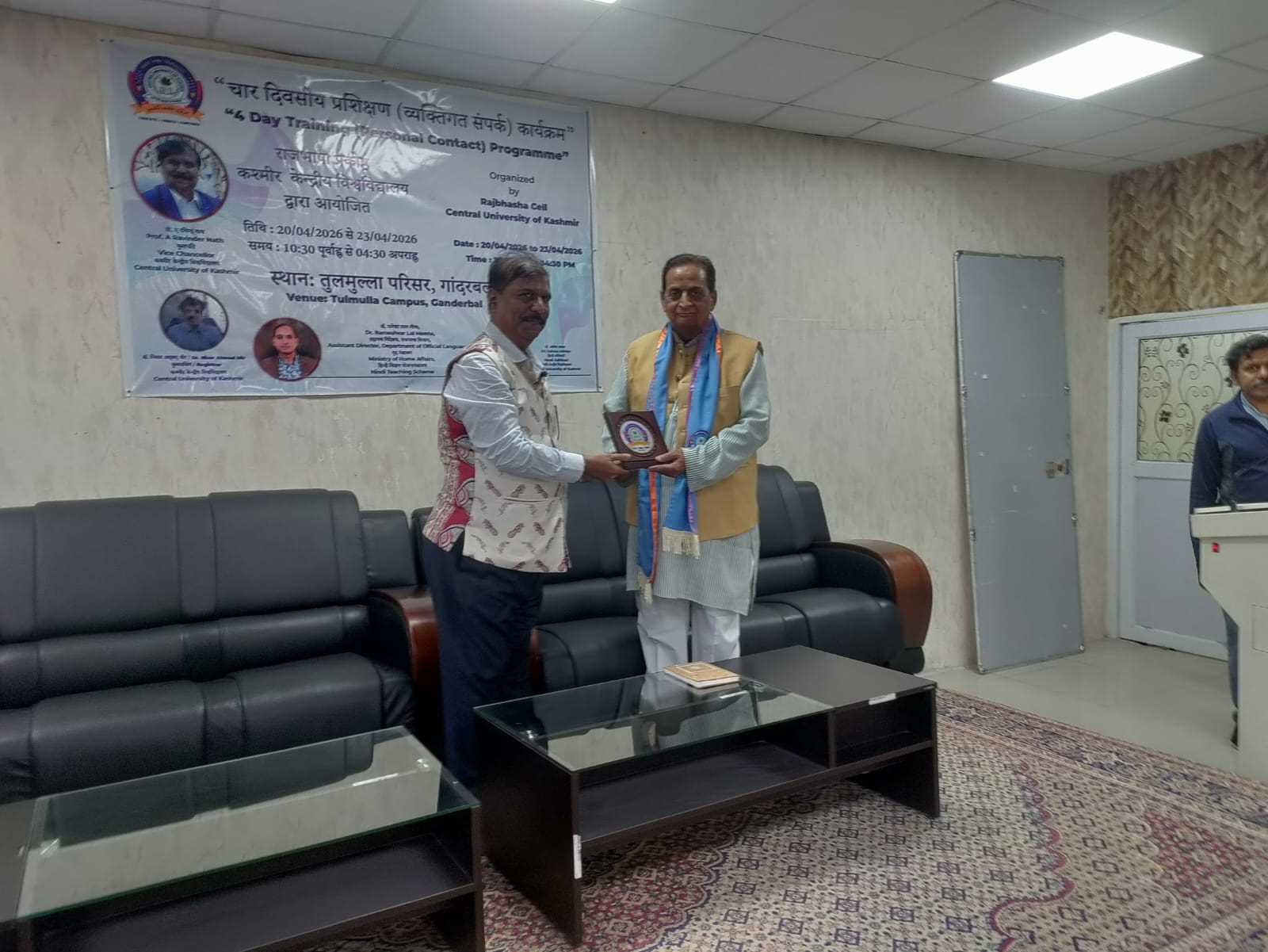
Ganderbal, May 8: Dr. Somdev Bhardwaj, organizing secretary, Vigyan Bharati (North India), delivered an insightful lecture on “Indian Knowledge Tradition and Earth Conservation” at the Central University of Kashmir (CUKashmir).
Vice-Chancellor, Prof. A. Ravindar Nath, along with faculty members, research scholars, and students were present during the lecture held on “World Earth Day.”
In his address, Dr. Bhardwaj highlighted that the world today is confronting challenges such as climate change, pollution, biodiversity loss, and ecological imbalance. At such a critical juncture, he emphasized that India’s ancient knowledge systems offer humanity a path toward living in harmony with nature—one that is balanced, sensitive, and deeply responsible.
Referring to the Atharvaveda mantra, “Mata Bhumih Putro’ham Prithivyah” (“The Earth is my mother, and I am her son”), Dr. Bhardwaj explained that Indian culture has long viewed the Earth as a nurturing mother and humanity as her children. This worldview, he said, instills a profound sense of duty toward conservation, protection, and reverence for nature.
Dr. Bhardwaj elaborated on the concept of the Panchamahabhutas—Earth, Water, Fire, Air, and Space—describing it as a scientific ecological framework embedded in Indian thought. He noted that all life is sustained by the balance of these five fundamental elements, and disturbances in this balance give rise to environmental crises. He added that principles such as water conservation, tree plantation, respect for nature, mindful consumption, and balanced living have been integral to Indian civilization for centuries and remain highly relevant in today’s environmental discourse.
About the message “Vasudhaiva Kutumbakam”—the world is one family—Dr. Bhardwaj said that environmental challenges can only be addressed through collective responsibility and global cooperation. “Indian knowledge traditions teach humanity that coexistence with nature, restrained consumption, and balanced development are the foundations of a sustainable future.”

Ganderbal, May 8: Dr. Somdev Bhardwaj, organizing secretary, Vigyan Bharati (North India), delivered an insightful lecture on “Indian Knowledge Tradition and Earth Conservation” at the Central University of Kashmir (CUKashmir).
Vice-Chancellor, Prof. A. Ravindar Nath, along with faculty members, research scholars, and students were present during the lecture held on “World Earth Day.”
In his address, Dr. Bhardwaj highlighted that the world today is confronting challenges such as climate change, pollution, biodiversity loss, and ecological imbalance. At such a critical juncture, he emphasized that India’s ancient knowledge systems offer humanity a path toward living in harmony with nature—one that is balanced, sensitive, and deeply responsible.
Referring to the Atharvaveda mantra, “Mata Bhumih Putro’ham Prithivyah” (“The Earth is my mother, and I am her son”), Dr. Bhardwaj explained that Indian culture has long viewed the Earth as a nurturing mother and humanity as her children. This worldview, he said, instills a profound sense of duty toward conservation, protection, and reverence for nature.
Dr. Bhardwaj elaborated on the concept of the Panchamahabhutas—Earth, Water, Fire, Air, and Space—describing it as a scientific ecological framework embedded in Indian thought. He noted that all life is sustained by the balance of these five fundamental elements, and disturbances in this balance give rise to environmental crises. He added that principles such as water conservation, tree plantation, respect for nature, mindful consumption, and balanced living have been integral to Indian civilization for centuries and remain highly relevant in today’s environmental discourse.
About the message “Vasudhaiva Kutumbakam”—the world is one family—Dr. Bhardwaj said that environmental challenges can only be addressed through collective responsibility and global cooperation. “Indian knowledge traditions teach humanity that coexistence with nature, restrained consumption, and balanced development are the foundations of a sustainable future.”
© Copyright 2023 brighterkashmir.com All Rights Reserved. Quantum Technologies