Srinagar Sep 23: The Department of Physics, University of Kashmir (KU), in collaboration with the UGC–DAE Consortium for Scientific Research (UGC–DAE CSR), Indore Centre, organised a two-day Awareness Workshop on “Utilization of In-House and Large-Scale DAE Facilities” at the Main Campus, aimed at promoting collaborative research and facilitating wider access to national scientific facilities.
The workshop familiarised faculty members and researchers from universities, colleges and research institutions with major Department of Atomic Energy (DAE) facilities, including the Raja Ramanna Centre for Advanced Technology (RRCAT), Dhruva Reactor and Variable Energy Cyclotron Centre (VECC), as well as advanced research infrastructure available at UGC–DAE CSR centres.
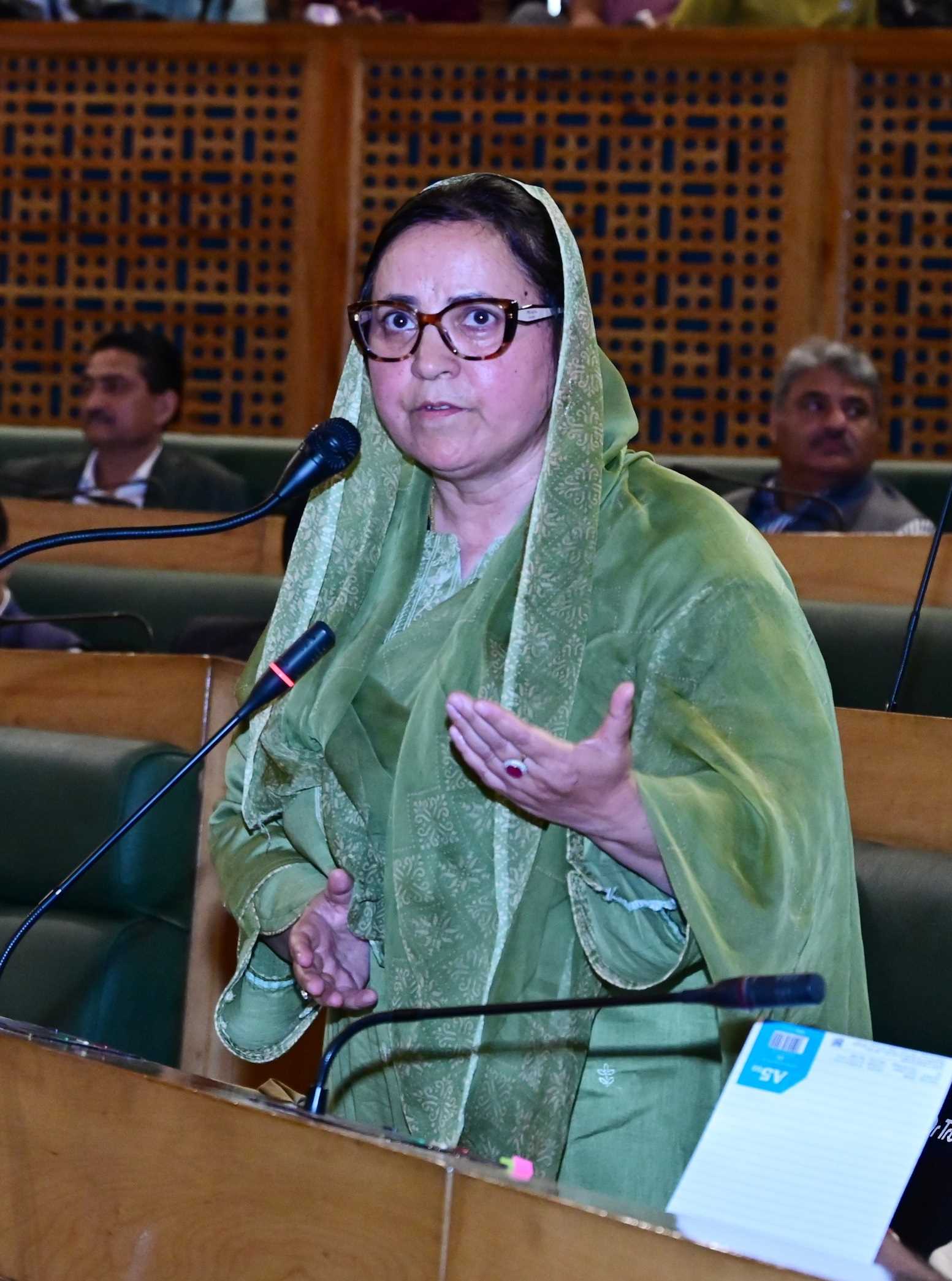
Speaking at the inaugural session, Vice-Chancellor, KU, Prof. Nilofer Khan, emphasised the importance of strengthening linkages between universities and national research facilities.
“Access to advanced national research facilities can significantly expand the scope and quality of research being undertaken in our universities. Such collaborations provide our researchers with opportunities to engage with cutting-edge infrastructure, build scientific networks and pursue research that can address emerging challenges,” she said.
Director, UGC–DAE CSR, Prof. Kaustubh R. S. Priolkar, highlighted the Consortium’s efforts to facilitate access to major DAE facilities for university and college researchers and encouraged participants to make greater use of the Collaborative Research Scheme (CRS).
Centre Directors and senior scientists from the Consortium interacted with participants and provided insights into facility access, procedural requirements and collaborative research opportunities.
The technical sessions highlighted the Indore Centre’s capabilities in material synthesis and characterisation, spectroscopy, microscopy and physical-property measurements under low-temperature and high-magnetic-field conditions. Participants were also introduced to access protocols for INDUS Synchrotron beamlines at RRCAT, besides facilities available at the Consortium’s Mumbai, Kalpakkam and Kolkata Centres, including the Bhubaneswar Node.
The workshop also highlighted the role of UGC–DAE CSR as a UGC-established Inter-University Centre and its Collaborative Research Scheme.
Faculty members from the Physical, Chemical, Biological and Engineering Sciences participated in the workshop and explored potential collaborations and research proposals. The programme is expected to strengthen research linkages between KU and UGC–DAE CSR and promote wider utilisation of advanced scientific infrastructure among researchers.

Srinagar Sep 23: The Department of Physics, University of Kashmir (KU), in collaboration with the UGC–DAE Consortium for Scientific Research (UGC–DAE CSR), Indore Centre, organised a two-day Awareness Workshop on “Utilization of In-House and Large-Scale DAE Facilities” at the Main Campus, aimed at promoting collaborative research and facilitating wider access to national scientific facilities.
The workshop familiarised faculty members and researchers from universities, colleges and research institutions with major Department of Atomic Energy (DAE) facilities, including the Raja Ramanna Centre for Advanced Technology (RRCAT), Dhruva Reactor and Variable Energy Cyclotron Centre (VECC), as well as advanced research infrastructure available at UGC–DAE CSR centres.
Speaking at the inaugural session, Vice-Chancellor, KU, Prof. Nilofer Khan, emphasised the importance of strengthening linkages between universities and national research facilities.
“Access to advanced national research facilities can significantly expand the scope and quality of research being undertaken in our universities. Such collaborations provide our researchers with opportunities to engage with cutting-edge infrastructure, build scientific networks and pursue research that can address emerging challenges,” she said.
Director, UGC–DAE CSR, Prof. Kaustubh R. S. Priolkar, highlighted the Consortium’s efforts to facilitate access to major DAE facilities for university and college researchers and encouraged participants to make greater use of the Collaborative Research Scheme (CRS).
Centre Directors and senior scientists from the Consortium interacted with participants and provided insights into facility access, procedural requirements and collaborative research opportunities.
The technical sessions highlighted the Indore Centre’s capabilities in material synthesis and characterisation, spectroscopy, microscopy and physical-property measurements under low-temperature and high-magnetic-field conditions. Participants were also introduced to access protocols for INDUS Synchrotron beamlines at RRCAT, besides facilities available at the Consortium’s Mumbai, Kalpakkam and Kolkata Centres, including the Bhubaneswar Node.
The workshop also highlighted the role of UGC–DAE CSR as a UGC-established Inter-University Centre and its Collaborative Research Scheme.
Faculty members from the Physical, Chemical, Biological and Engineering Sciences participated in the workshop and explored potential collaborations and research proposals. The programme is expected to strengthen research linkages between KU and UGC–DAE CSR and promote wider utilisation of advanced scientific infrastructure among researchers.
© Copyright 2023 brighterkashmir.com All Rights Reserved. Quantum Technologies