
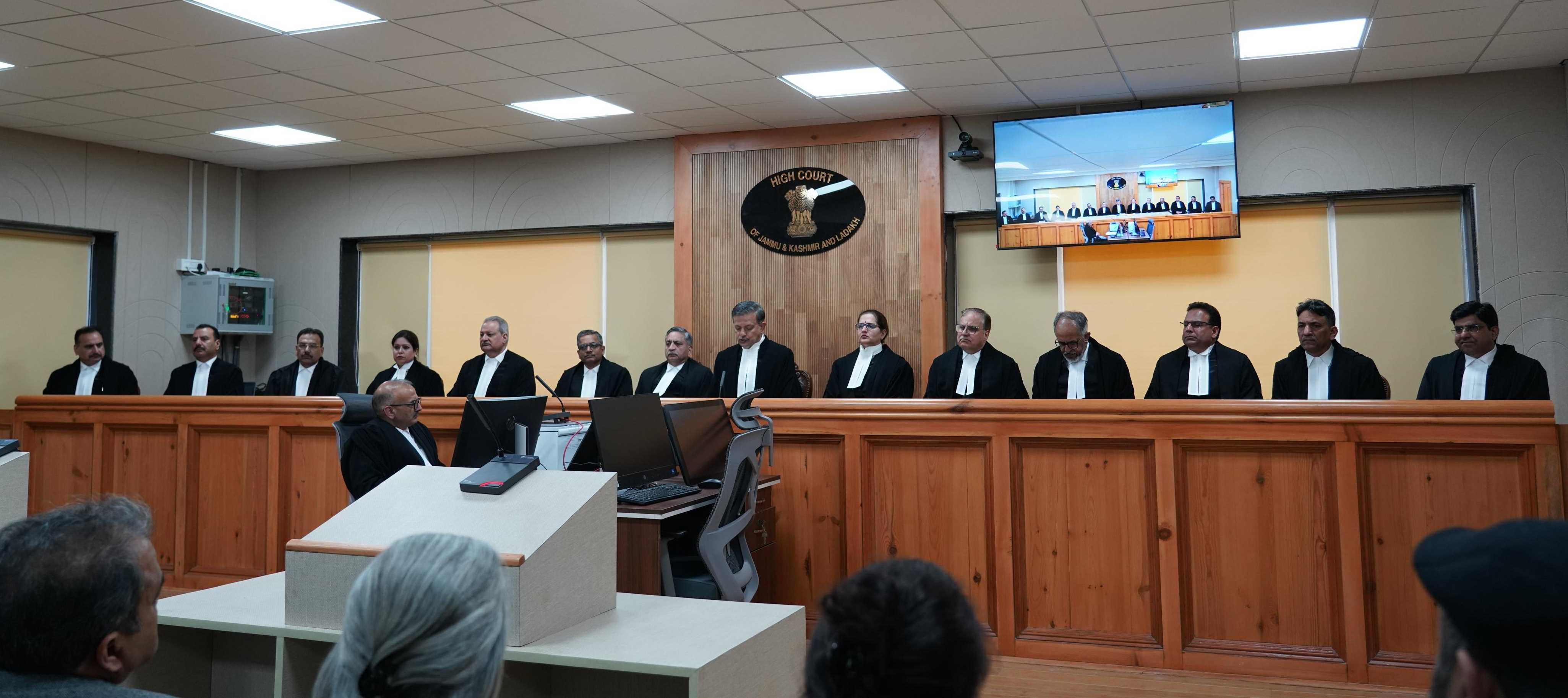
Leh, Oct 18: The High Court of Jammu and Kashmir and Ladakh held a ceremonial Full Court sitting in Leh on Sunday to mark the historic inauguration of the Ladakh Bench, a significant step towards ensuring accessible, inclusive and equitable justice for the people of the Union Territory.
The ceremonial bench was presided over by Chief Justice Dr Justice Pushpendra Singh Bhati and attended by judges of the High Court, law officers, members of the Bar, judicial officers and senior officials of the Registry and Ladakh administration.
Addressing the gathering, Deputy Solicitor General of India for Jammu Wing, Vishal Sharma, described the establishment of the Ladakh Bench as a reaffirmation of the constitutional promise of accessible justice. He said the initiative would strengthen the rule of law and bring judicial remedies closer to the people of the region.
Deputy Solicitor General of India for Srinagar Wing, Tahir Majid Shamsi, traced the evolution of judicial institutions in Ladakh since 2019. He observed that regular judicial sittings, digital facilities and legal aid services would substantially ease the difficulties faced by litigants.
Advocate Gonbo Stobgyal, President of the Bar Association, Leh, described the occasion as the fulfilment of a long-standing aspiration of Ladakh's people and assured the judiciary of the Bar's full cooperation in ensuring effective administration of justice.
Advocate Reyaz Ahmad Khan, President of the Bar Association, Kargil, also termed the establishment of the Bench a historic milestone and acknowledged the sustained efforts of the judicial leadership in bringing justice closer to the people.
Chief Justice Bhati described the establishment of the Ladakh Bench as the realisation of a decades-long aspiration for accessible and equitable justice.
He observed that people in Ladakh had long faced difficult terrain, harsh climatic conditions and substantial travel expenses while pursuing cases in Srinagar and Jammu. A dedicated Bench, he said, would help ensure that geographical isolation did not translate into judicial exclusion.
The Chief Justice expressed gratitude to Chief Justice of India Justice Surya Kant for his leadership and acknowledged the collective efforts of the Union Government, the Ministry of Law and Justice and the Ladakh administration in translating the initiative into reality within a short period.
He emphasised that the judiciary and the Bar had a shared responsibility to uphold constitutional values, safeguard the rights of vulnerable sections and protect Ladakh's fragile environment.
Envisioning the Bench as a beacon of fairness, truth and timely justice, he expressed confidence that it would strengthen public trust in the judicial system and serve generations to come.
A key highlight of the ceremonial sitting was the adoption of a Full Court resolution stressing the need to improve access to education and provide safe, accessible and affordable residential facilities for girl students in Ladakh, particularly those from remote and far-flung areas.
The resolution recognised the challenges posed by geographical isolation, long travel distances and inadequate accommodation, which can restrict educational opportunities for girls from distant villages.
It called for enhanced legal awareness and coordinated efforts among educational institutions, legal services authorities and other stakeholders to ensure equal access to education.
The Full Court also requested the Regular Bench to take further action on the matter.
Senior Judicial and Administrative Officials Attend
The occasion was attended by High Court judges Justice Sanjeev Kumar, Justice Sindhu Sharma, Justice Rajnesh Oswal, Justice Sanjay Dhar, Justice Mohd Akram Chowdhary, Justice Rahul Bharti, Justice Moksha Khajuria Kazmi, Justice Wasim Sadiq Nargal, Justice Rajesh Sekhri, Justice Mohd Yousuf Wani, Justice Sanjay Parihar, Justice Shahzad Azeem and Justice Yash Paul Bourney.
Additional Solicitors General of India Aishwarya Bhati and Archana Pathak Dave were also present, along with the spouses of High Court judges.
Senior Registry officials attending the proceedings included Haq Nawaz Zargar, Principal Secretary to the Chief Justice; Rajeev Gupta, Registrar Vigilance; Umesh Sharma, Registrar Information Technology; Faizan-i-Nazar, Central Project Coordinator, eCourts; and Chemit Yurgal, Secretary, District Legal Services Authority, Kargil, who has been entrusted with overseeing the day-to-day affairs of the Ladakh Bench Registry.
Law Secretary, Ladakh, Jatinder Jamwal; Principal District and Sessions Judge, Leh, Spalzes Angmo; and Principal District and Sessions Judge, Kargil, Sheikh Gowhar Hussain, attended with their respective teams of judicial officers.
The proceedings were conducted by M.K. Sharma, Registrar General of the High Court.
The establishment of the Ladakh Bench represents an important step towards reducing the practical barriers faced by litigants in the region. Its effectiveness will depend on regular judicial sittings, adequate infrastructure, digital access and robust legal aid, ensuring that residents can exercise their rights without the burden of travelling long distances to seek justice.
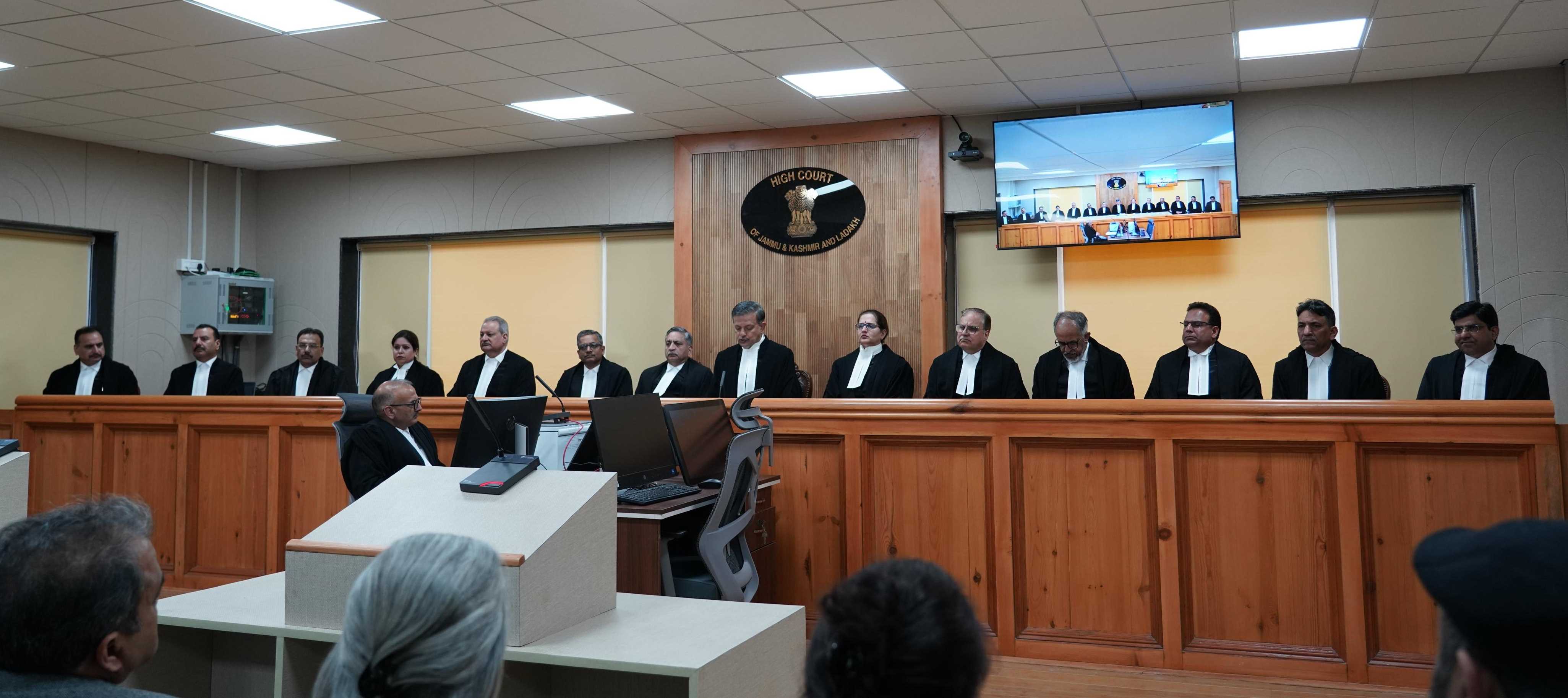
Leh, Oct 18: The High Court of Jammu and Kashmir and Ladakh held a ceremonial Full Court sitting in Leh on Sunday to mark the historic inauguration of the Ladakh Bench, a significant step towards ensuring accessible, inclusive and equitable justice for the people of the Union Territory.
The ceremonial bench was presided over by Chief Justice Dr Justice Pushpendra Singh Bhati and attended by judges of the High Court, law officers, members of the Bar, judicial officers and senior officials of the Registry and Ladakh administration.
Addressing the gathering, Deputy Solicitor General of India for Jammu Wing, Vishal Sharma, described the establishment of the Ladakh Bench as a reaffirmation of the constitutional promise of accessible justice. He said the initiative would strengthen the rule of law and bring judicial remedies closer to the people of the region.
Deputy Solicitor General of India for Srinagar Wing, Tahir Majid Shamsi, traced the evolution of judicial institutions in Ladakh since 2019. He observed that regular judicial sittings, digital facilities and legal aid services would substantially ease the difficulties faced by litigants.
Advocate Gonbo Stobgyal, President of the Bar Association, Leh, described the occasion as the fulfilment of a long-standing aspiration of Ladakh's people and assured the judiciary of the Bar's full cooperation in ensuring effective administration of justice.
Advocate Reyaz Ahmad Khan, President of the Bar Association, Kargil, also termed the establishment of the Bench a historic milestone and acknowledged the sustained efforts of the judicial leadership in bringing justice closer to the people.
Chief Justice Bhati described the establishment of the Ladakh Bench as the realisation of a decades-long aspiration for accessible and equitable justice.
He observed that people in Ladakh had long faced difficult terrain, harsh climatic conditions and substantial travel expenses while pursuing cases in Srinagar and Jammu. A dedicated Bench, he said, would help ensure that geographical isolation did not translate into judicial exclusion.
The Chief Justice expressed gratitude to Chief Justice of India Justice Surya Kant for his leadership and acknowledged the collective efforts of the Union Government, the Ministry of Law and Justice and the Ladakh administration in translating the initiative into reality within a short period.
He emphasised that the judiciary and the Bar had a shared responsibility to uphold constitutional values, safeguard the rights of vulnerable sections and protect Ladakh's fragile environment.
Envisioning the Bench as a beacon of fairness, truth and timely justice, he expressed confidence that it would strengthen public trust in the judicial system and serve generations to come.
A key highlight of the ceremonial sitting was the adoption of a Full Court resolution stressing the need to improve access to education and provide safe, accessible and affordable residential facilities for girl students in Ladakh, particularly those from remote and far-flung areas.
The resolution recognised the challenges posed by geographical isolation, long travel distances and inadequate accommodation, which can restrict educational opportunities for girls from distant villages.
It called for enhanced legal awareness and coordinated efforts among educational institutions, legal services authorities and other stakeholders to ensure equal access to education.
The Full Court also requested the Regular Bench to take further action on the matter.
Senior Judicial and Administrative Officials Attend
The occasion was attended by High Court judges Justice Sanjeev Kumar, Justice Sindhu Sharma, Justice Rajnesh Oswal, Justice Sanjay Dhar, Justice Mohd Akram Chowdhary, Justice Rahul Bharti, Justice Moksha Khajuria Kazmi, Justice Wasim Sadiq Nargal, Justice Rajesh Sekhri, Justice Mohd Yousuf Wani, Justice Sanjay Parihar, Justice Shahzad Azeem and Justice Yash Paul Bourney.
Additional Solicitors General of India Aishwarya Bhati and Archana Pathak Dave were also present, along with the spouses of High Court judges.
Senior Registry officials attending the proceedings included Haq Nawaz Zargar, Principal Secretary to the Chief Justice; Rajeev Gupta, Registrar Vigilance; Umesh Sharma, Registrar Information Technology; Faizan-i-Nazar, Central Project Coordinator, eCourts; and Chemit Yurgal, Secretary, District Legal Services Authority, Kargil, who has been entrusted with overseeing the day-to-day affairs of the Ladakh Bench Registry.
Law Secretary, Ladakh, Jatinder Jamwal; Principal District and Sessions Judge, Leh, Spalzes Angmo; and Principal District and Sessions Judge, Kargil, Sheikh Gowhar Hussain, attended with their respective teams of judicial officers.
The proceedings were conducted by M.K. Sharma, Registrar General of the High Court.
The establishment of the Ladakh Bench represents an important step towards reducing the practical barriers faced by litigants in the region. Its effectiveness will depend on regular judicial sittings, adequate infrastructure, digital access and robust legal aid, ensuring that residents can exercise their rights without the burden of travelling long distances to seek justice.

© Copyright 2023 brighterkashmir.com All Rights Reserved. Quantum Technologies