
Gurez, July 3: Reinforcing its commitment to sustainable livestock development and conservation of indigenous animal genetic resources, the Sher-e-Kashmir University of Agricultural Sciences and Technology of Kashmir (SKUAST-K) organised a two-day awareness, animal healthcare and input distribution programme in Gurez from June 30 to July 1.
The programme was organised by the Division of Animal Genetics & Breeding, Faculty of Veterinary Sciences & Animal Husbandry, Shuhama, under the ICAR–NBAGR Network Project on Animal Genetic Resources, in collaboration with Krishi Vigyan Kendra (KVK), Gurez, and the Department of Animal Husbandry. The initiative aimed to promote conservation of indigenous livestock, enhance productivity and strengthen the livelihoods of tribal farming communities.
Held under the leadership of Vice-Chancellor Prof. (Dr.) Nazir Ahmad Ganai, the outreach programme brought together scientists, veterinary experts, extension professionals and livestock farmers to promote scientific livestock management and climate-resilient farming practices.
Chief Guest Dr. Ravinder Kumar, Principal Scientist at ICAR-Central Institute for Research on Cattle, highlighted the importance of indigenous livestock genetic resources in ensuring sustainable livestock production, climate resilience and nutritional security. He encouraged farmers to adopt scientific livestock technologies to improve productivity and contribute to the vision of a "Viksit Gurez."
Guest of Honour Dr. Mahesh Dige, Senior Scientist at ICAR-National Bureau of Animal Genetic Resources, emphasised the need to conserve native animal breeds and appreciated SKUAST-K's continued efforts to strengthen the livestock sector through scientific interventions, awareness programmes and capacity building in remote tribal areas.
Earlier, Prof. (Dr.) Syed Shanaz Shafi, Professor and Head, Division of Animal Genetics & Breeding, welcomed the participants and stressed the importance of conserving indigenous animal genetic resources. She said native livestock and poultry breeds are naturally adapted to the harsh Himalayan climate and play a crucial role in sustainable livelihoods, biodiversity conservation and climate-resilient agriculture.
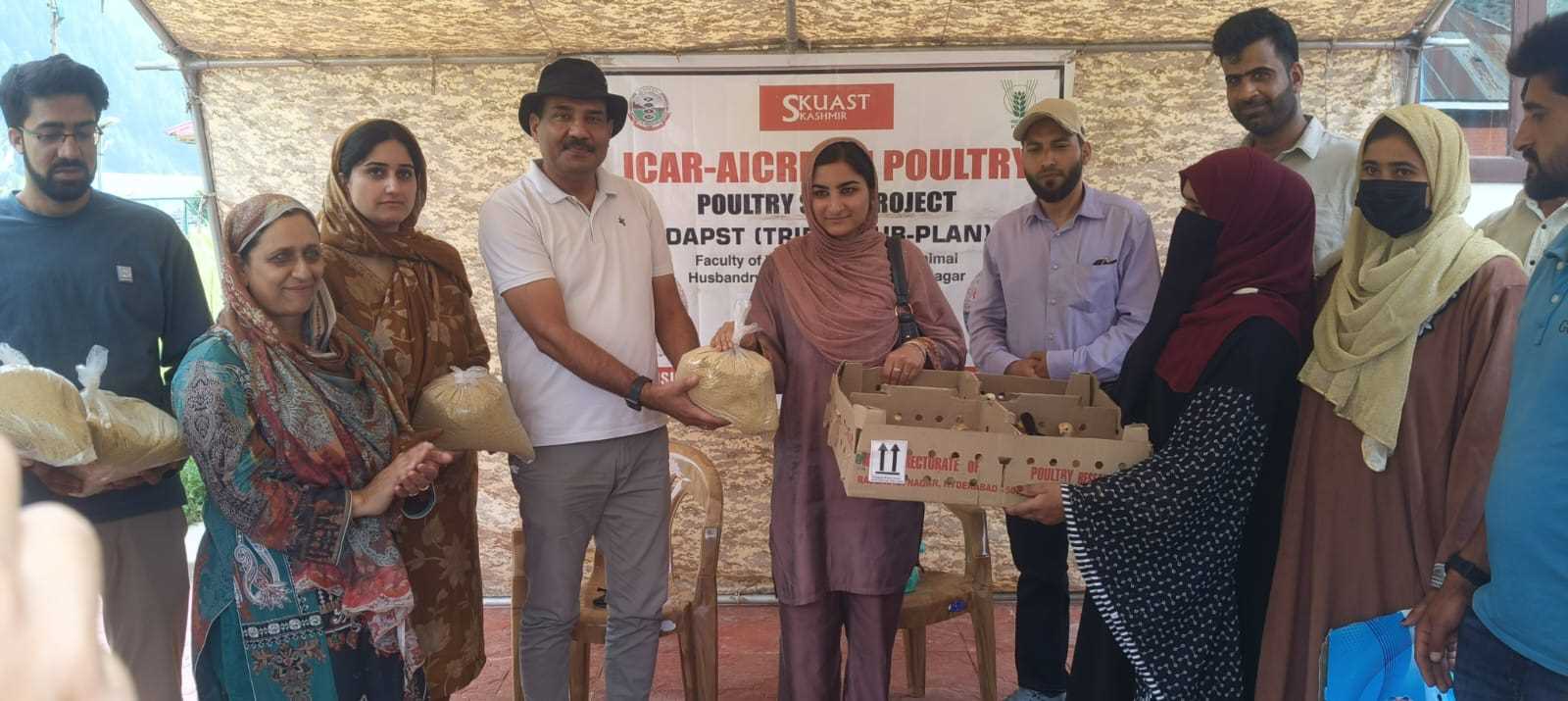
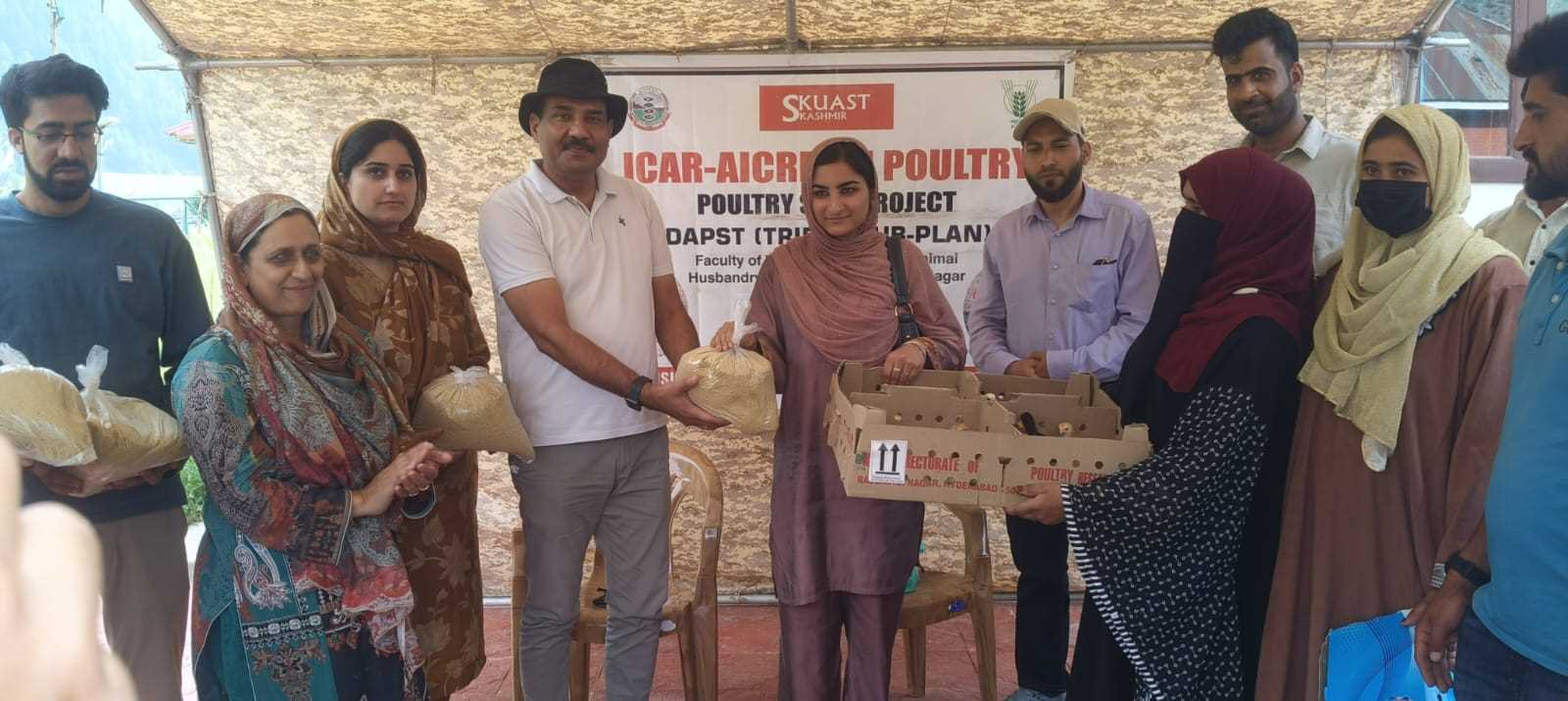
A key highlight of the programme was the distribution of livestock inputs. As many as 100 indigenous Kashmiri poultry birds were distributed under the ICAR–NBAGR Network Project to promote conservation and multiplication of native poultry germplasm. In addition, 300 Keystone Golden birds were distributed under the ICAR–All India Coordinated Research Project (AICRP) on Poultry, under the guidance of Principal Investigator Dr. Azmat Alam, to encourage backyard poultry farming, particularly among women's Self-Help Groups, thereby enhancing livelihoods and household nutrition.
To support animal health, around 50 livestock farmers were provided free deworming medicines and mineral mixtures.
During the technical session, Dr. Shahid Ahmad Shergojry, Associate Professor, Division of Animal Genetics & Breeding, educated farmers on scientific breeding, conservation of indigenous poultry, genetic improvement and sustainable livestock management. Scientists also conducted practical demonstrations on scientific feeding, breeding, healthcare, disease prevention and climate-resilient livestock production. Farmers actively participated in interactive sessions and sought scientific solutions to challenges affecting livestock production.
The programme was attended by Dr. Izhar Ahmad, BVO Gurez; Dr. Ishfaq Ahmad, VAS; Dr. Jauhar Rafeeq; Dr. Shahada; scientists and officials from KVK Gurez; officers of the Department of Animal Husbandry; and a large number of progressive livestock farmers and women beneficiaries from across the Gurez Valley.
The event concluded with a vote of thanks by Dr. Jauhar Rafeeq, Scientist, KVK Gurez, who expressed gratitude to all scientists, collaborating institutions and participating farmers. Special appreciation was extended to Prof. Raihana Kanth and Dr. Hilal, Head, KVK Gurez, for their support in ensuring the successful conduct of the programme.
Gurez, July 3: Reinforcing its commitment to sustainable livestock development and conservation of indigenous animal genetic resources, the Sher-e-Kashmir University of Agricultural Sciences and Technology of Kashmir (SKUAST-K) organised a two-day awareness, animal healthcare and input distribution programme in Gurez from June 30 to July 1.
The programme was organised by the Division of Animal Genetics & Breeding, Faculty of Veterinary Sciences & Animal Husbandry, Shuhama, under the ICAR–NBAGR Network Project on Animal Genetic Resources, in collaboration with Krishi Vigyan Kendra (KVK), Gurez, and the Department of Animal Husbandry. The initiative aimed to promote conservation of indigenous livestock, enhance productivity and strengthen the livelihoods of tribal farming communities.
Held under the leadership of Vice-Chancellor Prof. (Dr.) Nazir Ahmad Ganai, the outreach programme brought together scientists, veterinary experts, extension professionals and livestock farmers to promote scientific livestock management and climate-resilient farming practices.
Chief Guest Dr. Ravinder Kumar, Principal Scientist at ICAR-Central Institute for Research on Cattle, highlighted the importance of indigenous livestock genetic resources in ensuring sustainable livestock production, climate resilience and nutritional security. He encouraged farmers to adopt scientific livestock technologies to improve productivity and contribute to the vision of a "Viksit Gurez."
Guest of Honour Dr. Mahesh Dige, Senior Scientist at ICAR-National Bureau of Animal Genetic Resources, emphasised the need to conserve native animal breeds and appreciated SKUAST-K's continued efforts to strengthen the livestock sector through scientific interventions, awareness programmes and capacity building in remote tribal areas.
Earlier, Prof. (Dr.) Syed Shanaz Shafi, Professor and Head, Division of Animal Genetics & Breeding, welcomed the participants and stressed the importance of conserving indigenous animal genetic resources. She said native livestock and poultry breeds are naturally adapted to the harsh Himalayan climate and play a crucial role in sustainable livelihoods, biodiversity conservation and climate-resilient agriculture.
A key highlight of the programme was the distribution of livestock inputs. As many as 100 indigenous Kashmiri poultry birds were distributed under the ICAR–NBAGR Network Project to promote conservation and multiplication of native poultry germplasm. In addition, 300 Keystone Golden birds were distributed under the ICAR–All India Coordinated Research Project (AICRP) on Poultry, under the guidance of Principal Investigator Dr. Azmat Alam, to encourage backyard poultry farming, particularly among women's Self-Help Groups, thereby enhancing livelihoods and household nutrition.
To support animal health, around 50 livestock farmers were provided free deworming medicines and mineral mixtures.
During the technical session, Dr. Shahid Ahmad Shergojry, Associate Professor, Division of Animal Genetics & Breeding, educated farmers on scientific breeding, conservation of indigenous poultry, genetic improvement and sustainable livestock management. Scientists also conducted practical demonstrations on scientific feeding, breeding, healthcare, disease prevention and climate-resilient livestock production. Farmers actively participated in interactive sessions and sought scientific solutions to challenges affecting livestock production.
The programme was attended by Dr. Izhar Ahmad, BVO Gurez; Dr. Ishfaq Ahmad, VAS; Dr. Jauhar Rafeeq; Dr. Shahada; scientists and officials from KVK Gurez; officers of the Department of Animal Husbandry; and a large number of progressive livestock farmers and women beneficiaries from across the Gurez Valley.
The event concluded with a vote of thanks by Dr. Jauhar Rafeeq, Scientist, KVK Gurez, who expressed gratitude to all scientists, collaborating institutions and participating farmers. Special appreciation was extended to Prof. Raihana Kanth and Dr. Hilal, Head, KVK Gurez, for their support in ensuring the successful conduct of the programme.

© Copyright 2023 brighterkashmir.com All Rights Reserved. Quantum Technologies