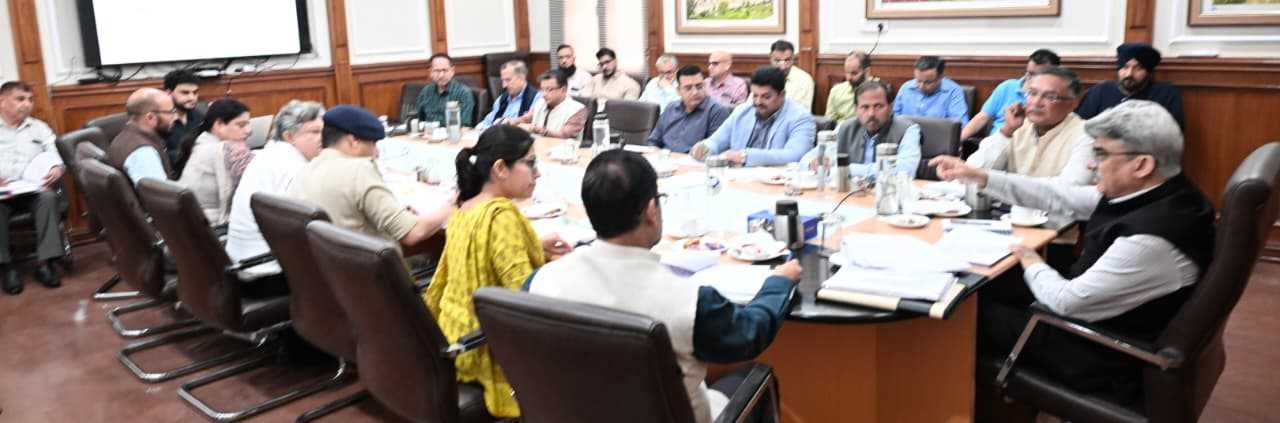
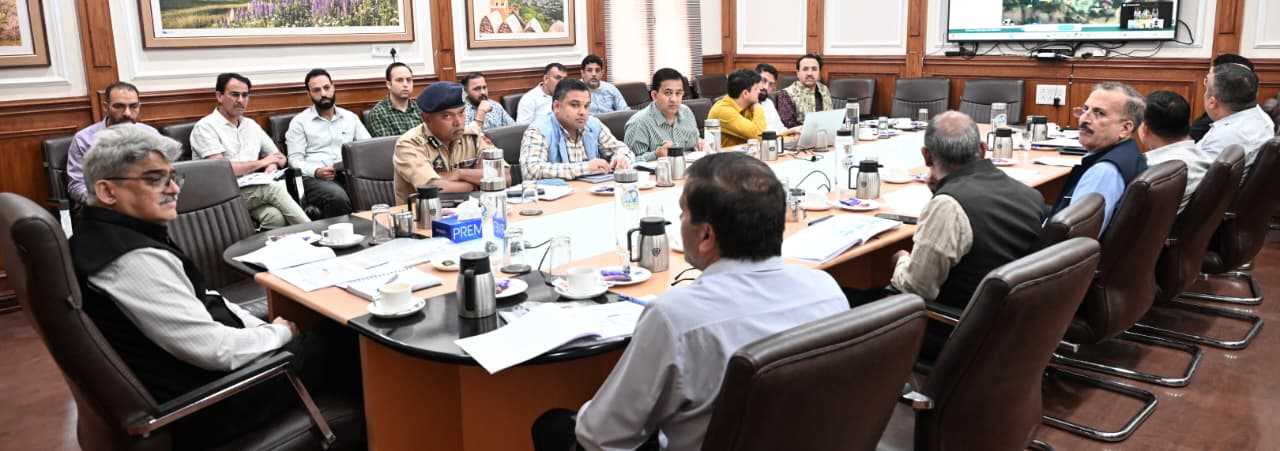
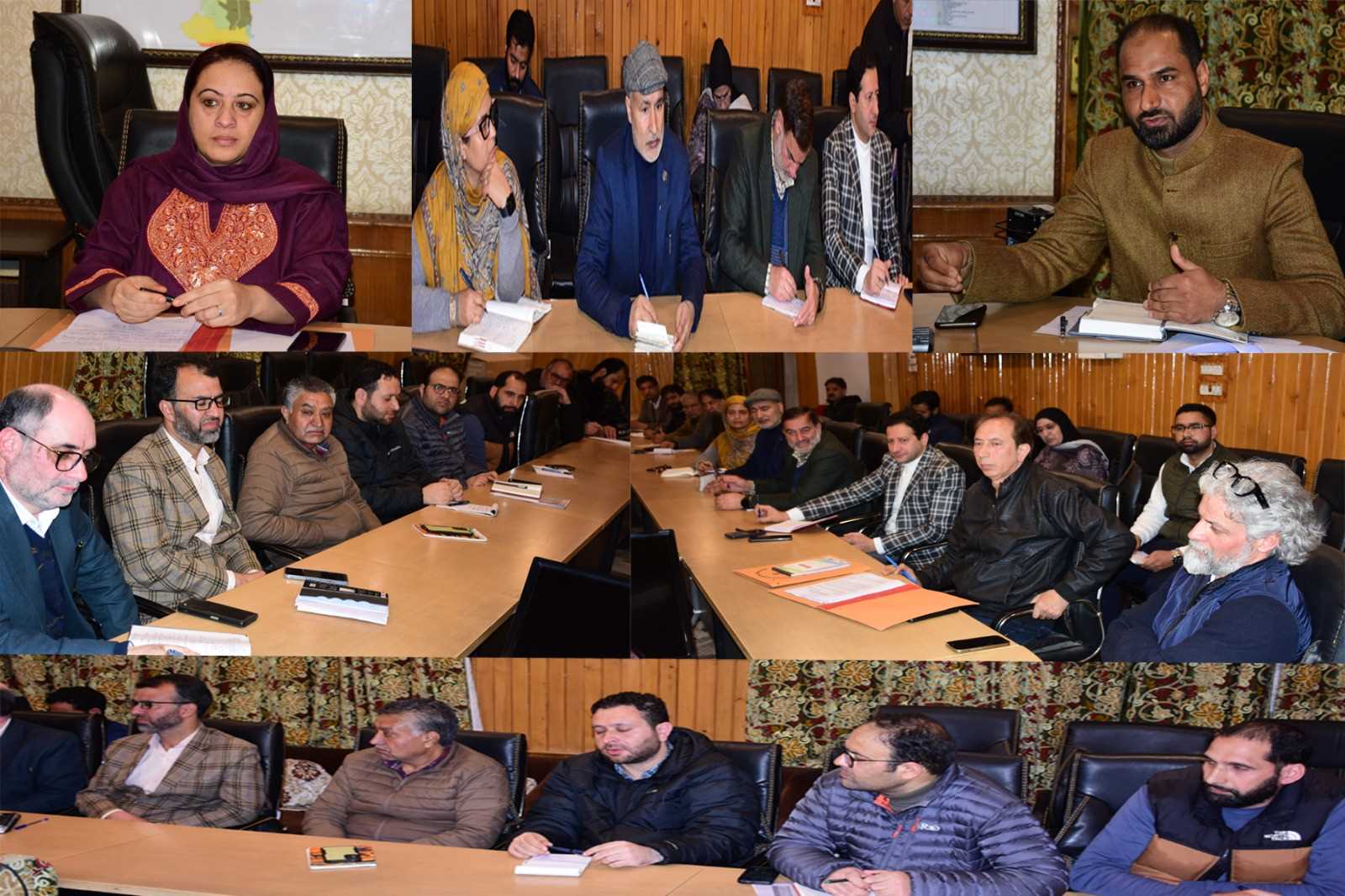
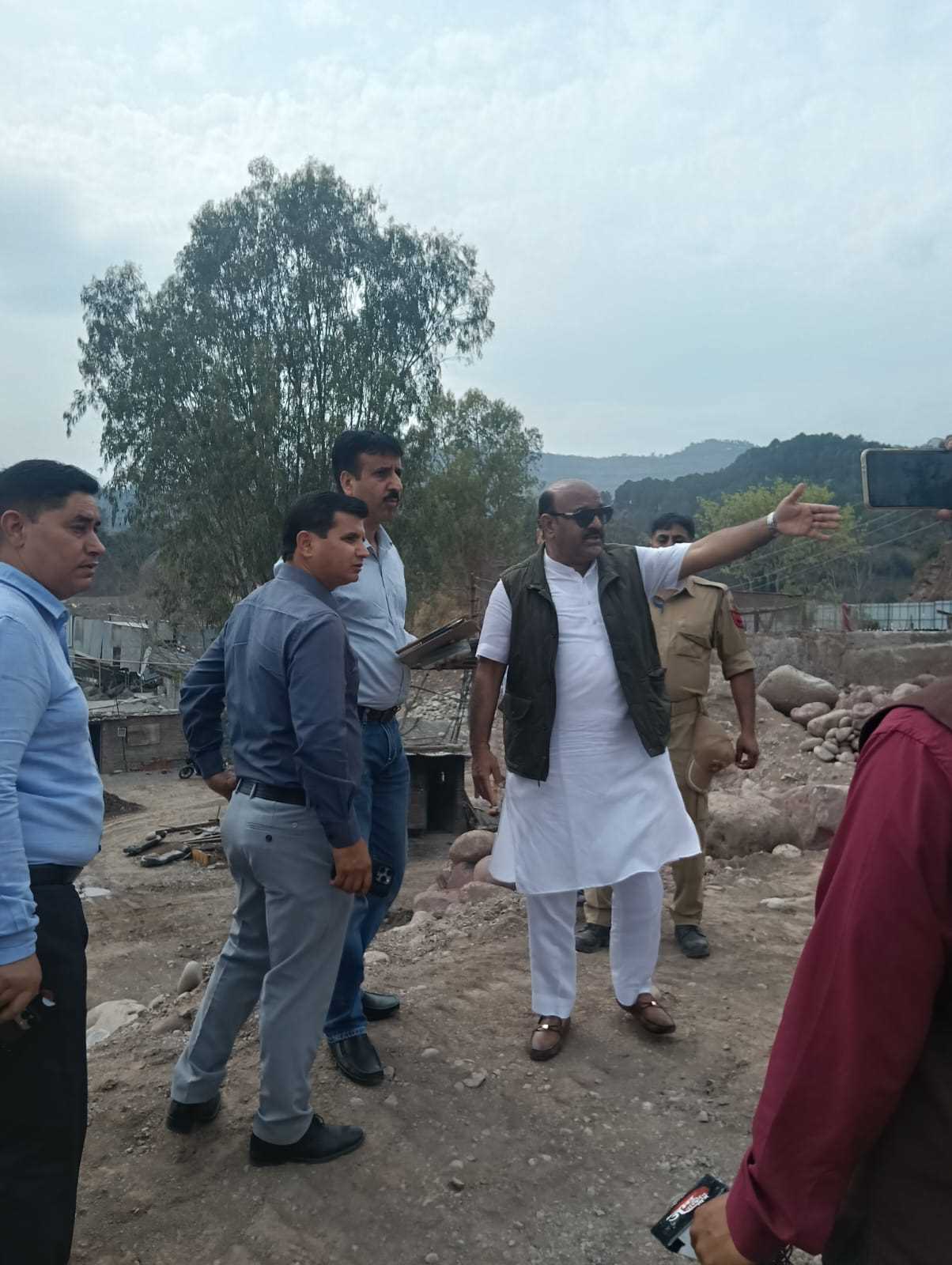
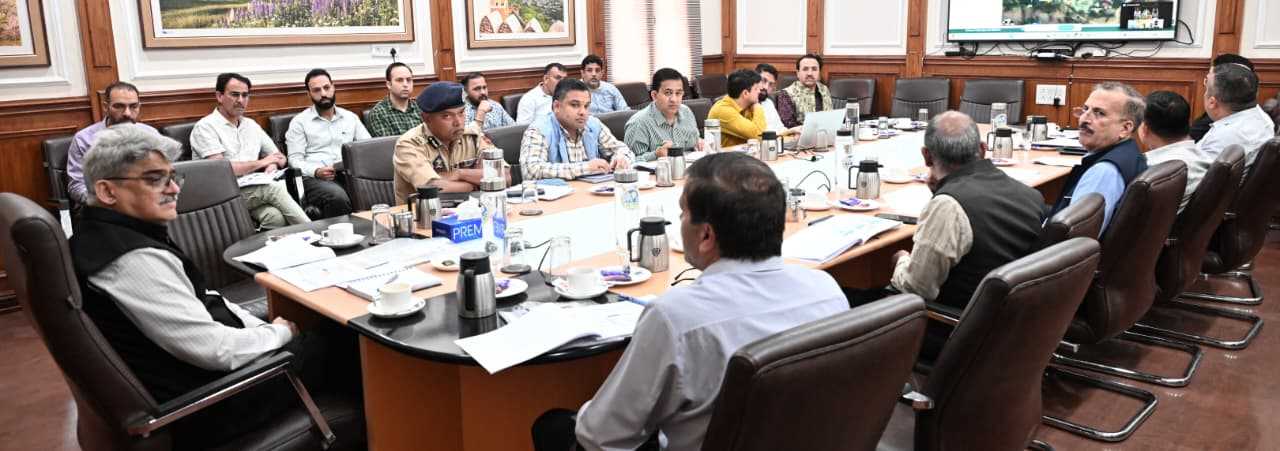
Chief Secretary, Atal Dulloo, today chaired a high-level meeting to review the ongoing reforms in the mining sector and assess measures aimed at curbing illegal mining across the Union Territory of Jammu and Kashmir.
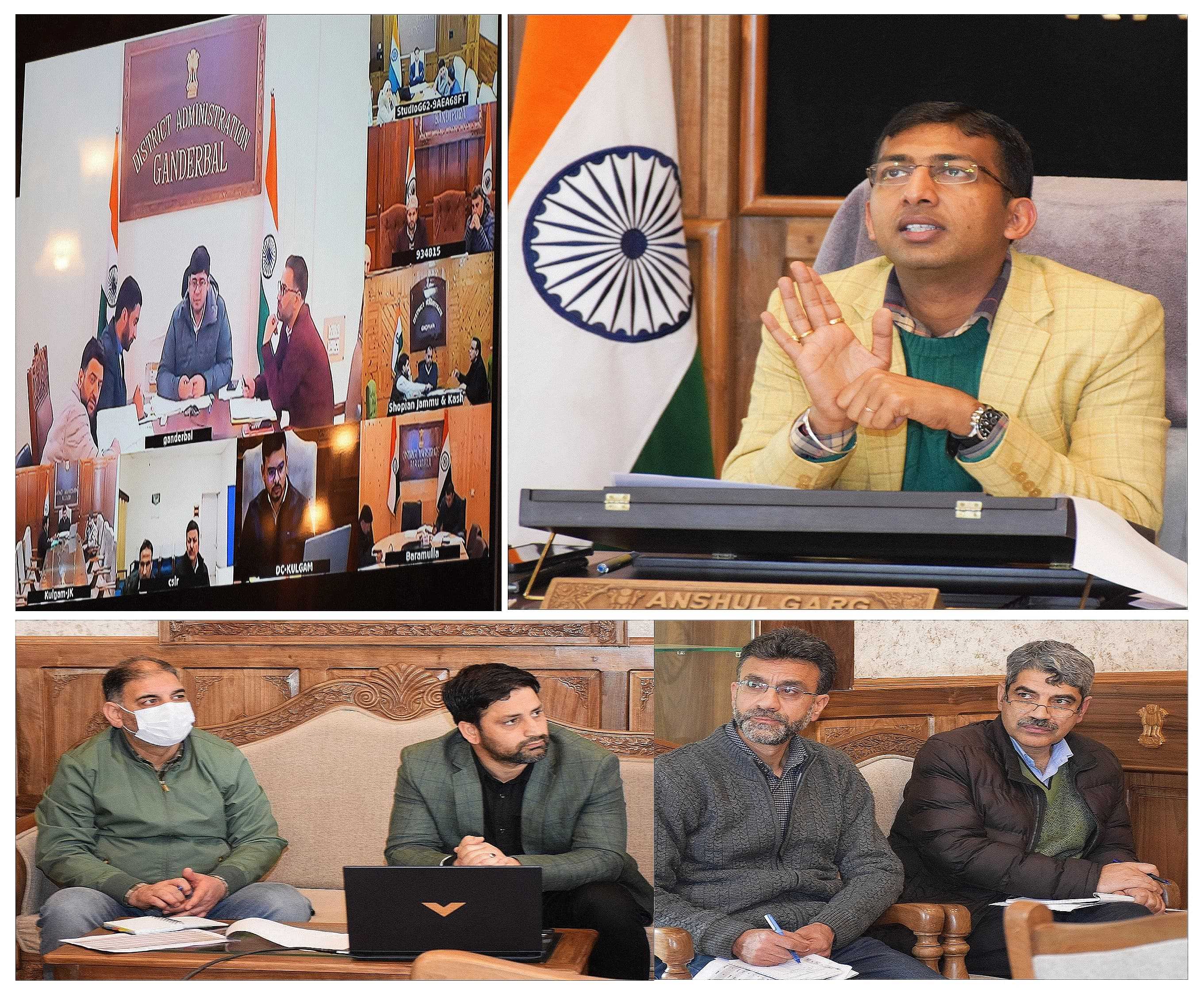
The meeting was attended by Additional Chief Secretary, Mining; Chairperson of the Jammu and Kashmir Pollution Control Committee; Divisional Commissioner, Jammu/Kashmir; Secretary, IT; IGP Jammu; Managing Director, Jammu and Kashmir Minerals Limited; Director, Geology and Mining; and other senior officers. The Divisional Commissioner Kashmir and Deputy Commissioners of various districts participated in the meeting through video conferencing.
During the meeting, the Chief Secretary reviewed the progress achieved under various mining sector reforms aimed at strengthening surveillance mechanisms, preventing illegal extraction of minerals and enhancing revenue realization from the sector.
The Chief Secretary also took a live demonstration of the Integrated Mining Surveillance System (IMSS), a digital platform designed to monitor the movement of vehicles transporting mining material across different districts of Jammu and Kashmir. While appreciating the initiative, he observed that there is still scope for further improvement in the system to ensure stricter checks against illegal mining activities.
Emphasizing the need for strengthening the technological framework, the Chief Secretary directed the department to share a clear problem statement with BISAG-N so that appropriate triggers can be developed to detect instances of illegal mining or extraction beyond permissible areas.
He also called for increasing the frequency of such automated alerts to weekly intervals, enabling the department to take timely corrective action on the ground. He further asked the department to specify a clear timeline for achieving the desired improvements in the surveillance system.
While reviewing the progress of e-auctioning of mineral blocks, the Chief Secretary underscored the importance of closely following up pending matters with the concerned Union Ministry to ensure timely completion of the auction process. He also interacted with Deputy Commissioners regarding the status of clearances for identified minor mineral blocks in their respective districts.
The Chief Secretary urged the district administrations to expedite the process of granting the necessary clearances so that the auctioning of minor mineral blocks could be completed at the earliest. He reviewed cases pending at different stages, including those awaiting Environmental Impact Assessment, approvals from the Pollution Control Committee and forest clearances from the concerned department.
Stressing the need to augment the availability of construction material and enhance revenue generation, the Chief Secretary directed the officers to examine each pending case on priority and explore possibilities of operationalizing all non-operational minor mineral blocks across the districts.
He further called for effective implementation of all reforms envisaged under the mining policy and the guidelines of the Union Ministry, reiterating that robust enforcement and surveillance mechanisms must be put in place to completely curb illegal mining in the Union Territory.
Additional Chief Secretary, Mining, Ashwani Kumar, informed the meeting that the department is actively working on upgrading the IMSS in coordination with BISAG-N. He emphasized that both enhanced surveillance and a foolproof enforcement mechanism are essential to effectively regulate the sector and prevent illegal mining.
He added that the IMSS dashboard is being integrated with the e-challan and e-market systems, which will enable generation of relevant alerts at shorter intervals and facilitate swift action by field functionaries.
Earlier, Director, Geology and Mining, S.P. Rukwal, in a detailed presentation, apprised the meeting about the current status of mining activities across Jammu and Kashmir. He informed that investigations related to minerals such as graphite, granite, sapphire, shallow gas and lithium are being carried out by the concerned agencies.
The meeting was informed that out of 235 identified minor mineral blocks in the Union Territory, 81 are currently operational. Extension of Letters of Intent (LoIs) has been issued to 10 blocks, while eight cases are pending before the competent authorities for issuance of LoIs. Mining leases in favour of four blocks are expected to be granted shortly, cumulatively projected to generate revenue of around ₹57 Cr for the UT.
Regarding the identification of new blocks, it was informed that seven minor mineral blocks have been auctioned by the Deputy Commissioner Anantnag, while 22 more are in the pipeline and 47 blocks are awaiting No Objection Certificates from different departments across the districts.
With respect to the installation of GPS tracking devices on vehicles involved in mining activities, the meeting was informed that GPS devices had been installed on 3,942 such vehicles and 3,515 of them have already been integrated with the IMSS platform by BISAG-N, while the remaining are expected to be integrated shortly.
The department also informed that enforcement measures have led to realization of a penalty amount of ₹1.10 Cr from violators of mining regulations. It was further noted that on-spot penalties are being collected using PoS machines to ensure transparency and efficiency.
Additionally, the meeting was apprised that during the first two months of 2026 alone, the mining sector has generated revenue of ₹137.27 Cr. The meeting also reviewed several measures including revision of penalties and operationalization of minor mineral leases across districts aimed at further augmenting revenue in the coming months.

Chief Secretary, Atal Dulloo, today chaired a high-level meeting to review the ongoing reforms in the mining sector and assess measures aimed at curbing illegal mining across the Union Territory of Jammu and Kashmir.
The meeting was attended by Additional Chief Secretary, Mining; Chairperson of the Jammu and Kashmir Pollution Control Committee; Divisional Commissioner, Jammu/Kashmir; Secretary, IT; IGP Jammu; Managing Director, Jammu and Kashmir Minerals Limited; Director, Geology and Mining; and other senior officers. The Divisional Commissioner Kashmir and Deputy Commissioners of various districts participated in the meeting through video conferencing.
During the meeting, the Chief Secretary reviewed the progress achieved under various mining sector reforms aimed at strengthening surveillance mechanisms, preventing illegal extraction of minerals and enhancing revenue realization from the sector.
The Chief Secretary also took a live demonstration of the Integrated Mining Surveillance System (IMSS), a digital platform designed to monitor the movement of vehicles transporting mining material across different districts of Jammu and Kashmir. While appreciating the initiative, he observed that there is still scope for further improvement in the system to ensure stricter checks against illegal mining activities.
Emphasizing the need for strengthening the technological framework, the Chief Secretary directed the department to share a clear problem statement with BISAG-N so that appropriate triggers can be developed to detect instances of illegal mining or extraction beyond permissible areas.
He also called for increasing the frequency of such automated alerts to weekly intervals, enabling the department to take timely corrective action on the ground. He further asked the department to specify a clear timeline for achieving the desired improvements in the surveillance system.
While reviewing the progress of e-auctioning of mineral blocks, the Chief Secretary underscored the importance of closely following up pending matters with the concerned Union Ministry to ensure timely completion of the auction process. He also interacted with Deputy Commissioners regarding the status of clearances for identified minor mineral blocks in their respective districts.
The Chief Secretary urged the district administrations to expedite the process of granting the necessary clearances so that the auctioning of minor mineral blocks could be completed at the earliest. He reviewed cases pending at different stages, including those awaiting Environmental Impact Assessment, approvals from the Pollution Control Committee and forest clearances from the concerned department.
Stressing the need to augment the availability of construction material and enhance revenue generation, the Chief Secretary directed the officers to examine each pending case on priority and explore possibilities of operationalizing all non-operational minor mineral blocks across the districts.
He further called for effective implementation of all reforms envisaged under the mining policy and the guidelines of the Union Ministry, reiterating that robust enforcement and surveillance mechanisms must be put in place to completely curb illegal mining in the Union Territory.
Additional Chief Secretary, Mining, Ashwani Kumar, informed the meeting that the department is actively working on upgrading the IMSS in coordination with BISAG-N. He emphasized that both enhanced surveillance and a foolproof enforcement mechanism are essential to effectively regulate the sector and prevent illegal mining.
He added that the IMSS dashboard is being integrated with the e-challan and e-market systems, which will enable generation of relevant alerts at shorter intervals and facilitate swift action by field functionaries.
Earlier, Director, Geology and Mining, S.P. Rukwal, in a detailed presentation, apprised the meeting about the current status of mining activities across Jammu and Kashmir. He informed that investigations related to minerals such as graphite, granite, sapphire, shallow gas and lithium are being carried out by the concerned agencies.
The meeting was informed that out of 235 identified minor mineral blocks in the Union Territory, 81 are currently operational. Extension of Letters of Intent (LoIs) has been issued to 10 blocks, while eight cases are pending before the competent authorities for issuance of LoIs. Mining leases in favour of four blocks are expected to be granted shortly, cumulatively projected to generate revenue of around ₹57 Cr for the UT.
Regarding the identification of new blocks, it was informed that seven minor mineral blocks have been auctioned by the Deputy Commissioner Anantnag, while 22 more are in the pipeline and 47 blocks are awaiting No Objection Certificates from different departments across the districts.
With respect to the installation of GPS tracking devices on vehicles involved in mining activities, the meeting was informed that GPS devices had been installed on 3,942 such vehicles and 3,515 of them have already been integrated with the IMSS platform by BISAG-N, while the remaining are expected to be integrated shortly.
The department also informed that enforcement measures have led to realization of a penalty amount of ₹1.10 Cr from violators of mining regulations. It was further noted that on-spot penalties are being collected using PoS machines to ensure transparency and efficiency.
Additionally, the meeting was apprised that during the first two months of 2026 alone, the mining sector has generated revenue of ₹137.27 Cr. The meeting also reviewed several measures including revision of penalties and operationalization of minor mineral leases across districts aimed at further augmenting revenue in the coming months.
© Copyright 2023 brighterkashmir.com All Rights Reserved. Quantum Technologies