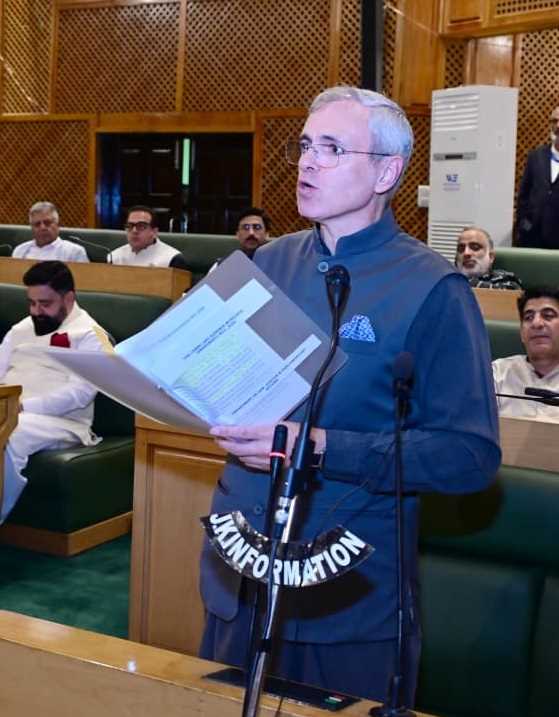
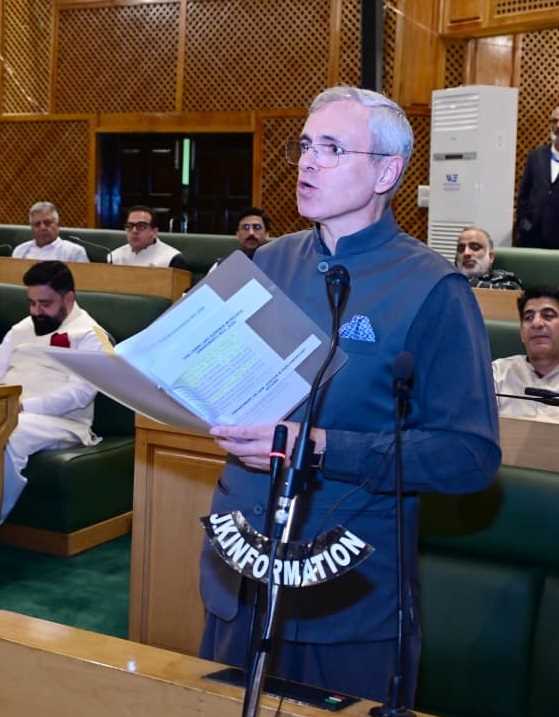
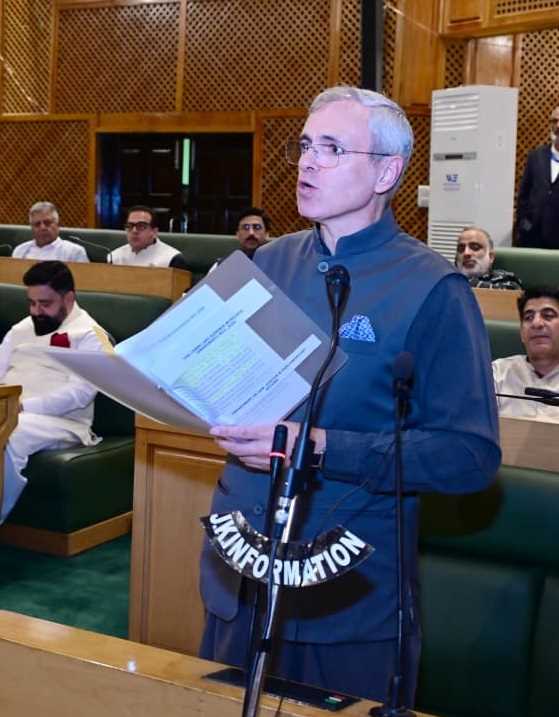
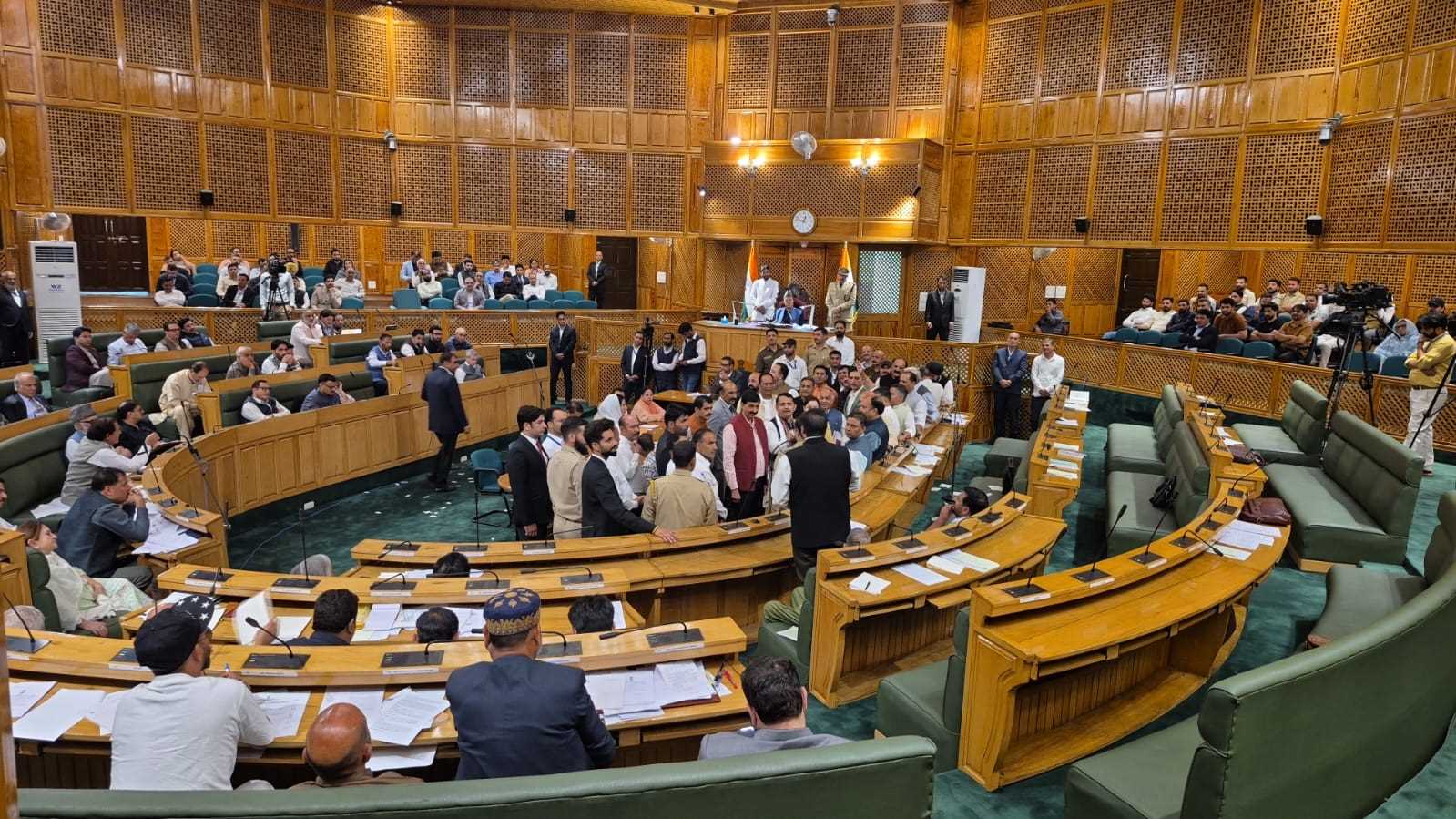
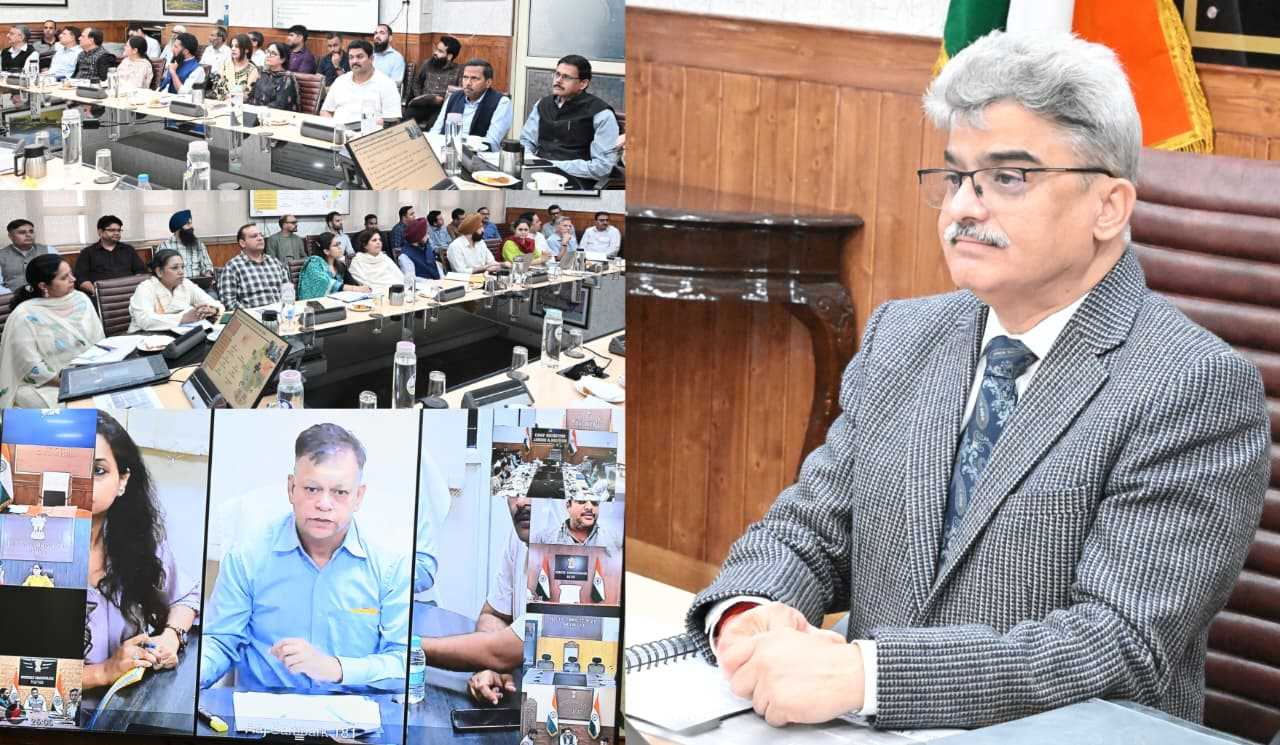
Chief Minister Omar Abdullah today chaired a meeting to review the Draft J&K Hydropower Policy 2026, calling for a focused policy framework to accelerate the harnessing of Jammu & Kashmir’s vast hydropower potential, augment power generation capacity and strengthen the overall electricity sector.
Reviewing the performance of the existing policy framework, the Chief Minister directed that the new policy should address the challenges that have constrained hydropower development and provide a clear roadmap for faster and sustainable development of the sector.
The meeting discussed the identified hydropower potential of 14,635 MW in Jammu & Kashmir, with the Chenab and Jhelum river basins accounting for 11,283 MW and 3,084 MW respectively.
It was informed that 3,540.15 MW, constituting 24.18 per cent of the identified potential, has so far been commissioned across the Central sector through NHPC, the UT sector through JKPDC and the private sector through Independent Power Producers (IPPs).
The Chief Minister emphasised that the policy should facilitate sustainable development of hydropower resources while ensuring that power sector expansion contributes to energy security, economic growth and balanced regional development.
The meeting also reviewed the experience and performance of the hydropower policies introduced in 2003 and 2011, with discussions focusing on the lessons learnt, challenges faced and the need for appropriate policy alignment to accelerate future investments and project implementation.
Detailed deliberations were also held on institutional mechanisms, including streamlining the respective roles of the Jammu & Kashmir Power Development Corporation (JKPDC) and the Jammu & Kashmir Energy Development Agency (JAKEDA).
Environmental safeguards formed an important part of the discussions, with emphasis on strict compliance with environmental requirements, including ecological flow (e-flow) and Environmental Impact Assessment/Environmental Management Plan (EIA/EMP) provisions. The Chief Minister stressed that hydropower development must also safeguard local drinking water and irrigation requirements.
The Chief Minister underscored that sustainable resource management, energy self-reliance and public welfare must remain central to the new policy, while creating an enabling framework for the responsible development of J&K’s hydropower resources.
Minister for Forest, Ecology & Environment Javed Rana, Advisor to the Chief Minister Nasir Aslam Wani, Chief Secretary Atal Dulloo, Additional Chief Secretary PDD Ashwini Kumar, Additional Chief Secretary Jal Shakti Shaleen Kabra, Additional Chief Secretary to the Chief Minister Dheeraj Gupta, Additional Chief Secretary Finance Shailendra Kumar, Managing Director J&K State Power Development Corporation Rahul Yadav and other concerned officers attended the meeting.

Chief Minister Omar Abdullah today chaired a meeting to review the Draft J&K Hydropower Policy 2026, calling for a focused policy framework to accelerate the harnessing of Jammu & Kashmir’s vast hydropower potential, augment power generation capacity and strengthen the overall electricity sector.
Reviewing the performance of the existing policy framework, the Chief Minister directed that the new policy should address the challenges that have constrained hydropower development and provide a clear roadmap for faster and sustainable development of the sector.
The meeting discussed the identified hydropower potential of 14,635 MW in Jammu & Kashmir, with the Chenab and Jhelum river basins accounting for 11,283 MW and 3,084 MW respectively.
It was informed that 3,540.15 MW, constituting 24.18 per cent of the identified potential, has so far been commissioned across the Central sector through NHPC, the UT sector through JKPDC and the private sector through Independent Power Producers (IPPs).
The Chief Minister emphasised that the policy should facilitate sustainable development of hydropower resources while ensuring that power sector expansion contributes to energy security, economic growth and balanced regional development.
The meeting also reviewed the experience and performance of the hydropower policies introduced in 2003 and 2011, with discussions focusing on the lessons learnt, challenges faced and the need for appropriate policy alignment to accelerate future investments and project implementation.
Detailed deliberations were also held on institutional mechanisms, including streamlining the respective roles of the Jammu & Kashmir Power Development Corporation (JKPDC) and the Jammu & Kashmir Energy Development Agency (JAKEDA).
Environmental safeguards formed an important part of the discussions, with emphasis on strict compliance with environmental requirements, including ecological flow (e-flow) and Environmental Impact Assessment/Environmental Management Plan (EIA/EMP) provisions. The Chief Minister stressed that hydropower development must also safeguard local drinking water and irrigation requirements.
The Chief Minister underscored that sustainable resource management, energy self-reliance and public welfare must remain central to the new policy, while creating an enabling framework for the responsible development of J&K’s hydropower resources.
Minister for Forest, Ecology & Environment Javed Rana, Advisor to the Chief Minister Nasir Aslam Wani, Chief Secretary Atal Dulloo, Additional Chief Secretary PDD Ashwini Kumar, Additional Chief Secretary Jal Shakti Shaleen Kabra, Additional Chief Secretary to the Chief Minister Dheeraj Gupta, Additional Chief Secretary Finance Shailendra Kumar, Managing Director J&K State Power Development Corporation Rahul Yadav and other concerned officers attended the meeting.
© Copyright 2023 brighterkashmir.com All Rights Reserved. Quantum Technologies