
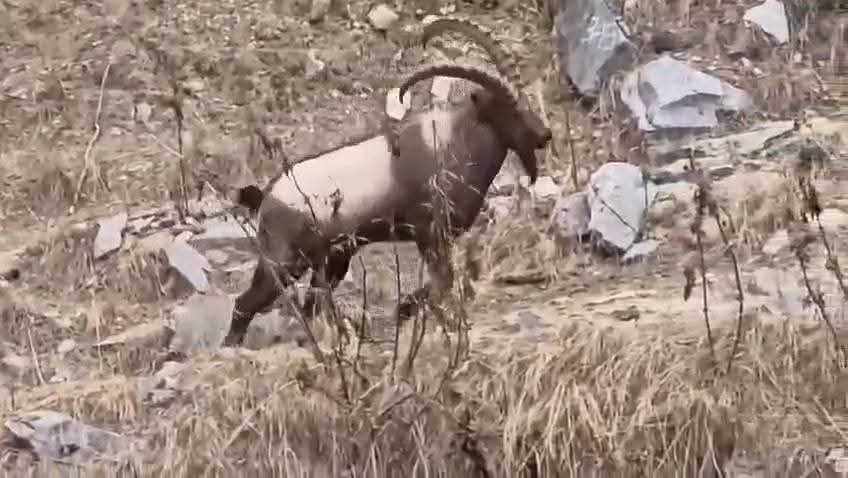
Bandipora, Dec 13:A Himalayan Ibex has been sighted in Chak Nallah of the Tulail area, a sensitive border region in the Gurez Valley of Bandipora district, drawing attention from wildlife officials, conservationists, and local residents. While the species is known to appear in groups during winter, officials said the sighting is significant due to the location and the clear visibility of the animal in North Kashmir.
The Himalayan Ibex—distinguished by its long, spiral horns and remarkable agility on steep, rocky terrain—is considered an important indicator of a healthy high-altitude ecosystem. Wildlife experts say its presence reflects improving habitat conditions and comparatively low levels of human disturbance in certain pockets of the Gurez Valley.
The rugged terrain, alpine vegetation, and limited human activity in the region provide a favourable environment for the species to survive and reproduce. Conservationists believe the sighting underscores the ecological richness of the valley and highlights the importance of continued habitat protection.
Confirming the sighting, Block Officer Wildlife Bandipora, Tanveer Ahmed Lone, said the appearance of the Himalayan Ibex in Chak Nallah was not an isolated incident. “This is not the first time the species has been seen in the area. Chak Nallah and surrounding regions have witnessed multiple sightings in the past, indicating a healthy local population,” he said.
Lone also clarified that the animal sighted was not a Markhor, as initially speculated in some quarters. “Markhor are confined to the Limber–Qazinag Wildlife Sanctuary in North Kashmir. The Himalayan Ibex, locally known as Jangli Bakri, is commonly found in the Gurez area, which offers ideal alpine and hilly terrain for the species,” he explained.
According to wildlife officials, sightings of the Himalayan Ibex at relatively lower altitudes are often linked to seasonal and climatic changes. As winter sets in and snowfall increases at higher elevations, the animals descend to lower regions in search of food, making them more visible in areas like Gurez during this time of year.
Appealing to local residents, Lone urged people not to disturb the animals or their habitat. He emphasized that the Himalayan Ibex is a protected species listed under Schedule I of the Wildlife Protection Act, and any harm, harassment, or disturbance would invite strict legal action. “These animals have descended temporarily and will return to higher altitudes on their own,” he said.
Residents of nearby villages welcomed the sighting, describing it as a source of pride and a testament to the Gurez Valley’s rich biodiversity. Some locals suggested that community involvement and carefully regulated eco-tourism could help conserve endangered species while also supporting sustainable livelihoods.
Meanwhile, officials from the Forest and Wildlife Department said the development is being closely monitored. They indicated that conservation strategies in the region may be reviewed and strengthened to ensure the long-term protection of the Himalayan Ibex and its fragile high-altitude habitat.


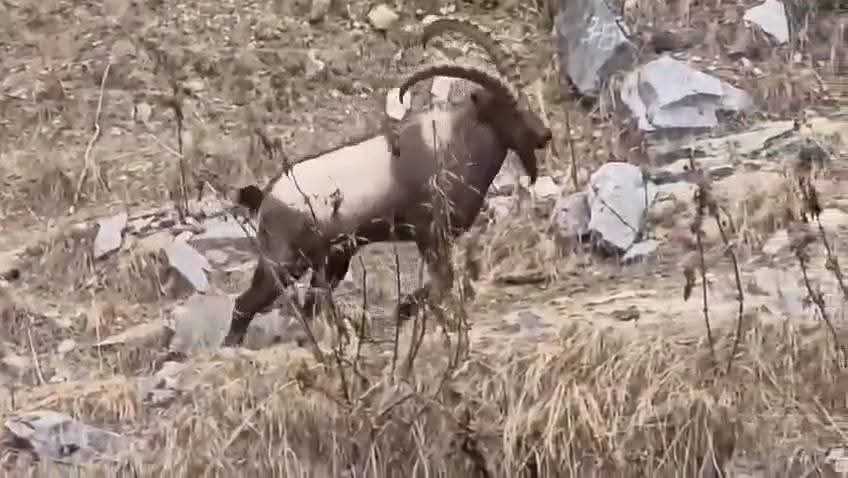
Bandipora, Dec 13:A Himalayan Ibex has been sighted in Chak Nallah of the Tulail area, a sensitive border region in the Gurez Valley of Bandipora district, drawing attention from wildlife officials, conservationists, and local residents. While the species is known to appear in groups during winter, officials said the sighting is significant due to the location and the clear visibility of the animal in North Kashmir.
The Himalayan Ibex—distinguished by its long, spiral horns and remarkable agility on steep, rocky terrain—is considered an important indicator of a healthy high-altitude ecosystem. Wildlife experts say its presence reflects improving habitat conditions and comparatively low levels of human disturbance in certain pockets of the Gurez Valley.
The rugged terrain, alpine vegetation, and limited human activity in the region provide a favourable environment for the species to survive and reproduce. Conservationists believe the sighting underscores the ecological richness of the valley and highlights the importance of continued habitat protection.
Confirming the sighting, Block Officer Wildlife Bandipora, Tanveer Ahmed Lone, said the appearance of the Himalayan Ibex in Chak Nallah was not an isolated incident. “This is not the first time the species has been seen in the area. Chak Nallah and surrounding regions have witnessed multiple sightings in the past, indicating a healthy local population,” he said.
Lone also clarified that the animal sighted was not a Markhor, as initially speculated in some quarters. “Markhor are confined to the Limber–Qazinag Wildlife Sanctuary in North Kashmir. The Himalayan Ibex, locally known as Jangli Bakri, is commonly found in the Gurez area, which offers ideal alpine and hilly terrain for the species,” he explained.
According to wildlife officials, sightings of the Himalayan Ibex at relatively lower altitudes are often linked to seasonal and climatic changes. As winter sets in and snowfall increases at higher elevations, the animals descend to lower regions in search of food, making them more visible in areas like Gurez during this time of year.
Appealing to local residents, Lone urged people not to disturb the animals or their habitat. He emphasized that the Himalayan Ibex is a protected species listed under Schedule I of the Wildlife Protection Act, and any harm, harassment, or disturbance would invite strict legal action. “These animals have descended temporarily and will return to higher altitudes on their own,” he said.
Residents of nearby villages welcomed the sighting, describing it as a source of pride and a testament to the Gurez Valley’s rich biodiversity. Some locals suggested that community involvement and carefully regulated eco-tourism could help conserve endangered species while also supporting sustainable livelihoods.
Meanwhile, officials from the Forest and Wildlife Department said the development is being closely monitored. They indicated that conservation strategies in the region may be reviewed and strengthened to ensure the long-term protection of the Himalayan Ibex and its fragile high-altitude habitat.

© Copyright 2023 brighterkashmir.com All Rights Reserved. Quantum Technologies