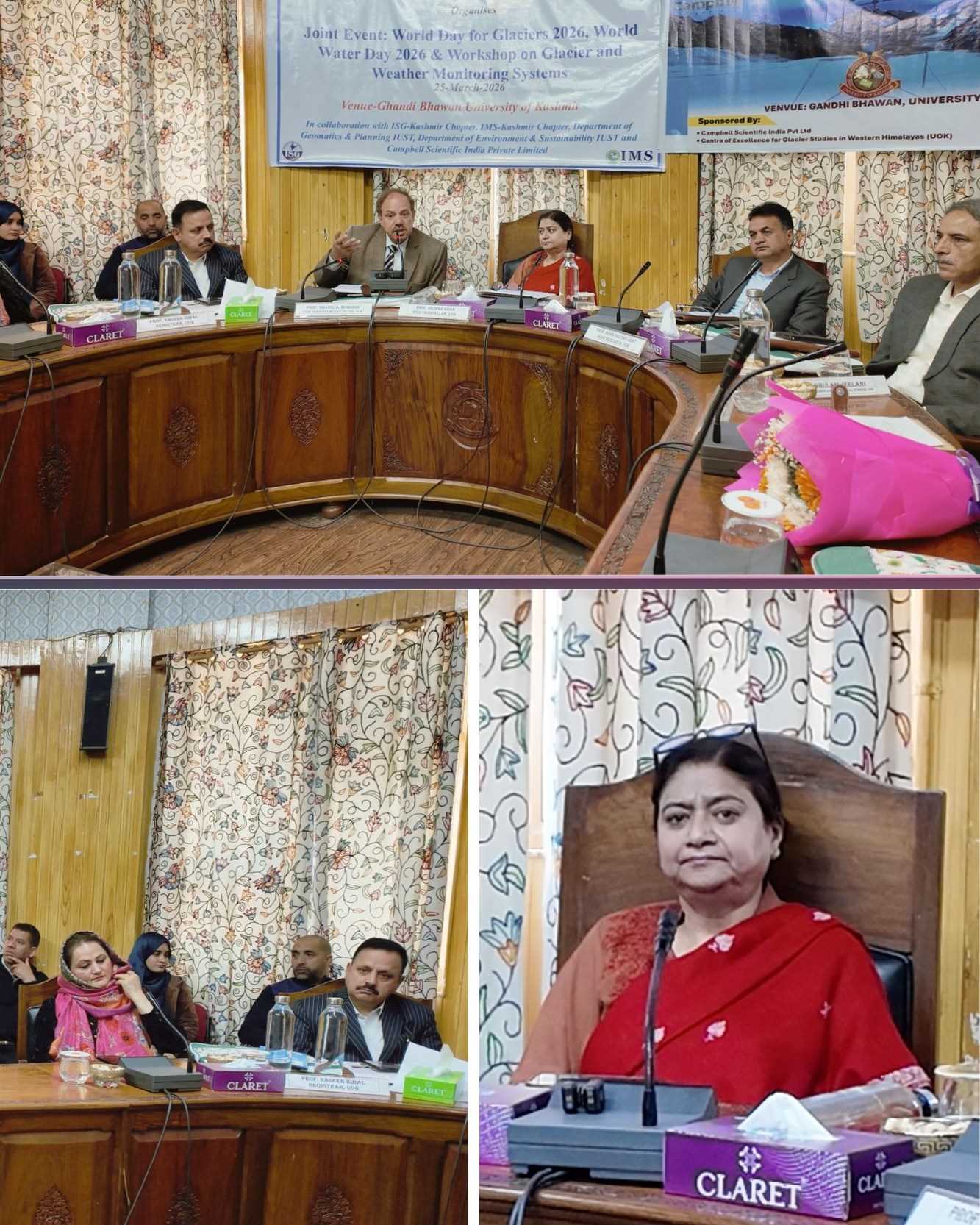
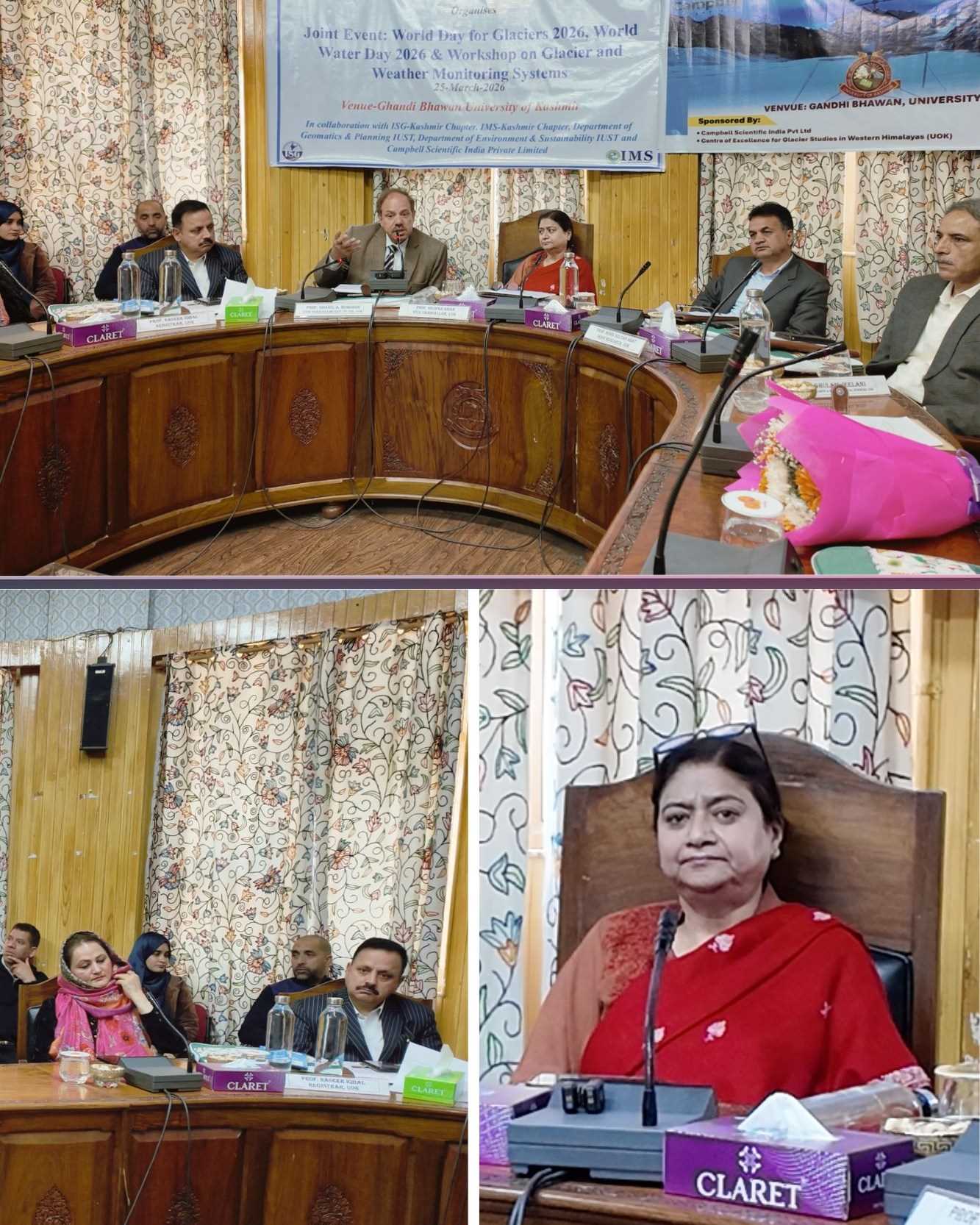
Srinagar Mar 27: The Centre of Excellence for Glacial Studies in the Western Himalaya, University of Kashmir (KU), organised a one-day conference to mark World Day for Glaciers 2026 and World Water Day 2026, along with a workshop on glacier and weather monitoring systems at the Main Campus.
Organised under the RUSA programme, in collaboration with the Department of Geoinformatics KU, Islamic University of Science and Technology (IUST), Indian Society of Geomatics (Kashmir Chapter), Indian Meteorological Society (Srinagar Chapter) and Campbell Scientific India Pvt. Ltd., the event focused on glacier dynamics, water security and climate-related challenges in the Himalayan region.
Speaking on the occasion, Vice-Chancellor KU, Prof. Nilofer Khan, emphasised the need for interdisciplinary research in addressing emerging water challenges. “Understanding glacier systems and their response to climate variability is essential for informed decision-making on water resources. Collaborative research and sustained monitoring are key to addressing these concerns,” she said.
Vice-Chancellor, IUST, Prof. Shakil Ahmad Romshoo, who is also the Principal Investigator of National Himalayan Cryospheric Research Lab KU, in his keynote address, highlighted the role of glaciers in sustaining regional water security and discussed the challenges associated with glacier mass balance, melt dynamics and cryosphere processes.
Advisor/Scientist ‘G’, Department of Science and Technology (GoI), Dr. Nisha Mendiratta, underscored the urgency of addressing global warming and stressed the need for strengthening glacier monitoring systems and advancing cryosphere research initiatives in the country.
Dean Research KU, Prof. Mohammad Sultan Bhat, and Registrar KU, Prof. Naseer Iqbal, in their remarks, highlighted the importance of such initiatives in enhancing scientific understanding of glacier–climate interactions and their implications for long-term water resource management in the region. Anuj Sharma, Managing Director, Campbell Scientific India, highlighted the importance of advanced glacier and weather monitoring technologies in generating reliable data for hydro-meteorological
processes.
Earlier, in his welcome address, Dr. Khalid Omar Murtaza, Co-Principal Investigator of the Centre, outlined the objectives of the conference and the need for continued research and collaboration in glaciology and related fields.
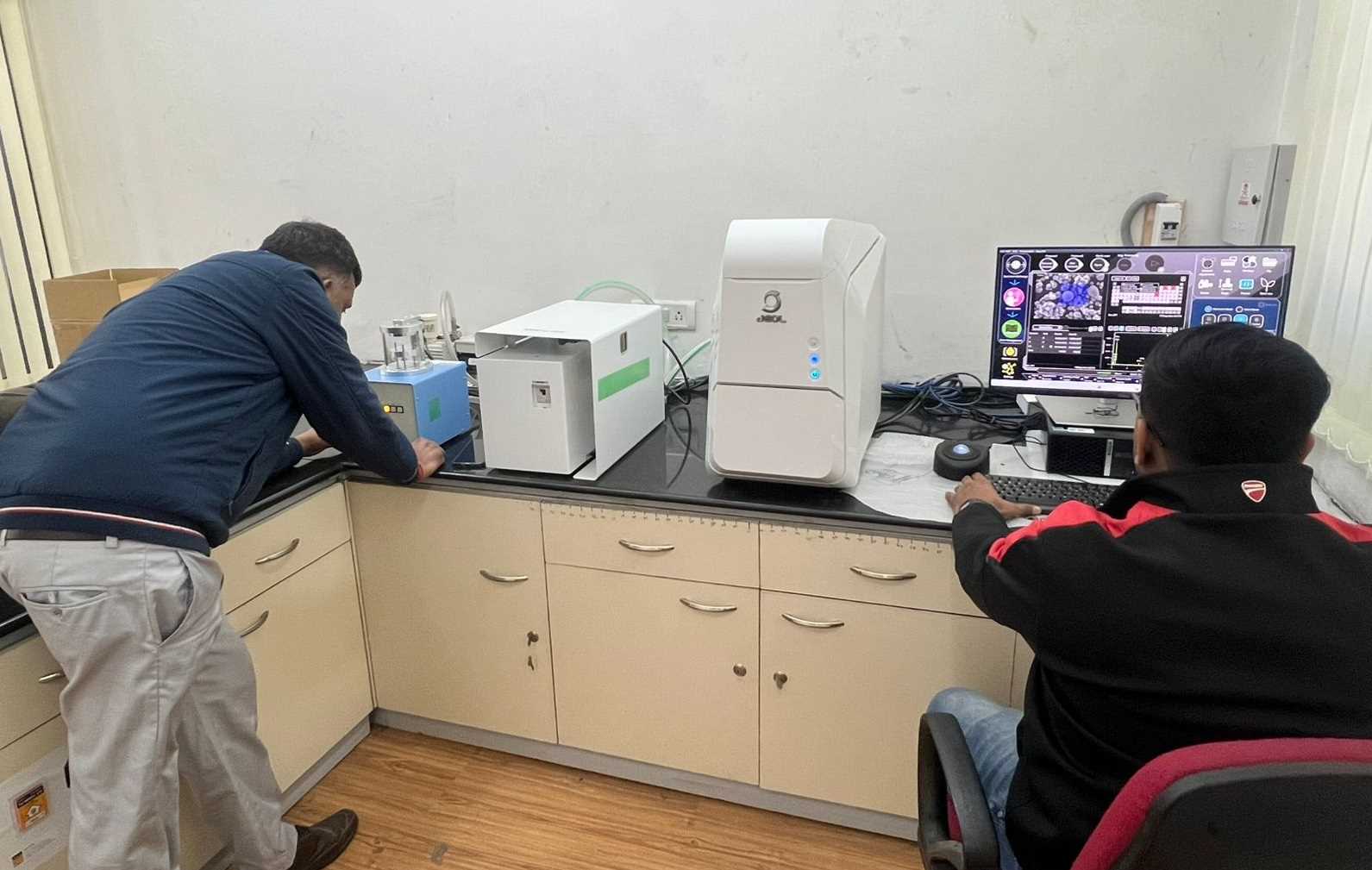
The conference featured technical sessions, including demonstrations and hands-on exposure to glacier and weather monitoring systems. Experts also deliberated on issues related to climate change, hydro-meteorological processes and technological interventions for data generation.
The event was attended by Deans, Heads of Departments, faculty members, researchers, technical experts from government agencies and students from KU and IUST.
The programme concluded with a vote of thanks delivered by Dr. Sarah Qazi, Co-Principal Investigator, Centre of Excellence for Glacial Studies KU.

Srinagar Mar 27: The Centre of Excellence for Glacial Studies in the Western Himalaya, University of Kashmir (KU), organised a one-day conference to mark World Day for Glaciers 2026 and World Water Day 2026, along with a workshop on glacier and weather monitoring systems at the Main Campus.
Organised under the RUSA programme, in collaboration with the Department of Geoinformatics KU, Islamic University of Science and Technology (IUST), Indian Society of Geomatics (Kashmir Chapter), Indian Meteorological Society (Srinagar Chapter) and Campbell Scientific India Pvt. Ltd., the event focused on glacier dynamics, water security and climate-related challenges in the Himalayan region.
Speaking on the occasion, Vice-Chancellor KU, Prof. Nilofer Khan, emphasised the need for interdisciplinary research in addressing emerging water challenges. “Understanding glacier systems and their response to climate variability is essential for informed decision-making on water resources. Collaborative research and sustained monitoring are key to addressing these concerns,” she said.
Vice-Chancellor, IUST, Prof. Shakil Ahmad Romshoo, who is also the Principal Investigator of National Himalayan Cryospheric Research Lab KU, in his keynote address, highlighted the role of glaciers in sustaining regional water security and discussed the challenges associated with glacier mass balance, melt dynamics and cryosphere processes.
Advisor/Scientist ‘G’, Department of Science and Technology (GoI), Dr. Nisha Mendiratta, underscored the urgency of addressing global warming and stressed the need for strengthening glacier monitoring systems and advancing cryosphere research initiatives in the country.
Dean Research KU, Prof. Mohammad Sultan Bhat, and Registrar KU, Prof. Naseer Iqbal, in their remarks, highlighted the importance of such initiatives in enhancing scientific understanding of glacier–climate interactions and their implications for long-term water resource management in the region. Anuj Sharma, Managing Director, Campbell Scientific India, highlighted the importance of advanced glacier and weather monitoring technologies in generating reliable data for hydro-meteorological
processes.
Earlier, in his welcome address, Dr. Khalid Omar Murtaza, Co-Principal Investigator of the Centre, outlined the objectives of the conference and the need for continued research and collaboration in glaciology and related fields.
The conference featured technical sessions, including demonstrations and hands-on exposure to glacier and weather monitoring systems. Experts also deliberated on issues related to climate change, hydro-meteorological processes and technological interventions for data generation.
The event was attended by Deans, Heads of Departments, faculty members, researchers, technical experts from government agencies and students from KU and IUST.
The programme concluded with a vote of thanks delivered by Dr. Sarah Qazi, Co-Principal Investigator, Centre of Excellence for Glacial Studies KU.
© Copyright 2023 brighterkashmir.com All Rights Reserved. Quantum Technologies