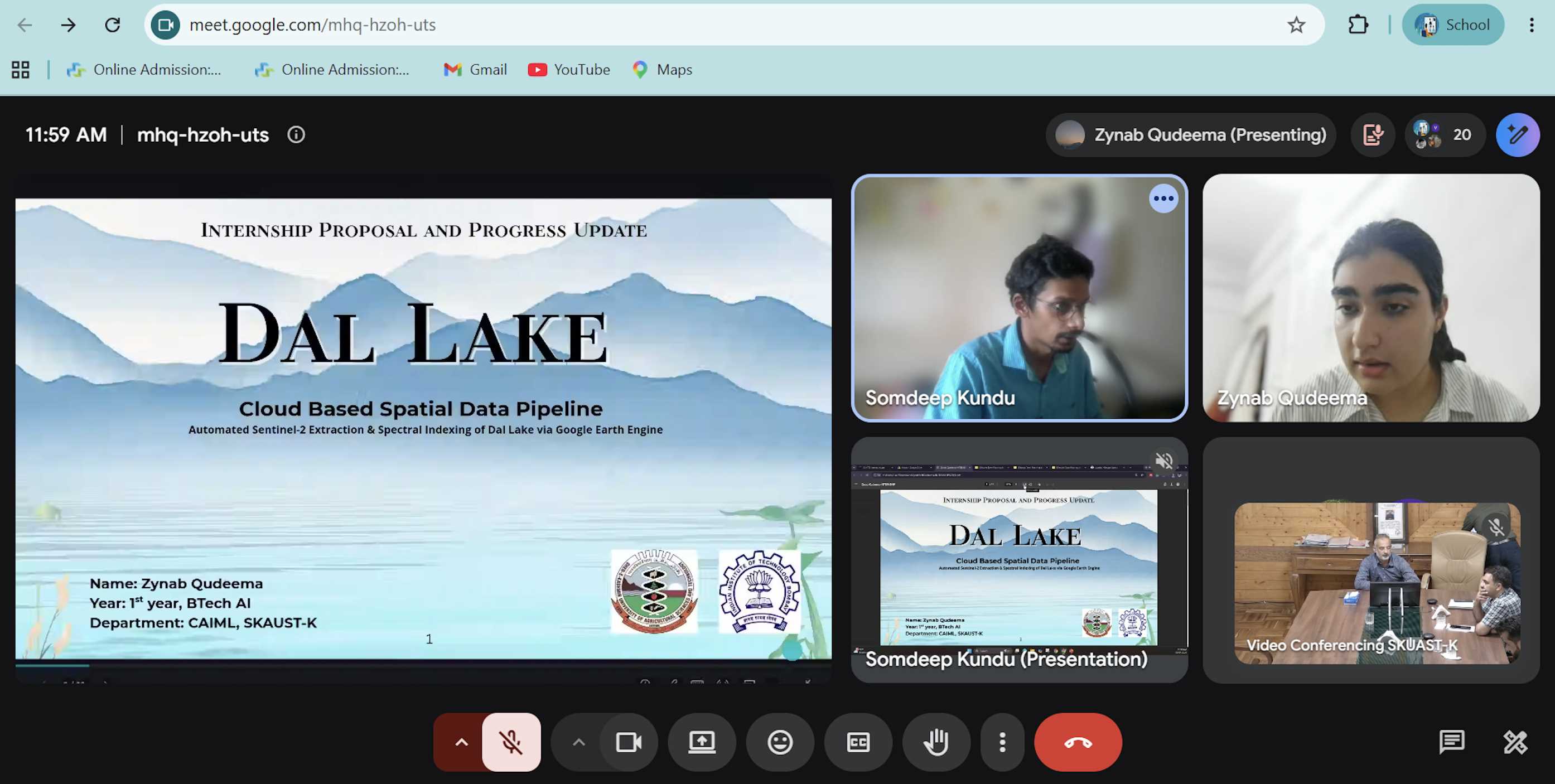
Sher-e-Kashmir University of Agricultural Sciences and Technology of Kashmir (SKUAST-K) on Wednesday reviewed the progress of its first batch of students undergoing a one-month internship at IIT Bombay under the Center of Excellence for Rural Data Research & Analysis (RuDRA), an initiative supported through HADP-19 and HADP-20.
The program is designed to equip students with advanced technological skills, research exposure, and interdisciplinary learning at one of India's premier institutions, enabling them to develop innovative, data-driven solutions for agriculture and rural development in Jammu & Kashmir.
The review was chaired by Vice-Chancellor Prof. Nazir Ahmad Ganai in the presence of Prof. Masood Saleem Mir, Principal Investigator, HADP-20; Prof. Shabir Ahmad Bangroo, Principal Investigator, HADP-19; Prof. Irfan Ahmad Bisati, Co-Principal Investigator, HADP-20; and IIT Bombay faculty members Dr. Pennan Chinnasamy; Dr. Mohammad Kasim; and Dr. Somdeep Kundu.
The internship is a key outcome of the Memorandum of Understanding signed between SKUAST-K and IIT Bombay to strengthen collaboration in sustainable agriculture, environmental management, and rural development. As part of the partnership, SKUAST-K has established the Center of Excellence for Rural Data Research & Analysis (RuDRA), in collaboration with IIT Bombay's RuDRA Lab, to advance decision-support systems for rural development and to promote joint research, curriculum development, knowledge transfer, faculty and student exchange, and internship programs.
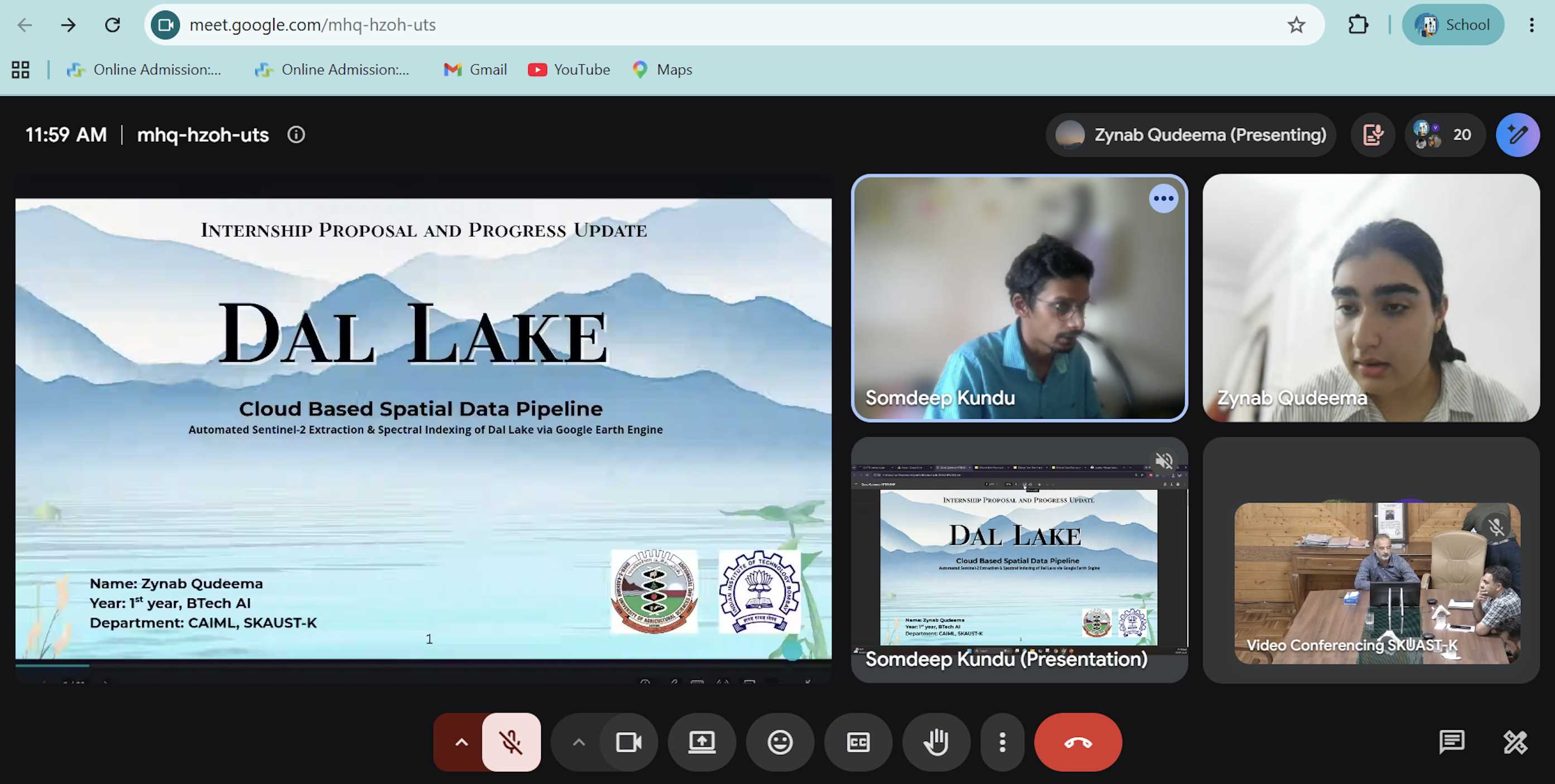
The inaugural cohort comprises 14 students from different faculties and academic programs, making it the university's first interdisciplinary batch under the initiative. During the review, the students presented the progress of their projects at IIT Bombay, highlighting work on geospatial technologies, data analytics, digital agriculture and AI-enabled decision-support systems for agriculture and rural planning.
Addressing the interns, Prof. Nazir Ahmad Ganai urged them to maximize the opportunity by acquiring cutting-edge technological expertise that can be adapted to address the evolving needs of farmers and rural communities in Jammu & Kashmir.
The internship program is expected to build a pool of skilled professionals capable of translating advanced technologies into practical solutions for sustainable agriculture, rural livelihoods, and evidence-based rural governance in Jammu & Kashmir.

Sher-e-Kashmir University of Agricultural Sciences and Technology of Kashmir (SKUAST-K) on Wednesday reviewed the progress of its first batch of students undergoing a one-month internship at IIT Bombay under the Center of Excellence for Rural Data Research & Analysis (RuDRA), an initiative supported through HADP-19 and HADP-20.
The program is designed to equip students with advanced technological skills, research exposure, and interdisciplinary learning at one of India's premier institutions, enabling them to develop innovative, data-driven solutions for agriculture and rural development in Jammu & Kashmir.
The review was chaired by Vice-Chancellor Prof. Nazir Ahmad Ganai in the presence of Prof. Masood Saleem Mir, Principal Investigator, HADP-20; Prof. Shabir Ahmad Bangroo, Principal Investigator, HADP-19; Prof. Irfan Ahmad Bisati, Co-Principal Investigator, HADP-20; and IIT Bombay faculty members Dr. Pennan Chinnasamy; Dr. Mohammad Kasim; and Dr. Somdeep Kundu.
The internship is a key outcome of the Memorandum of Understanding signed between SKUAST-K and IIT Bombay to strengthen collaboration in sustainable agriculture, environmental management, and rural development. As part of the partnership, SKUAST-K has established the Center of Excellence for Rural Data Research & Analysis (RuDRA), in collaboration with IIT Bombay's RuDRA Lab, to advance decision-support systems for rural development and to promote joint research, curriculum development, knowledge transfer, faculty and student exchange, and internship programs.
The inaugural cohort comprises 14 students from different faculties and academic programs, making it the university's first interdisciplinary batch under the initiative. During the review, the students presented the progress of their projects at IIT Bombay, highlighting work on geospatial technologies, data analytics, digital agriculture and AI-enabled decision-support systems for agriculture and rural planning.
Addressing the interns, Prof. Nazir Ahmad Ganai urged them to maximize the opportunity by acquiring cutting-edge technological expertise that can be adapted to address the evolving needs of farmers and rural communities in Jammu & Kashmir.
The internship program is expected to build a pool of skilled professionals capable of translating advanced technologies into practical solutions for sustainable agriculture, rural livelihoods, and evidence-based rural governance in Jammu & Kashmir.
© Copyright 2023 brighterkashmir.com All Rights Reserved. Quantum Technologies