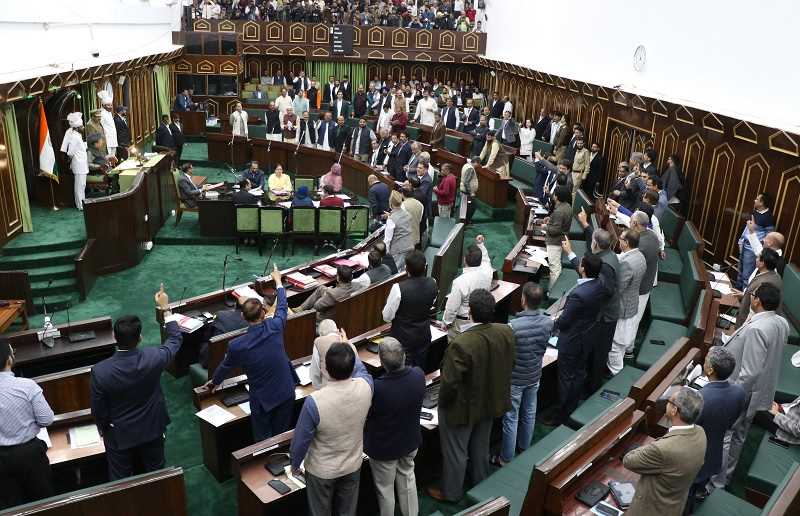
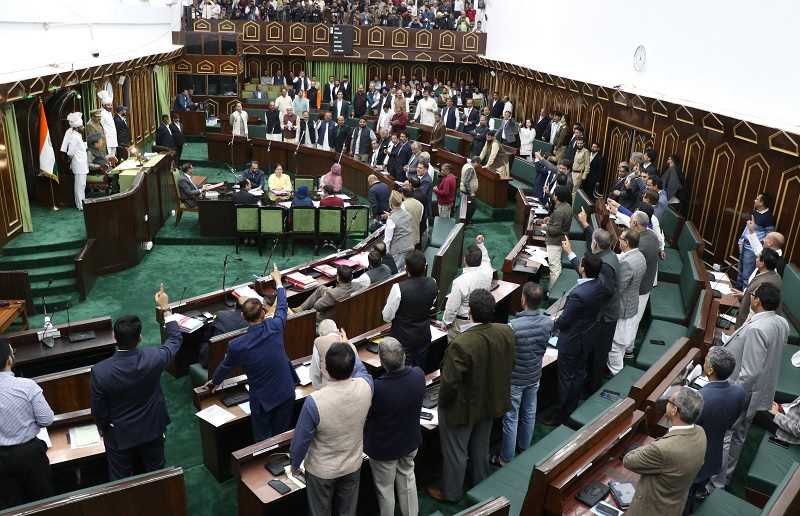
New Delhi, November 15: The Centre is likely to convene the Winter Session of Parliament during the first week of December, with the proposed implementation of women's reservation emerging as a major legislative priority.
The government is reportedly considering introducing a constitutional amendment to facilitate 33 per cent reservation for women in the Lok Sabha and state legislative assemblies. The proposed move is linked to the delimitation process, which could substantially increase the strength of the Lok Sabha from its present 543 seats to a maximum of 850.
The legislation is expected to be an important part of the government's preparations ahead of the 2029 general elections. However, securing the necessary parliamentary numbers could prove challenging, as a constitutional amendment requires the support of at least two-thirds of members present and voting.
The ruling National Democratic Alliance (NDA) is expected to seek support beyond its existing allies to meet the constitutional requirement. The proposed legislation could therefore lead to negotiations with opposition parties and other political groups.
The upcoming session is also likely to witness heated discussions over the Special Intensive Revision (SIR) of electoral rolls. Opposition parties have raised objections to the exercise and have questioned the functioning of the Election Commission. Demands concerning Chief Election Commissioner Gyanesh Kumar are also expected to figure in parliamentary debates.
The possibility of disruptions remains a concern, particularly as the government seeks to secure parliamentary approval for important legislative proposals. The smooth functioning of both Houses will be crucial for taking up the constitutional amendment and other pending business.
Another significant issue under consideration is the proposed expansion of Lok Sabha seats through delimitation. The exercise has generated concerns among southern states, which fear that changes in parliamentary representation could affect their relative political strength.
Among the proposals being discussed is an arrangement that would increase the total number of Lok Sabha seats while maintaining the existing proportional representation of states based on the 1971 Census. The proposal is intended to address concerns surrounding the redistribution of parliamentary seats, although a final framework is yet to be announced.
The government is also expected to face questions over the earlier attempt to advance the women's reservation-related constitutional changes, which failed to secure the required parliamentary backing during the special sitting in April.
With women's representation, delimitation and electoral reforms likely to dominate proceedings, the Winter Session could become a significant political test for the ruling alliance as it seeks to build consensus on major constitutional and legislative matters.

New Delhi, November 15: The Centre is likely to convene the Winter Session of Parliament during the first week of December, with the proposed implementation of women's reservation emerging as a major legislative priority.
The government is reportedly considering introducing a constitutional amendment to facilitate 33 per cent reservation for women in the Lok Sabha and state legislative assemblies. The proposed move is linked to the delimitation process, which could substantially increase the strength of the Lok Sabha from its present 543 seats to a maximum of 850.
The legislation is expected to be an important part of the government's preparations ahead of the 2029 general elections. However, securing the necessary parliamentary numbers could prove challenging, as a constitutional amendment requires the support of at least two-thirds of members present and voting.
The ruling National Democratic Alliance (NDA) is expected to seek support beyond its existing allies to meet the constitutional requirement. The proposed legislation could therefore lead to negotiations with opposition parties and other political groups.
The upcoming session is also likely to witness heated discussions over the Special Intensive Revision (SIR) of electoral rolls. Opposition parties have raised objections to the exercise and have questioned the functioning of the Election Commission. Demands concerning Chief Election Commissioner Gyanesh Kumar are also expected to figure in parliamentary debates.
The possibility of disruptions remains a concern, particularly as the government seeks to secure parliamentary approval for important legislative proposals. The smooth functioning of both Houses will be crucial for taking up the constitutional amendment and other pending business.
Another significant issue under consideration is the proposed expansion of Lok Sabha seats through delimitation. The exercise has generated concerns among southern states, which fear that changes in parliamentary representation could affect their relative political strength.
Among the proposals being discussed is an arrangement that would increase the total number of Lok Sabha seats while maintaining the existing proportional representation of states based on the 1971 Census. The proposal is intended to address concerns surrounding the redistribution of parliamentary seats, although a final framework is yet to be announced.
The government is also expected to face questions over the earlier attempt to advance the women's reservation-related constitutional changes, which failed to secure the required parliamentary backing during the special sitting in April.
With women's representation, delimitation and electoral reforms likely to dominate proceedings, the Winter Session could become a significant political test for the ruling alliance as it seeks to build consensus on major constitutional and legislative matters.
© Copyright 2023 brighterkashmir.com All Rights Reserved. Quantum Technologies