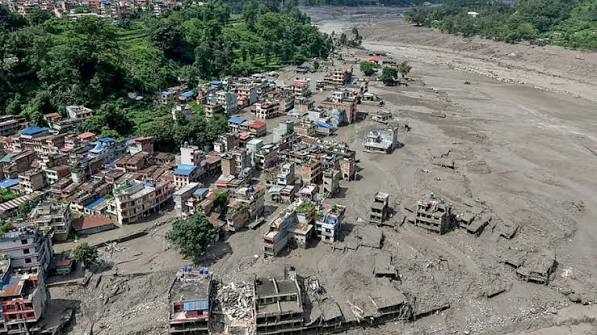
The devastating flash floods that struck Nepal’s Himalayan frontier have delivered a chilling message: the mountains are changing, and the danger is no longer confined to distant glaciers. What was initially mistaken for an earthquake was, according to emerging scientific evidence, triggered by a massive glacial collapse that unleashed an avalanche of ice, rock and debris into downstream river valleys. The distinction matters. An earthquake is a sudden geological event; a collapsing glacier in a warming Himalaya points towards a hazard that can be monitored, anticipated and, to some extent, managed. The disaster shows how rapidly conditions at high altitude can translate into catastrophe hundreds of kilometres downstream. The collapse near Langtang Lirung sent an enormous mass of ice and rock into the river system, producing a violent flash flood and devastating communities and infrastructure. The resulting surge reportedly raised river levels dramatically within minutes, leaving little time for those downstream to react. The Himalayas are already warming rapidly. Scientists warn that rising temperatures are accelerating glacier retreat and weakening frozen ground and mountain slopes. Such instability can increase the likelihood of landslides, ice-rock avalanches and glacial lake outburst floods. But climate change should not become an excuse for inadequate preparedness. The real tragedy is when a known natural hazard becomes a human catastrophe because warnings do not reach communities in time, vulnerable settlements remain exposed and infrastructure is built without fully accounting for changing mountain risks. Nepal and other Himalayan nations urgently need stronger early-warning systems, continuous satellite and ground-based glacier monitoring, hazard mapping and evacuation plans for downstream communities. Cross-border cooperation is equally essential because glaciers, rivers and disaster risks do not respect political boundaries. The lesson extends far beyond Nepal. From Kashmir and Himachal Pradesh to Uttarakhand, Sikkim, Bhutan and Arunachal Pradesh, millions live below unstable mountains and glacier-fed rivers. A warming Himalaya demands a new disaster-management strategy—one that treats glaciers as dynamic and potentially dangerous systems rather than permanent features of the landscape. The Nepal tragedy should therefore be a warning, not merely a headline. The mountains are sending signals. Ignoring them could make the next disaster even deadlier.

© Copyright 2023 brighterkashmir.com All Rights Reserved. Quantum Technologies