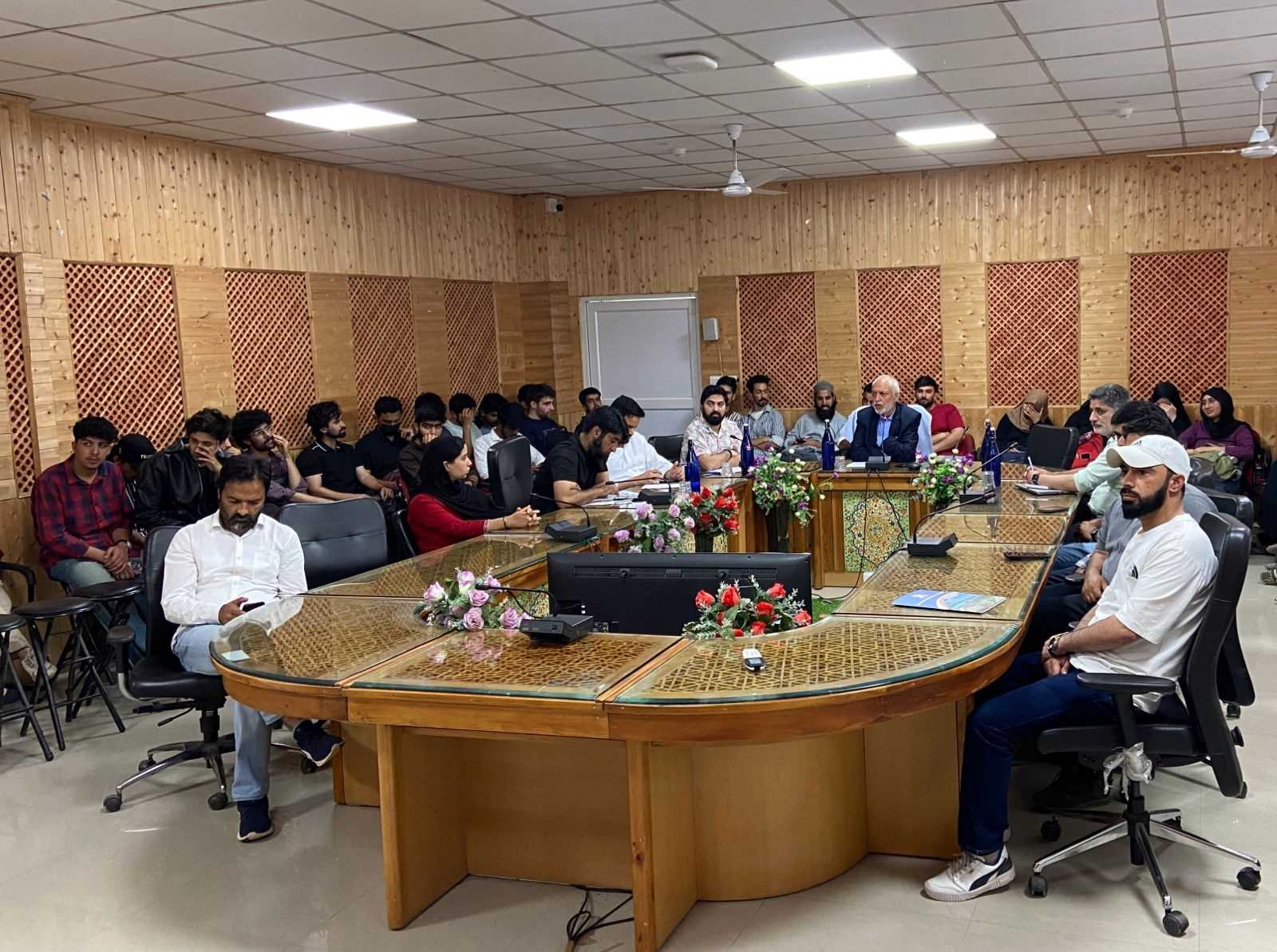
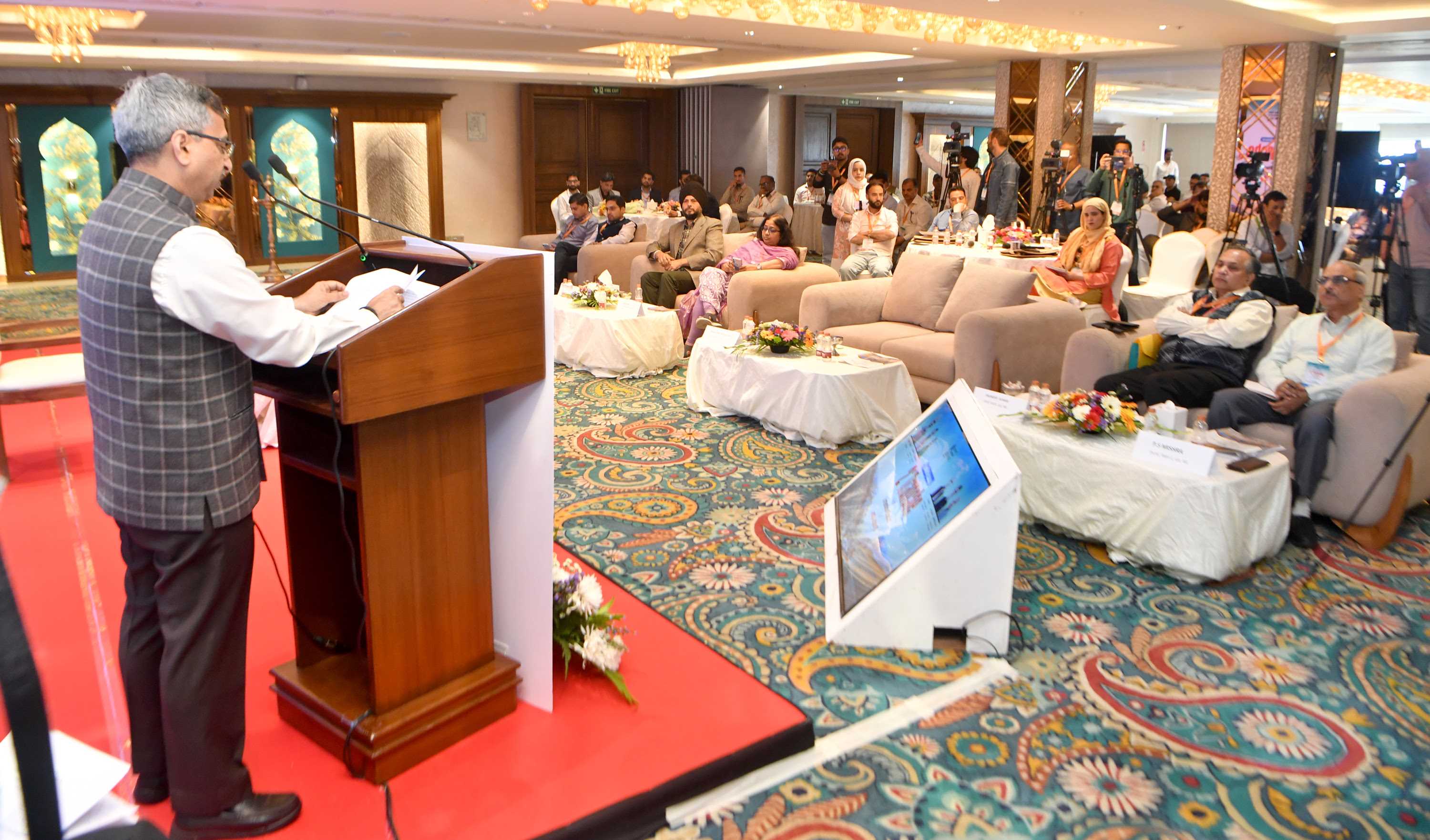
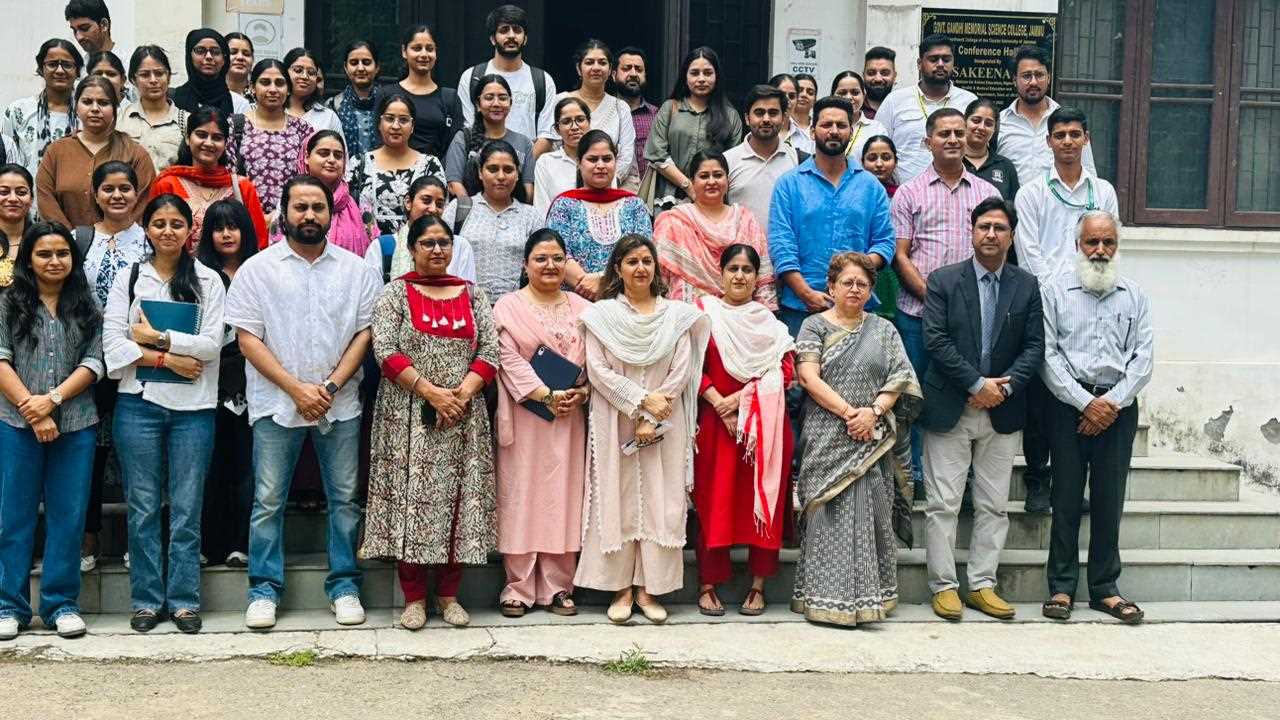
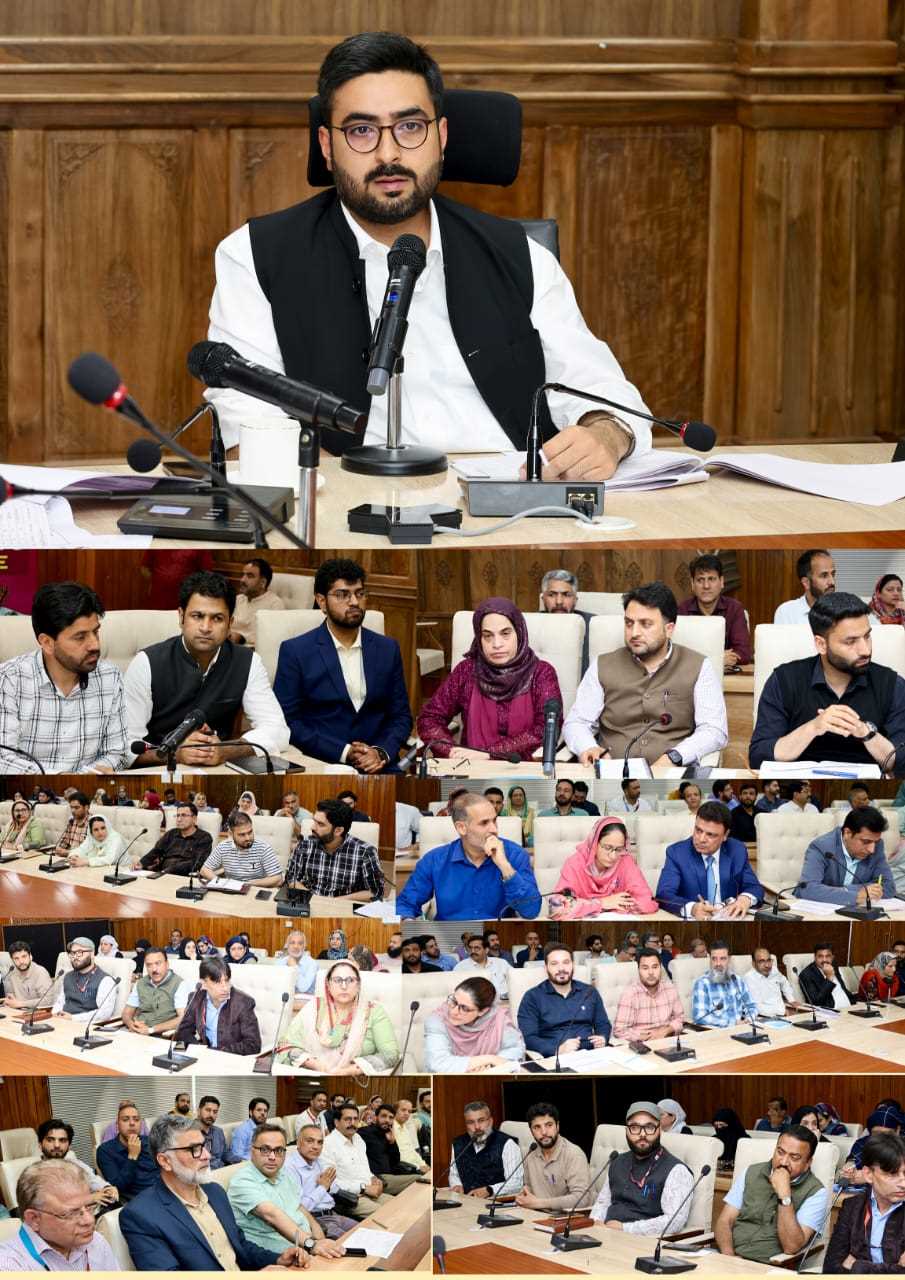
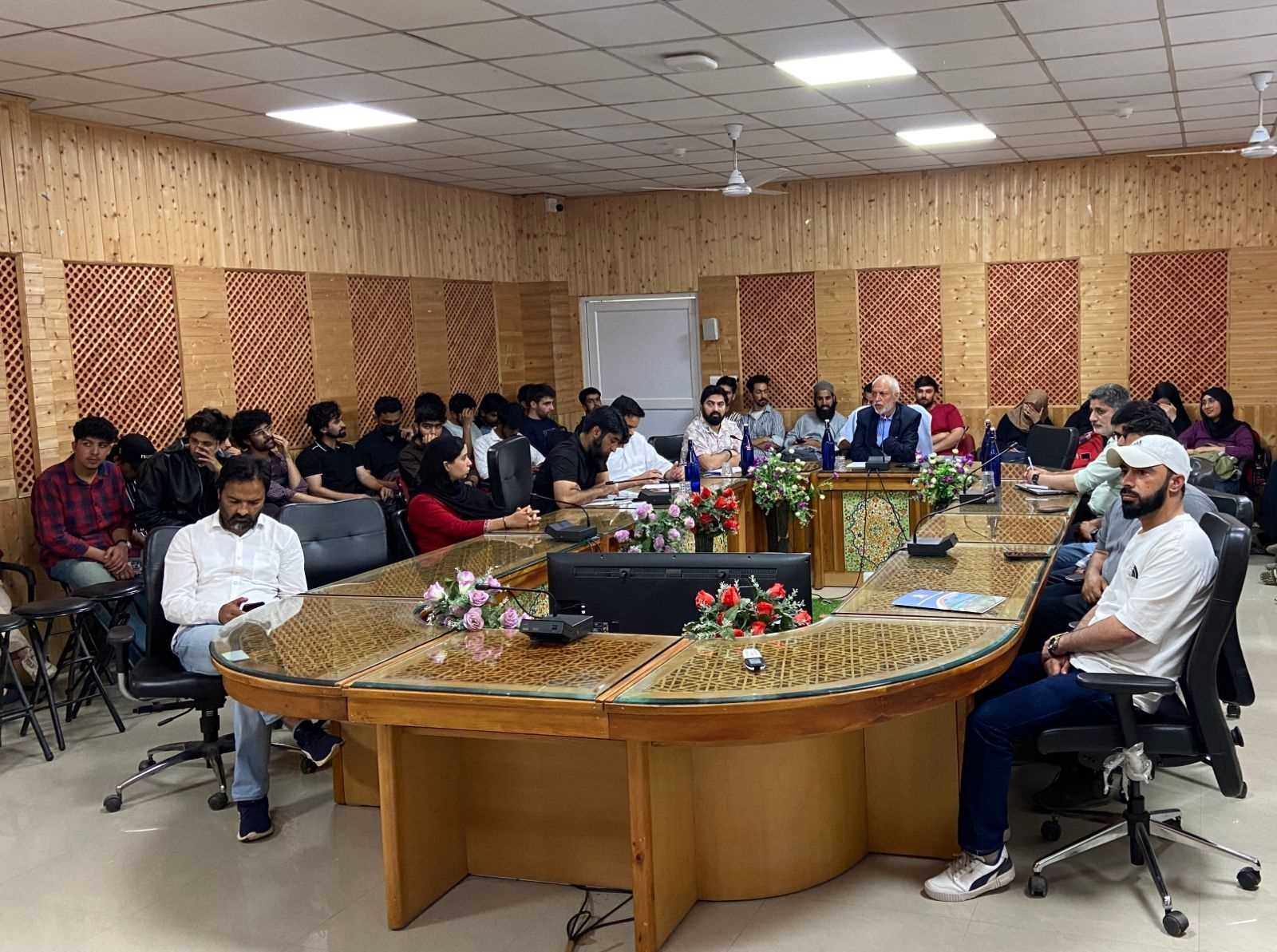
Department of Information Technology, Central University of Kashmir (CUKashmir), celebrated the National Technology Day-2026 under the theme “Responsible Innovation for Inclusive Growth,” with emphasis on Artificial Intelligence, Semiconductor Manufacturing, Clean Energy, Space Innovation, Deep Tech Research, and Digital Public Infrastructure.
In his welcome address, Coordinator, Deptt of Information Technology, Dr. Yashpaul, elaborated upon the historical background of National Technology Day. In his remarks, Prof. Farooq Ahmed Mir, Dean, School of Engineering, highlighted the importance of technology in every sphere of human life and its transformative role in shaping the future of society and humanity. He emphasized that while innovation is accelerating at an unprecedented pace, it is the principles of responsibility and inclusivity that will determine whether technology serves as a bridge or a barrier. He urged young researchers to pursue deep tech solutions that prioritize equity, accessibility, and long-term human welfare. He further emphasized that technology, particularly artificial intelligence, has posed a significant challenge to academicians and society at large.
In his keynote lecture about “Next Generation Semiconductors for Energy Harvesting Applications”, Dr. Praveen Kumar, Associate Prof. at Plaksha University in Mohali, elaborated on the emerging roles of two dimensional materials such as graphene and transition metals, as well as three-dimensional hetero structures, in revolutionising semiconductor technologies. He explained how these advanced materials are enabling quantum computing architectures, ultra low power neural processors, and next generation energy efficient systems. He also highlighted recent breakthroughs in piezoelectric and thermoelectric nano-generators capable of harvesting ambient energy from vibrations and temperature gradients, which could potentially power Internet of Things devices, wearable electronics, and remote sensors without conventional batteries. He noted that India's push toward indigenous semiconductor fabrication under the India Semiconductor Mission aligns closely with research on gallium nitride and silicon carbide based devices, which are critical for electric mobility, renewable energy grids, and space applications.
Er. Afaq Alam Khan, proposed the vote of thanks.

Department of Information Technology, Central University of Kashmir (CUKashmir), celebrated the National Technology Day-2026 under the theme “Responsible Innovation for Inclusive Growth,” with emphasis on Artificial Intelligence, Semiconductor Manufacturing, Clean Energy, Space Innovation, Deep Tech Research, and Digital Public Infrastructure.
In his welcome address, Coordinator, Deptt of Information Technology, Dr. Yashpaul, elaborated upon the historical background of National Technology Day. In his remarks, Prof. Farooq Ahmed Mir, Dean, School of Engineering, highlighted the importance of technology in every sphere of human life and its transformative role in shaping the future of society and humanity. He emphasized that while innovation is accelerating at an unprecedented pace, it is the principles of responsibility and inclusivity that will determine whether technology serves as a bridge or a barrier. He urged young researchers to pursue deep tech solutions that prioritize equity, accessibility, and long-term human welfare. He further emphasized that technology, particularly artificial intelligence, has posed a significant challenge to academicians and society at large.
In his keynote lecture about “Next Generation Semiconductors for Energy Harvesting Applications”, Dr. Praveen Kumar, Associate Prof. at Plaksha University in Mohali, elaborated on the emerging roles of two dimensional materials such as graphene and transition metals, as well as three-dimensional hetero structures, in revolutionising semiconductor technologies. He explained how these advanced materials are enabling quantum computing architectures, ultra low power neural processors, and next generation energy efficient systems. He also highlighted recent breakthroughs in piezoelectric and thermoelectric nano-generators capable of harvesting ambient energy from vibrations and temperature gradients, which could potentially power Internet of Things devices, wearable electronics, and remote sensors without conventional batteries. He noted that India's push toward indigenous semiconductor fabrication under the India Semiconductor Mission aligns closely with research on gallium nitride and silicon carbide based devices, which are critical for electric mobility, renewable energy grids, and space applications.
Er. Afaq Alam Khan, proposed the vote of thanks.
© Copyright 2023 brighterkashmir.com All Rights Reserved. Quantum Technologies